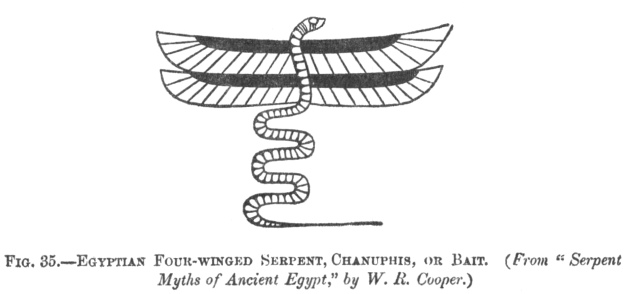
"That the sun will not rise to-morrow is no less intelligible a proposition, and implies no more contradiction, than the affirmation, that it will rise." -- David Hume, philosopher, 1772
I think I get it now.
I finally understand the wisdom of Sonchis of Sais.
And it's terrifying actually.
The Wisdom of Sonchis of Sais: Why the Greeks Have No History Prior To Homer

From Plato's Timaeus:
"There is a story, which even you have preserved, that once upon a time Paethon, the son of Helios, having yoked the steeds in his father's chariot, because he was not able to drive them in the path of his father, burnt up all that was upon the earth, and was himself destroyed by a thunderbolt." -- Sonchis of Sais, priest, ~600 B.C.
What this means is that the Sun (Helios) either (1) literally gave birth to another astronomical body (Phaeton) being either a star or a planet, or (2) figuratively captured an extrasolar body, either a star, planet, or comet which yoked, captured, and disturbed the orbits of the solar system, in particular the rotation of the Earth. And that Phaeton was zapped by an electric discharge, possibly from Jupiter.
"Now this has the form of a myth, but really signifies a declination of the bodies moving in the heavens around the earth, and a great conflagration of things upon the earth, which recurs after long intervals; at such times those who live upon the mountains and in dry and lofty places are more liable to destruction than those who dwell by rivers or on the seashore. And from this calamity the Nile, who is our never-failing saviour, delivers and preserves us."
When remarking on the Deluge/Great Flood of All, Sonchis even says, "after the usual interval."
WTF is the usual interval? Our history only goes back a few thousand years lol.
Herodotos, The History, Book II, Chapter 142:
[1] Thus far went the record given by the Egyptians and their priests; and they showed me that the time from the first king to that priest of Hephaestus, who was the last, covered three hundred and forty-one generations, and that in this time this also had been the number of their kings, and of their high priests.That's once every 2,835 years. Which means 2148 could be a rough one.
[2] Now three hundred generations are ten thousand years, three generations being equal to a hundred. And over and above the three hundred, the remaining forty-one cover thirteen hundred and forty years.
[3] Thus the whole period is eleven thousand three hundred and forty years; in all of which time (they said) they had had no king who was a god in human form, nor had there been any such either before or after those years among the rest of the kings of Egypt.
[4] Four times in this period (so they told me) the sun rose contrary to experience; twice he came up where he now goes down, and twice went down where he now comes up
The Egyptian priests are biologically and politically uniformitarian saying no harm came to Egypt as a result but Plato is more catastrophic. He says in The Statesman, "And animals, as we know, survive with difficulty great and serious changes of many different kinds when they come upon them at once. ... Hence there necessarily occurs a great destruction of them, which extends also to-the life of man; few survivors of the race are left...."
This explains how Democritus and Hippolytus knew that worlds collide.
"consider what impetuous force
Turns stars and planets in a diff'rent course.
I steer against their motions; nor am I
Born back by all the current of the sky.
But how cou'd you resist the orbs that roul
In adverse whirls, and stem the rapid pole?" -- Ovid, Phaeton
And that is the reason why the Greeks have no science prior to Thales and no history prior to Homer.
"I spent much care upon the history of the Arcadian kings, and the genealogy as given above was told me by the Arcadians themselves. Of their memorable achievements the oldest is the Trojan war." -- Pausanias, geographer, Desciption of Greece
ὅπερ ἔδει δεῖξαι
-- B.P.










-759725.jpg)