Prisca Sapientia, Science in Cryptomnesia, Dissident and Heretical Natural Philosophy, Abiotic Hydrocarbon Origin, Infinite Oil, The Cold Mantle, Expansion Tectonics, Pacific Biogeography, Euclidean Geometry, Electric Universe, Electromagnetic Gravity, Colliding Worlds, The Birth of Venus, The Reversal of Retrograde Rotation, Catastrophism, Global Pyramids, Atlantis In Antarctica, Extreme Human Antiquity, Ancient Technology, Giants and Dragons, Alien Astronauts, & Intelligent Design
"Thetis of the silver feet came to the house of Hephaistos, imperishable, starry, and shining among the immortals, built in bronze for himself by the god of the dragging footsteps. She found him sweating as he turned here and there to his billows busily, since he was working on twenty tripods which were to stand against the wall of his strong-founded dwelling. And he had set golden wheels underneath the base of each one so that of their own motion they could wheel into the immortal gathering, and return to his house: a wonder to look at." -- Homeros, poet, Iliad, XVIII:369-377, 8th century B.C.
"The programmable self-propelled machine might even go back as far as the 8th century B.C. ... It looks like the search for the earliest programmable robot is far from over." -- Noel Sharkey, computer scientist, July 2007
Engineers and scientists from NASA and GM worked together through a Space Act Agreement at the agency's Johnson Space Center in Houston to build a new [sic] humanoid robot capable of working side by side with people. Using leading edge control, sensor and vision technologies, future robots could assist astronauts during hazardous space missions and help GM build safer cars and plants.
The two organizations, with the help of engineers from Oceaneering Space Systems of Houston, developed and built the next iteration of Robonaut. Robonaut 2, or R2, is a faster, more dexterous and more technologically advanced robot. This new [sic] generation robot can use its hands to do work beyond the scope of prior humanoid machines. R2 can work safely alongside people, a necessity both on Earth and in space.
"This cutting-edge robotics technology holds great promise, not only for NASA, but also for the nation," said Doug Cooke, associate administrator for the Exploration Systems Mission Directorate at NASA Headquarters in Washington. "I'm very excited about the new [sic] opportunities for human and robotic exploration these versatile robots provide across a wide range of applications."
"Thetis of the silver feet came to the house of Hephaistos, imperishable, starry, and shining among the immortals, built in bronze for himself by the god of the dragging footsteps. She found him sweating as he turned here and there to his billows busily, since he was working on twenty tripods which were to stand against the wall of his strong-founded dwelling. And he had set golden wheels underneath the base of each one so that of their own motion they could wheel into the immortal gathering, and return to his house: a wonder to look at." -- Homeros, poet, Iliad, XVIII:369-377, 8th century B.C.
"The movements of animals may be compared with those of automatic puppets, which are set going on the occasion of a tiny movement; the levers are released, and strike the twisted strings against one another; or with the toy wagon. For the child mounts on it and moves it straight forward, and then again it is moved in a circle owing to its wheels being of unequal diameter (the smaller acts like a centre on the same principle as the cylinders). Animals have parts of a similar kind...." -- Aristotle, philosopher, On the Motion of Animals, 350 B.C.
"For if every instrument could accomplish its own work, obeying or anticipating the will of others, like the statues of Daedalus, or the tripods of Hephaestus, which, says the poet, 'of their own accord entered the assembly of the Gods;' if, in like manner, the shuttle would weave and the plectrum touch the lyre without a hand to guide them, chief workmen would not want servants, nor masters slaves." -- Aristotle, philosopher, Politics, Book I, 350 B.C.
"When Lionardo was at Milan the King of France came there and desired him to do something curious; accordingly he made a lion whose chest opened after he had walked a few steps, discovering himself to be full of lilies." -- Giorgio Vasari, The Lives of the Most Excellent Painters, Sculptors and Architects (Florence 1550).
Constructing a mechanical lion that could walk, let alone present flowers to the king, can't have been a simple task back in 1515 - even for a genius like Leonardo da Vinci. How he managed this feat remained a mystery until 2000, when US robotics expert Mark Rosheim came to a surprising conclusion.
Pulling together fragments of notes and drawings, Rosheim worked out that the lion was almost certainly powered by a clockwork cart illustrated in da Vinci's Codex Atlanticus (see Illustration) Intriguingly, Rosheim suggested that the cart's steering mechanism was controlled by arms attached to rotating gears. With this design it would have been possible to control the automaton's movements simply by changing the position of these arms - in other words, Rosheim argues, da Vinci's lion was not only clockwork, it was also programmable.
This astonishing idea raised some intriguing questions: was da Vinci influenced by an earlier design? And if so, how far back in history can we trace programmable robots?
In search of answers I followed the technology back through medieval Europe to the Islamic world, where I have found evidence of an even earlier programmable automaton, made in Baghdad by the brilliant 13th-century engineer Ibn Ismail Ibn al-Razzaz Al-Jazari. He created a veritable boatload of programmable robot musicians - effectively a floating jukebox - designed to entertain nobles as they drank and lounged at royal pool parties.
Yet the trail doesn't stop there. It led me even further back past the automata of the Byzantine court and ancient Rome to ancient Alexandria. It was here that Hero, one of the greatest Greek engineers, constructed a programmable robot that pre-dates da Vinci's by 1500 years. ...
This certainly seems like a candidate for a programmable machine, and a translation of Book I of Hero's Peri automatopoietikes (on automata-making) supplied the answer. This theatre was indeed a programmable machine, but not in quite the way I had imagined; there are no cams involved. Surprisingly, Hero used a much more explicit programming strategy than either da Vinci or Al-Jazari. His method of programming is unique in the history of robots. It relied on string. ...
There is also the vexatious question of whether Hero's machine was the first. It is hard to believe that there were no earlier designs. In his book Hero hinted that he was giving us something new in an already established theatrical tradition, but he complained that earlier writers were not clear enough to enable others to copy their robots. He made explicit references to Philo of Byzantium's lost book on automatic theatres from 200 BC, for example. Elsewhere there are references to even earlier automata - for instance, in the 4th century BC Aristotle wrote about automatic puppets and a child's wagon that could move in a circle, describing them as if they were commonplace.
The programmable self-propelled machine might even go back as far as the 8th century BC, according to Homer's Iliad: "[Hephaestus] was making twenty tripods that were to stand by the wall of his house, and he set wheels of gold under them all that they might go of their own selves to the assemblies of the gods, and come back again - marvels indeed to see." It looks like the search for the earliest programmable robot is far from over.
"... scholars claimed the great sage [Imhotep] was an invention .... They dismissed Imhotep as nothing more than a myth. That all changed on January 2nd 1926." -- The Lost Mummy of Imhotep, The Smithsonian Institute, April 28th 2011
"Ok, ok, he [yours truly] can sit in the corner with a green dunce cap on. That'd be fitting." -- Hilton Ratcliffe, astronomer, April 21st 2011
"The Atlantis Maps is destined to further blur the lines between myth and reality by raising perceived myths closer than ever to the brink of reality, while perceived reality sinks into the depths of modern myth and misguided science." -- Doug Fisher, author, 2010
"There is no difference between mythology and science." -- Me, noob, March 2010
"Myths have no point to make. They are, in fact, history." -- Jno Cook, author, November 2009
"How quickly science fact becomes science fiction and science fiction becomes science fact!" -- Me, noob, July 2009
"I do not know whether any of this is true. I am certain that the scientific community does not know that it is false." -- David Berlinski, mathematician, The Devil's Delusion, 2008
"In all the Indian legends, whether it is the Ramayana or Mahabharata, one can find embedded elements of geological processes." -- D. Chandrasekharam, geomythologist, 2007
"Some geomyths actually constitute a record of major geological events." -- Dorothy B. Vitaliano, geomythologist, 2007
"Myth and geology are related in several ways." -- Dorothy B. Vitaliano, geomythologist, 2007
"The interpretation of geological folklore, to be correctly and exhaustively carried out, requires the integration of knowledge in the fields of geology, archaeology, history, comparative mythology and anthropology. The geological study of mythology and legendary accounts may reveal encoded memories of past geological events, thus providing a reservoir of geological information." -- Luigi Piccardi, geomythologist, Myth and Geology, 2007
"Geomythology indicates every case in which the origin of myths and legends can be shown to contain references to geological phenomena and aspects, in a broad sense including astronomical ones (comets, eclipses, meteor impacts, etc.)." -- Luigi Piccardi, geomythologist, Myth and Geology, 2007
"... the study of the geological foundation of human myths, an emerging discipline in the Earth sciences called 'geomythology.' This term was coined by Dorothy Vitaliano, in her pioneering book Legends of the Earth: Their Geological Origins (1973), as 'the study of the geological reality lying behind myths and legends of the past." -- Luigi Piccardi, geomythologist, Myth and Geology, 2007
"The ancients possessed a plasma cosmology and physics themselves, and from laboratory experiments, were well familiar with the patterns exhibited by [Anthony] Peratt's petroglyphs. They chose, for some strange reason, to disguise their knowledge by creating myths and legends in archaic petroglyphs and mythological symbols." -- Joseph P. Farrell, author, 2007
"Archaeologists claim to have unearthed the remains of the 3,500-year-old palace of Ajax, the warrior-king who according to Homer's Iliad was one of the most revered fighters in the Trojan War. Classicists hailed the discovery, made on a small Greek island, as evidence that the myths recounted by Homer in his epic poem were based on historical fact." -- John Carr, journalist, March 2006
"Michael Maier is a famous writer of the early 17th century who tried to decipher as much Greek mythology as he could get his hands on. So it was a common belief." -- Bill Newman, historian, November 15th 2005
"... it has not been established that scientifically acceptable accounts of the past benefit society more than mythical, biblical or other accounts." -- Cornelius J. Holtorf, archaeologist, August 2005
"Accepting myths and legends as at least potentially accurate enabled Heinrich Schliemann to find the ruins of Troy, and enabled Helge Ingstad to find L'Anse aux Meadows, the Newfoundland site that authenticated the idea that the Norse had visited America 500 years before Columbus." -- Andrew O'Hehir, journalist, August 2005
"Year after year, science finds explanations, scientific reasons behind all the legends. They think this proves history was not as myth has shown it, but in fact it proves that all the myths were true." -- Robert Brown, writer, 2005
"Odysseus' island is no longer a fantasy." -- Robert Bittlestone, consultant, Odysseus Unbound, 2005
"Studying myths and legends, I was awed by their cognitive power, their ability to organize the inchoate data of perceptions into meaningful experiences. A myth, I was taught, was neither true nor false." -- Nathan Katz, anthropologist, Who Are The Jews of India?, 2000
"... the word 'myth' does not necessarily carry a connotation of falsehood...." -- Manuel Alfonseca, computer scientist, July 1998
"She [Gertrude Stein] had her own idea of what poetry was and you don't make poetry out of falsities. I don't think you make anything much out of that which is false. No. Why bother? When you can do it with what's true?" -- Paul Bowles, author, 1998
"Then the legends must be true." -- Steve Kramer, writer, Exedore, Zentraedi Minister of Affairs, Robotech: The Macross Saga, Episode 23: Reckless, April 3rd 1985
"Many myths contain accurate or reasonable statements about past events, while all historical sources, both primary and secondary, originate in a given cultural milieu and are influenced by cultural practices and beliefs. Because of this, it can be said that all historical accounts, whether Aztec, European, Chinese, or Fijian, are to some extent 'myths' (see Sahlins 1983)." -- Michael E. Smith, historian, 1984
"... all the talk, all the legends, must be true." -- Paige W. Christiansen, historian, The Story of Mining in New Mexico, 1975
"By becoming fact it does not cease to be myth...." -- C.S. Lewis, author, 1977
"The heart of Christianity is a myth which is also a fact." -- C.S. Lewis, author, 1977
"The geomythologist seeks to find the real geological event underlying a myth or legend to which it has given rise; thus he helps convert mythology back into history." -- Dorothy B. Vitaliano, geomythologist, May 1967/June 1968
"During the early seventeenth century, Michael Maier (1568-1622), whose works were deeply studied by Newton, had undertaken a survey of the entire Greek mythology to demonstrate that they represented alchemical secrets." -- J.E. McGuire and P.M. Rattansi, historians, Newton and the Pipes of Pan, 1966
"The only modern author cited was Natalis Conti (c.1520-1582), an influential sixteenth century mythographer, who links Newton with a Renaissance tradition attributing a hidden theological, moral, and natural-philosophical meaning to all the classical myths." -- J.E. McGuire and P.M. Rattansi, historians, Newton and the Pipes of Pan, 1966
"... there remained still a few in the older families who studied their own books, and even gathered reports of old times and distant lands ...." -- John R.R. Tolkien, english professor (Oxford University), The Fellowship of the Ring, July 29th 1954
"... legend ... becomes history." -- John R.R. Tolkien, english professor (Oxford University), The Fellowship of the Ring, July 29th 1954
"One of the great discoveries of the last eighty years has been the discovery of the civilization of prehistoric Greece, the Aegean Civilization as it is sometimes called. Before 1870 the history of Greece began with the First Olympiad in 776 B.C. Everything before that date was legendary and mythical. The age of Homer and Homer's heroes and their cities was also regarded as belonging to a kind of classical fairyland." -- Alan Wace, professor of classics and archaeology (Farouk I University of Alexandria), The Bull of Minos, 1953
"Facts are facts, and the Cult's so-called mythology has certain facts behind it." -- Isaac Asimov, author, 1941
"He had heard such things, of course, in old old tales; but it was hard to believe ....." -- John R. R. Tolkien, english professor (Oxford University), The Hobbit, September 21st, 1937
"When in the end, the day came on which I was going away, I learned the strange learning that things can happen which we ourselves cannot possibly imagine, either beforehand, or at the time when they are taking place, or afterwards when we look back on them." -- Isak Denison, author, 1937
"[Heinnrich] Schliemann, the resurrector of Troy, believed that Atlantis had served as a mediating link between the cultures of Europe and Yucatan, and that Egyptian civilization had been brought from Atlantis." -- Will Durant, historian, The Story of Civilization, Volume I, Our Oriental Heritage, 1935
"We cannot entirely ignore the legends, current throughout history, of civilizations once great and cultured, destroyed by some catastrophe of nature or war, and leaving not a wrack behind...." -- Will Durant, historian, The Story of Civilization, Volume I, Our Oriental Heritage, 1935
"This they tell, and whether it happened or not I do not know; but if you think about it, you can see that it is true." -- Black Elk, medicine man, August 1930
"Men once claimed that ancient Troy was a myth and that the Labyrinth of Minos was fiction; but archaeologists have unearthed the Troy of Greek legends and the Labyrinth of Crete." -- Drusilla D. Houston, historian, Wonderful Ethiopians of the Ancient Cushite Empire, Chapter XI: The Strange Races of Chaldea, 1926
"The history of Babylonia like that of most nations begins with a myth; but we are beginning to realize that a deep significance lies beneath old myths." -- Drusilla D. Houston, historian, Wonderful Ethiopians of the Ancient Cushite Empire, Chapter XI: The Strange Races of Chaldea, 1926
"... at the basis of all myths, particularly nature myths, there is a real fact, but during a subsequent period the material was given its present mythical character and form." -- Johannes Riem, author, 1925
"... If I am to discuss what is wrong, one of the first things that are wrong is this: the deep and silent modern assumption that past things have become impossible." -- G. K. Chesterton, philosopher, What's Wrong With The World, Chapter IV: The Fear of the Past, 1910
"My first and last philosophy, that which I believe in with unbroken certainty, I learnt in the nursery. ... The things I believed most then, the things I believe most now, are the things called fairy tales. They seem to be the entirely reasonable things. They are not fantasies: compared with them other things that are fantastic. ... Fairyland is nothing but the sunny country of common sense." -- G. K. Chesterton, philosopher, Orthodoxy, Chapter IV: The Ethics of Elfland, 1909
"I would always trust the old wives' fables against the old maids facts." -- G. K. Chesterton, philosopher, Orthodoxy, Chapter IV: The Ethics of Elfland, 1909
"... what is myth to-day is often history to-morrow." -- Lewis Spence, translator, July 1908
"We all believe in fairy-tales, and live in them." -- G. K. Chesterton, philosopher, Heretics, Chapter XX: Concluding Remarks About Orthodoxy, 1905
"All legend was history as history became legend about her." -- 13 year old Chinese boy in Sichuan 1898 (quoted in Suyin Han, The Crippled Tree, 1965)
"I thought I must be dreaming when I heard Captain Len Guy’s words. Edgar Poe’s romance was nothing but a fiction, a work of imagination by the most brilliant of our American writers. And here was a sane man treating that fiction as a reality." -- Jules Verne, author, 1897
"... the theory, so commonly held by the earlier philosophers, that the earth had been originally in a moist state, was not purely mythological in origin, but based on biological and paleontological observations." -- John Burnet, classicist, Early Greek Philosophy, 1892
"There are no facts, only interpretations." -- Friedrich W. Nietzsche, philosopher, The Will to Power, Note 481, 188-
"... the only explanation possible is that the legends must be true." -- John H. Parker, archaeologist, The Archaeology of Rome, 1877
"Depend upon it, there is mythology now as there was in the time of Homer, only we do not perceive it, because we ourselves live in the very shadow of it, and because we all shrink from the full meridian light of truth." -- F. Max Muller, philologist, On the Philosophy of Mythology, 1872
"Mythology is inevitable, it is natural, it is an inherent necessity of language." -- F. Max Muller, philologist, On the Philosophy of Mythology, 1872
"Tis strange -- but true; for truth is always strange; stranger than fiction." -- Lord Byron, poet, Don Juan, Canto XIV, Dec 17th 1823
"Man will believe anything, as long as it's not in the Bible." -- Napoleon Bonaparte, emperor, 19th century
"Le mythologie, dans son origine, est l'ouvrage de la science [Mythology has it's origin in the opera of science]..." -- Charles F. Dupuis, polymath, 1795
"Le myth est ne de la science [Myth is born from science]." -- Charles F. Dupuis, polymath, 1795
"... the Egyptians ... concealed mysteries that were above the common herd under a veil of religious rites and hieroglyphic symbols." -- Isaac Newton, mathematician, 1694
"And now we pass out of Asia into Europe, from Zoroaster to Orpheus. It is the opinion of some eminent philologers of latter times, that there never was any such man as Orpheus, but only in Fairy-land; and that the whole history of Orpheus was nothing but a mere romantic allegory, utterly devoid of all truth and reality. But there is nothing alleged for this opinion from antiquity...." -- Ralph Cudworth, philosopher, The True Intellectual System of the Universe, Volume III, 1671
"I for my part believe this story; it has been a legend among the Arcadians from of old, and it has the additional merit of probability." -- Pausanias, geographer, Description of Greece, Arcady, 2nd century
"... Xeniades of Corinth, whom Democritus mentions, says that everything is false, and that every appearance and opinion lies, and that all that comes to be comes to be out of what is not...." -- Sextus Empiricus, philosophers, Against the Mathematicians, 2nd century
"For the time will come when they will not endure sound doctrine, but after their own lusts shall they heap to themselves teachers, having itching ears, and they shall turn away their ears from the truth, and shall be turned into fables." -- 2 Timothy 4:3-4
"... there will be no scientific knowledge of the primary premisses...." -- Aristotle, philosopher, Posterior Analytics, Book II, 350 B.C.
"... the basic premisses of demonstrations are definitions, and it has already been shown that these will be found indemonstrable; either the basic premisses will be demonstrable and will depend on prior premisses, and the regress will be endless; or the primary truths will be indemonstrable definitions. " -- Aristotle, philosopher, Posterior Analytics, Book II, 350 B.C.
"...scientific knowledge through demonstration is impossible unless a man knows the primary immediate premisses." -- Aristotle, philosopher, Posterior Analytics, 350 B.C.
"And the stars of heaven fell unto the earth, even as a fig tree casteth her untimely figs, when she is shaken of a mighty wind." -- Revelation 6:13
"And I beheld when he had opened the sixth seal, and, lo, there was a great earthquake; and the sun became black as a sackcloth of hair, and the moon became blood;" -- Revelation 6:12
"Concerning the country [Greece] the Egyptian priests said what is not only probable but manifestly true ...." -- Plato, philosopher, Critias, 360 B.C.
"Now this has the form of a myth, but really signifies a declination of the bodies moving in the heavens around the earth, and a great conflagration of things upon the earth, which recurs after long intervals...." -- Plato, philosopher, Timaeus, 360 B.C.
"Indeed the face is pale; ... what the ancestors foretold has arrived...." -- Ipuwer, scribe, Papyrus 1, date debated
"How much past knowledge has humanity forgotten?" -- Jonathan Henry, philosopher, April 2010
"Going back 30,000 years requires you to speculate because we really don't have much an idea what was going on." -- David Morrison, archaeologist, February 26th 2010
"History began when humans remembered to forget." -- Me, noob, February 2010
"What has already happened cannot be impossible." -- Me, noob, August 2009
"A nation that does not know it's history has no future." -- Russell C. Means, native american actor/activist, 2009
"You know, chess players are notorious at forgetting things and I as a chess player am no exception." -- Magnus Carlsen, chess player, October 19th 2008
"This is shaping up to be one of those historic battles in science. There are people who believe one thing. There are people who believe another. There are people who believe everything, and people who don't know what to believe. It's quite a mess." -- Thomas Kaye, paleontologist, October 9th 2008
"Nothing is certain and particularly in space flight is anything certain." -- Christopher C. Kraft Jr., NASA flight director, 2008
"I believe the seemingly impossible has already happened." -- Theodore Knerly, physicist, March 2008
"Things that a physicist would snicker at today could become possible in the coming decades. As we get a better grasp on quantum theory, we think that it may be possible to make objects invisible. It may be possible to teleport them like you see on 'Star Trek.' So some of the things that we see in science fiction could very well become science fact in the coming years." -- Michio Kaku, physicist, February 2008
"Many times, physicists say that certain things are impossible – like physicists said that airplanes were impossible at one point. That’s because we didn’t understand the laws of physics very well." -- Michio Kaku, physicist, February 2008
"Most people are in denial about most things; you may have noticed: it's called human life and human culture. And you know, we don't like to face anything really to speak of. Of course, we all are sufficiently in denial that we convince ourselves that we're not in denial about anything." -- Robert K.G. Temple, author, November 2007
"The only new things are those which have been forgotten." -- Seb Janiak, film producer, 2007
"A culture will ask itself, 'Well, where did I come from?' It's a very important questions for humans. Because if we don't know where we came from then we don't know who we are." -- David Leeming, professor, 2007
"I think the bottom line is the poet must not avert his eyes. You have to take a bold look at what is your environment and what is around you. Even the ugly things. Even the decadent things." -- Werner Herzog, film maker, January 2007
"The further back you go the harder it is to interpret." -- Stanton Friedman, author, 2007
"Quite often in this field [of medicine] politics comes first and science second. We must take a position based upon the science and the data." -- Arata Kochi, physician, September 15th 2006
"How can we know who we are if we don't know where we come from?" -- Stephen Wagner, author, February 2004
"Nobody remembers anything." -- Michael Connelly, author, 2004
"Some people in each successive generation believe that theirs is the one that has at last seen everything clearly, that their insights point to the truth, the final answer. Yet scientific discovery marches on and today’s truth will become tomorrow’s anecdotes." -- Gerrit L. Verschuur, astronomer, 2003
"... now, you understand that in Hollywood, nobody reads and nobody remembers anything." -- Sue Grafton, author, 2003
"Whenever you hear the consensus of scientists agrees on something or other, reach for your wallet, because you're being had. Let's be clear: the work of science has nothing whatever to do with consensus. Consensus is the business of politics. Science, on the contrary, requires only one investigator who happens to be right, which means that he or she has results that are verifiable by reference to the real world. In science consensus is irrelevant. What is relevant is reproducible results. The greatest scientists in history are great precisely because they broke with the consensus. There is no such thing as consensus science. If it's consensus, it isn't science. If it's science, it isn't consensus. Period." -- Michael Crichton, author, January 17th 2003
"Is history what happened in the past, or is it what we think happened in the past?" -- Michael Shermer and Alex Grobman, historians, 2002
"But you really have to look at the science of the situation." -- Michael G. Tyson, pugilist, May 1st 2002
"It's something you learn here -- after a while nobody remembers anything." -- Joseph Kanon, author, 2001
"I believe that anyone who claims to know what's going on will lie about the little things too." -- Neil Gaiman, author, American Gods, Chapter 13, 2001
"Ideas are more difficult to kill than people, but they can be killed, in the end." -- Neil Gaiman, author, American Gods, Chapter 3, 2001
"I must confess to being an admirer of the late Harlow Shapley, the Professor of Astronomy at Harvard at the time Velikovsky was first published. He alone, it seems, had the foresight to realise that what Velikovsky was proposing was the biggest threat that the scientific establishment would ever have to face. His apocryphal statement that 'if Velikovsky is right then we are all crazy' was to say the least prophetic. For somebody, who allegedly, had not even read the book to have this insight into the paradigm shift that was being published adds stature to his ability. Because he was quite right ... almost every field of science is suspect, as we are continually finding out." -- Harold Tresman, scholar, September 1999
"Nobody remembers anything." -- Joseph Kanon, author, 1999
"... nobody remembers anything, not even poems." -- Jaime Manrique, author, 1999
"For every expert there is an equal and opposite expert." -- Arthur C. Clarke, author, 1999
"The history of science demonstrates, however, that the scientific truths of yesterday are often viewed as misconceptions, and, conversely, that ideas rejected in the past may now be considered true. History is littered with the discarded beliefs of yesteryear, and the present is populated by epistemic corrections. This realization leads us to the central problem of the history and philosophy of science: How are we to evaluate contemporary sciences's claims to truth given the perishability of past scientific knowledge? ... If the truths of today are the falsehoods of tomorrow, what does this say about the nature of scientific truth?" -- Naomi Oreskes, historian, 1999
"We are certainly not at the end of science. Most probably we are just at the beginning!" -- Halton C. Arp, astronomer, 1998
"The answers to all the scientific questions we could possibly ask are sitting right in front of our noses, yet we don't see them." -- Steve Grand, computer programer, October 1998
"Nobody remembers anything from the past." -- Makarand Sathe, playwright, 1998
"One of the keys to happiness is a bad memory." -- Rita Mae Brown, author, 1998
"I think people are planets floating. Spheres. So if they touch, they just touch at one tiny point. That's the maximum touching. I think in general they don't touch at all. They just sort of float around." -- Paul Bowles, author, 1998
"... we must look back relentlessly into our own past." -- Robert K. G. Temple, author, The Sirius Mystery, 1998
"If our commonly accepted pattern of civilization is seen to be based on a lie, based on the denial of the non-orthodox, the implications are so immense that nothing short of total intellectual upheaval could result." -- Robert K. G. Temple, author, The Sirius Mystery, 1998
"Not only did secular scientists rout the Christian fundamentalists, they placed themselves in the posture of knowing more, on the basis of their own very short-term investigations, than the collective remembrances of the rest of humankind." -- Vine Deloria Jr., historian, 1997
"According to Milton Humason, the astronomer had given him [Harlow Shapley] plates of M31, the great Andromeda nebula, for examination on the stereocomparator. During the process of blinking the plates, the night assistant discerned images never before seen. He marked their locations in ink and sought out Shapley for confirmation. If he was not mistaken, the plates contained Cepheid variables from beyond the Milky Way. Shapley, who was certain of himself, was having none of this. He launched into a shortened version of the same arguments he employed during the Great Debate, then calmly took out his handkerchief, turned the plates over, and wiped them clean ...." -- Gale E. Christianson, historian, Edwin Hubble: Mariner of the Nebulae, 1996
"I am convinced by the evidence that we are a species with amnesia. We have forgotten something of great importance from our own past." -- Graham Hancock, writer, 1996
"One of the greatest mysteries of mankind is: where did we come from? Scientists and philosophers alike have pondered this elusive question and put forth many explanations. But in truth, no one really knows. " -- Charlton Heston, actor, 1996
"The absense of evidence is not evidence of absense." -- Kenneth A. Kitchen, egyptologist, 1995
"... I think it's fairly clear that all reality has to respect all other reality. If you come to inconsistencies, they have to be resolved...." -- Charles T. Munger, philosopher, 1995
"...Worlds In Collision was the one book which lay open on Einstein's desk at the time of his death." -- Charles Ginenthal, historian, 1995
"Students will start finding history interesting when their teachers and textbooks stop lying to them." -- James Loewen, historian, 1995
"There are great ideas undiscovered; breakthroughs available to those who can remove one of truth's protective layers. There are places to go beyond belief. Those challenges are yours. In many fields, not the least of which is space, because there lies human destiny." -- Neal Armstrong, astronaut, 1994
"We already have the means to travel among the stars, but these technologies are locked up in black projects and it would take an act of God to ever get them out to benefit humanity.... Anything you can imagine, we already know how to do." -- Benjamin R. Rich, aeronautical engineer, 1993
"In matters of religion, medicine, biology, physics, and other fields, I came to discover that reality differed seriously from what I had been taught. As a result of this questioning process, I was startled to realize how much of my 'knowledge' was indeed questionable. I was even more startled to discover a few 'extraordinary hypotheses' to be undeniably true, even while almost every expert in those fields continued to deny that possibility. To take just a single example which can be verified with minimal effort: Fresh vitamin E applied directly to cuts and burns, even of great severity, relieves pain immediately and promotes healing without scar tissue at an accelerated rate. Although the healing action of vitamin E is apparently superior to any known drug, few physicians recommend it, or even know about this simple home remedy." -- Thomas C. Van Flandern, astronomer, 1993
"We are drowning in print, and yet (with a few rare and glorious exceptions) nobody remembers anything. In my darker moments I wonder sometimes whether anybody reads anything." -- Amy Clampitt, critic, 1991
"How often must I tell you that people never remember anything?" -- George S. Schuyler, author, 1989
"Here it is: people have atrophy of the memory. Nobody remembers anything. Everyone tries to forget everything as quickly as possible." -- Inna Varlamova, author, 1988
"My studies in Velikovskian catastrophism can be said to have commenced as soon as I turned the last page of Worlds in Collision." -- Dwardu Cardona, author, December 1988
"By this time [1955] the radio noises from Jupiter, as predicted by Velikovsky, had already been detected. Textbooks on astronomy, however, were still preaching a universe void of any forces other than gravitation. Entire galaxies, it had already been observed were colliding with one another. But mere planets, it was still being argued, could not so collide." -- Dwardu Cardona, author, December 1988
"I have read less than a handful of books that can be said to have influenced my thinking. Immanuel Velikovsky's Worlds In Collision has not only been one of them, in the end it totally changed my life." -- Dwardu Cardona, author, December 1988
"If we're looking at human history, we can't see very far...." -- Isaac Asimov, author, 1988
"We can't be absolutely certain. Science doesn't purvey absolute truth." -- Isaac Asimov, author, 1988
"The past isn't even dead. It's disintegrated, dispersed. This is America. Nobody remembers anything past twenty years ago. — Unless there's money or trouble in it. — Antique dealers and politicians take care of that." -- John W. Corrington and Joyce H. Corrington, authors, 1986
"... when time goes on long enough, not even historians can remember everything." -- Stephen King, author, The Eyes of the Dragon, 1984
"The greatest obstacle to discovery is not ignorance -- it is the illusion of knowledge." -- Daniel J. Boorstin, historian, 1984
"Some people never remember anything further back than five or six years." -- James S. Gordon, physician, et al., 1984
"I ain't no student of ancient culture. Before I talk, I should read a book." -- Fred Schneider III, singer, January 1982
"As we shall see again and again, we have such a limited knowledge and practically no understanding of the worlds before our own." -- Brad Steiger, author, October 1978
"It is amazing that such sophisticated people, as we judge ourselves to be, do not even know who we are." -- Brad Steiger, author, October 1978
"For more than a century, orthodox historians essentially have dealt with only a single body of historical facts -- facts that meet the requirements of their preconceived hypothetical framework, telling them that man of today is the result of an evolutionary process that has brought us upward both intellectually and physically from a lower order of beings. Millions of years are involved in this hypothetical view of history, and even though the historians cannot draw the curtain of recorded history back further than 6,000 years, they steadfastly stick to their theories, for their programmed minds simply will not accept any other explanation for man's technological and cultural development." -- Rene Noorbergen, author, Secrets of the Lost Races: New Discoveries of Advanced Technology in Ancient Times, 1977
"Our quest for knowledge and our memories have become one-sided, and this is precisely our problem." -- Rene Noorbergen, author, Secrets of the Lost Races: New Discoveries of Advanced Technology in Ancient Times, 1977
"Our slot in the eons of unrecorded time has in fact become an age of slanted information. With ever-increasing frequency, new hypotheses are tested, current scientific theories modified, and new formulae constructed, but all with the aim of proving previously accepted theories...." -- Rene Noorbergen, author, Secrets of the Lost Races: New Discoveries of Advanced Technology in Ancient Times, 1977
"Endoheretics are appropriately credentialed scientists. If the person is outside the scientific community or at least outside of his specialty, he is an exoheretic. If a person is an endoheretic, he will be considered as eccentric and incompetent, whereas if the person is an exoheretic, he will be regarded as a crackpot, a charlatan, and a fraud." -- Isaac Asimov, author, 1977
"As in olden times so now." -- Cormac McCarthy, author, Child of God, 1973
"Why, the past is always changing — nobody remembers anything. " -- Arthur Miller, playwright, 1973
"The study of prehistory today is in a state of crisis. Archaeologists all over the world have realized that much of prehistory, as written in the existing textbooks, is inadequate: some of it quite simply wrong. A few errors, of course, were to be expected, since the discovery of new material through archaeological excavation inevitably leads to new conclusions. But what has come as a considerable shock, a development hardly forseeable just a few years ago, is that prehistory as we have learnt it is based upon several assumptions which can no longer be accepted as valid." -- Colin Renfrew, archaeologist, 1973
"If it were not for the burning of libraries in antiquity, history would not have had so many missing pages." -- Andrew Tomas, author, 1971
"Man is civilized only when he remembers his yesterday...." -- Andrew Tomas, author, 1971
"Everything has been said yet few have taken advantage of it." -- Raoul Veneigem, philosopher, 1967
"We are in the state of a victim of amnesia. Humankind is a victim of amnesia. And a victim of amnesia does not act responsibly, he acts irrationally. His technological progress outstrips his understanding of his milieu and of events in which his ancestors lived or succomed. And it is a dangerous situation when the victim of amnesia plays with thermonuclear war/weapons. He enters into conflicts for which there is no reason. And in many of our actions, even as single individuals, we are sharing in that course of amnesia, of not wishing to know, of preferring to forget, of opposing to a book that said nothing more than what [was] said already and told so many times in thousands of ancient sources. The very violence and opposition to that revelation is rooted exactly in this desire not to know, and thus I feel my obligation in going to campuses, speaking to the young, to tell them, 'what you are taught is not complete.'" -- Immanuel Velikovsky, polymath, 1966
"It is a unique sensation, and it has nothing to do with loneliness, for loneliness presupposes memory. Here, in this wholly mineral landscape lighted by stars like flares, even memory disappears; nothing is left but your own breathing and the sound of your heart beating." -- Paul Bowles, author, 1963
"The only way of discovering the limits of the possible is to venture a little way past them into the impossible." -- Arthur C. Clarke, author, 1962
"When a distinguished but elderly scientist states that something is possible, he is almost certainly right. When he states that something is impossible, he is very probably wrong." -- Arthur C. Clarke, author, 1962
"The history of cosmic theories can be called, without exaggeration, a history of collective obsessions and controlled schizophrenias, and the manner in which some discoveries have been made resemble the conduct of a sleepwalker, rather than the performance of an electronic brain." -- Arthur Koestler, polymath, 1959
"Don't know much about history. Don't know much biology. Don't know much about a science book." -- Sam Cooke, singer/song writer, 1958
"The difficulty is not that nobody remembers anything, but that everybody remembers, with wholehearted conviction, totally different and conflicting things." -- Margaret Webster, actress, 1955
"I have again read Worlds in Collision. It is a book of immeasurable importance, and scientists should read it." -- Albert Einstein, mathematician, April 1955
"And some things that should not have been forgotten were lost." -- John R.R. Tolkien, english professor (Oxford University), The Fellowship of the Ring, July 29th 1954
"Much that once was, is lost, for none now live who remember it." -- John R.R. Tolkien, english professor (Oxford University), The Fellowship of the Ring, July 29th 1954
"... their most ancient legends hardly looked back ...." -- John R.R. Tolkien, english professor (Oxford University), The Fellowship of the Ring, July 29th 1954
"... far back in Elder Days that are now lost and forgotten." -- John R.R. Tolkien, english professor (Oxford University), The Fellowship of the Ring, July 29th 1954
"As is well known in all sciences there have been many important events which have not left any trace." -- Hannes O.G. Alfvén, physicist, 1954
"To trace the origin of the solar system is archaeology, not physics." -- Hannes O.G. Alfvén, physicist, 1954
"Whoever undertakes to set himself up as a judge of Truth and Knowledge is shipwrecked by the laughter of the gods." -- Albert Einstein, mathematician, 1953
"People never notice anything." -- J.D. Salinger, author, 1951
"Although man knows that he has lived on this planet for millions of years, he finds a recorded history of only a few thousand years. And even these few thousand years are not sufficiently well known." -- Immanuel Velikovsky, polymath, 1950
"There is no place for dogma in science. The scientist is free, and must be free to ask any question, to doubt any assertion, to seek any evidence, to correct any errors." -- J. Robert Oppenheimer, physicist, October 1949
"Knowledge is ancient error reflecting on it's youth." -- Francis Picabia, poet, 1949
"Historian: an unsuccessful novelist." -- H.L. Mencken, satirist, 1949
"The distant past returned -- what part of it, he could not decide." -- Paul Bowles, author, 1947
"Study men, not historians." -- Harry S. Truman, politician, 194-
"The only thing new in the world is the history that you don't know." -- Harry S. Truman, politician, 194-
"History is written by the victors." -- Winston Churchill, historian, August 6th 1945
"Of course nobody remembers anything." -- Sy M. Kahn, soldier, November 21st 1944
"... in the great days of old, when Dale in the North was rich and prosperous, they had been wealthy and powerful, and there had been fleets of boats on the waters, and some were filled with gold and some with warriors in armour, and there had been wars and deeds which were now only a legend. The rotting piles of a greater town could still be seen along the shores when the waters sank in a drought. But men remembered little of all that, though some still sang old songs...." -- John R. R. Tolkien, english professor (Oxford University), The Hobbit, September 21st 1937
"... they have a fund of wisdom and wise sayings that men have mostly never heard or have forgotten long ago." -- John R. R. Tolkien, english professor (Oxford University), The Hobbit, September 21st 1937
"... one of those people whose fathers came into the strange stories before the beginning of History...." -- John R. R. Tolkien, english professor (Oxford University), The Hobbit, September 21st 1937
"You know we receive an education in the schools from books. All those books that people became educated from twenty-five years ago, are wrong now, and those that are good now, will be wrong again twenty-five years from now. So if they are wrong then, they are also wrong now, and the one who is educated from the wrong books is not educated, he is misled. All books that are written are wrong, the one who is not educated cannot write a book and the one who is educated, is really not educated but he is misled and the one who is misled cannot write a book that is correct." -- Edward Leedskalnin, stone mason, 1936
"Certainly it is probable, as Aristotle thought, that many civilizations came, made great inventions and luxuries, were destroyed, and lapsed from human memory. History, said Bacon, is the planks of a shipwreck; more of the past is lost than has been saved. We console ourselves with the thought that as the individual memory must forget the greater part of experience in order to be sane, so the race has preserved in its heritage only the most vivid and impressive -- or is it only the best-recorded?" -- Will Durant, historian, The Story of Civilization, Volume I, Our Oriental Heritage, 1935
"We know that there is no absolute knowledge, that there are only theories; but we forget this. The better educated we are, the harder we believe in axioms. I asked Einstein in Berlin once how he, a trained, drilled, teaching scientist of the worst sort, a mathematician, a physicist, astronomer, had been able to make discoveries. 'How did you ever do it?,' I exclaimed, and he, understanding and smiling, gave the answer: 'By challenging an axiom.'" -- Lincoln Steffens, journalist, 1931
"You can see that it is not the grass and the water that have forgotten." -- Black Elk, medicine man, August 1930
"Fallacies do not cease to be fallacies because they become fashions." -- G. K. Chesterton, philosopher, The Illustrated London News, April 19th 1930
"A person without the knowledge of their past history, origin and culture is like a tree without roots." -- Marcus M. Garvey Jr., author, 1920
"There is no future for a people who deny their past." -- Marcus M. Garvey Jr., author, 1920
"Any man worth his salt will stick up for what he believes is right, but it takes a slightly bigger man to acknowledge instantly and without reservation that he is in error." -- Peyton C. March, general, 1918
"Ignorance is the first requisite of the historian...." -- Lytton Strachey, historian, 1918
"History is more or less bunk." -- Henry Ford, entrepreneur, May 1916
"... we forget that we have forgotten." -- G. K. Chesterton, philosopher, Orthodoxy, Chapter IV: The Ethics of Elfland, 1909
"In fairy land we avoid the word 'law'; but in the land of science they are singularly fond of it." -- G. K. Chesterton, philosopher, Orthodoxy, Chapter IV: The Ethics of Elfland, 1909
"It is the reality that is often a fraud." -- G. K. Chesterton, philosopher, Orthodoxy, Chapter IV: The Ethics of Elfland, 1909
"Reason is itself a matter of faith. It is an act of faith to assert that our thoughts have any relation to reality at all." -- G. K. Chesterton, philosopher, Orthodoxy, Chapter III: The Suicide of Thought, 1909
"I know of men who believe in themselves more colossally than Napoleon or Caesar. I know where flames the fixed star of certainty and success. I can guide you to the thrones of the Super-men. The men who really believe in themselves are all in lunatic asylums." -- G. K. Chesterton, philosopher, Orthodoxy, Chapter II: the Maniac, 1909
"... the chief object of education is to unlearn things." --G.K. Chesterton, philosopher, All Things Considered, 'An Essay on Two Cities', 1908
"Without education, we are in a horrible danger of taking educated people seriously." -- G. K. Chesterton, philosopher, The Illustrated London News, ~1905-1907
"Truths turn into dogmas the instant that they are disputed. Thus every man who utters a doubt defines a religion." -- G. K. Chesterton, philosopher, Heretics, Chapter XX: Concluding Remarks About Orthodoxy, 1905
"The modern world is filled with men who hold dogmas so strongly that they do not even know they are dogmas." -- G. K. Chesterton, philosopher, Heretics, Chapter XX: Concluding Remarks About Orthodoxy, 1905
"Man can be defined as an animal that makes dogmas. As he piles doctrine on doctrine and conclusion on conclusion in the formation of some tremendous scheme of philosophy and religion, he is, in the only legitimate sense of which the expression is capable, becoming more and more human." -- G. K. Chesterton, philosopher, Heretics, Chapter XX: Concluding Remarks About Orthodoxy, 1905
"Those who do not remember the past are condemned to repeat it." -- George Santayana, philosopher, 1905
"... we glided past like phantoms, wondering and secretly appalled, as sane men would be before an enthusiastic outbreak in a madhouse. We could not understand, because we were too far and could not remember, because we were travelling in the night of the first ages, of those ages that are gone, leaving hardly a sign -- and no memories." -- Joseph Conrad, author, Heart of Darkness, 1899
"We know so little of the great names of antiquity...." -- Oliver J. Lodge, physicist, Pioneers of Science, 1893
"The past is of no importance." -- Oscar Wilde, author, The Soul of Man Under Socialism, 1891
"To give an accurate description of what has never occured ... the proper occupation of the historian...." -- Oscar Wilde, writer, 1891
"Everything has been said before, but since nobody listens we have to keep going back and beginning all over again." -- André Gide, author, 1891
"It is not worth while to try to keep history from repeating itself, for man's character will always make the preventing of the repetitions impossible." -- Mark Twain, author, 18--
"I am also superstitious in the extreme; well, at least enough to respect medicine." -- Fyodor Dostoyevsky, author, 1864
"Ignorance is the parent of fear." -- Hermann Melville, author, Moby Dick, 1851
"... for not one man in five cycles, who is wise, will expect appreciative recognition from his fellows, or any one of them." -- Herman Melville, author, 1851
"Modern historians are all would-be philosophers; who, instead of relating facts as they occured, give us their version, or rather perversions of them, always colored by their political prejudices, or distorted to establish some theory...." -- Marguerite Blessington, author, 1838
"The great tragedy of science, the slaying of a beautiful hypothesis by an ugly fact." -- Friedrich Wohler, chemist, 1828
"Again, in the customs and institutions of schools, academies, colleges, and similar places of resort, set apart as the abodes of learned men, and for the cultivation of erudition, everything is found to be hostile to the progress of knowledge. For lectures and exercises are so disposed, that it does not easily occur to any one to think or meditate on anything out of the customary routine. And if one or two have perchance the boldness to exercise liberty of judgment, they must undertake the task by themselves, for they will gain no advantage from union with others. And if they can endure this, still they will find their industry and liberality no slight impediment in reaching fortune. For the pursuits of men in places of this kind are confined to the writings of certain authors, as if they were prisons; and if any one dissents from them, he is straightaway seized upon as a turbulent man, and one desirous of innovations." -- Francis Bacon, philosopher, 1620
"... the natives say ... they do not know who made it [Tiahuanaco]." -- Garcilaso de la Vega, historian, 1609
"There are more things in heaven and earth, Horatio, than are dreamt of in your philosophy." -- William Shakespeare, playwright, 1601
"He [Pythagoras] called Mnemosyne, or Memory, the composition, symphony and connexion of them all, which is eternal and unbegotten as being composed of all of them." -- Porphyry, philosopher, 3rd century
"I spent much care upon the history of the Arcadian kings, and the genealogy as given above was told me by the Arcadians themselves. Of their memorable achievements the oldest is the Trojan war." -- Pausanias, geographer, Description of Greece: Arcadia, 2nd century
"But let Homer be not later than the Trojan war; let it be granted that he was contemporary with it, or even that he was in the army of Agamemnon...." -- Tatian, theologian, Address to the Greeks, Chapter XXXVI, 2nd century
"... chronology, in general, is uncertain...." -- Plutarch, historian, Lives, Numa Pompilius, 75
"Many discoveries are reserved for the ages still to be when our memory shall have perished. The world is a poor affair if it does not contain matter for investigation for the whole world in every age . . . Nature does not reveal all her secrets at once. We imagine we are initiated in her mysteries. We are, as yet, but hanging around her outer courts." -- Lucius A. Seneca, philosopher statesman, 1st century
"... let us dismiss things ancient." -- Strabo, geographer, 7
"Pilate saith unto him, What is truth? And when he had said this, he went out again unto the Jews, and saith unto them, I find in him no fault at all." -- John 18:38
"Even the Spirit of truth; whom the world cannot receive, because it seeth him not, neither knoweth him;" -- Jesus Christ, extraterrestrial, John 14:17
"Jesus saith unto him, 'I am ... the truth....'" -- Jesus Christ, extraterrestrial, John 14:6
"That which is far off, and exceeding deep, who can find it out?" -- Ecclesiastes 7:24
"May also any other one who does such things so perish!" -- Homer, poet, Odyssey, Book I:47, 8th century B.C.
"... Krishna showed him all the worlds within his body ...." -- Dhritarashtra, Mahabharata, 8th century B.C.
"... the lamp of history ... destroyeth the darkness of ignorance, the whole mansion of nature is properly and completely illuminated." -- Ugrasrava Sauti, Mahabharata, 8th century B.C.
"Where are the princes of the heathen become, and such as ruled the beasts upon the earth; They that had their pastime with the fowls of the air, and they that hoarded up silver and gold, wherein men trust, and made no end of their getting? For they that wrought in silver, and were so careful, and whose works are unsearchable, They are vanished and gone down to the grave, and others are come up in their steads. Young men have seen light, and dwelt upon the earth: but the way of knowledge have they not known, Nor understood the paths thereof, nor laid hold of it: their children were far off from that way." -- Baruch 3:16-21
"There is no remembrance of former things; neither shall there be any remembrance of things that are to come with those that shall come after." -- Ecclesiastes 1:11
"Remember the former things of old: for I am God, and there is none else; I am God, and there is none like me, Declaring the end from the beginning, and from ancient times the things that are not yet done, saying My counsel shall stand, and I will do all my pleasure:" -- Isaiah 46:9-10
"Only take heed to thyself, and keep thy soul diligently, lest thou forget the things which thine eyes have seen, and lest they depart from thy heart all the days of thy life: but teach them thy sons, and thy sons' sons;" -- Deuteronomy 4:9
"Would that I had unknown utterances, sayings that are unfamiliar, even new speech that has not occurred (before), free from repetitions, not the utterance of what has [long?] passed, which the ancestors spake." -- Khekheperre-Sonbu, priest, 19th century B.C.
"...there is no man of yesterday." -- Ipuwer, scribe, Papyrus 1, date debated
"... many modern discoveries are, in fact, rediscoveries of ancient knowledge." -- Jonathan Henry, philosopher, Galileo's Rediscoveries, April 2010
"Galileo thought, or at least claimed, that he had discovered the mountains of the moon. But he had simply rediscovered ancient knowledge that was lost." -- Jonathan Henry, philosopher, Galileo's Rediscoveries, April 2010
"Knowledge is often lost or forgotten, and many 'new' discoveries may be only the regaining of old knowledge. The 'discoveries' of Galileo illustrate this concept." -- Jonathan Henry, philosopher, Galileo's Rediscoveries, April 2010
"The history of astronomy is littered with forgotten discoveries which, when later discovered again, were heralded as brand new knowledge." -- Jonathan Henry, philosopher, Galileo's Rediscoveries, April 2010
"Todays obsession with 'progress' - a straight line from one accomplishment to another - blinds us to the lost realities of our past. Our research reveals a legacy closer to the ideas of the ancients." -- Rand and Rose Flem-Ath, scholars, 2010
"Personally I believe that when we really understand this Mill and how it works we will find out where we are in time and that's something that's very precious that I think has been lost by this linear view that anything that came before us must be more primitive. With that view, there's really nothing that we can learn in ancient history." -- Walter Cruttenden, author, October 2008
"Plasma physicist Anthony Peratt argues that some ancient petroglyphs -- some dating to over 20,000 years ago -- demonstrate remarkable accuracy in the depiction of standard plasma instabilities, and reasons that ancients must have witnessed such instabilities on a massive celestial scale thousands of years ago." -- Joseph P. Farrell, author, 2007
"Notably, [Anthony] Peratt focuses his attention on petroglyphs thought to be dated from 10,000 to 20,000 B.C.."-- Joseph P. Farrell, author, 2007
"The ancients possessed a plasma cosmology and physics themselves, and from laboratory experiments, were well familiar with the patterns exhibited by [Anthony] Peratt's petroglyphs. They chose, for some strange reason, to disguise their knowledge by creating myths and legends in archaic petroglyphs and mythological symbols." -- Joseph P. Farrell, author, 2007
"If you look at practically any of the writings of ancient civilizations, the ancient Sanskrit writings of India are the ones I'm most familiar with, speak of spaceships, of weapons resembling our modern weapons, they had, apparently, the ability to look inside the human embryo and see what was going on, so, it appears, yes, ancient peoples did have quite a bit of knowledge that perhaps, some of it that we're rediscovering." -- Michael A. Cremo, author, August 2006
"There's a tradition of scholarship that was very popular in the Renaissance called the prisca sapientia, the primal wisdom. It claimed that there was a secret wisdom that was first trasmitted by an archetypal figure--say, for example, Moses--and then passed down through the line of successors, usually including Pythagoras, Plato, and so forth, and that this wisdom was really the ultimate tool for understanding the universe. Newton clearly believed that." -- Bill Newman, historian, November 15th 2005
"They [the Egyptians] don't seem to have an ancestry, they don't seem to have any period of development, they just seem almost to appear overnight." -- Toby Wilson, egyptologist, 2003
"We get a sense that the significance of [Laird] Scranton's work, he is showing that, he is showing in a way that's practically incontrovertible, that the ancients had our science." -- John A. West, egyptologist, December 2003
"... faith in progress is a superstition." -- John Gray, philosopher, April 1999
"Clues for this latter force [gravity] would have come both from his [Newton's] alchemical discoveries and from his grasp of hermetic tradition as it extended into theology and ancient lore." -- Michael White, author, Isaac Newton: The Last Sorcerer, 1999
"As for Democritus, Plato notoriously fails altogether to mention either him or his writings, though (especially in the Timaeus) he arguably betrays knowledge of them, if only indirectly." -- Paul Cartledge, philosopher, 1999
"It certainly is an embarrassing fact, then, for certain classical scholars to have to face, that the Platonic Academy continued to function in Athens for over nine hundred years." -- Robert K. G. Temple, author, The Sirius Mystery, 1998
"There is nothing connected to the many supposed superstitious funerary rituals of Egypt that cannot also be interpreted as pertaining to space travel or some more advanced scientific accomplishment." -- Bruce Rux, author, 1996
"Our conventional divisions of Western history are mired in these twinned errors of false categorization and pejorative designation." -- Stephen J. Gould, Dinosaur in a Haystack, Late Birth of a Flat Earth, 1995
"... since we have a lamentable tendency to view our own age as best, these divisions often saddle the past with pejorative names while designating successively more modern epochs with words of light and progress." -- Stephen J. Gould, Dinosaur in a Haystack, Late Birth of a Flat Earth, 1995
"Seneca (who largely agreed with him [Democritus]) thought him the most acute of the ancient philosophers, and it must have been the same reputation that made Pliny rely on him to such an extent." -- Roger K. French, historian, 1994
"They come in search of new things, but when they leave they are basically the same people they were when they arrived. They climb the mountain to see the castle, and they wind up thinking that the past was better than what we have now." -- Paulo Coelho, author, The Alchemist, 1988
"This question of measurement is only one example of Newton's faith in the prisca sapientia of Ancient Egypt. He was also convinced that atomic theory, heliocentricity and gravitation had been known there [See McGuire and Rattansi (1966, p. 110)]." -- Martin Bernal, historian, 1987
"[Newton] certainly believed in an Egyptian prisca sapientia, which he saw it as his mission to retrieve." -- Martin Bernal, historian, 1987
"...the Corpus Hermeticum -- Greek and Latin translations of supposedly ancient Egyptian concepts -- Newton regarded the stream of such writings as an expression of the prisca sapientia, as it was called in Renaissance times, i.e., the wisdom of the ancients." -- I.M. Oderberg, writer, 1986
"We know very little, or rather we have known very little, of the technologies of early Africa because of this concentration on the primitive." -- Ivan Van Sertima, historian, 1986
"There are few new things in this world, very few. That's why people that are young, if they're smart, try to profit from the experience of an older guy so they won't have to go through all the pain and suffering. But a certain amount of pain and suffering is good because it makes a person think that they've learned." -- Constantine 'Cus' D'Amato, boxing trainer, 1985
"Sunspots were known to the ancient Greeks, but this knowledge was lost in the West and the spottiness of the Sun only rediscovered by Galileo in the early seventeenth century." -- John R. Gribbin, astrophysicist, The Death of the Sun, 1980
"Books permit us to voyage through time, to tap the wisdom of our ancestors. The library connects us with the insights and knowledge, painfully extracted from Nature, of the greatest minds that ever were, with the best teachers, drawn from the entire planet and from our history, to instruct us without tiring, and to inspire us to make our own contribution to the collective knowledge of the human species." -- Carl E. Sagan, professor, 1980
"Democritus understood that the complex forms, changes, and motions of the material world all derived from the interaction of very simple moving parts. He called these parts atoms." -- Carl E. Sagan, cosmologist, 1980
"The mind of Democritus soared. He saw deep connections between the heaven and the earth. Man, he said, is a microcosm. A little cosmos." -- Carl E. Sagan, cosmologist, 1980
"Of all the ancient scientists it is he [Democritus] who speaks most clearly to us across the centuries. The few surviving fragments of his scientific writings reveal a mind of the highest logical and intuitive powers. He believed that a large number of other worlds wander through space, that worlds are born and die, that some are rich in living creatures and others are dry and barren. He was the first [Greek] to understand that the Milky Way is an aggregate of the light of innumerable feint stars." -- Carl E. Sagan, cosmologist, 1980
"The scientific community starts its annals with Newton, paying some homage to Copernicus, Kepler and Galileo, unaware that the great ones of the sixteenth and seventeenth centuries searched through classical authors of antiquity for their great discoveries. Did not Copernicus strike out the name of Aristarchus of Samos from the introduction to De Revolutionibus before he signed imprimatur on his work? Did not Tycho Brahe find the compromising theory of the Sun revolving around the Earth—but Mercury and Venus circling around the Sun—in Heracleides of Pontus, yet announce it as his own? Did not Galileo read of the equal velocity of heavy and light falling bodies in Lucretius; did not Newton read in Plutarch of the Moon removed from the Earth by fifty-six terrestrial radii and impelled by gravitation to circle around the Earth, the basic postulate of Newton’s Principia, and did not Halley read in Pliny about comets returning on their orbits?" -- Immanuel Velikovsky, polymath, 1974
"Pythagoras, whose influence in ancient and modern times is my subject in this chapter, was intellectually one of the most important men that ever lived, both when he was wise and when he was unwise." -- Bertrand Russell, philosopher, A History of Western Philosophy, 1972
"The speculations of Thales, Anaximander, and Anaximenes are to be regarded as scientific hypotheses...." -- Bertrand Russell, philosopher, A History of Western Philosophy, 1972
"The Babylonian knowledge, as we shall see, was acquired by Thales." -- Bertrand Russell, philosopher, A History of Western Philosophy, 1972
"Philosophy begins with Thales, who, fortunately, can be dated by the fact that he predicted an eclipse which, according to the astronomers, occurred in the year 585 B.C. Philosophy and science -- which were not originally separate -- were therefore born together at the beginning of the sixth century." -- Bertrand Russell, philosopher, A History of Western Philosophy, 1972
"Our science has only rediscovered and perfected old ideas." -- Andrew Tomas, author, 1971
"During the past three or four hundred years science has been rediscovered rather than discovered." -- Andrew Tomas, author, 1971
"... Newton asserts unequivocally that Pythagoras discovered by experiment an inverse-square relation in the vibrations of strings (unison of two strings when tensions are reciprocally as the squares of the lengths) ; that he extended such a relation to the weights and distances of the planets from the sun; and that this true knowledge, expressed esoterically, was lost through the misunderstanding of later generations. This is an instance of a fully developed prisca sapientia...." -- J.E. McGuire and P.M. Rattansi, historians, Newton and the Pipes of Pan, 1966
"For about a month I went round to people in the music business and asked them if they had ever heard it before. Eventually it became like handing something into the police." -- J. Paul McCartney, songwriter, 1964/5
"I believe in yesterday." -- J. Paul McCartney, songwriter, 1964/5
"In the Thelogia Platonica, [Marsilio] Ficino gives the genealogy as (1) Zoroaster, (2) Mercurius Trismegistus, (3) Orpheus, (4) Aglaophemus, (5) Pythagoras, (6) Plato .... In the preface to Plotinus commentaries, Ficino says that divine theology began simultaneously with Zoroaster among the Persians and with Mercurius among the Egyptians; then goes on to Orpheus, Aglaophemus, Pythagoras, and Plato...." -- Frances Yates, historian, Giordano Bruno and the Hermetic Tradition, 1964
"There are certain moments when we might wish the future were built by men of the past." -- Jean Rostand, biologist, The Substance of Man, 1962
"It is somewhat disquieting to speculate on the fact that even 50,000 years ago, in the early Stone Age, the human family contained individuals with innate capacities for reasoning and self-expression approaching those of a Shakespeare, a Beethoven or an Einstein." -- Frederick Seitz, physicist, President of the National Academy of Sciences, The Scientist, 1962
"Don't worry about people stealing an idea. If it's original, you will have to ram it down their throats." -- Howard H. Aiken, computer engineer, 1961
"Scientists generally have little historical sense, so that each single generation knows little of the struggles and inner difficulties of the former generation. Thus it happens that many ideas at different times are repeatedly conceived anew, without the initiator knowing that these subjects had been considered already before." -- Albert Einstein, mathematician, 1954
"The founder of the Milesian School and therefore the first man of science was Thales." -- Erwin Schrodinger, physicist, Nature and the Greeks, 1954
"Democritus was intensely interested in geometry, not as a mere enthusiast like Plato; he was a geometer of distinction." -- Erwin Schrodinger, physicist, Nature and the Greeks, 1954
"What is then the great thing that happened at that time in the history of ideas, what makes us call this even the Birth of Science and speak of Thales of Miletus as the first scientist in the world (Burnet)?" -- Erwin Schrodinger, physicist, Nature and the Greeks, 1954
"I have not mentioned in this brief survey the anatomical and physiological discoveries of Alcmaeon of Croton. He was a younger contemporary of Pythagoras; he discovered the main sensual nerves and followed their course to the brain, which he recognized as the central organ corresponding to the activity of the mind." -- Erwin Schrodinger, physicist, Nature and the Greeks, 1954
"... modern scholars have probably not always been aware that they repeated the same controversy." -- Immanuel Velikovsky, polymath, Ages in Chaos, 1952
"Everything of importance has been said before, by someone who did not discover it." -- Alfred N. Whitehead, mathematician/philosopher, 1947
"Even in literature and art, no man who bothers about originality will ever be original: whereas if you simply try to tell the truth (without caring twopence how often it has been told before) you will, nine times out of ten, become original without ever having noticed it." -- C.S. Lewis, author, 1942
"I would express the whole industry [literary criticism] in yet another allegory. A man inherited a field in which was an accumulation of old stone, part of an older hall. Of the old stone some had already been used in building the house in which he actually lived, not far from the old house of his fathers. Of the rest he took some and built an old tower. But his friends coming perceived at once (without troubling to climb the steps) that these stones had formerly belonged to a more ancient building. So they pushed the tower over, with no little labour, in order to look for hidden carvings and inscriptions, or to discover whence the man's distant forefathers had obtained their building material. Some suspecting a deposit of coal under the soil began to dig for it, and forgot even the stones. They all said: 'This tower is most interesting.' But they also said (after pushing it over): 'What a muddle it is in!' And even the man's own descendants, who might have been expected to consider what he had been about, were heard to murmur: 'He is such an odd fellow! Imagine using these old stones just to build a nonsensical tower! Why did he not restore the old house? He had no sense of proportion.' But from the top of that tower the man had been able to look out to sea." -- J. R. R. Tolkein, author, 1936
"Possibly every discovery is a rediscovery." -- Will Durant, historian, The Story of Civilization, Volume I, Our Oriental Heritage, 1935
"The ancient Chinese, Babylonian, Hindu, Greek, Roman, and most of the medieval thinkers supporting theories of rhythmical, cyclical or trendless movements of social processes were much nearer to reality than the present proponents of the linear view." -- P.A. Sorokin, sociologist, 1932
"Even the seasons form a great circle in their changing, and always come back again to where they were. The life of a man is a circle from childhood to childhood, and so it is in everything where power moves." -- Black Elk, medicine man, August 1930
"The safest general characterization of the European philosophical tradition is that it consists of a series of footnotes to Plato." -- Alfred N. Whitehead, mathematician/philosopher, 1929
"... all the men in history who have really done anything with the future have had their eyes fixed on the past. I need not mention the Renaissance, the very word proves my case. The originality of Michael Angelo and Shakespeare began with digging up old vases and manuscripts." -- G. K. Chesterton, writer, What's Wrong With the World, Chapter IV: The Fear of the Past, 1910
"The future is a refuge from the fierce competition of our forefathers." -- G. K. Chesterton, philosopher, What's Wrong With The World, Chapter IV: The Fear of the Past, 1910
"... men invent new ideals because they dare not attempt old ideals. They look forward with enthusiasm, because they are afraid to look back." -- G. K. Chesterton, philosopher, What's Wrong With The World, Chapter IV: The Fear of the Past, 1910
"Can we not read into them some justification for the belief that some former forgotten race of men attained not only to the knowledge we have so recently won, but also to the power that is not yet ours?" -- Frederick Soddy, radiochemist, The Interpretation of Radium, 1909
"There is nothing new to be discovered in physics now." -- Lord Kelvin, physicist, 1900
"Besides this, however, many of their discoveries [the ancients] were ultimately lost to the world, some, as at Alexandria, by fire -- the bigoted work of a Mohammedan conquerer -- some by irruption of barbarians; and all were buried so long and so completely by the night of the dark ages, that they had to be rediscovered almost as absolutely and completely as though they had never been." -- Oliver J. Lodge, physicist, Pioneers of Science, 1893
"... as though 'the truth' were such an innocuous and incompetent creature as to require protectors!" -- Friedrich W. Nietzsche, philosopher, Beyond Good and Evil, 1886
"'Bind it about thy neck, write it upon the tablet of thy heart' -- Everything of Christianity is of Egyptian origin."' -- Robert Taylor, reverend, 1837
"But what are we to say when we find Kant's most important and brilliant doctrine, that of the ideality of space and of the merely phenomenal existence of the corporeal world, expressed already thirty years previously by Maupertuis? ... Maupertuis expresses this paradoxical doctrine so decidedly, and yet without the addition of proof, that it must be supposed that he also obtained it from somewhere else [Aristotle and Leibniz!]. It is very desirable that the matter should be further investigated, and as this would demand tiresome and extensive researches, some German Academy might very well make the question the subject of a prize essay." -- Arthur Schopenhauer, philosopher, 1819
"That all our knowledge begins with experience there can be no doubt." -- Immanuel Kant, physical scientist/philosopher, 1781
"Your manuscript is both good and original. But the part that is good is not original, and the part that is original is not good." -- Samuel Johnson, author, 1777
"The Egyptians [were] the best philosophers in the world." -- Charles Montesquieu, philosopher, 1748
"Modesty teaches us to speak of the ancients with respect, especially when we are not very familiar with their works. Newton, who knew them practically by heart, had the greatest respect for them, and considered them to be men of genius and superior intelligence who had carried their discoveries in every field much further than we today suspect, judging from what remains of their writings. More ancient writings have been lost than have been preserved, and perhaps our new discoveries are of less value than those that we have lost." -- Francis Atterbury, Bishop of Rochester, 18th century
"I do not know what I seem to the world, but to myself I appear to have been like a boy playing upon the seashore and diverting myself by now and then finding a smoother pebble or prettier shell than ordinary, while the great ocean of truth lay before me all undiscovered." -- Isaac Newton, mathematician, 1727
"... the Egyptians ... concealed mysteries that were above the common herd under the veil of religious rites and hieroglyphic symbols." -- Isaac Newton, mathematician, 1694
"Monsieur Newton croit avoir decouvert assez clairement que les Anciens comme Pythagore, Platon, &c, avoient toutes les demonstrations qu'il donne du veritable Systeme du Monde...." -- Nicolas Fatio de Duiller, mathematician, February 5th 1691/2
"... to what Agent did the Ancients attribute the gravity of their atoms and what did they mean by calling God an harmony and comparing him & matter (the corporeal part of the Universe) to the God Pan and his Pipe?" -- Isaac Newton, mathematician, 169-
"Nothing can be written as the result of new researches." -- Leonardo Da Vinci, polymath, Codex Atlanticus, ~1478-1519
"He [Hermes Trismegistus] is called the first author of theology: he was succeeded by Orpheus, who came second amongst ancient theologians: Aglaophemus, who had been initiated into the sacred teachings of Orpheus, was succeeded in theology by Pythagoras, whose disciple was Philolaus, the teacher of our Divine Plato. Hence there is one ancient theology (prisca theologia) ... taking its origin in Mercurius and culminating in the Divine Plato." -- Marsilio Ficino, scholarch, Preface to Pimander, 1493
"The mind has lost it's cutting edge, we hardly understand the Ancients." -- Grégoire de Tours, historian, 6th century
"Everywhere arose great mobs against him [Pythagoras], of which even now the inhabitants make mention, calling them the Pythagorean riots, as his followers were called Pythagoreans." -- Porphyry, philosopher, 3rd century
"Pythagoras's friends then gathered together in the house of Milo the wrestler; and were all stoned and burned when Cylon's followers set the house on fire. Only two escaped, Archippus and Lysis, according to the account of Neanthes." -- Porphyry, philosopher, 3rd century
"Pythagoras and his associates were long held in such admiration in Italy, that many cities invited them to undertake their administration. At last, however, they incurred envy, and a conspiracy was formed against them...." -- Porphyry, philosopher, 3rd century
"This primary philosophy of the Pythagoreans finally died out first, because it was enigmatical, and then because their commentaries were written in Doric, which dialect itself is somewhat obscure, so that Doric teachings were not fully understood, and they became misapprehended, and finally spurious, and later, they who published them no longer were Pythagoreans. The Pythagoreans affirm that Plato, Aristotle, Speusippus, Aristoxenus and Xenocrates; appropriated the best of them, making but minor changes (to distract attention from this their theft)...." -- Porphyry, philosopher, 3rd century
"He [Pythagoras] showed to his disciples that the soul is immortal, and to those who were rightly purified he brought back the memory of the acts of their former lives." -- Porphyry, philosopher, 3rd century
"Abaris was called Aethrobates, the walker in air; for he was carried in the air on an arrow of the Hyperborean Apollo, over rivers, seas and inaccessible places. It is believed that this was the method employed by Pythagoras when on the same day he discoursed with his friends at Metapontum and Tauromenium." -- Porphyry, philosopher, 3rd century
"He [Pythagoras] taught that the soul was immortal and that after death it transmigrated into other animated bodies. After certain specified periods, the same events occur again; that nothing was entirely new, that all animated beings were kin, and should be considered as belonging to one great family. Pythagoras was the first to introduce these teachings to Greece." -- Porphyry, philosopher, 3rd century
"It was from his stay amongst these foreigners [Egyptians and Babylonians] that Pythagoras acquired the greater part of his wisdom." -- Porphyry, philosopher, 3rd century
"In Egypt he lived with the priests, and learned the language and wisdom of the Egyptians, and three kinds of letters, the epistolic, the hieroglyphic, and symbolic, whereof one imitates the common way of speaking, while the others express the sense by allegory and parable." -- Porphyry, philosopher, 3rd century
"As to his knowledge, it is said that he [Pythagoras] learned the mathematical sciences from the Egyptians, Chaldeans and Phoenicians; for of' old the Egyptians excelled, in geometry, the Phoenicians in numbers and proportions, and the Chaldeans of astronomical theorems, divine rites, and worship of the Gods; other secrets concerning the course of life he received and learned from the Magi." -- Porphyry, philosopher, 3rd century
"The Samian Duris, in the second book of his 'Hours,' writes that his [Pythagoras's] son was named Arimnestus, that he [Arimnestus] was the teacher of Democritus...." -- Porphyry, philosopher, 3rd century
"... Pythagoras studied not only under Pherecydes and Hermodamas, but also under Anaximander." -- Porphyry, philosopher, 3rd century
"There were however certain persons who were hostile to the Pythagoreans, and who rose against them. That stratagems were employed to destroy them ... is universally acknowledged. ... Those who were called Cylonians continued to plot against the Pythagoreans ... they set fire to Milo's residence, where were assembled all the Pythagoreans, holding a council of war. All were burnt, except two, Achippus and Lysis, who ecaped through their bodily vigor." -- Iamblichus, philosopher, 3rd century
"So by night he [Pythagoras] privately departed with one Hermodamas, - who was surnamed Creophilus, and was the grandson of the host, friend and general preceptor of the poet Homer, - going to Phorecydes, to Anaximander the natural philosopher, and to Thales at Miletu. He successively associated with each of these philosophers in a manner such that they all loved him, admired his natural endowments, and admitted him to the best of their doctrines, Thales especially, on gladly admitting him to the intimacies of his confidence, admired the great difference between him and other young men, who were in every accomplishment surpassed by Pythagoras. After increasing the reputation Pythagoras had already acquired, by communicating to him the utmost he was able to impart to him, Thales, laying stress on his advanced age and the infirmities of his body, advised him to go to Egypt, to get in touch with the priests of Memphis and Jupiter. Thales confessed that the instruction of these priests was the source of his own reputation for wisdom, while neither his own endowments nor achievements equaled those which were so evident in Pythagoras. Thales insisted that, in view of all this, if Pythagoras should study with those priests, he was certain of becoming the wisest and most divine of men." -- Iamblichus, philosopher, 3rd century
"Protagoras was a pupil of Democritus." -- Diogenes Laertius, historian, 3rd century
"... a treatise on the Magnet. These are his [Democritus's] miscellaneous works." -- Diogenes Laertius, historian, 3rd century
"Some authors also give a list of some separate treatises which they collect from his [Democritus's] Commentaries. A treatise on the Sacred Letters seen at Babylon; another on the Sacred Letters seen at Meroe; the Voyage round the Ocean; a treatise on History...." -- Diogenes Laertius, historian, 3rd century
"Now his [Democritus's] principal doctrines were these. ... That the atoms were infinite both in magnitude and number, and were borne about through the universe in endless revolutions. And that thus they produced all the combinations that exist; fire, water, air, and earth; for that all these things are only combinations of certain atoms...." -- Diogenes Laertius, historian, 3rd century
"... he [Democrtius] expired, without any pain, as Hipparchus assures us, having lived a hundred and nine years." -- Diogenes Laertius, historian, 3rd century
"... he [Democritus] was, according to the statement made by himself in the Little World, a youth when Anaxagoras was an old man, being forty years younger than he was. And he says, that he composed the Little World seven hundred and thirty years after the capture of Troy." -- Diogenes Laertius, historian, 3rd century
"And Aristoxenus, in his Historic Commentaries, says that Plato wished to burn all the writings of Democritus that he was able to collect; but that Amyclas and Cleinias, the Pythagoreans, prevented him, as it would do no good; for that copies of his books were already in many hands. And it is plain that that was the case; for Plato, who mentions nearly all the ancient philosophers, nowhere speaks of Democritus; not even in those passages where he has occasion to contradict his theories, evidently, because he said that if he did, he would be showing his disagreement with the best of all philosophers...." -- Diogenes Laertius, historian, 3rd century
"... when he [Democritus] had foretold some future event, which happened as he had predicted, and had in consequence become famous, he was for all the rest of his life thought worthy of almost divine honours by the generality of people." -- Diogenes Laertius, historian, 3rd century
"And it is evident from his [Democritus's] writings, what sort of man he was. 'He seems,' says Thrasylus, 'to have been also an admirer of the Pythagoreans.' And he mentions Pythagoras himself, speaking of him with admiration, in the treatise which is inscribed with his name. And he appears to have derived all his doctrines from him to such a degree, that one would have thought that he had been his pupil, if the difference of time did not prevent it. At all events, Glaucus of Rhegium, who was a contemporary of his, affirms that he was pupil of some of the Pythagorean school. And Apollodorus, of Cyzicus, says that he was intimate with Philolaus...." -- Diogenes Laertius, historian, 3rd century
"And Demetrius in his treatise on People of the same Name, and Antisthenes in his Successions, both affirm that he [Democritus] travelled to Egypt to see the priests there, and to learn mathematics of them; and that he proceeded further to the Chaldeans, and penetrated into Persia, and went as far as the Persian Gulf. Some also say that he made acquaintance with the Gymnosophists [naked gurus] in India, and that he went to Aethiopia." -- Diogenes Laertius, historian, 3rd century
"Favorinus, in his Univeral History, says that Democritus said of Anaxagoras, that his opinions about the sun and moon were not his own, but were old theories, and that he had stolen them." -- Diogenes Laertius, historian, 3rd century
"He [Democritus] was a pupil of some of the Magi and Chaldaeans, whom Xerxes had left with his father as teachers, when he had been hospitably received by him, as Herodotus [Metrodorus] informs us; and from these men he, while still a boy, learned the principles of astronomy and theology. Afterwards, his father entrusted him to Leucippus, and to Anaxagoras, as some authors assert, who was forty years older than he." -- Diogenes Laertius, historian, 3rd century
"Leucippus admits also, that the production of worlds, their increase, and their diminution, depends on a certain necessity, the character of which he does not precisely explain." -- Diogenes Laertius, historian, 3rd century
"Demetrius, in his treatise on people of the same name, says that he [Philolaus] was the first of the Pythagoreans who wrote a treatise on Natural Philosophy...." -- Diogenes Laertius, historian, 3rd century
"He [Philolaus] wrote one book, which Hermippus reports, on the authority of some unknown writer, that Plato the philosopher purchased when he was in Sicily (having come thither to the court of Dionysius), of the relations of Philolaus, for forty Alexandrian minae of silver; and that from this book he copied his Timaeus." -- Diogenes Laertius, historian, 3rd century
"Philolaus was a native of Crotona, and a pupil of Pythagoras, it was from him that Plato wrote to Dion to take care and purchase the books of Pythagoras." -- Diogenes Laertius, historian, 3rd century
"He [Pythagoras] too, was the first [Greek] person who ever gave the name of kosmos to the universe, and the first [Greek] who called the earth round." -- Diogenes Laertius, historian, 3rd century
"... Eratosthenes says, as Favorinus quotes him, in the eighth book of his Universal History, that this philosopher, of whom we are speaking [Pythagoras], was the first [Greek] man who ever practised boxing in a scientific manner, in the forty-eighth Olympiad...." -- Diogenes Laertius, historian, 3rd century
"... the last of the Pythagoreans ... were disciples of Philolaus and Eurytus, of Tarentum." -- Diogenes Laertius, historian, 3rd century
"... [Pythagoras said] that deliberation (nous), and reason (phren), reside in the brain...." -- Diogenes Laertius, historian, 3rd century
"Another of his [Pythagoras's] theories was ... that the sun, and the moon, and the stars, were all Gods...." -- Diogenes Laertius, historian, 3rd century
"Also [Pythagoras said], that animals are born from one another by seeds, and that it is impossible for there to be any spontaneous production by the earth." -- Diogenes Laertius, historian, 3rd century
"And [Pythagoras said] that the moon derives its light from the sun." -- Diogenes Laertius, historian, 3rd century
"... until the time of Philolaus, there were no doctrines of Pythagoras ever divulged; and he [Philolaus] was the first [Greek] person who published the three celebrated books which Plato wrote to have purchased for him for a hundred minae." -- Diogenes Laertius, historian, 3rd century
"Parmenides, too, assures us, that he [Pythagoras] was the first person who asserted the identity of Hesperus and Lucifer [Venus]." -- Diogenes Laertius, historian, 3rd century
"He [Pythagoras] was also the first person who introduced measures and weights among the Greeks; as Aristoxenus the musician informs us." -- Diogenes Laertius, historian, 3rd century
"He [Pythagoras] also discovered the numerical relation of sounds on a single string...." -- Diogenes Laertius, historian, 3rd century
"They say, too, that he [Pythagoras] was the first [Greek] person who asserted that the soul went a necessary circle, being changed about and confined at different times in different bodies." -- Diogenes Laertius, historian, 3rd century
"It was Pythagoras also who carried geometry to perfection [e.g. Euclid Proposition I:47], after Moeris had first found out the principles of the elements of that science, as Aristiclides tells us in the second book of his History of Alexander; and the part of the science to which Pythagoras applied himself above all others was arithmetic." -- Diogenes Laertius, historian, 3rd century
"And Heraclides, the son of Sarapion, in his Abridgement of Sotion, says that he [Pythagoras] wrote a poem in epic verse on the Universe; and besides that a sacred poem, which begins thus: 'Dear youths, I warn you cherish peace divine, And in your hearts lay deep these words of mine.'" -- Diogenes Laertius, historian, 3rd century
"Now, some people say that Pythagoras did not leave behind him a single book; but they talk foolishly; for Heraclitus, the natural philosopher, speaks plainly enough of him, saying, 'Pythagoras, the Son of Mnesarchus, was the most learned of all men in history; and having selected from these writings, he thus formed his own wisdom and extensive learning, and mischievous art.' And he speaks thus, because Pythagoras, in the beginning of his treatise on Natural Philosophy, writes in the following manner: 'By the air which I breathe, and by the water which I drink, I will not endure to be blamed on account of this discourse.'" -- Diogenes Laertius, historian, 3rd century
"And as he [Pythagoras] was a young man, and devoted to learning, he quitted his country, and got initiated into all the Grecian and barbarian sacred mysteries. Accordingly, he went to Egypt, on which occasion Polycrates gave him a letter of introduction to Amasis; and he learnt the Egyptian language, as Antipho tells us, in his treatise on those men who have been conspicuous for virtue, and he associated with the Chaldeans and with the Magi." -- Diogenes Laertius, historian, 3rd century
"He [Pythagoras] was a pupil, as I have already mentioned, of Pherecydes, the Syrian...." -- Diogenes Laertius, historian, 3rd century
"And having made three silver goblets, he [Pythagoras] carried them to Egypt as a present for each of the three priests." -- Diogenes Laertius, historian, 3rd century
"After that he [Pythagoras] migrated to Lesbos, having come to Pherecydes with letters of recommendation from Zoilus, his uncle." -- Diogenes Laertius, historian, 3rd century
"And as he [Plato] argued against almost every one who had lived before his time, it is often asked why he has never mentioned Democritus." -- Diogenes Laertius, historian, 3rd century
"And some people, (of whom Satyrus is one,) say that he [Plato] sent a commission to Sicily to Dion, to buy him three books of Pythagoras from Philolaus for a hundred minae; for they say that he was in very easy circumstances, having received from Dionysius more than eighty talents [$1.6 million in 2004], as Onetor also asserts in his treatise which is entitled, Whether a Wise Man Ought to Acquire Gains." -- Diogenes Laertius, historian, 3rd century
"... from thence he [Plato] proceeded to Italy to the Pythagoreans, Philolaus and Eurytus...." -- Diogenes Laertius, historian, 3rd century
"... Sotion, in his Succession of the Philosophers, says, that he [Anaxagoras] was persecuted for impiety by Cleon because he said that the sun was a fiery ball of iron. And though Pericles, who had been his pupil, defended him, he was, nevertheless, fined five talents and banished ... and that he was condemned to death in his absence. " -- Diogenes Laertius, historian, 3rd century
"And he [Anaxagoras] comforted a man who was grieving because he was dying in a foreign land, by telling him, 'The descent to hell is the same from every place.'" -- Diogenes Laertius, historian, 3rd century
"And he [Anaxagoras] said that the stars originally moved about in irregular confusion, so that at first the pole star, which is continually visible, always appeared in the zenith, but that afterwards it acquired a certain declination. And that the milky way was a reflection of the light of the sun when the stars did not appear. The comets he considered to be a concourse of planets emitting rays: and the shooting stars he thought were sparks as it were leaping from the firmament. " -- Diogenes Laertius, historian, 3rd century
"He [Anaxagoras] asserted ... that the moon contained houses...." -- Diogenes Laertius, historian, 3rd century
"He [Anaxagoras] asserted that the sun was a mass of burning iron...." -- Diogenes Laertius, historian, 3rd century
"... he [Thales] never had any teacher except during the time that he went to Egypt, and associated with the priests. Hieronymus also says that he measured the Pyramids: watching their shadow, and calculating when they were of the same size as that was." -- Diogenes Laertius, historian, 3rd century
"Aristotle and Hippias say that he [Thales] attributed souls also to lifeless things, forming his conjecture from the nature of the magnet, and of amber." -- Diogenes Laertius, historian, 3rd century
"Some again (one of whom is Choerilus the poet) say that he [Thales] was the first person who affirmed that the souls of men were immortal...." -- Diogenes Laertius, historian, 3rd century
"... he [Thales] is said to have been the first who studied astronomy, and who foretold the eclipses and motions of the sun, as Eudemus relates in his history of the discoveries made in astronomy; on which account Xenophanes and Herodotus praise him greatly; and Heraclitus and Democritus confirm this statement." -- Diogenes Laertius, historian, 3rd century
"They [Egyptians] consider that the world had a beginning and will have an end, and that it is a sphere; they think that the stars are fire, and that it is by a combination of them that things on earth are generated." -- Diogenes Laertius, historian, Lives: Introduction, 3rd century
"Some say that the study of philosophy originates with the barbarians. In that among the Persians there existed the Magi, and among the Babylonians or Assyrians the Chaldaei, among the Indians the Gymnosophistae, and among the Celts and Gauls men who were called Druids and Semnothei, as Aristotle relates in his book on Magic, and Sotion in the twenty-third book of his Successions of Philosophers. Besides these men there were the Phoenecian Ochus, the Thracian Zamolxis, and the Libyan Atlas. For the Egyptians say that Vulcan was the son of Nilus, and that he was the author of philosophy, in which those who were especially eminent were called his priests and prophets. From his age to that of Alexander, king of the Macedonians, were forty-eight thousand eight hundred and sixty-three years, and during this time there were three hundred and seventy-three eclipses of the sun, and eight hundred and thirty-two eclipses of the moon." -- Diogenes Laertius, historian, Lives: Introduction, 3rd century
"Democritus laughed at all people, and said they were mad; when his countrymen called him Gelasinus [Laugher]. They likewise say, that Hippocrates at his first meeting with Democritus thought him mad: But after they had conversed together, admired the man. They say that Hippocrates, though he were Doric, yet for the sake of Democritus he composed his Writings in the Ionic Dialect." -- Aelian, historian, 3rd century
"It is reported that Democritus the Abderite was wise, besides other things, in desiring to live unknown, and that he wholly endeavoured it. In pursuit whereof he travelled to many Countries; he went to the Chaldæans, and to Babylon, and to the Magi, and to the Indian Sophists. When the estate of his Father Damasippus was to be divided into three parts amongst the three Brothers, he took onely so much as might serve for his travel, and left the rest to his Brethren. For this Theophrastus commends him, that by travelling he had gained better things than Menelaus and Ulysses." -- Aelian, historian, 3rd century
"While, however, the statements which the Ancients made on these points were correct, they yet omitted to defend their arguments with logical proofs; of course they never suspected that there could be sophists so shameless as to try to contradict obvious facts. ... For I find that a great many things which have been conclusively demonstrated by the Ancients are unintelligible to the bulk of the Moderns owing to their ignorance -- nay, that, by reason of their laziness, they will not even make an attempt to comprehend them; and even if any of them have understood them, they have not given them impartial examination. The fact is that he whose purpose is to know anything better than the multitude do must far surpass all others both as regards his nature and his early training. And when he reaches early adolescence he must become possessed with an ardent love for truth, like one inspired; neither day nor night may he cease to urge and strain himself in order to learn thoroughly all that has been said by the most illustrious of Ancients. And when he has learnt this, then for a prolonged period he must test and prove it, observing what part of it is in agreement, and what in disagreement with obvious fact; thus he will choose this and turn away from that. To such an one my hope has been that my treatise would prove of the very greatest assistance. Still, such people may be expected to be quite a few in number, while, as for the others, this book will be as superfluous to them as a tale told to an ass." -- Galen, philosopher/physician, On the Natural Faculties, Book III, 2nd century
"And he [Democritus] laughed at everything as if all things among men deserved laughter." -- Hippolytus, priest, 2nd century
"He [Democritus] said that the ordered worlds are boundless and differ in size, and that in some there is neither sun nor moon, but that in others, both are greater than with us, and yet with others more in number. And that the intervals between the ordered worlds are unequal, here more and there less, and that some increase, others flourish and others decay, and here they come into being and there they are eclipsed. But that they are destroyed by colliding with one another. And that some ordered worlds are bare of animals and plants and all water." -- Hippolytus, priest, 2nd century
"This was Democritus of Abdera, son of Damasippus, who met with many gymnosophists [naked gurus] among the Indians and with priests and astrologers in Egypt and with the Magi in Babylon." -- Hippolytus, priest, 2nd century
"He [Anaxagoras] was the first [Greek] to determine the facts about eclipses and renewals of light." -- Hippolytus, priest, 2nd century
"He [Anaximander] said that certain fiery exhalations exist in those places where the stars appear, and by the obstructions of these exhalations come eclipses." -- Hippolytus, priest, 2nd century
"And he [Pythagoras], after having enquired into physics, combined with it astronomy, geometry, and music." -- Hippolytus, priest, 2nd century
"Thales, having devoted himself to the system of the stars and to an enquiry into them, became for the Greeks the first who was responsible for this branch of learning. And he, gazing upon the heavens and saying that he was apprehending with care the things above, fell into a well; whereupon a certain maid by the name of Thratta [A Thracian woman] laughed at him and said: 'While intent on beholding things in heaven, he does not see what is at his feet.' And he lived about the time of Croesus." -- Hippolytus, priest, 2nd century
"Numa the king of the Romans was a Pythagorean, and aided by the precepts of Moses, prohibited from making an image of God in human form, and of the shape of a living creature. Accordingly, during the first hundred and seventy years, though building temples, they made no cast or graven image. For Numa secretly showed them that the Best of Beings could not be apprehended except by the mind alone. Thus philosophy, a thing of the highest utility, flourished in antiquity among the barbarians, shedding its light over the nations. And afterwards it came to Greece. First in its ranks were the prophets of the Egyptians; and the Chaldeans among the Assyrians; and the Druids among the Gauls; and the Samaneans among the Bactrians; and the philosophers of the Celts; and the Magi of the Persians, who foretold the Saviour's birth, and came into the land of Judaea guided by a star. The Indian gymnosophists are also in the number, and the other barbarian philosophers. And of these there are two classes, some of them called Sarmanae, and others Brahmins." -- Clement of Alexandria, theologian, Stromata, Chapter XV, 2nd century
"Clearchus the Peripatetic says he knew a Jew who associated with Aristotle." -- Clement of Alexandria, theologian, Stromata, Chapter XV, 2nd century
"Parmenides, accordingly, was the disciple of Xenophanes, and Zeno of him; then came Leucippus, and then Democritus. Disciples of Democritus were Protagoras of Abdera, and Metrodorus of Chios, whose pupil was Diogenes of Smyrna; and his again Anaxarchus, and his Pyrrho, and his Nausiphanes. Some say that Epicurus was a scholar of his." -- Clement of Alexandria, theologian, Stromata, 2nd century
"And Pythagoras is reported to have been a disciple of Sonches the Egyptian arch-prophet; and Plato, of Sechnuphis of Heliopolis; and Eudoxus, of Cnidus of Konuphis, who was also an Egyptian." -- Clement of Alexandria, theologian, Stromata, 2nd century
"Thales was a Phoenician by birth, and was said to have consorted with the prophets of the Egyptians; as also Pythagoras did with the same persons, by whom he was circumcised, that he might enter the adytum and learn from the Egyptians the mystic philosophy." -- Clement of Alexandria, theologian, Stromata, 2nd century
"Witness to this also are the wisest of the Greeks: Solon, Thales, Plato, Eudoxus, Pythagoras, who came to Egypt and consorted with the priests; and in this number some would include Lycurgus also. Eudoxus, they say, received instruction from Chonuphis of Memphis, Solon from Sonchis of Sais, and Pythagoras from Oenuphis of Heliopolis." -- Plutarch, historian, Ethika, 1st century
"It is supposed that Pythagoras made the first discovery of the obliquity of the zodiac...." -- Plutarch, Opinions of the Philosophers, 1st century
"Those bodies [atoms] acknowledge these three accidents, figure, magnitude, and gravity. Democritus acknowledged but two, magnitude and figure. Epicurus added the third, to wit, gravity; for he pronounced that it is necessary that bodies receive their motion from that impression which springs from gravity, otherwise they could not be moved." -- Plutarch, Opinions of the Philosophers, 1st century
"Upon quitting the marbles to pass on to the other more remarkable stones, who can for a moment doubt that the magnet will be the first to suggest itself? For what, in fact, is there endowed with more marvellous properties than this?" -- Pliny the Elder, historian, 77
"When a vivifying heat has been imparted to it [amber] by rubbing it between the fingers, amber will attract chaff, dried leaves, and thin bark, just in the same way that the magnet attracts iron." -- Pliny the Elder, historian, Natural History, Book XXXVII, 77
"... in Syria the women make the whirls of their spindles of this substance [amber], and give it the name of 'harpax,' from the circumstance that it attracts leaves towards it...." -- Pliny the Elder, historian, Natural History, Book XXXVII, 77
"... the sun was usually called 'elector.'" -- Pliny the Elder, historian, Natural History, Book XXXVII, 77
"Among the Greeks, Thales the Milesian first investigated the subject [eclipses], in the fourth year of the forty-eighth olympiad, predicting the eclipse of the sun which took place in the reign of Alyattes, in the 170th year of the City . After them Hipparchus calculated the course of both these stars for the term of 600 years, including the months, days, and hours, the situation of the different places and the aspects adapted to each of them; all this has been confirmed by experience, and could only be acquired by partaking, as it were, in the councils of nature. These were indeed great men, superior to ordinary mortals, who having discovered the laws of these divine bodies, relieved the miserable mind of man from the fear which he had of eclipses, as foretelling some dreadful events or the destruction of the stars." -- Pliny the Elder, historian, 77
"Below the Sun revolves the great star called Venus, wandering with an alternate motion, and, even in its surnames, rivalling the Sun and the Moon. For when it precedes the day and rises in the morning, it receives the name of Lucifer, as if it were another sun, hastening on the day. On the contrary, when it shines in the west, it is named Vesper, as prolonging the light, and performing the office of the moon. Pythagoras the Samian, was the first who discovered its nature, about the 62nd olympiad, in the 222nd year of the City." -- Pliny the Elder, historian, 77
"Anaximander the Milesian, in the 58th olympiad, is said to have been the first who understood its obliquity, and thus opened the road to a correct knowledge of the subject...." -- Pliny the Elder, historian, 77
"... if one must believe Poseidonius, the ancient dogma about atoms originated with Mochus, a Sidonian, born before the Trojan times. However, let us dismiss things ancient." -- Strabo, geographer, 7
"And he [Methuselah] was moreover with the angels of God these six jubilees of years, and they showed him everything which is on the earth and in the heavens, the rule of the sun, and he wrote down everything." -- Jubilees 4:21
"Hast though not seen, sweeping so far and high,
The meteors, midnight flambeaus of the sky,
How after them they draw long trails of flame
Wherever Nature gives a thoroughfare?
How stars and constellations drop to earth,
Seest not?" -- T. Lucretius Carus, philosopher poet, On the Nature of Things, Book II, 50 B.C.
"... why did Plato travel through Egypt to learn arithmetic and astronomy from foreign priests? Why did he later visit Archytas at Tarentum, and other Pythagoreans: Echechrates, Timaeus and Arion at Locri? His intention was to combine Pythagorean doctrines with his portrayal of Socrates and take on board subjects that Socrates had scorned. Why did Pythagoras himself cross Egypt, and visit the Persian magi? Why did he roam on foot over vast foreign lands and sail across so many seas? Why did Democritus do likewise?" -- Lucius C. Piso, politician, 1st century B.C.
"Why are we so fascinated by the motions of the stars, and by contemplation of the heavenly bodies and all of nature's hidden secrets? Why do we like history so much? We enjoy pursuing the smallest points, worrying over areas we have left blank, and trying to fill in what is incomplete." -- Marcus T. Cicero, philosopher, On Moral Ends, 1st century B.C.
"One need hardly mention Pythagoras, Plato, or Democritus. We are told that their desire for knowledge propelled them to the four corners of the earth. Those who cannot understand this have never loved any great and worthy object of knowledge." -- Marcus T. Cicero, philosopher, 1st century B.C.
"Epicurus too, I consider, in physics at least, a mere pupil of Democritus." -- Marcus T. Cicero, philosopher, 1st century B.C.
"Thus when he [Epicurus] changes Democritus he makes things worse; when he follows Democritus there is nothing original." -- Marcus T. Cicero, philosopher, 1st century B.C.
"In the very midst of feasting, upon any small occasion, it is ordinary for them [Egyptians] in a heat to rise, and without any regard of their lives, to fall to it with their swords. For the opinion prevails so much amongst them, that men's souls are immortal, and that there is a transmigration of them into other bodies, and after a certain time they live again...." -- Diodorus Siculus, historian, 1st century B.C.
"And Pythagoras learned from Egyptians his teachings about the gods, his geometrical propositions and theory of numbers, as well as the transmigration of the soul into every living thing." -- Diodorus Siculus, historian, 1st century B.C.
"And that Pythagoras learnt his mysterious and sacred expressions, the art of geometry, arithmetic, and transmigration of souls in Egypt." -- Diodorus Siculus, historian, 1st century B.C.
"Having now given an account of these things, it remains we should declare how many wise and learned men among the Grecians journeyed into Egypt in ancient times, to understand the laws and sciences of the country. For the Egyptian priests, out of their sacred records relate, that Orpheus, Musaeus, Melampodes, Daedalus, Homer the poet, Lycurgus the Spartan, Solon the Athenian, Plato the philosopher, Pythagoras the Samian, Eudoxus the mathematician, Democritus the Abderite, and Oenopides the Chian, all came to them in Egypt, and they show certain marks and signs of all these being there. Of some, by their pictures; and of others, by the names of places, or pieces of work that have been called after their names." -- Diodorus Sicuus, historian, 1st century B.C.
"For many of the ancient customs of the Egyptians that are most to be admired were not only allowed by the natural inhabitants, but were greatly admired by the Grecians, so that every learned man earnestly coveted to travel into Egypt to learn the knowledge of their laws and customs, as things of great weight and moment: and though the country antiently forbade all reception of strangers, (for the reasons before alleged), yet some of the antients, as Orpheus and Homer, and many of later times, as Pythagoras the Samian, and Solon the lawgiver, ventured to travel hither. And therefore the Egyptians affirm that letters, astronomy, geometry, and many other arts were first found out by them...." -- Diodorus Siculus, historian, 1st century B.C.
"Democritus, wisest of men, Sage ruler of his speech; profound converser, Whose works I love to read among the first." -- Timon of Phlius, philosopher poet, 3rd century B.C.
"The mathematical sciences and all other speculative disciplines ... make use of old knowledge to impart new ...." -- Aristotle, philosopher, Posterior Analytics, 350 B.C.
"All instruction given or received by way of argument proceeds from pre-existent knowledge." -- Aristotle, philosopher, Posterior Analytics, 350 B.C.
"Thales, too, to judge from what is recorded about him, seems to have held soul to be a motive force, since he said that the magnet has a soul in it because it moves the iron." -- Aristotle, philosopher, On The Soul, 350 B.C.
"Democritus has expressed himself more ingeniously than the rest on the grounds for ascribing each of these two characters to soul; soul and mind are, he says, one and the same thing, and this thing must be one of the primary and indivisible bodies, and its power of originating movement must be due to its fineness of grain and the shape of its atoms...." -- Aristotle, philosopher, On The Soul, 350 B.C.
"Democritus roundly identifies soul and mind, for he identifies what appears with what is true -- that is why he commends Homer for the phrase 'Hector lay with thought distraught.'" -- Aristotle, philosopher, On The Soul, 350 B.C.
"... his [Democritus's] ... atoms are infinite in number ... and [he] compares them to the motes of air which we see in shafts of light coming through windows [photons] ...." -- Aristotle, philosopher, On the Soul, 350 B.C.
"Anaxagoras, Democritus, and their schools say that the milky way is the light of certain stars." -- Aristotle, philosopher, Meteorology, Book I, 350 B.C.
"Democritus however, insists upon the truth of his view and affirms that certain stars [Venus] have been seen when comets dissolve." -- Aristotle, philosopher, Meteorology, Book I, 350 B.C.
"Some of the Italians called Pythagoreans say that the comet is one of the planets [Venus]." -- Aristotle, philosopher, Meteorology, Book I, 350 B.C.
"O youth or young man, who fancy that you are neglected by the Gods, know that if you become worse you shall go to the worse souls, or if better to the better, and in each succession of life and death you will do and suffer what like may fitly suffer at the hands of like. This is the justice of heaven, which neither you nor any other unfortunate will ever glory in escaping, and which the ordaining powers have specially ordained; take good heed thereof, for it will be sure to take heed of you." -- Plato, philosopher, Laws: Book X, 360 B.C.
"... he [Solon] asked the priests who were most skilful in such matters, about antiquity, and made the discovery that neither he nor any other Hellene knew anything worth mentioning about the times of old." -- Plato, philosopher, Critias, 360 B.C.
"Your favorite doctrine, Socrates, that knowledge is simply recollection, if true, also necessarily implies a previous time in which we learned that which we now recollect." -- Plato, philosopher, Phaedo, 360 B.C.
"There is no teaching, but only recollection." -- Plato, philosopher, Meno, 380 B.C.
"Man is a microcosm." -- Democritus, polymath, 4th century B.C.
"I have roamed over the most ground of any man of my time, investigating the most remote parts. I have seen the most skies and lands, and I have heard of learned men in very great numbers. And in composition no one has surpassed me; in demonstration, not even those among the Egyptians who are called Arpenodaptae, with all of whom I lived in exile up to eighty years." -- Democritus, polymath, 4th century B.C.
"You see how the god smites with his thunderbolt creatures of greatness and does not suffer them to display their pride...." -- Herodotus, historian, Book VII, ~440-420 B.C.
"...in fact Egyptian and Pythagorean [are one]." -- Herodotus, historian, Book II, ~440-420 B.C.
"Moreover, great stone obelisks stand in the precinct [Sais]; and there is a [crater] lake nearby, adorned with a stone margin and made in a complete circle; it is, as it seemed to me, the size of the [crater] lake at Delos which they call the Round Pond. On this lake they enact by night the story of the god's [Saturn's] sufferings, a rite which the Egyptians call the Mysteries. I could say more about this, for I know the truth, but let me preserve a discreet silence." -- Herodotus, historian, Book II: 169-171, ~440-420 B.C.
"Dear youths, I warn you cherish peace divine,
And in your hearts lay deep these words of mine." -- Pythagoras, philosopher, 6th century B.C.
"If therefore it is agreeable to you [Pherecydes], I should be glad to become a pupil of yours as to the matters about which you write [Metaphysics]; and if you invite me I will come to you to Syros; for Solon the Athenian and I must be out of our senses if we sailed to Crete to investigate the history of that country, and to Egypt for the purpose of conferring with the priests and astronomers who are to be found there, and yet are unwilling to make a voyage to you; for Solon will come too, if you will give him leave...." -- Thales, philosopher, 6th century
"O Solon, Solon, you Hellenes are never anything but children, and there is not an old man among you. ... in mind you are all young; there is no old opinion handed down among you by ancient tradition nor any science which is hoary with age. And I will tell you why. There have been, and will be again, many destructions of mankind arising out of many causes; the greatest have been brought about by the agencies of fire and water, and other lesser ones by innumerable other causes. There is a story, which even you have preserved, that once upon a time Paethon [Venus], the son of Helios, having yoked the steeds in his father's chariot, because he was not able to drive them in the path of his father, burnt up all that was upon the earth, and was himself destroyed by a thunderbolt. Now this has the form of a myth, but really signifies a declination of the bodies moving in the heavens around the earth, and a great conflagration of things upon the earth, which recurs after long intervals; at such times those who live upon the mountains and in dry and lofty places are more liable to destruction than those who dwell by rivers or on the seashore. And from this calamity the Nile, who is our never-failing saviour, delivers and preserves us. When, on the other hand, the gods purge the earth with a deluge of water, the survivors in your country are herdsmen and shepherds who dwell on the mountains, but those who, like you, live in cities are carried by the rivers into the sea. Whereas in this land, neither then nor at any other time, does the water come down from above on the fields, having always a tendency to come up from below; for which reason the traditions preserved here are the most ancient. The fact is, that wherever the extremity of winter frost or of summer does not prevent, mankind exist, sometimes in greater, sometimes in lesser numbers. And whatever happened either in your country or in ours, or in any other region of which we are informed - if there were any actions noble or great or in any other way remarkable, they have all been written down by us of old, and are preserved in our temples. Whereas just when you and other nations are beginning to be provided with letters and the other requisites of civilized life, after the usual interval, the stream from heaven, like a pestilence, comes pouring down, and leaves only those of you who are destitute of letters and education; and so you have to begin all over again like children, and know nothing of what happened in ancient times, either among us or among yourselves. As for those genealogies of yours which you just now recounted to us, Solon, they are no better than the tales of children. In the first place you remember a single deluge only, but there were many previous ones; in the next place, you do not know that there formerly dwelt in your land the fairest and noblest race of men which ever lived, and that you and your whole city are descended from a small seed or remnant of them which survived. And this was unknown to you, because, for many generations, the survivors of that destruction died, leaving no written word." -- Sonchis of Sais, priest, 6th century B.C.
"ἵνα μαθὼν αὐτὸ ἀποθάνω [So that I may learn it then die]." -- Solon, philosopher, 6th century B.C.
"Is there any thing whereof it may be said, See, this is new? it hath been already of old time, which was before us." -- Ecclesiastes 1:10
"Remember the former things of old: for I am God, and there is none else; I am God, and there is none like me, Declaring the end from the beginning, and from ancient times the things that are not yet done, saying My counsel shall stand, and I will do all my pleasure:" -- Isaiah 46:9-10
Prisca Sapientia: Da Vinci, Kircher, and Von Humboldt
"I'm not trying to decry Leonardo [Da Vinci]. In my view he's the greatest genius that ever lived. He didn't actually invent anything as far as I could see." -- Gavin Menzies, historian, June 2008
"Well it's certainly plagiarism. Today obviously people would be horrified if previous authors were not acknowledged but I think in those days it was accepted. Now, just take Leonardo Da Vinci for a moment. He suddenly produces, out of the blue, drawings of helicopters, submarines, parachutes, machine guns, bazookas, underwater swimmers, paddlewheel ships, God knows what, as if by magic they appear in his brilliant and wonderful drawings. Well, as I explain in the book [1434], there is nothing there original. Everything which Leonardo drew were improvements on an earlier Italian, called Francesco Di Giorgio, whose notebooks Leonardo possessed and copied and improved on. And Di Giorgio was not original either. He copied everything from another Italian an earlier Italian called [Mariano] Taccola. Now my book then shows the link between Taccola and the Chinese. So none of of them, Taccola, Di Georgio, Leonardo, not one acknowledged where he got his information from." -- Gavin Menzies, historian, June 2008
"Not only did Columbus and Vespucci and Magellan not acknowledge Chinese, but neither did Copernicus, Galileo, or Leonardo [Da Vinci]. They all were completely silent on how they got their new information and I think this is most vividly illustrated by Copernicus. He suddenly produces this new system of the universe, how everything works, but there's absolutely no credit. How on Earth did he suddenly come across this? Whose previous work did he rely on? Completely silent." -- Gavin Menzies, historian, June 2008
"The source of Taccola and di Giorgio’s inventions was, of course, the Nung Shu passed on by Zheng He’s fleets in 1434. In the book, the first drawing was of two horses pulling a mill to grind corn, just as Taccola and Di Giorgio had done. Every variation of shafts, wheels and cranks “invented” and drawn by Taccola and di Giorgio are illustrated in the drawings of the Nung Shu. This is epitomised in the horizontal water powered turbine used in the blast furnace. Every type of powered transmission described by Taccola and di Giorgio is shown in the Nung Shu. By comparing Leonardo da Vinci’s drawings with the Nung Shu, each element of a machine superbly illustrated by Leonardo had previously been illustrated by the Chinese in a much simpler manual. In summary, Leonardo’s body of work rested on a vast foundation of work previously done by others. His mechanical drawings of flour and roller mills, water and saw mills, pile drivers, weight transporting machines, all kinds of winders and cranes, mechanised cars, all manner of pumps, water lifting devices and dredgers were developments and improvements upon di Giorgio's Trattato di Architettura Civil e militare and his rules for perspective for painting and sculpture were derived from Alberti's De Pictura and De Statua. His parachute was based on di Giorgio's and his helicopter modelled on a Chinese toy imported to Italy circa 1440. Leonardo's work on canals, locks, aqueducts and fountains originated from his meeting in Pavia with di Giorgio in 1490. His military machines were copies of Taccola and di Giorgio’s – but brilliantly drawn. Leonardo's three-dimensional illustrations of the components of man and machines are a unique and brilliant contribution to civilization -- as are his sublime sculpture and paintings. He remains the greatest genius who ever lived. However, it is time to recognise the Chinese contributions to his work. Without these contributions, the history of the Renaissance would have been very different ...." -- Gavin Menzies, historian, 2008
"Di Giorgio was, in fact, a wholesale plagiariser. Di Giorgio’s picture of a collapsing tower is almost identical to Taccola’s." -- Gavin Menzies, historian, 2008
"And as far as why he [Athanasius Kircher] wanted to connect so many different kinds of knowledge, um, you know, another word to associate with Kircher is pansophism. Right? Universal wisdom. Kircher truly, I think, believed that, as he says in one of his books on magnetism, 'The world is bound by secret knots.' Right? In other words, there are these kinds of hidden connections among all the things of the world, that, with the right understanding you might eventually discover." -- Paula Findlen, historian, 2004
"Kircher's Egypt was a veritable hieroglyph of the world, an ancient civilization of knowledge that contained true wisdom, prisca sapientia...." -- Paula Findlen, historian, 2004
"The methods of navigation employed by Zhu Di's admirals are revealed by one of the few documents of the era to have survived, the Wu Pei Chi. These Chinese sailing instructions, essentially a manual of the arts of seamanship and naval warfare, somehow escaped the purges of the mandarins. There were instructions, inscribed on a long, thin strip of paper, for each regular voyage they made, giving detailed directions including star positions, latitudes, bearings and the physical description of islands, prominent headlands, bays and inlets that would be clearly visible along the route. By studying these sailing directions, it is possible to deduce not only the course the Chinese had steered but the accuracy of their navigation and their ability to set a course by the stars. It is an invaluable document." -- Gavin Menzies, historian, 2002
"The great Chinese fleets undertook scientific expeditions the Europeans could not even begin to equal in scale or scope until Captain Cook set sail three and a half centuries later." -- Gavin Menzies, historian, 2002
"A new observatory would be at the epicentre of Beijing. Zhu Di took a personal interest in astronomy, and in the means by which he could build on the wonderful legacy he had inherited in this field. Chinese astronomers had well over two thousand years of experience of recording events in the night sky. They had noted the appearance of a new star in 1300 BC, had charted every arrival of Halley's comet since 240 BC, and by 1054 were describing the remnants of the supernova explosion known as the Crab Nebula...." -- Gavin Menzies, historian, 2002
"There was also a wealth of physical evidence: Chinese porcelain, silk, votive offerings, artefacts, carved stones left by the Chinese admirals as monuments to their achievements, the wrecks of Chinese junks on the coasts of Africa, America, Australia and New Zealand, and the flora and fauna transplanted far from their places of origin and thriving when the first Europeans appeared." -- Gavin Menzies, historian, 2002
"They [China] had solved the problems of latitude and longitude and had mapped the earth and heavens with equal accuracy." -- Gavin Menzies, historian, 2002
"I seemed to be looking at a series of the most incredible journeys in the history of mankind, but one that had been completely expunged from human memory, the majority of records destroyed, the achievements ignored and finally forgotten. These revelations were both astounding and horrifying." -- Gavin Menzies, historian, 2002
"I decided to see if there were other charts like the 1424 map, showing continents that had been surveyed before the European voyages of discovery. The deeper I dug, the more bombshells I uncovered. I was astonished to find that Patagonia and the Andes had been mapped a century before the first Europeans sighted them, and Antarctica had been accurately drawn some four centuries before Europeans reached the continent. The east coast of Africa was shown on another chart, with longitudes that were perfectly correct -- something Europeans did not manage to achieve for another three centuries. Australia appeared on another map, three centuries before Cook, and other charts showed the Carribean, Greenland, the Arctic and the Pacific and Atlantic coasts of both North America and South America long before Europeans had arrived." -- Gavin Menzies, historian, 2002
"Over ten years ago I stumbled upon an incredible discovery, a clue hidden in an ancient map which, though it did not lead to buried treasure, suggested that the history of the world as it has been known and handed down for centuries would have to be radically revised." -- Gavin Menzies, historian, 2002
"From the very faintest of hints, the ladder of thought leading back to the proto-Pythagorean imagery was revealed to the preternaturally perceptive minds of Kircher and Dupuis." -- Giorgio De Santillana and Hertha Von Dechend, polymaths, 1969
"Humboldt, that wise master, said it long ago: First, people will deny a thing; then they will belittle it; then they will decide that it had been known long ago." -- Giorgio De Santillana, polymath, 1969
"...nothing is so easy to ignore as something that does not yield freely to understanding. Our science of the past flowered in the fullness of time into philology and archaeology, as learned volumes on ancient philosophy have continued to pour forth, to little avail. A few masters of our own time have rediscovered these 'preliterate' accomplishments. Now Dupuis, Kircher and Boll are gone like those archaic figures, and are equally forgotten. That is the devouring way of time. The iniquity of oblivion blindly scattereth her poppies." -- Giorgio De Santillana, polymath, 1969
"I grieve to hear Humboldt is failing." -- Charles R. Darwin, naturalist, February 10th 1845
"I never forget that my whole course of life is due to having read & reread as a Youth his [Von Humboldt's] Personal Narrative." -- Charles R. Darwin, naturalist, February 10th 1845
"... none but those who have experienced it can understand— If it is to be done, it must be by studying Humboldt." -- Charles R. Darwin, naturalist, May 1832
"I formerly admired Humboldt, I now almost adore him;" -- Charles R. Darwin, naturalist, May 18th 1832
"I read & reread Humboldt, do you do the same, & I am sure nothing will prevent us seeing the Great Dragon tree." -- Charles R. Darwin, naturalist, July 11th 1831
"... in the morning I go and gaze at Palm trees in the hot-house and come home and read Humboldt: my enthusiasm is so great that I cannot hardly sit still on my chair." -- Charles R. Darwin, naturalist, April 28th 1831
"Alexander von Humboldt has been some hours with me this morning. What a man he is! Long as I have known him, he ever surprises me anew. One may say he has not his equal in knowledge and living wisdom. Then he has a many-sidedness such as I have found nowhere else. On whatever point you approach him, he is at home, and lavishes upon us his intellectual treasures. He is like a fountain with many pipes, under which you need only hold a vessel, and from which refreshing and inexhaustible streams are ever flowing. He will stay here some days; and I already feel that it will be with me as if I had lived for years." -- Johann W. Von Goethe, naturalist, December 11th 1826
"I consider him [Von Humboldt] the most important scientist whom I have met." -- Thomas Jefferson, revolutionary, 18--
"The ancients apparently used the telescope long before Pythagoras's time." -- Larry B. Radka, historian, 2010
"The antediluvian world was not a primitive world." -- Jonathan Henry, philosopher, 2010
"I was flabbergasted. The idea of finding tools from this early time period on Crete was about as believable as finding an iPod in King Tut's tomb." -- Curtis Runnels, archaeologist, February 17th 2010
"This [Antikythera Mechanism] was tantamount to finding a jet airplane in the tomb of King Tut." -- David H. Childress, author, 2009
"I have discovered [sic] an avalanche of evidence proving the existence of a very remarkable ancient technology, one which is well and truly forbidden because it indicates that our ancestors were not idiots, and as we all know very well, if we ever admitted that, the illusion of progress would be seriously imperiled. The technology I have discovered is optical." -- Robert G. K. Temple, author, Forbidden Technology, 2009
"The mammoth-ivory flutes would have been especially challenging to make, the team said. Using only stone tools, the flute maker would have had to split a section of curved ivory along its natural grain. The two halves would then have been hollowed out, carved, and fitted together with an airtight seal." -- James Owen, journalist, June 2009
"Well it's certainly plagiarism. Today obviously people would be horrified if previous authors were not acknowledged but I think in those days it was accepted. Now, just take Leonardo Da Vinci for a moment. He suddenly produces, out of the blue, drawings of helicopters, submarines, parachutes, machine guns, bazookas, underwater swimmers, paddlewheel ships, God knows what, as if by magic they appear in his brilliant and wonderful drawings. Well, as I explain in the book [1434], there is nothing there original. Everything which Leonardo drew were improvements on an earlier Italian, called Francesco Di Giorgio, whose notebooks Leonardo possessed and copied and improved on. And Di Giorgio was not original either. He copied everything from another Italian an earlier Italian called [Mariano] Taccola. Now my book then shows the link between Taccola and the Chinese. So none of of them, Taccola, Di Georgio, Leonardo, not one acknowledged where he got his information from." -- Gavin Menzies, historian, June 2008
"The programmable self-propelled machine might even go back as far as the 8th century B.C. ... It looks like the search for the earliest programmable robot is far from over." -- Noel Sharkey, computer scientist, July 2007
"There is also the vexatious question of whether Hero's machine was the first. It is hard to believe that there were no earlier designs." -- Noel Sharkey, computer scientist, July 2007
"Constructing a mechanical lion that could walk, let alone present flowers to the king, can't have been a simple task back in 1515 - even for a genius like Leonardo da Vinci. How he managed this feat remained a mystery until 2000, when US robotics expert Mark Rosheim came to a surprising conclusion. Pulling together fragments of notes and drawings, Rosheim worked out that the lion was almost certainly powered by a clockwork cart illustrated in da Vinci's Codex Atlanticus. Intriguingly, Rosheim suggested that the crat's steering mechanism was controlled by arms attached to rotating gears. With this design it would have been possible to control the automaton's movements simply by changing the position of these arms - in other words, Rosheim argues, da Vinci's lion was not only clockwork, it was also programmable. This astonishing idea raised some intriguing questions: was da Vinci influenced by an earlier design? And if so, how far back in history can we trace programmable robots?" -- Noel Sharkey, computer scientist, July 2007
"An ancient interplanetary war was fought in our own solar system with weapons of extraordinary power and sophistication." -- Joseph P. Farrell, author, 2007
"Weighing an estimated 1200 tons [the trilithon stone of Baalbek], it is sixty-nine feet by sixteen feet by thirteen feet ten inches, making it the single largest piece of stonework ever crafted in the world. Called the Hajar el Gouble, the Stone of the South, or the Hajar el Hibla, the Stone of the Pregnant Woman, it lays at a raised angle with the lowest part of its base still attached to the quarry rock as though it were almost ready to be cut free and transported to its presumed location next to the other stones of the Trilithon. Why these stones are such an enigma to contemporary scientists, both engineers and archaeologists alike, is that their method of quarrying, transportation and precision placement is beyond the technological ability of any known ancient or modern builders." -- Martin Gray, photographer, 2007
"If you look at practically any of the writings of ancient civilizations, the ancient Sanskrit writings of India are the ones I'm most familiar with, speak of spaceships, of weapons resembling our modern weapons, they had, apparently, the ability to look inside the human embryo and see what was going on, so, it appears, yes, ancient peoples did have quite a bit of knowledge that perhaps, some of it that we're rediscovering." -- Michael A. Cremo, author, August 2006
"It is clear from many fragments of evidence, traditions and lore that we have an incomplete picture of the earliest days of human civilization. It's possible that whole civilizations, some with advanced technology, have come and gone." -- Stephen Wagner, author, February 2004
"An enemy appears in the form of a serpent known as the Great Leaping One. It opposes the sacred domain's divine inhabitants, who fight back with a weapon known only as the Sound Eye." -- Andrew Collins, author, April 2002
"Drona awards Arjuna by giving him a supreme weapon, the Brahmasira, only to be used against celestial beings, or else it will destroy the world." -- Larry A. Brown, author, Mahabharata: The Great Epic of India, 2000
"When the Pandavas seek revenge, Ashvatthama launches the most fearsome celestial weapon in his arsenal [Brahmastra]. Arjuna counters with his own weapon, which Drona taught both of them; it was only to be used against divine beings, or else it could destroy the world." -- Larry A. Brown, author, Mahabharata: The Great Epic of India, 2000
"At Baalbek, the builders took on a supreme challenge to human ingenuity by building a podium with decorative facings all of colossal dimensions. The largest are the three trilithons measuring respectively 19.6m, 19.3m, and 19.1m long by 4.34m high and 3.65m deep. Their average weight is in the region of 800 tonnes. ... the quarry was situated around 800m from the temple and slightly higher up." -- Jean-Pierre Adam and Anthony Mathews, architects, 1999
"At the temple of Seti I in the ancient city of Abydos, part of the plaster overhang crumbled, revealing some most remarkable underlying hieroglyphs. This is a very unusual frieze depicting what appear to be modern machines. This photograph is discussed on the internet, and shows what appear to be a helicopter in the upper left, a submarine in the upper right, a flying disc in the middle (right) and a plane in the lower right. These photographs and glyphs reveal that the Egyptian civilisation was far more mysterious than we have been led to believe." -- M.M. El-Gamili, archaeologist, et al., 1999
"Recently, granite cores dated to Egypt's pyramid age and examined by American technologist Christopher Dunn have revealed clear signs of being drilled using a form of ultrasonics -- the same technique that powers pneumatic drills today. According to his calculations, the drills employed must have penetrated the granite 500 times faster than the modern diamond-tipped drills." -- Andrew Collins, author, 1998
"These ideas are part of a mistaken view of history best described as temporocentrism -- the belief that our own time is the most important and represents a 'pinnacle' of achievement. The temporocentric view is a hangover from nineteenth century ideas of progress. This crude version of Darwinian evolution has led to many misinterpretations of the archaeological evidence for ancient technological and cultural achievement." -- Peter James, historian, and Nick Thorpe, archaeologist, July 1994
"A popular misconception exists that the builders of the pyramids or the cave painters of prehistory were somehow less intelligent than we are. This simply isn't true -- there is no evidence that the human brain has evolved at all in the last fifty thousand years at least. Modern people are simply benefiting from thousands of years of accumulated knowledge and experiment, not from increased intellect." -- Peter James, historian, and Nick Thorpe, archaeologist, July 1994
"We are told that the evolution of human civilization is a linear process -- that it goes from stupid cave man to smart old us with our hydrogen bombs and striped toothpaste. But the proof that the Sphinx is many, many thousands of years older than the archaeologists think it is, that it preceded by many thousands of years even dynastic Egypt, means that there must have been, at some distant point in history, a high and sophisticated civilization -- just as all the legends affirm." -- John A. West, egyptologist, 1993
"It is a short and simple step to place one lens in front of another to make a basic telescope, and the chances are it could have happened and many times. Galileo himself noted that the 'ancients' were aware of telescopes." -- Hunter H. Adams III, archaeoastronomer, African Observers of the Universe: The Sirius Question, 1983
"Galileo always insisted that the ancients had telescopes." -- Ivan Van Sertima, historian, The Lost Sciences of Africa: An Overview, 1983
"Cybernetics is an old science. In China it was known as the art of Khwai-shuh, by means of which a statue was brought to life to serve it's maker. The description of a mechanical man is contained in the story of Emperor Ta-chouan. The empress found the robot so irresistable that the jealous ruler of the Celestial Empire gave orders to the constructor to break it up in spite of all the admiration that he himself had for the walking robot." -- Andrew Tomas, author, 1971
"... the presence of certain scientific knowledge in ancient times cannot be easily accounted for unless it is assumed that the skills and knowledge of the ancients have been drastically underestimated." -- Andrew Tomas, author, 1971
"Oddly enough, the peoples further back in time had greater scientific knowledge than the nations of later historical periods." -- Andrew Tomas, author, 1971
"This book [We Are Not the First] is about penicillin before Fleming, about airplanes before the Wright Brothers, about the moons of Jupiter before Galileo, about voyages to the moon before Apollo probes, about the atomic theory centuries before Rutherford, about electric batteries before Volta, about computers before Wiener, about science before this Science Age." -- Andrew Tomas, author, 1971
"Our science has only rediscovered and perfected old ideas." -- Andrew Tomas, author, 1971
"During the past three or four hundred years science has been rediscovered rather than discovered." -- Andrew Tomas, author, 1971
"... the technical skills of the men of antiquity and prehistory have been greatly underestimated." -- Andrew Tomas, author, 1971
"It is an embarrassing story: in advanced cultures of the past we find buildings that we cannot copy today with the most modern technical means." -- Erich Von Däniken, author, 1968
"... the imaginative power of the old storytellers was so incredible that the books of contemporary writers of science fiction seem banal by comparison. So it must be that the ancient storytellers had a store of things already seen, known, and experienced ready at hand to spark off their imagination!" -- Erich Von Däniken, author, 1968
"There is something inconsistent with our archaeology! Because we find electric batteries many thousands of years old." -- Erich Von Däniken, author, 1968
"Incredible technical achievements existed in the past." -- Erich Von Däniken, author, 1968
"Each generation imagines itself to be more intelligent than the one that went before it, and wiser than the one that comes after it." -- George Orwell, writer, 1945
"The Chaldeans must have understood the manufacture of the telescope, for [Austen H.] Layard reported the discovery of a lens of power in the ruins of Babylon. Nero the emperor of Rome had optical glasses from the east." -- Drusilla D. Houston, historian, Wonderful Ethiopians of the Ancient Cushite Empire, Chapter XIII: The Civilization of Babylonia, 1926
"The credit of the discovery of the telescope has been a fruitful subject of discussion. Thus, because Democritus announced that the Milky Way is composed of vast multitudes of stars, it has been maintained that he could only have been led to form such an opinion from actual examination of the heavens with a telescope. Other passages from the Greek and Latin authors have similarly been cited to prove that the telescope was known to the ancients." -- Encyclopaedia Britannica 1911
"Can we not read into them some justification for the belief that some former forgotten race of men attained not only to the knowledge we have so recently won, but also to the power that is not yet ours?" -- Frederick Soddy, radiochemist, The Interpretation of Radium, 1909
"... strange as it may seem to us ... the Babylonians possessed optical instruments of the nature of telescopes, since it is impossible, even in the clear and vapor-less sky of Chaldaea, to discern the faint moons of that distant planet [Saturn] without lenses. A lens, it must be remembered, with a fair magnifying power, has been discovered amongst the Mesopotamian ruins." -- George Rawlinson, historian, The Seven Great Monarchies of the Eastern World, Volume 4: Babylon, 1862-67
"There is said to be distinct evidence that they [Babylonians] observed the four satellites of Jupiter, and strong reason to believe that they were acquainted likewise with the seven satellites of Saturn." -- George Rawlinson, historian, The Seven Great Monarchies of the Eastern World, Volume 4: Babylon, 1862-67
"When Leonardo was at Milan the King of France came there and desired him to do something curious; accordingly he made a lion whose chest opened up after he had walked a few steps, discovering himself to be full of lilies." -- Giogio Vasari, The Lives of the Most Excellent Painters Sculptors and Architects, 1550
"Flying machines as these were of old, and are made even in our day." -- Roger Bacon, natural philosopher, 1260
"... sight is made precise by the compass, rule, and telescope." -- Iamblichus, philosopher, Life of Pythagoras, 3rd century
"Abaris was called Aethrobates, the walker in air; for he was carried in the air on an arrow of the Hyperborean Apollo, over rivers, seas and inaccessible places. It is believed that this was the method employed by Pythagoras when on the same day he discoursed with his friends at Metapontum and Tauromenium." -- Porphyry, philosopher, 3rd century
"... that sphere which was lately made by our friend Posidonius, the regular revolutions of which show the course of the sun, moon, and five wandering stars, as it is every day and night performed ...." -- Marcus T. Cicero, philosopher, 1st century
"At least those atoms whence derives their power To throw forth fire and send out light from under To shoot the sparks and scatter embers wide." -- T. Lucretius Carus, philosopher poet, On the Nature of Things, Book II, 54 B.C.
"The movements of animals may be compared with those of automatic puppets, which are set going on the occasion of a tiny movement; the levers are released, and strike the twisted strings against one another;...." -- Aristotle, philosopher, On the Motion of Animals, 350 B.C.
"For if every instrument could accomplish its own work, obeying or anticipating the will of others, like the statues of Daedalus, or the tripods of Hephaestus, which, says the poet, 'of their own accord entered the assembly of the Gods;' if, in like manner, the shuttle would weave and the plectrum touch the lyre without a hand to guide them, chief workmen would not want servants, nor masters slaves." -- Aristotle, philosopher, Politics, Book I, 350 B.C.
"Thetis of the silver feet came to the house of Hephaistos,
imperishable, starry, and shining among the immortals,
built in bronze for himself by the god of the dragging footsteps.
She found him sweating as he turned here and there to his billows
busily, since he was working on twenty tripods
which were to stand against the wall of his strong-founded dwelling.
And he had set golden wheels underneath the base of each one
so that of their own motion they could wheel into the immortal
gathering, and return to his house: a wonder to look at."
-- Homeros, poet, Iliad, XVIII:369-377, 8th century B.C.
"... the young men with forks in their hands stood about him." -- Homer, poet, Iliad, I:463, 8th century B.C.
"This weapon [astra] can slay any being within the three worlds, including Indra and Rudra." -- Mahabharata, 8th century B.C.
"Then is narrated the ascent on the hills of Kailasa by Bhimasena, his terrific battle with the mighty Yakshas headed by Hanuman; then the meeting of the Pandavas with Vaisravana (Kuvera), and the meeting with Arjuna after he had obtained for the purpose of Yudhishthira many celestial weapons; then Arjuna's terrible encounter with the Nivatakavachas dwelling in Hiranyaparva, and also with the Paulomas, and the Kalakeyas; their destruction at the hands of Arjuna; the commencement of the display of the celestial weapons by Arjuna before Yudhishthira...." -- Mahabharata, 8th century B.C.
"Thou hast heard, O Raja, of the greatly powerful men of vast exertions, spoken of by Vyasa and the wise Narada; men born of great royal families, resplendent with worthy qualities, versed in the science of celestial arms, and in glory emblems of Indra; men who having conquered the world by justice and performed sacrifices with fit offerings (to the Brahmanas), obtained renown in this world and at last succumbed to the sway of time." -- Ugrasrava Sauti, Mahabharata, 8th century B.C.
"When I heard that the just and renowned Arjuna after having been to the celestial regions, had there obtained celestial weapons from Indra himself then, O Sanjaya, I had no hope of success. When I heard that afterwards Arjuna had vanquished the Kalakeyas and the Paulomas proud with the boon they had obtained and which had rendered them invulnerable even to the celestials, then, O Sanjaya, I had no hope of success." -- Dhritarashtra, Mahabharata, 8th century B.C.
"It may without doubt destroy even the sin of killing the embryo and the like." -- Mahabharata, 8th century B.C.
"Is there any thing whereof it may be said, See, this is new? it hath been already of old time, which was before us." -- Ecclesiastes 1:10
"The thing that hath been, it is that which shall be; and that which is done is that which shall be done: and there is no new thing under the sun." -- Ecclesiastes 1:9
"... and he [Lot] looked toward Sodom and Gomorrah, and toward all the land of the plain, and beheld, and, lo, the smoke of the country went up as the smoke of a furnace." -- Genesis 19:28
"Then the LORD rained upon Sodom and upon Gomorrah brimstone and fire from the LORD out of heaven." -- Genesis 19:24
"The reader becomes immediately aware that we are tracing the footsteps of historical heroes who risked life and limb to plumb the secret depths of Sacred Nature. And who did so while enflamed in prayer. Thereby did these giants give rise to modern chemistry and physics." -- James Wasserman, author, The Weiser Concise Guide to Alchemy, 2007
"Where do we stand today compared to Greece circa 400 B.C.? Today's experiment-driven 'standard model' is not all that dissimilar to Democritus's speculative atomic theory." -- Leon M. Lederman, physicist, The God Particle, 2006
"The British philosopher Bertrand Russell said that philosophy went downhill after Democritus and did not recover until the Renaissance." -- Leon M. Lederman, physicist, The God Particle, 2006
"Democritus's notion is compatible with our present belief." -- Leon M. Lederman, physicist, The God Particle, 2006
"... even for a genius, Democritus was far ahead of his time." -- Leon M. Lederman, physicist, The God Particle, 2006
"There's no question that they [Newton's papers] were considered to be borderline scandalous. Newton died in 1727. By that time you're well into the Enlightenment, and alchemy had become the domain of dunces; it was associated with all sorts of useless medieval knowledge. So the fact that Newton had been a serious student of this obsolete and idiotic field was really problematic." -- Bill Newman, historian, November 15th 2005
"...we now know that most of the great minds of the period were involved in alchemy, including Robert Boyle, John Locke, Leibniz, any number of others." -- Bill Newman, historian, November 15th 2005
"Our project now must be to see Newton the way that Newton was, rather than trying to see Newton the way we want him to be." -- James Force, professor, November 15th 2005
"On the one hand, we can recognize him [Newton] as a scientist [alchemist], but on the other hand, he's pursuing an activity which we now label as a pseudoscience [gravitational physics]." -- Pamela Smith, professor, November 15th 2005
"The modern interpretation of Newton is about as far as could possibly be from what Newton himself thought." -- Simon Schaffer, professor, November 15th 2005
"... [Kurt] Gödel exposed the 'Queen of the Sciences' as nothing more than a common harlot. The meticulous proofs of mathematics had no more to do with higher truths than the steps of popular parlor games. There were reports of mathematicians committing suicide after reading his proof." -- Dennis W. Hauck, alchemist, Jun 2004
"Like all European alchemists from the Dark Ages to the beginning of the scientific era and perhaps beyond, Newton was motivated by a deep-rooted commitment to the notion that alchemical wisdom extended back to ancient times. The hermetic tradition -- the body of alchemical knowledge -- was believed to have originated in the mists of time and to have been 'given' to humanity through supernatural agents. The very name 'hermetic tradition' derives from the god Hermes...." -- Michael White, author, Isaac Newton: the Last Sorcerer, 1999
"... certain of these scientists, notably Isaac Newton, were shown to have borrowed a theory of origins of atomism from the Cambridge Platonist, Ralph Cudworth." -- Danton B. Sailor, historian, Newton's Debt to Cudworth, Journal of the History of Ideas, Volume 49, Number 3, Pages 511-518, Jul-Sep 1988
"Thus it seems that Anaxilaus believed that Democritus was involved in the imitation of silver...." -- Jackson P. Hershbell, professor, March 1987
"Democritus understood that the complex forms, changes, and motions of the material world all derived from the interaction of very simple moving parts. He called these parts atoms." -- Carl E. Sagan, cosmologist, 1980
"Are we now again approaching the level of advancement and sophistication that led to a historical downfall of the human race?" -- Rene Noorbergen, author, 1977
"Their [Leucippus and Democritus's] point of view was remarkably like that of modern science, and avoided most of the faults to which Greek speculation was prone. They believed that everything is composed of atoms, which are physically, but not geometrically, indivisible; that between the atoms there is empty space;" -- Bertrand Russell, philosopher, A History of Western Philosophy, 1972
"[Thomas] Heath esteems him [Democritus] highly as a mathematician." -- Bertrand Russell, philosopher, A History of Western Philosophy, 1972
"Zeller calls him [Democritus] 'superior to all earlier and contemporary philosophers in wealth and knowledge, and to most in acuteness and logical correctness.'" --Bertrand Russell, philosopher, A History of Western Philosophy, 1972
"It is noteworthy that, according to ancient alchemy, gold was made from mercury or lead. In the periodic table of elements, the atomic number of gold is 79, that of mercury 80, and of lead 82 -- in other words they are neighbors. It was Mendeleyeff who in 1879 first formulated a table of the elements and arranged them in order of increasing weight according to their atomic structure. The question is -- had the alchemists discovered the table before Mendeleyeff?" -- Andrew Tomas, author, 1971
"All these prohibitions on alchemy are very bewildering. A 'No smoking' sign in a train is put up because people have cigarettes in their pockets. What was the reason for these 'No goldmaking' orders? If there were no cases of illegal transmutation, it surely would not have been worthwhile wasting expensive parchment on long, sternly worded decrees." -- Andrew Tomas, author, 1971
"The opinion current among the practitioners of the alchemical art in China, India, Egypt, and Western Europe -- that mercury and sulfur had unusual properties for transmutation -- is really baffling. After all, it was a long way from Peking to Alexandria, and from Benares to medieval Paris. What was the primary source of this doctrine?" -- Andrew Tomas, author, 1971
"The basic ingredient of Chinese alchemy was cinnabar or mercuric sulfide...." -- Andrew Tomas, author, 1971
"The words chemistry and alchemy are derived from the name of Egypt -- Khemt." -- Andrew Tomas, author, 1971
"The Roman emperor Diocletian issued an edict in Egypt around A.D. 300, demanding that all books on 'the art of making gold and silver' be burned. The decree shows that the Roman government was certain that such an art existed. It would surely have been unnecessary to issue decrees banning this craft unless it were known to have been practiced." -- Andrew Tomas, author, 1971
"For many centuries scholars thought that chemical elements were stable and could not be transformed. This is why the alchemists were regarded as dreamers, charlatans, or idiots. But in the year 1919 the great English physicist Rutherford sided with the alchemists and transmuted nitrogen into oxygen and hydrogen by bombarding it with helium. That was the day of the vindication of the alchemical doctrine of transmutation." -- Andrew Tomas, author, 1971
"During the early seventeenth century, Michael Maier (1568-1622), whose works were deeply studied by Newton, had undertaken a survey of the entire Greek mythology to demonstrate that they represented alchemical secrets." -- J.E. McGuire and P.M. Rattansi, historians, Newton and the Pipes of Pan, 1966
"We are facing here one of the most fascinating cases in the history of ideas. The astonishing point is this. From the lives and writings of Gassendi and Descartes, who introduced atomism into modern science, we know as an actual historical fact that, in doing so, they were fully aware of taking up the theory of the ancient philosophers whose scripts they had diligently studied. Furthermore, and more importantly, all the basic features of the ancient theory have survived in the modern one up to this day, greatly enhanced and widely elaborated but unchanged...." -- Erwin Schrodinger, physicist, Nature and the Greeks, 1954
"The question as to the origin of ancient atomism and to its connexion with modern theory is of much more than purely historical interest." -- Erwin Schrodinger, physicist, Nature and the Greeks, 1954
"Is the ancient atomic theory, which is attached to the names of Leucippus and Democritus (born around 460 B.C.), the true forerunner of the modern one? This question has often been asked and very different opinions about it are on record. Gomperz, Cournot, Bertrand Russell, J. Burnet say: Yes." -- Erwin Schrodinger, physicist, Nature and the Greeks, 1954
"Everyone knows Newton as the great scientist. Few remember that he spent half his life muddling with alchemy, looking for the philosopher's stone. That was the pebble by the seashore he really wanted to find." -- Fritz Leiber, author, Poor Superman, 1951
"The science in which Newton seems to have been chiefly interested, and on which he spent most of his time was alchemy." -- Arthur S. Eddington, physicist, 1938
"Can we not read into them some justification for the belief that some former forgotten race of men attained not only to the knowledge we have so recently won, but also to the power that is not yet ours?" -- Frederick Soddy, radiochemist, The Interpretation of Radium, 1909
"The atomic theory, adopted later by the Epicureans, came to us, and she is still professed today by the majority of chemists. It thus seems that it is by a kind of natural affinity that the alchemists reported their origins to Democritus." -- Marcellin Berthelot, chemist, 1885
"Democritus had travelled in Egypt, in Bablyon, and in diverse regions of the Orient and had been initiated with theoretical knowledge and perhaps also with practical arts of these regions. These voyages were a tradition among the first Greek philosophers, who had the habit of completing their education thus. The voyages of Herodotus are certain and are told by itself. The tradition transmitted to us of the memory of those such as Plato, Pythagoras, and Democritus. These last in particular are attested by all of antiquity." -- Marcellin Berthelot, chemist, 1885
"Democritus of Abdera, who died towards the year 357 before the Christian era, is one of the Greek philosophers most famous and least known, at least by his authentic works. He was a rationalist and a powerful spirit." -- Marcellin Berthelot, chemist, 1885
"Democritus and the traditions which are attached to him play a key role in the history of the origins of alchemy." -- Marcellin Berthelot, chemist, 1885
"The oldest authors quoted by the alchemical manuscripts, Democritus, Ostanes, also appear as magicians and astrologers in Columelle, Pliny and the writers of antiquity." -- Marcellin Berthelot, chemist, 1885
"Preludes of science. -- Do you really believe that the sciences would ever have originated and grown if the way had not been prepared by magicians, alchemists, astrologers, and witches whose promises and pretensions first had to create a thirst, a hunger, a taste for hidden and forbidden powers?" -- Friedrich W. Nietzsche, philosopher, The Gay Science, Aphorism 300, 1882
"Aristotle consequently reckons Democritus, in spite of his moral sayings, among the Physicists...." -- Eduard Zeller, philosopher, History of Greek Philosophy, 1881
"Of all the more ancient systems, the Democritean is of the greatest consequence. ... Now for the first time do we have a rigorous, scientifically useful hypothesis." -- Friedrich W. Nietzsche, philosopher, The Pre-Platonic Philosophers, 1872-1876
"... to what Agent did the Ancients attribute the gravity of their atoms and what did they mean by calling God an harmony and comparing him & matter (the corporeal part of the Universe) to the God Pan and his Pipe?" -- Isaac Newton, mathematician, 169-
"That all matter consists of atoms was a very ancient opinion. This was the teaching of the multitude of philosophers who preceded Aristotle, namely Epicurus, Democritus, Ecphantus, Empedocles, Zenocrates, Heraclides, Asclepiades, Diodorus, Metrodorus of Chios, Pythagoras, and previous to these Moschus the Phoenician whom Strabo declares older than the Trojan war. For I think that same opinion obtained in that mystic philosophy which flowed down to the Greeks from Egypt and Phoenicia, since atoms are sometimes found designated by the mystics as monads." -- Isaac Newton, alchemist/mathematician, Portsmouth Manuscript, 1687
"Because the way by which mercury may be so impregnated, has been thought fit to be concealed by others that have known it, and therefore possibly may be an inlet to something more noble, not to be communicated without immense danger to the world, if there should be any verity in the Hermetic writers." -- Isaac Newton, alchemist/mathematician, Letter to Oldenburg, April 16th 1676
"It is also evident that the middle elements should be in the heavenly bodies, but that different elements should abound in different parts of the celestial regions." -- Proclus, philosopher, Commentary on Plato's Timaeus, 5th century
"Now his [Democritus's] principal doctrines were these. ... That the atoms were infinite both in magnitude and number, and were borne about through the universe in endless revolutions. And that thus they produced all the combinations that exist; fire, water, air, and earth; for that all these things are only combinations of certain atoms...." -- Diogenes Laertius, historian, 3rd century
"... he [Leucippus] was the first philosopher who spoke of atoms as principles." -- Diogenes Laertius, historian, 3rd century
"Democritus, the one who is likened to the voice of Zeus, and who said these things about the whole...." -- Sextus Empiricus, philosopher, Against the Mathematicians, 2nd century
"He [Anaximander] said ... that winds come from the separation and condensation of the subtler atoms of air ...." -- Hippolytus, priest, 2nd century
"Those bodies [atoms] acknowledge these three accidents, figure, magnitude, and gravity. Democritus acknowledged but two, magnitude and figure. Epicurus added the third, to wit, gravity; for he pronounced that it is necessary that bodies receive their motion from that impression which springs from gravity, otherwise they could not be moved." -- Plutarch, Opinions of the Philosophers, 1st century
"Democritus ... introduced atoms ...." -- Plutarch, historian, 1st century
"The highest rank has been accorded to this substance [gold], not, in my opinion, for it's color, (which in silver is clearer and more like the light of day, for which reason silver is preferred for our military ensigns, its brightness being seen at a greater distance); and those persons are manifestly in error who think that it is the resemblance of its color to the stars that is so prized in gold, seeing that the various gems and other things of the same tint, are in no such particular request. Nor yet is it for its weight or malleability that gold has been preferred to the other metals, it being inferior in both respects to lead--but it is because gold is the only substance in nature that suffers no loss from the action of fire, and passes unscathed through conflagrations and the flames of the funeral pile. Nay, even more than this, the oftener gold is subjected to the action of fire, the more refined in quality it becomes; indeed, fire is one test of its goodness, as, when submitted to intense heat, gold ought to assume a similar color, and turn red and igneous in appearance; a mode of testing which is known as 'obrussa.'" -- Pliny the Elder, historian, 77
"Midas and Croesus, before this, had possessed gold to an endless amount." -- Pliny the Elder, historian, 77
"But the day of the Lord will come like a thief in the night; in the which the heavens shall pass away with a great noise, and the elements shall melt with fervent heat, the earth also and the works that are therein shall be burned up." -- 2 Peter 3:10
" ... if one must believe Poseidonius, the ancient dogma about atoms originated with Mochus, a Sidonian, born before the Trojan times. However, let us dismiss things ancient." -- Strabo, geographer, 7
"At least those atoms whence derives their power To throw forth fire and send out light from under To shoot the sparks and scatter embers wide." -- T. Lucretius Carus, philosopher poet, On the Nature of Things, Book II, 50 B.C.
"... it is highly unscientific to believe that there is an indivisible magnitude. Epicurus would surely never have held that view had he chosen to learn geometry from his friend Polyaenus rather than make Polyaenus himself unlearn it. Democritus thought the sun was of great size, as befits a man of education, well-trained in geometry. Epicurus thought that it was maybe a foot across. He took the view that it was more or less as big as it looked. Thus when he changes Democritus he makes things worse; when he follows Democritus there is nothing original, as is the case with atoms ...." -- Marcus T. Cicero, philosopher, On Moral Ends, Book I, 1st century B.C.
"The atoms, as their own weight bears them down...." -- Lucretius, philosopher poet, On the Nature of Things, Book II, 50 B.C.
"Democritus has expressed himself more ingeniously than the rest on the grounds for ascribing each of these two characters to soul; soul and mind are, he says, one and the same thing, and this thing must be one of the primary and indivisible bodies, and its power of originating movement must be due to its fineness of grain and the shape of its atoms...." -- Aristotle, philosopher, On The Soul, 350 B.C.
"The [atomic] doctrine of the Pythagoreans seems to rest upon the same ideas; some of them declared the motes in air, others what moved them, to be soul. These motes [atoms] were referred to because they are seen always in movement, even in a complete calm." -- Aristotle, philosopher, On The Soul, Book I, 350 B.C.
"... his [Democritus's] ... atoms are infinite in number ... and [he] compares them to the motes of air which we see in shafts of light coming through windows ...." -- Aristotle, philosopher, On The Soul, Book I, 350 B.C.
"Democritus, however, does seem not only to have thought carefully about all the problems, but also to be distinguished from the outset by his method." -- Aristotle, philosopher, On Generation and Corruption, 350 B.C.
"Man is a microcosm." -- Democritus, philosopher, 4th century B.C.
"Krishna showed him all the worlds within his body." -- Mahabharata, Book I, 8th century B.C.
"Sorcery and witchcraft were real, but now they are called physics and chemistry." -- Me, noob, November 2009
"Magic is both an art and a science. Certain things cause certain effects to happen." -- James Wasserman, author, October 2008
"Scientists are trained to believe what they see in the lab. Magicians claiming psychic powers, however, are trained to deceive others by fooling their visual senses." -- Michio Kaku, physicist, February 2008
"He [Anaxilaus of Larissa] will have presented himself as a Pythagorean and will have displayed the outward trappings of membership in the sect, the black cloak and linen garments and shoes. It is frustrating that we know nothing of the philosophy of those Pythagoreans like Anaxilaus with a leaning towards the occult. All that can be said of Anaxilaus is that he represents a version of Pythagoreanism that goes back at least to Bolus of Mendes and almost certainly further. Anaxilaus' expulsion not only from Rome but also from Italy in 28 BC in the year in which the new Augustan dispensation came into place suggests that his activities went rather beyond putting together a collection of conjuring-tricks designed to amuse the guests at a symposium, but what he had been doing is a mystery." -- Matthew Dickie, historian, 2003
"... by Pliny's time Anaxilaus' collection of what were essentially conjuring-tricks was circulating under the title of Paignia [Tricks]. It is virtually certain that Anaxilaus will have given that title to his work." -- Matthew Dickie, historian, 2003
"What is positively known about the man [Anaxilaus of Larissa] is that he put together a collection of spells of an amusing character such as would entertain those present at a drinking-party. They were like the Tricks of Democritus called by the Greek name of Paignia [Paienia]. Irenaeus, Bishop of Lugdunum (Lyon) in the latter half of the second century AD, accuses the Gnostic heresiarch Marcus of using conjuring-tricks from the Paignia of Anaxilaus to impress his followers." -- Matthew Dickie, historian, 2003
"Under the year 28 BC Jerome reports the expulsion from Rome and Italy by Augustus of the Pythagorean and magus, Anaxilaus of Larissa." -- Matthew Dickie, historian, 2003
"In 1460 Cosimo de Medici, a Florentine duke, had sent emissaries around the world in an effort to track down ancient manuscripts about the hermetic arts." -- Michael White, author, Isaac Newton: The Last Sorcerer, 1999
"Our faith in technology shows that we still believe in magic." -- John Gray, philosopher, April 9th 1999
"If technology is distinguishable from magic, it is insufficiently advanced." -- Gregory Benford, author, 1997
"... flying through the air by magic has has now become reality...." -- Georg Luck, historian, 1985
"What we can say is that magic anticipated modern science and technology." -- Georg Luck, historian, 1985
"Any technology distinguishable from magic is insufficiently advanced." -- Barry Gehm, biochemist, 1973
"Any sufficiently advanced technology is indistinguishable from magic." -- Arthur C. Clarke, author, 1973
"Some regarded the books on magic ascribed to Democritus as spurious, but Pliny insists that they are genuine." -- Lynn Thorndike, historian, 1958
"Newton was not the first of the age of reason. He was the last of the magicians." -- John M. Keynes, economist, 1936
"All the terms used in the science books, 'law,' 'necessity,' 'order,' 'tendency,' and so on, are really unintellectual .... The only words that ever satisfied me as describing Nature are the terms used in the fairy books, 'charm,' 'spell,' 'enchantment.' They express the arbitrariness of the fact and its mystery. A tree grows fruit because it is a MAGIC tree. Water runs downhill because it is bewitched. The sun shines because it is bewitched." -- G.K. Chesterton, philosopher, Orthodoxy, Chapter IV: The Ethics of Elfland, 1909
"Granted, then, that certain transformations do happen, it is essential that we should regard them in the philosophic manner of fairy tales, not in the unphilosophic manner of science and the 'Laws of Nature.' When we are asked why eggs turn into birds or fruits fall in autumn, we must answer exactly as the fairy godmother would answer if Cinderella asked her why mice turned into horses or her clothes fell from her at twelve o'clock. We must answer that it is MAGIC. It is not a 'law,' for we do not understand it's general formula." -- G. K. Chesterton, philosopher, Orthodoxy, Chapter IV: The Ethics of Elfland, 1909
"Anaxilaus of Larissa, a physician and Pythagorean philosopher, was banished from Rome by Augustus, B.C. 28, on the charge of practicing the magic art. This accusation appears to have originated in his superior skill in natural philosophy, by which he produced effects the ignorant attributed to magic." -- Encylopaedia Britannica 1902
"But of all the Egyptians who were skilled in working magic, Nectanebus, the last native king of Egypt, about B.C. 358, was the chief, if we may believe Greek tradition. According to Pseudo-Callisthenes, and the versions of his works which were translated into Pehlevi, Arabic, Syriac, and a score of other languages and dialects, this king was famous as a magician and a sage, and he was deeply learned in all the wisdom of the Egyptians." -- Ernest A.W. Budge, curator, Egyptian Magic, 1901
"As almost every man, woman, and child in Egypt who could afford it wore some such charm or talisman, it is not to be wondered at that the Egyptians were at a very early period regarded as a nation of magicians and sorcerers." -- Ernest A.W. Budge, curator, Egyptian Magic, 1901
"Had Deinon known anything of Zoroaster's cultus, he would not have called him 'a sacrificer to stars.' Most likely his true reading is, born of stars. Windischmann wonders why the Greeks have not pronounced Zarathystres for Zarathustra, rather than Zoroastros or Zoroastres. The reason is, that they recognized in thustra the name of the star, and indeed that of Sirius the Dog-star, as Anquetil and Wahl thought, Tistrya or Teshtri. Sirius was frequently called simply aster, as, e.g. sunstroke is called astroblasia, from Sirius, under whose light is the greatest heat. I am the more inclined to this interpretation, because Sirius plays an important part in the doctrines of Zoroaster. It is well known which signification it had in Egypt." -- Paulus Cassel, historian, An Explanatory Comment on Esther, 1888
"But in the Western libraries we found old books which tell us that in olden times there was a class of men, who had discovered these secrets, had interrogated nature behind her veil. These men lived in the lands now called Tibet, India, Persia, Chaldea, Egypt, and Greece. We find traces of them even in the fragmentary remains of the sacred literature of Mexico and Peru. And we have been told that this sacred science is not extinct, but still survives, and is practices by men who carefully guard their knowledge from profane hands." -- Henry S. Olcott, theosopher, Theosophy: Religion and Occult Science, 1885
"The oldest authors quoted by the alchemical manuscripts, Democritus, Ostanes, also appear as magicians and astrologers in Columelle, Pliny and the writers of antiquity." -- Marcellin Berthelot, chemist, 1885
"Preludes of science. -- Do you really believe that the sciences would ever have originated and grown if the way had not been prepared by magicians, alchemists, astrologers, and witches whose promises and pretensions first had to create a thirst, a hunger, a taste for hidden and forbidden powers?" -- Friedrich W. Nietzsche, philosopher, The Gay Science, Aphorism 300, 1882
"... he [Anaxilaus of Larissa] was banished from Italy, by the order of Augustus, for the crime of magic." -- Joseph Banvard, historian, 1855
"Anaxilaus had composed a book quoted by Saint Ireneus and Saint Epiphanes, and entitled παίηνια [Tricks]." -- Eusèbe Salverte, philosopher, 1847
"The vapor of burning sulphur, and the light of a lamp fed by a particular unctuous substance, were made use of by Anaxilaus of Larissa to work various apparent miracles, which are referable not so much to magic, as to real experiments in physics." -- Eusèbe Salverte, philosopher, 1847
"As to his knowledge, it is said that he [Pythagoras] learned the mathematical sciences from the Egyptians, Chaldeans and Phoenicians; for of' old the Egyptians excelled, in geometry, the Phoenicians in numbers and proportions, and the Chaldeans of astronomical theorems, divine rites, and worship of the Gods; other secrets concerning the course of life he received and learned from the Magi." -- Porphyry, philosopher, 3rd century
"And as he [Pythagoras] was a young man, and devoted to learning, he quitted his country, and got initiated into all the Grecian and barbarian sacred mysteries. Accordingly, he went to Egypt, on which occasion Polycrates gave him a letter of introduction to Amasis; and he learnt the Egyptian language, as Antipho tells us, in his treatise on those men who have been conspicuous for virtue, and he associated with the Chaldeans and with the Magi." -- Diogenes Laertius, historian, 3rd century
"He [Democritus] was a pupil of some of the Magi and Chaldaeans, whom Xerxes had left with his father as teachers, when he had been hospitably received by him, as Herodotus [Metrodorus] informs us; and from these men he, while still a boy, learned the principles of astronomy and theology. Afterwards, his father entrusted him to Leucippus, and to Anaxagoras, as some authors assert, who was forty years older than he." -- Diogenes Laertius, historian, 3rd century
"And this writer [Dinon] says, that the name of Zoroaster being interpreted means, a sacrifice to the stars; and Hermodorus makes the same statement. But Aristotle, in the first book of his Treatise on Philosophy, says, that the Magi are more ancient than the Egyptians; and that according to them there are two principles, a good demon and an evil demon, and that the name of the one is Jupiter or Oromasdes, and that of the other Pluto or Arimanius. And Hermippus gives the same account in the first Book of his History of the Magi; and so does Eudoxus in his Period; and so does Theopompus in the eighth book of his History of the Affairs of Phillip; and this last writer tells us also, that according to the Magi men will have a ressurection and be immortal, and that what exists now will exist hereafter under its own present name; and Eudemus of Rhodes coincides in this statement. But Hecataeus says, that according to their doctrines the gods also are beings who have been born. But Clearchus the Solensian, in his Treatise on Education says, that the Gymnosophists are descendants of the Magi; and some say that the Jews also are derived from them." -- Diogenes Laertius, historian, Lives: Introduction, 3rd century
"Again, from the time of the Magi, the first of whom was Zoroaster the Persian, to that of the fall of Troy, Hermodorus the Platonic philosopher, in his treatise on Mathematics, calculates that fifteen thousand years elapsed. But Xanthus the Lydian says that the passage of the Hellespont by Xerxes took place six thousand years after the time of Zoroaster, and that after him there was a regular succession of Magi under the names of Ostanes and Astrampsychos and Gobryas and Pazatas, until the destruction of the Persian empire by Alexander." -- Diogenes Laertius, historian, Lives: Introduction, 3rd century
"It is reported that Democritus the Abderite was wise, besides other things, in desiring to live unknown, and that he wholly endeavoured it. In pursuit whereof he travelled to many Countries; he went to the Chaldæans, and to Babylon, and to the Magi, and to the Indian Sophists. When the estate of his Father Damasippus was to be divided into three parts amongst the three Brothers, he took onely so much as might serve for his travel, and left the rest to his Brethren. For this Theophrastus commends him, that by travelling he had gained better things then Menelaus and Ulysses." -- Aelian, historian, 3rd century
"This was Democritus of Abdera, son of Damasippus, who met with many gymnosophists [naked gurus] among the Indians and with priests and astrologers in Egypt and with the Magi in Babylon." -- Hippolytus, priest, 2nd century
"Zoroaster the Magus, Pythagoras showed to be a Persian. Of the secret books of this man, those who follow the heresy of Prodicus boast to be in possession. Alexander, in his book On the Pythagorean Symbols, relates that Pythagoras was a pupil of Nazaratus the Assyrian (some think he is Ezekial but he is not, as will afterwards be shown), and will have it that, in addition to these, Pythagoras was a hearer of the Gelatae and the Brahmins." -- Clement of Alexandria, theologian, Stromata, 2nd century
"It was Democritus, too, who first drew attention to Apollobeches of Coptos, to Dardanus, and to Phoenix: the works of Dardanus he sought in the tomb of that personage, and his own were composed in accordance with the doctrines there found. That these doctrines should have been received by any portion of mankind, and transmitted to us by the aid of memory, is to me beyond anything I can conceive. All the particulars there found are so utterly incredible, so utterly revolting, that those even who admire Democritus in other respects, are strong in their denial that these works were really written by him. Their denial, however, is in vain; for it was he, beyond all doubt, who had the greatest share in fascinating men's minds with these attractive chimeras." -- Pliny the Elder, historian, Natural History, XXX, 77
"The first person, so far as I can ascertain, who wrote upon magic, and whose works are still in existence, was Osthanes, who accompanied Xerxes, the Persian king, in his expedition against Greece. It was he who first disseminated, as it were, the germs of this monstrous art, and tainted therewith all parts of the world through which the Persians passed." -- Pliny the Elder, historian, Natural History, XXX, 77
"There is no doubt that this art [magic] originated in Persia under Zoroaster, this being a point upon which authors are generally agreed; but whether there was only one Zoroaster, or whether in later times there was a second person of that name, is a matter which still remains undecided. Eudoxus, who has endeavored to show that of all branches of philosophy the magic art is the most illustrious and the most beneficial, informs us that this Zoroaster existed six thousand years before the death of Plato, an assertion in which he is supported by Aristotle. Hermippus, again, an author who has written with the greatest exactness on all particulars connected with this art, and has commented upon the two millions of verses left by Zoroaster, besides completing indexes to his several works, has left a statement, that Agonaces was the name of the master from whom Zoroaster derived his doctrines, and that he lived five thousand years before the time of the Trojan War." -- Pliny the Elder, historian, Natural History, XXX, 77
"As to Democritus, there can be no doubt that the work called 'Chirocmeta' belongs to him. How very much more marvellous too are the accounts given in this book by the philosopher who, next to Pythagoras, has acquired the most intimate knowledge of the learning of the Magi!" -- Pliny the Elder, historian, Natural History, Book XXIV, Chapter 102, 77
"While I am treating of plants of a marvellous nature, I am induced to make some mention of certain magical plants -- for what, in fact, can there be more marvellous than they? The first who descanted upon this subject in our part of the world were Pythagoras and Democritus, who have adopted the accounts given by the Magi." -- Pliny the Elder, historian, Natural History, Book XXIV, Chapter 99, 77
"Democritus too, composed a similar work [Causes Affecting Seeds, Plants, and Fruits]. Both of these philosophers [Pythagoras and Democritus] had visited the magicians of Persia, Arabia, Ethiopia, and Egypt, and so astounded were the ancients at their recitals, as to learn to make [scientific] assertions which transcend all belief." -- Pliny the Elder, historian, 77
"At the base of Olympus is a city Dium. And it has a village near by, Pimpleia. Here lived Orpheus, the Ciconian, it is said -- a wizard ...." -- Strabo, geographer, Geography, 7
"Why did Pythagoras himself cross Egypt, and visit the Persian magi? Why did he roam on foot over vast foreign lands and sail across so many seas? Why did Democritus do likewise?" -- Lucius C. Piso, politician, 1st century B.C.
"Aristotle tells us that there never was such a person as Orpheus the poet; and it is said that the verse called Orphic verse was the invention of Cercops, a Pythagorean ...." -- Marcus T. Cicero, philosopher statesman, Of the Nature of the Gods, Book I, 1st century B.C.
"Preparing himself [Hercules], therefore, to perform this, to be better enabled thereunto, he went to Athens to be initiated into the mysterious rites of Elusina, where Musaeus the son of Orpheus was then high priest. And because we have now occasion to mention Orpheus, we conceive it will not be amiss here to give a short account of him. He was the son of Oeagrus, and by birth a Thracian, for in the art of music and poetry far excelling all that were ever recorded. ... and being naturally studious, he attained to an extraordinary degree of knowledge in the antient theology. He improved himself, likewise, very much by travelling into Egypt, so that he was accounted to excel the most accomplished person among all the Grecians for his knowledge both in divinity and sacred mysteries, in music, and in poetry." -- Diodorus Siculus, historian, The Library of History, 1st century B.C.
"... great jealousies are aroused by his proceedings, and he is the subject of many enmities and conspiracies. Now the art of the Sophist is, as I believe, of great antiquity; but in ancient times those who practised it, fearing this odium, veiled and disguised themselves under various names, some under that of poets, as Homer, Hesiod, and Simonides, some, of hierophants and prophets, as Orpheus and Musaeus...." -- Plato, philosopher, Protagoras, 360 B.C.
"... who handed down to posterity an Homeric way of life, such as was established by Pythagoras who was so greatly beloved for his wisdom, and whose followers are to this day quite celebrated for the order which was named after him ...." -- Plato, philosopher, Republic, Book X, 360 B.C.
"Daniel answered in the presence of the king [Nebuchadnezzar], and said, The secret which the king hath demanded cannot the wise men, the astrologers, the magicians, the soothsayers, shew unto the king; But there is a God in heaven that revealeth secrets...." -- Daniel 2:27-28
"He [God] revealeth the deep and secret things: he knoweth what is in the darkness, and the light dwelleth with him." -- Daniel 2:22
"... he [God] giveth wisdom unto the wise, and knowledge to them that know understanding:" -- Daniel 2:21
"Then the king [Nebuchadnezzar] commanded to call the magicians, and the astrologers, and the sorcerers, and the Chaldeans, for to shew the king his dreams. So they came and stood before the king." -- Daniel 2:2
"And in all matters of wisdom and understanding, that the king [Nebuchadnezzar] enquired of them, he found them ten times better than all the magicians and astrologers that were in his realm." -- Daniel 1:20
"As for these four children [Daniel, Hananiah, Mishael, and Azariah], God gave them knowledge and skill in all learning and wisdom: and Daniel had understanding in all visions and dreams." -- Daniel 1:17
"Children in whom was no blemish, but well favoured, and skillful in all wisdom, and cunning in knowledge, and understanding science, and such as had ability in them to stand in the king's palace, and whom they might teach the learning and the tongue of the Chaldeans." -- Daniel 1:4
"It is the glory of God to conceal a thing: but the honour of kings is to search out a matter." -- Proverbs 25:2
"Stand now with thine enchantments, and with the multitude of thy sorceries, wherein thou hast laboured from thy youth; if so be thou shalt be able to profit, if so be thou mayest prevail." -- Isaiah 47:12
"Then the magicians said unto Pharaoh, This is the finger of God: and Pharaoh's heart was hardened, and he hearkened not unto them; as the LORD had said." -- Exodus 8:19
"And the magicians did so with their enchantments, and brought up frogs upon the land of Egypt." -- Exodus 8:7
"Then Pharaoh [Pepi II Neferkare] also called the wise men and the sorcerers: now the magicians of Egypt, they also did in like manner with their enchantments." -- Exodus 7:11
"And it came to pass in the morning that his [Pharaoh Djoser's] spirit was troubled; and he sent and called for all the magicians of Egypt, and all the wise man thereof: and Pharaoh told them his dream; but there was none that could interpret them unto Pharaoh." -- Genesis 41:8
"One wonders whether this proves a special arcane knowledge of Sirius B, or even a planetary system around Sirius, on the part of Voltaire." -- Noah Brosch, astronomer, Sirius Matters, 2008
"It just intrigues me to think that if I could find one of our 'recent relatives,' Cro-Magnon man for example, he would probably correct me because he would be more familiar with the sky and he would know the constellations just a little bit better than people do today." -- Matt Malkan, professor, February 19th 2008
"Biot (1846) and Humboldt (1850) were the pioneer western astronomers who firstly introduced the historical Chinese astronomical records to North America." -- Zhen-Ru Wang, astronomer, November 2006
"Ancient cultures were often more realistic in their relationship with the heavens. In recent decades we have come to recognize the astronomical sophistication of ancient non-Western cultures. Otto Neugebauer's 1957 Exact Sciences in Antiquity became a foundation text and spurred the beginning of a new interdisciplinary field, archaeoastronomy. " -- Dick Teresi, author, Lost Discoveries, 2002
"Pursuing further what one would expect to be the logical meaning of the alignment distances in a chart, namely the actual distances to the stars, just for fun I looked up our current measures for the astrophysical distances to these stars. The best star distances astronomers have been able to measure are from the Hipparcos Space Astronomy satellite parallax measurements. Astonishingly, these Hipparcos astrophysical distance measurements match the megalith distance pattern quite well." -- Thomas G. Brophy, archaeoastronomer, 2002
"By even the more conservative estimate, these are by far the most certain ancient megalithic astronomical alignments known in the world." -- Thomas G. Brophy, archaeoastronomer, 2002
"Even cursory initial consideration of the locations of the six Orion stars in question (Alnitak, Alnilam, Mintaka, Betelguese, Bellatrix, and Meissa) suggests that the megaliths probably represented them." -- Thomas G. Brophy, archaeoastronomer, 2002
"... people living over seven thousand years ago may have possessed technical knowledge in astronomy and physics more advanced than our current understanding of the same subjects." -- Robert M. Schoch, geologist, 2002
"Only within the last century have we begun to gain a full appreciation of the magnitude and sophistication of ancient New World cultures. Calendrical documents reveal that mathematics and astronomy were among the intellectual hallmarks of the Maya, who emerge as a people thoroughly devoted to these disciplines." -- Anthony F. Aveni, archaeoastronomer, Skywatchers, 2001
"In the Americas, investigators from diverse fields have turned their attention to archaeoastronomical pursuits. As a result of cooperation among them, there has been added to the literature an increasing body of evidence relating to the role of astronomy in the lives of the ancient people of this hemisphere. The slow process of integration of the results of these investigations into the mainstream of human intellectual history continues." -- Anthony F. Aveni, archaeoastronomer, Skywatchers, 2001
"Stonehenge is perhaps the most famous example of an ancient structure believed to have served an astronomical function. In 1964, astronomer Gerald Hawkins wrote Stonehenge Decoded, thus rekindling an idea made popular at the end of the nineteenth century by Sir Norman Lockyer ([1894] 1964). Hawkins hypothesized that the magaliths standing for 5,000 years on the plain of southern Great Britain constituted a calendar in stone, each component situated deliberately and precisely to align with astronomical events taking place along the local horizon. Detailed works (Alexander Thom 1967, 1971) and cultural syntheses (Euan MacKie 1977, Clive Ruggles 1999, Rodney Castledon 1987, and Aveni 1997) have since helped solidify the basis of our understanding of ancient megalithic astronomy as part of an unwritten record of astronomical achievement. The Stonehenge controversy was responsible for a resurgence in interest in the interdisciplinary field of astroarchaeology, a term first coined by Hawkins (1966) to encompass the study of astronomical principles employed in ancient works of architecture and the elaboration of a methodology for the retrieval and quantitative analysis of astronomical alignment data. The alternate term, archaeoastronomy, came to embody the study of the extent and practice of astronomy among ancient cultures." -- Anthony F. Aveni, archaeoastronomer, Skywatchers, 2001
"We are constantly amazed at the seemingly impossible accomplishments of our ancestors." -- Anthony F. Aveni, archaeoastronomer, Skywatchers, 2001
"Though we may try, we cannot really appreciate the degree to which the minds of the ancients were preoccupied with astronomical pursuits." -- Anthony F. Aveni, archaeoastronomer, Skywatchers, 2001
"Astronomy is the oldest of the sciences." -- H.E. Gene Smith, professor, April 16th 1999
"The situation regarding The Sirius Mystery has changed completely since the initial edition of the book was published in 1976. At that time the Dogon tribal tradition insisted upon the existence of a third star in the system of Sirius which modern astronomers could not confirm. Some critics said this proved the hypothesis of the book to be false. If the earth had been visited by intelligent beings from the system of the star Sirius in the distant past, and they had left behind all this precise information about their star system, the fact that they described the existence of a third star, a Sirius C, whose existence could not be confirmed by modern astronomy rendered the whole account untrustworthy. However, the existence of Sirius C has now been confirmed after all." -- Robert K. G. Temple, author, The Sirius Mystery, 1998
"He [Robert K. G. Temple] was baffled as to how the Dogon could have known of the existence of Sirius B, given that it is barely visible using a very powerful telescope (it was only in the 1970s that the first photograph of Sirius B was obtained with great difficulty by the astronomer Irving Lindenblad). Most people today remain ignorant of the existence of Sirius B and not many would even be aware of Sirius A, so how could the Dogon have had accurate information concerning Sirius B in the 1950s?" -- Robert G. Bauval, author, The Orion Mystery: Unlocking the Secrets of the Pyramids, 1994
"A master plan for the three pyramids of Giza based on the configuration of the three stars of the belt of Orion." -- Robert G. Bauval, author, 1989
"How could the ancient and secret traditions of an African tribe contain highly precise information about invisible stars in the Sirius star system? Some of it has only been discovered very recently by modern scientists, half a century after it was recorded by anthropologists studying the tribe." -- Robert K. G. Temple, author, The Sirius Mystery, 1976
"Maya astronomy is too important to be left to the astronomers." -- J. Eric S. Thompson, archaeologist, 1974
"The wondrous thing is: how could Kepler have known of the red spot in Jupiter, then not yet discovered? It was discovered by J. D. Cassini in the 1660’s, after the time of Kepler and Galileo. Kepler’s assumption that Galileo had discovered a red spot in Jupiter amazes and defies every statistical chance of being a mere guess. But the possibility is not excluded that Kepler found the information in some Arab author or some other source, possibly of Babylonian or Chinese origin. Kepler did not disclose what the basis of his reference to the red spot of Jupiter was — he could not have arrived at it either by logic and deduction or by sheer guesswork. A scientific prediction must follow from a theory as a logical consequence. Kepler had no theory on that. It is asserted that the Chinese observed solar spots many centuries before Galileo did with his telescope. Observing solar spots, the ancients could have conceivably observed the Jovian red spot, too. Jesuit scholars traveled in the early 17th century to China to study Chinese achievements in astronomy." -- Immanuel Velikovsky, polymath, ~1960-70
"... I am convinced that the history of mathematical astronomy is one of the most promising fields of historical research. I hope that this will become evident...." -- Otto E. Neugebauer, archaeoastronomer, The Exact Sciences in Antiquity, 1957
"He [Democritus] said that the ordered worlds are boundless and differ in size, and that in some there is neither sun nor moon, but that in others, both are greater than with us, and yet with others more in number. And that the intervals between the ordered worlds are unequal, here more and there less, and that some increase, others flourish and others decay, and here they come into being and there they are eclipsed. But that they are destroyed by colliding with one another. And that some ordered worlds are bare of animals and plants and all water." -- Hippolytus, priest, 2nd century
"Why are we so fascinated by the motions of the stars, and by contemplation of the heavenly bodies and all of nature's hidden secrets?" -- Marcus T. Cicero, philosopher, On Moral Ends, 1st century B.C.
"Clearly then their [stars] mass will have the form of a sphere." -- Aristotle, philosopher, On The Heavens, Book II, 350 B.C.
"... there was war between the Lydians and the Medes for five years; each won many victories over the other, and once they fought a battle by night. They were still warring with equal success, when it happened, at an encounter which occurred in the sixth year, that during the battle the day was suddenly turned to night. Thales of Miletus had foretold this loss of daylight to the Ionians, fixing it within the year in which the change did indeed happen. So when the Lydians and Medes saw the day turned to night, they stopped fighting, and both were the more eager to make peace." -- Herodotus, historian, Book I:74, ~440-420 B.C.
"He [Hephaistos] made the earth upon it, and the sky, and the sea's water, and the tireless sun, and the moon waxing into her fullness, and on it all the constellations that festoon the heavens, the Pleiades and the Hyades and the strength of Orion and the Bear, whom men give also the name of the Wagon, who turns about in a fixed place and looks at Orion and she alone is never plunged in the wash of the Ocean." -- Homeros, poet, Iliad, Book XVIII: 483-489, 8th century B.C.
"Dost thou not know, Asclepius, that Egypt is the image of the Heaven?" -- Hermes Trismegistus, mage, Asclepius, date debated
"He telleth the number of stars; he calleth them all by their names." -- Psalm 147:4
"Indeed, astronomy was closely linked with their [Maya] religion. The Sun, Moon, and planets were their gods." -- Michael Guillen, physicist, The Ancient Maya: The Tools of Astronomy, The History Channel, 2010
"... 'Star of Horus, Foremost of the Sky' (in the Pyramid Texts, Horus was called the 'Morning Star')." -- Robert G. Bauval, author, The Egypt Code, 2008
"A perusal of nearly any ancient pantheon reveals the obvious: At least some of the gods, often the most important ones, are objects in the sky." -- Edwin C. Krupp, archaeoastronomer, Echoes of the Ancient Sky: The Astronomy of Lost Civilizations, 2003
"As in ancient Mesopotamia, China, India, Greece, and Italy, astronomical gods form the core of the pre-Columbian pantheon. Mesoamerican societies saw the heavenly bodies as gods who influenced their fate and controlled what happened on earth." -- Dick Teresi, author, Lost Discoveries, 2002
"In most ancient cultures in which sky observations were important, astronomers served also as priests." -- Dick Teresi, Lost Discoveries, author, 2002
"So great was the ancients reliance on the sun and the moon that they deified them." -- Anthony F. Aveni, archaeoastronomer, Sky Watchers, 2001
"Would you believe that all the gods that people have ever imagined are still with us today?" -- Neil Gaiman, author, American Gods, Chapter 13, 2001
"Like the ancient Greeks, Romans, Hindus, Chinese, Mesopotamians, and Egyptians, the Maya believed that the celestial luminaries were gods who influenced human destiny and controlled events on earth." -- Susan Milbrath, archaeoastronomer, Star Gods of the Maya, 1999
"Astronomical gods form the core of the Precolumbian pantheon." -- Susan Milbrath, archaeoastronomer, Star Gods of the Maya, 1999
"Athena and Aphrodite were both planet Venus deities." -- Charles Ginenthal, historian, 1995
"On the mythological front, it was not long before I had to accept that the deities of the ancient nations originated as personifications of cosmic bodies, prime among which were the very planets of the solar system. It did not take Velikovsky, or any of his precursors, to convince me of this. The ancients, who were in the best position to know what they themselves believed in, so stated in many of their texts. It therefore struck me as strange that most modern mythologists would go to such great pains in attempting to explain mythological characters and themes in anything but cosmic terms." -- Dwardu Cardona, author, December 1988
"... it is not the 'beliefs' and 'religions' which circle around and fight eachother restlessly; what changes is the celestial situation." -- Giorgio de Santillana and Hertha Von Dechend, polymaths, 1969
"Are you so impressed also by the planet Jupiter that you would regard it as a chief deity above Sun and Moon? And they worshipped those planets, those gods, in the planets themselves. They were lifting their hands, the Babylonians and the Indians, Hindu, and the Chinese, all, they were lifting their hands to those planets in worshipping them. And human sacrifice were brought to them. Even into recent times, among the American Indians, in the last century still, human sacrifice were brought to the planet Venus." -- Immanuel Velikovsky, polymath, 1966
"I ask again and again why the ancients worshipped planetary gods." -- Immanuel Velikovsky, polymath, 1966
"We cannot understand the Egyptian -- or man -- until we study his gods." -- Will Durant, historian, The Story of Civilization, Volume I, Our Oriental Heritage, 1935
"Astrology wants to be religion and science at the same time; that marks its essence." -- Franz Boll, philologist, 1931
"The Babylonians were planet worshippers." -- Drusilla D. Houston, historian, Wonderful Ethiopians of the Ancient Cushite Empire, Chapter XIII: The Civilization of Babylonia, 1926
"The great temple [of Babylon] was the symbolization of Babylonian mythology. The seven platforms were dedicated to the seven planets." -- John C. Ridpath, historian, History of the World, 1894
"It is not easy to understand the idea which was the basis for the identification of the Babylonian gods with the planets." -- Peter Jensen, author, 1890
"Nay, truly, I might carry this matter still higher, and if one planet must be made parent another, justly claim the principal place for Jupiter, probably above 200 times as big as our Earth, and the largest and most considerable of all the Sun's chorus...." -- William Whiston, mathematician, 1737
"The sun, moon and stars, were such noble and glorious bodies, and so visible, so remarkable, so useful [to all] parts of the world; and the heathen nations so generally doted on the worship of them...." -- William Whiston, mathematician, 1737
"I take the sharing of the kingdom of Hyperion among his brothers the Titans, to be the division of the earth among the gods mentioned in the poem of Solon." -- Isaac Newton, mathematician, Revised History of Ancient Kingdoms: A Complete Chronology, 1727
"He [Thales] held the sun and the planets for Gods. And in the same sense Pythagoras, on account of its immense force of attraction, said that the Sun was a prison of Zeus, that is, a body possessed of the greatest circuits." -- Isaac Newton, mathematician, 1690
"But, when the planets,
In evil mixture, to disorder wander,
What plagues, and what portents? what mutiny?
What raging of the sea? Shaking of the earth?
Commotion in the winds? frights, changes, horrors,
Divert and crack, rend and deracinate
The unity and married calm of states
Quite from their fixture?"
-- William Shakespeare, playwright, Troilus and Cressida, 1602
"In the life of Manco Capac, who was the first Inca, and from whom they began to boast themselves children of the Sun and from whom they derived their idolatrous worship of the Sun, they had an ample account of the deluge." -- Cristóbal de Molina, priest, 1572
"The last fell to the lot of Cronos [Saturn] the seventh planet. Such he made this seat; having founded the sacred city, he called it by the name of Thebes in Egypt...." -- Nonnus, poet, Dionysiaca, Book V, 5th century
"But possibly these stars which have been called by their names are these gods. They call a certain star Mercury, and likewise a certain other star Mars. But among those stars which are called by the name of gods, is that one which they call Jupiter, and yet with them Jupiter is the world. There also is that one they call Saturn, and yet they give him no small property beside, namely all seeds." -- Augustine, theologian, City of God, 426
"Another of his [Pythagoras's] theories was ... that the sun, and the moon, and the stars, were all Gods...." -- Diogenes Laertius, historian, 3rd century
"The following is the account that authors give of the philosophy of the Egyptians ... that the sun and moon are gods, of whom the former is called Osiris and the latter Isis ...." -- Diogenes Laertius, historian, Lives: Introduction, 3rd century
"Seven pillars, which are not far from this tomb ... in the ancient manner, I believe, which they say are images of the planets." -- Pausanias, geographer, Description of Greece, Book III: Laconia, 2nd century
"The sculptures carved above the pillars refer either to the birth of Zeus [Jupiter] and the battle between the gods and the giants, or to the Trojan war and the capture of Ilium." -- Pausanias, geographer, Description of Greece, Book II: Argolis, 2nd century
"On leaving the market-place along the road to Lechaeum you come to a gateway, on which are two gilded chariots, one carrying Phaethon the son of Helius, the other Helius himself." -- Pausanius, geographer, Description of Greece, Book II: Argolis, 2nd century
"And in the time of Crotopus occurred the burning of Phaethon, and the deluges of Deucalion." -- Clement of Alexandria, priest, Stromata, 2nd century
"... and yet the King of Gods, the first and eldest one, is in bonds [rings], they say, if we are to believe Hesiod and Homer and other wise men who tell this tale about Cronus [Saturn]...." -- Dio Crysostom, philosopher, 1st century
"To come now to our subject: atheism, which is a sorry judgement that there is nothing blessed or incorruptible, seems, by disbelief in the Divinity, to lead finally to a kind of utter indifference, and the end which it achieves in not believing in the existence of gods is not to fear them." -- Plutarch, historian, On Superstition, 1st century
"I regard Serapis as foreign, but Osiris [Saturn] as Greek, and both as belonging to one god and one power. Like these also are the Egyptian beliefs; for they oftentimes call Isis [Venus] by the name of Athena...." -- Plutarch, historian, Isis and Osiris, 61-62, 1st century
"... the shrine of Minerva [Venus] at Sais (whom they consider the same with Isis) ..." -- Plutarch, historian, 1st century
"For though there be that are called gods, whether in heaven or in earth, (as there be gods many, and lords many,) But to us there is but one God, the Father, of whom are all things, and we in him; and one Lord Jesus Christ, by whom are all things and we in him." -- 1 Corinthians 8:5-6
"Yea, ye took up the tabernacle of Moloch [Saturn], and the star of your god Remphan [Saturn], figures which ye made to worship them: and I will carry you away beyond Babylon." -- Acts 7:43
"In the middle of the city, she [Semiramis] built a temple to Jupiter, whom the Babylonians call Belus, (as we have before said), ... it is apparent that it was of an exceeding great height, and that by the advantage of it, the Chaldean astrologers exactly observed the setting and rising of the stars." -- Diodorus Siculus, The Library, Book II, 1st century B.C.
"... there were the brazen statues of Ninus and Semiramis, the great officers, and of Jupiter, whom the Babylonians call Belus...." -- Diodorus Siculus, The Library, Book II, 1st century B.C.
"There was in their city [Carthage] a bronze image of Cronus [Saturn], extending his hands, palms up and sloping toward the ground, so that each of the children when placed thereon rolled down and fell into a sort of gaping pit with fire. ... Also the story passed down among the Greeks from ancient myth that Cronus [Saturn] did away with his own children appears to have been kept in mind among the Carthaginians through this observance." -- Diodorus Siculus, historian, Library of History, Book XX, 1st century B.C.
"And since they [Chaldeans] have observed the stars over a long period of time and have noted both the movements and the influences of each of them with greater precision than any other men, they foretell to mankind many things that will take place in the future. But above all importance, they say, is the study of the influence of the five stars known as planets, which they call 'Interpreters' when speaking of them as a group, but if referring to them singly, the one named Cronus [Saturn] by the Greeks, which is the most conspicuous and presages more events and such as are of greater importance than the others, they call the star of Helius, whereas the other four they designate as the stars of Ares [Mars], Aphrodite [Venus], Hermes [Mercury], and Zeus [Jupiter], as do our astrologers." -- Diodorus Siculus, historian, Library of History, Book II, 1st century B.C.
"Since the stars come into existence in the aether, it is reasonable that they possess sensation and intelligence. And from this it follows that the stars are to be reckoned as gods. For it may be observed that the inhabitants of those countries in which the air is pure and rarefied have keener wits and greater powers of understanding than persons who live an a dense and heavy climate.... It is therefore likely that the stars possess surpassing intelligence, since they inhabit the ethereal region of the world. Again, the consciousness and intelligence of the stars is most clearly evinced by their order and regularity ... the stars move of their own free will and because of their intelligence and divinity.... Not yet can it be said that some stronger force compels the heavenly bodies to travel in a manner contrary to their nature, for what stronger force can there be? It remains therefore that the motion of the heavenly bodies is voluntary...Therefore the existence of the gods is so manifest that I can scarcely deem one who denies it to be of sound mind." -- Marcus T. Cicero, philosopher, 1st century B.C.
"I suspect that the sun, moon, earth, stars, and heaven, which are still the Gods of many barbarians, were the only Gods known to the aboriginal Hellenes. Seeing that they were always moving and running, from their running nature they were called Gods or runners (Theous, Theontas)" -- Plato, philosopher, Cratylus, 360 B.C.
"Hades [Pluto] trembled where he rules over the dead below, and the Titans under Tartarus who live with Cronos [Saturn] ...." -- Hesiod, poet, Theogony, 8th century B.C.
"And he [Zeus] was reigning in heaven, himself holding the lightning and glowing thunderbolt, when he had overcome by might his father Cronos [Saturn]; and he distributed fairly to the immortals their portions and declared their privileges." -- Hesiod, poet, Theogony, 8th century B.C.
"So he [Mars] spoke, and ordered Deimos and Phobos to harness." -- Homeros, poet, Iliad, XV:119, 8th century B.C.
"This is the way it is fated to be; and for you and your anger
I [Jupiter] care not; not if you stray apart to the undermost limits
of earth and sea, where Iapetos and Kronos [Saturn] seated
have no shining of the sun god Hyperion to delight them
nor winds delight, but Tartaros stands deeply about them."
-- Homeros, poet, Iliad, VIII:477-481, 8th century B.C.
"For if the Olympian who handles the lightning [Jupiter] should be minded
to hurl us [planets] out of our places, he is far too strong for any."
-- Homer, poet, Iliad, I:580-581
"... Indra [Jupiter] hurled the thunderbolt at Vritra [Venus]..." -- Mahabharata, 8th century B.C.
"For the LORD is great, and greatly to be praised; he is to be feared above all gods." -- Psalm 96:4
"God standeth in the congregation of the mighty; he judgeth among the gods." -- Psalm 82:1
"And them that worship the host of heaven upon the housetops; and them that worship and that swear by the LORD, and that swear by Malcham [Saturn];" -- Zephaniah 1:5
"But we will certainly do whatsoever thing goeth forth out of our own mouth, to burn incense unto the queen of heaven [Venus], and to pour out drink offerings unto her, as we have done, we, and our fathers, our kings, and our princes, in the cities of Judah, and in the streets of Jerusalem:" -- Jeremiah 44:17
"And the houses of Jerusalem, and the houses of the kings of Judah, shall be defiled as the place of Tophet [Saturn], because of all the houses whose roofs they have burned incense unto all the host of heaven, and have poured out drink offerings unto other gods." -- Jeremiah 19:13
"And they shall spread them before the sun, and the moon, and all the host of heaven, whom they have loved, and whom they have served, and after whom they have walked, and whom they have sought, and whom they have worshipped: they shall not be gathered, nor be buried; they shall be for dung upon the face of the earth." -- Jeremiah 8:2
"And he brought me unto the inner court of the LORD's house, and, behold, at the door of the temple of the LORD, between the porch and the altar, were about five and twenty men, with their backs toward the temple of the LORD, and their faces towards the east; and they worshipped the sun toward the east." -- Ezekiel 8:16
"And the high places that were before Jerusalem, which were on the right hand of the mount of corruption, which Solomon the king of Israel had builded for Ashtoreth [Venus] the abomination of the Zidonians, and for Chemosh [Saturn] the abomination of the Moabites, and for Milcom the abomination of the children of Ammon, did the king defile" -- II Kings 23:13
"For he [Manasseh] built again the high places which Hezekiah his father had destroyed; and he reared up altars for Baal [Saturn], and made an Asherah, as did Ahab king of Israel, and worshipped all the host of heaven, and served them. -- II Kings 21:3
"And they left all the commandments of the LORD their God, and made them molten images, even two calves, and made a grove, and worshipped all the host of heaven, and served Baal [Saturn]." --II Kings 17:16
"Then said Elijah unto the people, I, [even] I only, remain a prophet of the LORD; but Baal's [Saturn's] prophets [are] four hundred and fifty men." -- I Kings 18:22
"Because they have forsaken me, and have worshipped Ashtoreth [Venus] the goddess of the Zidonians, Chemosh [Saturn] the god of the Moabites, and Milcom [Saturn] the god of the children of Ammon, and have not walked in my ways, to do that which is right in mine eyes, and to keep my statutes and my judgments, as did David his father." -- I Kings 11:33
"Then did Solomon build a high place for Chemosh [Saturn], the abomination of Moab, in the hill that is before Jerusalem, and for Molech [Saturn], the abomination of the children of Ammon." -- I Kings 11:7
"Wilt not thou possess that which Chemosh [Saturn] thy god giveth thee to possess? So whomsoever the LORD our God shall drive out from before us, them will we possess." -- Judges 11:24
"And they forsook the LORD, and served Baal [Saturn] and Ashtaroth [Venus]." -- Judges 2:13
"But the LORD hath taken you, and brought you forth out of the iron furnace, even out of Egypt, to be unto him a people of inheritance, as ye are this day." -- Deuteronomy 4:20
"And lest thou lift up thine eyes unto heaven, and when thou seest the sun, and the moon, and the stars, even all the host of heaven, shouldest be driven to worship them, and serve them, which the LORD thy God hath divided under the whole heaven." -- Deuteronomy 4:19
"Woe to thee, Moab! thou art undone, O people of Chemosh [Saturn]:" -- Numbers 21:29
"He [Tiamat] marked the positions of the wandering stars to shine in their courses, that they may not do injury, and may not trouble any one." -- Enuma Elish, Fifth Tablet of Creation
"According to the legend, the ancient peoples [of Lake Titicaca] had been without light for many days." -- Clive L. N. Ruggles, archaeoastronomer, 2005
"It is said that in this province [Titicaca] the people of ancient times tell of being without light from the heavens for many days, and all of the local inhabitants were astonished, confused, and frightened to have total darkness for such a long time. Finally, the people of the Island of Titicaca saw the Sun come up one morning out of that crag with extraordinary radiance." -- Bernabé Cobo, historian, 1990
"The last of these catastrophic events occurred on 23 March - 686. Fortunately, men were not illiterate at the time of these catastrophes." -- Immanuel Velikovsky, polymath, 1979
"Physical scientists were outraged in 1950 when Immanuel Velikovsky published historical evidence from around the world suggesting that the order and even the number of planets in the solar system had changed within the memory of man. Ideas in nearly every field of scholarship were challenged, but most seriously challenged of all were certain dogmas in the field of astronomy which had only in recent centuries succeeded in convincing mankind that Spaceship Earth was a haven of safety. The emotional outburst from the community of astronomers that so blackened the name Velikovsky and so successfully - if only temporarily - discredited Worlds in Collision has been laid to many causes, from the psychological and the political to simple resentment against invasion of the field by an outsider. Whatever the nature of such intensifying factors, however, I believe it is only fair to acknowledge an underlying and totally sincere scientific disbelief in the historical record." -- Ralph E. Juergens, engineer, 1972
"Could the [American] Indians on this continent know the connection between the sun appearing over the horizon, Eastern horizon, dropping down, again appearing, dropping down, and all the continent, this continent, bursting in flame? How could they know the connection? So they could not invent the stories. Something must have happened." -- Immanuel Velikovsky, polymath, 1966
"...it was accepted that the solar system has no history at all. So it was created if not 6000 years ago, then 6 billion years ago. But then for 6 billion years there was no change. Whether it was created or came into being by tidal action of a passing star which would be catastrophic as the tidal theory wishes or it is growing out of a nebula, the nebular theory which goes back to Kant and Laplace, but since creation there was no change. But if what I am telling you is truth, then there were changes, and very many, and very recently too." -- Immanuel Velikovsky, polymath, 1966
"... the solar system may have changed so much since it was created that a study of the present state would tell us very little about it's origin." -- Hannes O.G. Alfvén, physicist, 1954
"In -747 [B.C.] a new calendar was introduced in the Middle East, and that year is known as 'the beginning of the era of Nabonassar.' It is asserted that some astronomical event gave birth to this new calendar, but the nature of the event is not known. The beginning of the age of Nabonassar, otherwise an obscure Babylonian king, was an astronomical date used as late as the second Christian century by the great mathematician and astronomer of the Alexandrian school, Ptolemy, and also by other scholars. It was employed as a point of departure of ancient astronomical tables. 'This was not a political or religious era.... Farther back there was no certainty in regard to the calculation of time. It is from that moment that the records of the eclipses begin which Ptolemy used.' [Cumont, F., 1912] What was the astronomical event that closed the previous era and gave birth to a new era?" -- Immanuel Velikovsky, polymath, 1950
"In the tomb of Senmut, the architect of Queen Hatshepsut, a panel on the ceiling shows the celestial sphere with 'a reversed orientation' or the southern sky. The end of the Middle Kingdom antedated the time of Queen Hatshepsut by several centuries. The astronomical ceiling presenting a reversed orientation must have been a venerated chart, made obsolete a number of centuries earlier. 'A characteristic feature of the Senmut ceiling is the astronomically objectionable orientation of the souther panel.' The center of this panel is occupied by the Orion-Sirius group, in which Orion appears west of Sirius instead of east. 'The orientating of the southern panel is such that a person in the tomb looking at it has to lift his head and face north, not south.' 'With the reversed orientation of the south panel, Orion, the most conspicuous constellation of the southern sky, appeared to be moving eastward, i.e., in the wrong direction.' [Pogo, A., 1930]" -- Immanuel Velikovsky, polymath, 1950
"The most incredible story." -- Immanuel Velikovsky, polymath, 1950
"Uranus has the sun rising and setting neither in the east nor in the west. So it is not a law that a planet of the solar system must rotate from west to east and that the sun must rise in the east." -- Immanuel Velikovsky, polymath, 1950
"If, occasionally, historical evidence does not square with formulated laws, it should be remembered that a law is but a deduction from experience and experiment, and therefore laws must conform with historical facts, not facts with laws." -- Immanuel Velikovsky, polymath, 1950
"The signs of the Chinese zodiac have the strange peculiarity of proceeding in a retrograde direction, that is, against the course of the sun." -- Hans S. Bellamy, author, 1936
"The Chinese say that it is only since a new order of things has come about that the stars move from east to west." -- Hans S. Bellamy, author, 1936
"The next reference to meteors is found in the Chinese annals for 687 B.C. It is given by Biot as follows: '(March 23), during the night the fixed stars did not appear, although the night was clear. In the middle of the night, stars (des étoiles) fell like rain.' The account is translated in another way by Abel-Remmat who makes the last part read: 'there fell a star in the form of rain.'" -- Charles P. Olivier, astronomer, 1925
"... when the Duke of Lu-yang [Huai-nan-tse] was at war against Han, during the battle the sun went down. The Duke, swinging his spear, beckoned to the sun, whereupon the sun, for his sake, came back and passed through three solar mansions." -- Alfred Forke, philosopher, 1925
"According to a different account, which found favour with the Latin poets, the sun reversed his course in the sky, not in order to demonstrate the right of Atreus to the crown, but on the contrary to mark his disgust and horror at the king for murdering his nephews and dishing up their mangled limbs to their father Thyestes at table." -- James G. Frazer, translator, 1920
"As told by Huaman Poma, five such ages had preceded that in which he lived. The first was an age of Viracochas, an age of gods, of holiness, of life without death, although at the same time it was devoid of inventions and refinements; the second was an age of skin-clad giants, the Huari Runa, or 'Indigenes,' worshippers of Viracocha; third came the age of Puron Runa, or 'Common Men,' living without culture; fourth, that of Auca Runa, 'Warriors,' and fifth that of the Inca rule, ended by the coming of the Spaniards." -- Hartley B. Alexander, historian, 1920
"Harakhte [The Sun] ... he rises in the west...." -- James H. Breasted, egyptologist, 1906
"The travelling toward the east [of the sun] and the disappearance in the east ... must be understood literally...." -- Eduard Seler, anthropologist, 1903
"Pour retrouver la plus ancienne histoire du globe, il fallait comparer aux antiques traditions de l’Asie et de l’Egypte celles des peuples primitifs de l’Amerique. [In order to rediscover the remotest history of the earth it is necessary to compare the ancient traditions of Asia and Egypt with those of the primitive peoples of America.]" -- Charles-Étienne Brasseur de Bourbourg, archaeologist, 1864
"The year 687 B.C., in the summer, in the fourth moon, in the day of sin mao (23rd of March) during the night, the fixed stars did not appear, though the night was clear [cloudless]. In the middle of the night stars fell like rain." -- Édouard Biot, astronomer, 1846
"The nations of Culhua, or Mexico, says Gomara, who wrote about the middle of the sixteenth century, believe according to their hieroglyphical paintings, that, previous to the sun which now enlightens them, four had already been successively extinguished. These four suns are as many ages, in which our species has been annihilated by inundations, by earthquakes, by a general conflagration, and by the effect of destroying tempests." -- Alexander Von Humboldt, naturalist, 1814
"That the sun will not rise to-morrow is no less intelligible a proposition, and implies no more contradiction, than the affirmation, that it will rise." -- David Hume, philosopher, 1772
"The problem set forth by the [Royal Berlin] Academy [of Sciences] is expressed in the following terms: Whether the Earth in its Rotation around its Axis, by which it brings about the alternation of day and night, has undergone any alteration since the first period of its origin. What may be the cause of this, and what can make us certain of it? The question may be investigated historically. This may be done by examining monuments of antiquity dating from remotest times...." -- Immanuel Kant, natural philosopher, 1754
"In the lifetime of [Emperor] Yao the sun did not set for ten full days and the entire land was flooded." -- Johannes Hübner, evangelist, 1729
"Lord of the two Easts, and Lord of the two Wests!" -- Quran 55:17
"This is that very same original text-book which the Sun of old promulgated: only, by reason of the revolution of the Ages, there is here a difference of times." -- Brahmarishi Mayan, demon, The Surya Siddhanta, 490
"The inhabitants of this country [Egypt] say that they have it from their ancestors that the sun now sets where it formerly rose." -- Gaius J. Solinus, grammarian, 3rd century
"Soles fuerre quinque." [There were five suns] -- Lucius Ampelius, tutor, date unknown
"O all-enduring Phoebus, though thou didst shrink afar, and in mid-sky didst bury the darkened day, still thou didst set too late." -- Lucius A. Seneca, philosopher statesman, 1st century
"Whither, O father of the lands and skies, before whose rising thick night with all her glories flees, whither doest turn thy course and why dost blot out the day in mid-Olympus? Why, O Phoebus, dost snatch away thy face? Not yet does Vesper, twilight’s messenger, summon the fires of night; not yet does thy wheel, turning its western goal, bid free thy steeds from their completed task; not yet as day fades into night has the third trump sounded; the ploughman with oxen yet unwearied stands amazed at his supper-hour’s quick coming. What has driven thee from thy heavenly course? What cause form their fixed track has turned aside thy horses? Is the prison-house of Dis thrown wide and are the conquered Giants again essaying war?" -- Lucius A. Seneca, philosopher statesman, 1st century
"The Zodiac, which, making passage through the sacred stars, crosses the zones obliquely, guide and sign-bearer for the slow-moving years, falling itself, shall see the fallen constellations; the Ram, who, ere kindly spring has come, gives back the sails to the warm West-wind, headlong shall plunge into the waves o’er which he had borne the trembling Helle; the Bull, who before him on bright horns bears the Hyades, shall drag the Twins down with him and the Crab’s wide-curving claws; Alcides’ Lion, with burning heat inflamed, once more shall fall down from the sky; the Virgin shall fall to the earth she once abandoned, and the Scales of justice with their weights shall fall and with them shall drag the fierce Scorpion down; old Chiron, who sets the feathered shafts upon Haemonian chord, shall lose his shafts from the snapped bowstring; the frigid Goat who brings back sluggish winter, shall fall and break thy urn, whoe’er thou art; with thee shall fall the Fish, last of the stars of heaven, and the Wain, which was ne’er bathed by the sea, shall be plunged beneath the all-engulfing waves; the slippery Serpent which, gliding like a river, separates the Bears, shall fall, and icy Cynosura, the Lesser Bear, together with the Dragon vast, congealed with cold; and that slow-moving drive of his wain, Arctophylax, no longer fixed in place, shall fall." -- Lucius A. Seneca, philosopher statesman, 1st century
"... the day was retarded in contrariety to nature, and the sun delayed." -- Plutarch, historian, 1st century
"The sun set in the East." -- Apollodoros, Scholium on the Iliad: Book II, ~143 B.C.
"And it may be supposed to result in the greatest changes to the human beings who are the inhabitants of the world at the time. ... And animals, as we know, survive with difficulty great and serious changes of many different kinds when they come upon them at once. ... Hence there necessarily occurs a great destruction of them, which extends also to-the life of man; few survivors of the race are left, and those who remain become the subjects of several novel and remarkable phenomena ...." -- Plato, philosopher, The Statesman, 360 B.C.
"The reversal which takes place from time to time of the motion of the universe. ... Of all changes of the heavenly motions, we may consider this to be the greatest and most complete. " -- Plato, philosopher, The Statesman, 360 B.C.
"There is a time when God himself guides and helps to roll the world in its course; and there is a time, on the completion of a certain cycle, when he lets go, and the world being a living creature, and having originally received intelligence from its author and creator turns about and by an inherent necessity revolves in the opposite direction." -- Plato, philosopher, The Statesman, 360 B.C.
"There did really happen, and will again happen, like many other events of which ancient tradition has preserved the record, the portent which is traditionally said to have occurred in the quarrel of Atreus and Thyestes. ... how the sun and the stars once rose in the west, and set in the east, and that the god reversed their motion, and gave them that which they now have as a testimony to the right of Atreus. " -- Plato, philosopher, The Statesman, 360 B.C.
"Then, it was then that Zeus changed the radiant paths of the stars, and the light of the sun, and the bright face of dawn; and the sun drove across the western back of the sky with hot flame from heaven's fires, while the rain-clouds went northward and Ammon's lands [Egypt] grew parched and faint, not knowing moisture, robbed of heaven's fairest showers of rain." --Euripides, playwright, Electra, 408 B.C.
"... here also everyone bows down before him who reversed the circuit of the sun." -- Sophocles, playwright, Fragment 738, 410 B.C.
"Thus the whole period is eleven thousand three hundred and forty years; in all of which time (they said) they had no king who was a god in human form, nor had there been any such either before or after those years among the rest of the kings of Egypt. Four times in this period (so they told me) the sun rose contrary to experience; twice he came up where he now goes down, and twice went down where he now comes up." -- Herodotus, historian, Book II, ~440-420 B.C.
"Let not the sun go down and disappear into darkness." -- Homeros, poet, Iliad, Book II: 413
"Immediately after the tribulation of those days shall the sun be darkened, and the moon shall not give her light, and the stars shall fall from heaven, and the powers of the heavens shall be shaken:" -- Matthew 24:29
"Therefore night shall be unto you, that ye shall not have a vision; and it shall be dark unto you, that ye shall not divine; and the sun shall go down over the prophets, and the day shall be dark over them. Then shall the seers be ashamed, and the diviners confounded: yea, they shall all cover their lips; for there is no answer of God." -- Micah 3:6-7
"And it shall come to pass in that day, saith the Lord God, that I will cause the sun to go down at noon, and I will darken the earth in the clear day:" -- Amos 8:9
"Behold, I will bring again the shadow of the degrees, which is gone down in the sun dial of Ahaz, ten degrees backward. So the sun returned ten degrees, by which degrees it was gone down." -- Isaiah 38:8
"And Isaiah the prophet cried unto the LORD: and he brought the shadow ten degrees backward, by which it had gone down in the dial of Ahaz." -- II Kings 20:11
"And the sun stood still, and the moon stayed..." -- Joshua 10:13
"Is not this written in the book of Jasher? So the sun stood still in the midst of heaven, and hasted not to go down about a whole day." -- Joshua 10:13
"Indeed, the land turns around as does a potter's wheel." -- Ipuwer, scribe, Papyrus II, date debated
"... modern astronomical evidence does not support the common supposition that the night sky has been unchanging for 5,000 years." -- William Napier, astronomer, 2009
"Simulations have been done to show that when these Baptistina family members happen to get into a resonance with the planet Jupiter, in other words a resonance where the asteroid orbits seven times for every two orbits of Jupiter, when that special moment happens, the asteroids can get shot into the inner solar system, just like hitting a flipper on a pinball machine, some fraction of those asteroids are going to get into Earth-crossing orbits, which means they have a chance of hitting the Earth." -- Amy Mainzer, astronomer, March 4th 2008
"[Andrew] Collins is also alive to the possibility that the 'Sound Eye' may represent some lost science and technology of sound." -- Joseph P. Farrell, author, 2007
"Saturn is a source of intense radio emissions. The radio waves are closely related to the auroras near the poles of the planet. These auroras are similar to Earth's northern and southern lights." -- Bill Kurth, astrophysicist, July 2005
"Was it possible therefore that the world once possessed an understanding of sound that was lost and never recovered?" -- Andrew Collins, author, 1998
"Recently, granite cores dated to Egypt's pyramid age and examined by American technologist Christopher Dunn have revealed clear signs of being drilled using a form of ultrasonics -- the same technique that powers pneumatic drills today. According to his calculations, the drills employed must have penetrated the granite 500 times faster than the modern diamond-tipped drills. All this is interesting, for there is also evidence that ultrasonic devices were used to disintegrate rock in Tibetan monasteries, while in the nineteenth century a maverick American scientist named John Ernest Worrell Keely developed a sympathetic vibratory apparatus that could raise heavy objects into the air and disintegrate granite. Like the stone cores from Egypt, Keely found that ultrasonics could penetrate quartz much faster than other types of mineral because it so closely matched the ultrasonic frequency range used in this process. This knowledge of ultrasonic drilling in ancient Egypt is a startling revelation, and is yet further evidence that the Pyramid builders were in possession of an advanced technology that came out of nowhere. " -- Andrew Collins, author, 1998
"If I were to try to replicate [Edward] Leedskalnin's feat, I would begin with the premise that he was using his flywheel to generate a single-frequency tunable radio signal. The box at the top of the tripod would contain the radio receiver (there are several tuners in Leedskalnin's workshop), and the cable coming from the box would be attached to a speaker that emitted sound to vibrate the coral rock at it's resonant frequency. With the atoms in the coral vibrating (like those in an iron bar), I would then attempt to flip their magnetic poles -- which are naturally in an attraction orientation with the Earth -- using an electromagnetic field." -- Christopher Dunn, author, 1998
"Included in the program is a meeting with a Native American maker of sacred flutes from Oregon. His flutes, which are made to serenade Mother Earth, are tuned to the key of F Sharp!" -- Boris Said, egyptologist, 1996
"Subsequent experiments conducted by Tom Danley in the King's Chamber of the Great Pyramid and in chambers above the King's Chamber suggest that the pyramid was constructed for a sonic purpose. Danley identifies four resident frequencies, or notes, that are enhanced by the structure of the pyramid, and by the materials used in it's construction. The notes from an F Sharp chord, which according to ancient Egyptian texts were the harmonic of our planet." -- Boris Said, egyptologist, 1996
"Our debate ended on Friday, April 8, 1955, only nine days before Einstein’s death. I think I was the last person with whom he discussed a scientific problem. On that day I brought him the published news that Jupiter sends out radio noises; ten months earlier, in a letter to him, I had offered to stake our dispute on this my claim of an as yet undiscovered phenomenon...." -- Immanuel Velikovsky, polymath, 1976
"Babylonian tablets affirm that sound could lift stones. The Bible speaks of Jericho and what sound waves did to it's walls. Coptic writings relate the process by which blocks for the pyramids were elevated by the sound of chanting. However, at the present state of our knowledge we can establish no connection between sound and weightlessness." -- Andrew Tomas, author, 1971
"Francois Lenormont writes in his Chaldean Magic that by means of sounds the priests of ancient Babylon were able to raise into the air heavy rocks which a thousand men could not have lifted." -- Andrew Tomas, author, 1971
"Ancient historians would have been aghast had they been told that obvious things were to become unnoticeable. Aristotle was proud to state it as known that the gods were originally [wandering] stars, even if popular fantasy had obscured this truth. Little as he believed in progress, he felt this much had been secured for the future. He could not guess that W.D. Ross, his modern editor, would condescendingly annotate, 'This is historically untrue.' Yet we know that Saturday and Sabbath had to do with Saturn, just as Wednesday and Mercredi had to do with Mercury. Such names are as old as time; as old, certainly, as the planetary heptagram of the Harranians. They go back far before Professor Ross' Greek philology. The inquiries of great and meticulous scholars such as Ideler, Lepsius, Chwolson, Boll and, to go further back, of Athanasius Kircher and Petavius, had they only been read carefully, and noted, would have taught several relevant lessons to the historians of culture, but interest shifted to other goals, as can be seen from current anthropology, which has built up it's own idea of the 'primitive' and what came after." -- Giorgio de Santillana, polymath, 1969
"Today expert philologists tell us that Saturn and Jupiter are names of vague deities, subterranean or atmospheric, superimposed on the planets at a 'late' period; they neatly sort out folk origins and 'late' derivations, all unaware that planetary periods, sidereal and synodic, were known and rehearsed in numerous ways by celebrations already traditional in archaic times." -- Giorgio de Santillana, polymath, 1969
"In 1960, already in 1955, radio noises from Jupiter were detected and this was one of the crucial tests that I offered for the truth of my theory." -- Immanuel Velikovsky, polymath, 1966
"... to what Agent did the Ancients attribute the gravity of their atoms and what did they mean by calling God an harmony and comparing him & matter (the corporeal part of the Universe) to the God Pan and his Pipe?" -- Isaac Newton, mathematician, 169-
"He himself [Pythagoras] could hear the harmony of the Universe, and understood the universal music of the spheres, and of the stars which move in concert with them, and which we cannot hear because of the limitations of our weak nature. This is testified to by ... Empedocles." -- Porphyry, philosopher, 3rd century
"He [Pythagoras] also discovered the numerical relation of sounds on a single string...." -- Diogenes Laertius, historian, 3rd century
"He [Pythagoras] declared ... that the nature of the cosmos is according to musical harmony, wherefore the sun makes his journey rhythmically." -- Hippolytus, priest, 2nd century
"And he [Pythagoras], after having enquired into physics, combined with it astronomy, geometry, and music." -- Hippolytus, priest, 2nd century
"Democritus [said], that there is but one sort of motion, and it is that which is vibratory." -- Plutarch, historian, 1st century
"In the same city [Cyzicus] also, there is a stone, known as the 'Fugitive Stone;' the Argonautæ, who used it for the purposes of an anchor, having left it there. This stone having repeatedly taken flight from the Prytanæum, the place so called where it is kept, it has been fastened down with lead." -- Pliny the Elder, historian, 77
"The rising and the setting sun clearly prove, that this globe is carried round in the space of twenty-four hours, in an eternal and never-ceasing circuit, and with incredible swiftness. I am not able to say, whether the sound caused by the whirling about of so great a mass be excessive, and, therefore, far beyond what our ears can perceive, nor, indeed, whether the resounding of so many stars, all carried along at the same time and revolving in their orbits, may not produce a kind of delightful harmony of incredible sweetness. To us, who are in the interior, the world appears to glide silently along, both by day and night." -- Pliny the Elder, historian, Natural History, Book II, Chapter 3, 77
"Each of the planets, according to them [the Chaldaeans], has its own particular course, and its velocities and periods of time are subject to change and variation." -- Diodorus Siculus, The Historical Library, 1st century B.C.
"Set your affection of things above, not on things on the earth." -- Colossians 3:2
"I conceive that as the eyes are designed to look up at the stars, so are the ears to hear harmonious motions; and these are sister sciences --as the Pythagoreans say...." -- Plato, philosopher, Republic, Book VIII, 360 B.C.
"For if the Olympian who handles the lightning [Jupiter] should be minded
to hurl us [planets] out of our places, he is far too strong for any."
-- Homer, poet, Iliad, I:580-581
"He [Tiamat] marked the positions of the wandering stars to shine in their courses, that they may not do injury, and may not trouble any one." -- Enuma Elish, Fifth Tablet of Cration
"... those terrifiers of the world stood like two planets both deviating from their orbits." -- Sanjaya, Mahabharata, Book 8 (Karna Parva), Chapter 17, 8th century B.C.
"Purveyors of the flat-earth myth could never deny this plain testimony of Bede, Bacon, Aquinas, and others -- so they argued that these men acted as rare beacons of light in pervasive darkness. But consider the absurdity of such a position. Who formed the orthodoxy representing the consensus of ignorance? Two pip-squeaks named Lactantius and Cosmas Indicopleustes? Bede, Bacon, Aquinas, and their ilk were not brave iconocalasts. They formed the establishment, and their convictions about the earth's roundness stood canonical, while Lactantius and colleagues remained entirely marginal." -- Stephen J. Gould, Dinosaur in a Haystack, Late Birth of a Flat Earth, 1995
"Virtually all major scholars affirmed the earth's roundness." -- Stephen J. Gould, Dinosaur in a Haystack, Late Birth of a Flat Earth, 1995
"There was never a period of 'flat earth darkness' among scholars (regardless of how many uneducated people may have conceptualized our planet both then and now). Greek knowledge of sphericity never faded, and all major medieval scholars accepted the earth's roundness as an established fact of cosmology." -- Stephen J. Gould, Dinosaur in a Haystack, Late Birth of a Flat Earth, 1995
"Classical scholars, of course, had no doubt about the earth's sphericity." -- Stephen J. Gould, Dinosaur in a Haystack, Late Birth of a Flat Earth, 1995
"I write this essay to point out that the most prominent of all scientific stories in this mode -- the supposed Dark and Medieval consensus for a flat earth -- is entirely mythological." -- Stephen J. Gould, Dinosaur in a Haystack, Late Birth of a Flat Earth, 1995
"... I have heard that the earth is round like a ball, and so are all the stars." -- Black Elk, medicine man, August 1930
"... [Pythagoras said] the earth ... is also spherical. ... and also that there are antipodes, and that what is below, as respects us, is above in respect of them." -- Diogenes Laertius, historian, 3rd century
"Alexander also says in his Successions of Philosophers, that he found the following dogmas also set down in the Commentaries of Pythagoras: ... that the world, which is endued with life, and intellect, and which is of a spherical figure, having the earth which is also spherical." -- Diogenes Laertius, philosopher, 3rd century
"[Pythagoras was] the first [Greek] who called the earth round; though Theophrastus attributes this to Parmenides, and Zeno to Hesiod." --Diogenes Laertius, historian, 3rd century
"They [Egyptians] consider that the world had a beginning and will have an end, and that it is a sphere ...." -- Diogenes Laertius, historian, Lives: Introduction, 3rd century
"The rising and the setting sun clearly prove, that this globe is carried round in the space of twenty-four hours, in an eternal and never-ceasing circuit, and with incredible swiftness." -- Pliny the Elder, historian, Natural History, Book II, Chapter 3, 77
"[The Earth] is best fitted for that motion, with which, as will appear hereafter, is continually turning round...." -- Pliny the Elder, historian, Natural History, Book II, Chapter 2, 77
"That it [Earth] has the form of a perfect globe we learn from the name which has been uniformly given to it, as well as from numerous natural arguments." -- Pliny the Elder, historian, Natural History, Book II, Chapter 2, 77
"And Poseidonius also conjectures that migration of the Cimbrians and their kinsfolk from their native country occurred as the result of an inundation of the sea that came on all of a sudden. And he suspects that the length of the inhabited world, being about seventy thousand stadia, is half of the entire circle on which it has been taken, so that, says he, if you sail from the west in a straight course you will reach India within the seventy thousand stadia. " -- Strabo, geographer, 7
"Either then the earth is spherical or it is at least naturally spherical. And it is right to call anything that which nature intends it to be, and which belongs to it, rather than that which it is by constraint and contrary to nature. The evidence of the senses further corroborates this. How else would eclipses of the moon show segments shaped as we see them? As it is, the shapes which the moon itself each month shows are of every kind -- straight, gibbous, and concave -- but in eclipses the outline is always curved: and, since it is the interposition of the earth that makes the eclipse, the form of this line will be caused by the form of the earth's surface, which is therefore spherical. Again, our observations of the stars make it evident, not only that the earth is circular, but also that it is a sphere of no great size. For quite a small change of position to south or north causes a manifest alteration of the horizon. There is much change, I mean, in the stars which are observed overhead, and the stars seen are different, as one moves northward or southward. Indeed there are some stars seen in Egypt and in the neighborhood of Cyprus which are not see in the northerly regions; and stars, which in the north are never beyond the range of observation, in those regions rise and set. All of which goes to show not only that the earth is circular in shape, but also that it is a sphere of no great size: for otherwise the effect of so slight a change of place would not be quickly apparent." -- Aristotle, philosopher, On The Heavens, Book II, 350 B.C.
"Clearly then their [stars] mass will have the form of a sphere." -- Aristotle, philosopher, On The Heavens, Book II, 350 B.C.
"In the first place, the earth, when looked at from above, is like one of those balls which have leather coverings in twelve pieces, and is of divers colors...." -- Plato, philosopher, Phaedo, 360 B.C.
"He hath compassed the waters with bounds, until the day and night come to an end." -- Job 26:10
"He [God] stretcheth out the north over the empty space, and hangeth the earth upon nothing." -- Job 26:7
"The wind goeth toward the south, and turneth about unto the north; it whirleth about continually, and the wind returneth again according to his circuits." -- Ecclesiastes 1:6
"The orb of the Earth is seen...." -- Vishnu Purana, Book I, Chapter IV
"This question of measurement is only one example of Newton's faith in the prisca sapientia of Ancient Egypt. He was also convinced that atomic theory, heliocentricity and gravitation had been known there [See McGuire and Rattansi (1966, p. 110)]." -- Martin Bernal, historian, 1987
"Yet their power of observation, trained in those early, simple acoustical experiments about vibrating strings, must have enabled them to recognize through the fog of their prejudices, something so near the truth that it served as a good foundation from which the heliocentric view rapidly sprang." -- Erwin Schrodinger, physicist, Nature and the Greeks, 1954
"He [Newton] will show that the most ancient philosophy is in agreement with this hypothesis of his as much because the Egyptians and others taught the Copernican system, as he [Newton] shows from their religion and hieroglyphics and images of the Gods, as because Plato and others--Plutarch and Galileo refer to it--observed the gravitation of all bodies towards all." -- David Gregory, mathematician, July 1694
"This [heliocentrism] was the philosophy taught of old by Philolaus, Aristarchus of Samos, Plato in his riper years, the whole sect of Pythagoreans, and that wisest king of the Romans, Numa Pompilius." -- Isaac Newton, mathematician, 1694
"... Pythagoras, on account of its immense force of attraction, said that the Sun was a prison of Zeus [Jupiter]...." -- Isaac Newton, mathematician, 1690
"... the seeker after truth is not one who studies the writings of the ancients and, following his natural disposition, puts his trust in them, but rather the one who suspects his faith in them and questions what he gathers from them, the one who submits to argument and demonstration, and not to the sayings of a human being whose nature is fraught with all kinds of imperfections and deficiency. Thus the duty of the man who investigates the writings of scientists, if learning the truth is his goal, is to make himself an enemy of all that he reads, and, applying his mind to the core and margins of its content, attack it from every side. He should also suspect himself as he performs his critical examination of it, so that he may avoid falling into either prejudice or leniency." -- Ibn al-Haytham, polymath, Aporias Against Ptolemy, 11th century
"... the midmost gate opposite the Dawn he dedicated to fiery Helios, since he is in the middle of the planets." -- Nonnus, poet, Dionysiaca, Book V, 5th century
"Does the earth move like the sun, moon, and five planets, which for their motions he calls organs or instruments of time? Or is the earth fixed to the axis of the universe; yet not so built as to remain immovable, but to turn and wheel about, as Aristarchus and Seleucus have shown since; Aristarchus only supposing it, Seleucus positively asserting it? Theophrastus writes how that Plato, when he grew old, repented him that he had placed the earth in the middle of the universe, which was not its place." -- Plutarch, historian, Platonic Questions, VIII, 1st century
"Most people -- all, in fact, who regard the whole heaven as finite -- say it [the Earth] lies at the centre. But the Italian philosophers known as Pythagoreans take the contrary view. At the centre, they say, is fire, and the earth is one of the [wandering] stars, creating night and day by its circular motion about the centre." -- Aristotle, philosopher, On The Heavens, Book II, 350 B.C.
"... then yonder sun strings these worlds to himself on a thread. Now that thread is the same as the [solar] wind; and that wind is the same as this Vikarnî: thus when he lays down the latter, then yonder sun strings to himself these worlds on a thread." -- Yajnavalkya, gymnosophist, Satapatha Brahmana, 1st millenium B.C.
"And he [Methuselah] was moreover with the angels of God these six jubilees of years, and they showed him everything which is on the earth and in the heavens, the rule of the sun, and he wrote down everything." -- Jubilees 4:21-22
"The form of the corona and the motion of the prominences suggest that it [the sun] is a magnet." -- George E. Hale, astronomer, 1913
"[Leucippus said] All the stars are set on fire by the rapidity of their own motion; and the sun is set on fire by the stars...." -- Diogenes Laertius, historian, Life of Leucippus, 3rd century
"On the other side, there is produced another enveloping membrane, which increases incessantly by the accretion of exterior bodies; and which, as it is itself animated by a circular movement, drags with it, and adds to itself, everything it meets with; some of these bodies thus enveloped re-unite again and form compounds, which are at first moist and clayey, but soon becoming dry, and being drawn on in the universal movement of the circular vortex, they catch fire, and constitute the substance of the stars." -- Diogenes Laertius, historian, Life of Leucippus, 3rd century
"Favorinus, in his Univeral History, says that Democritus said of Anaxagoras, that his opinions about the sun and moon were not his own, but were old theories, and that he had stolen them." -- Diogenes Laertius, historian, 3rd century
"... Sotion, in his Succession of the Philosophers, says, that he [Anaxagoras] was persecuted for impiety by Cleon because he said that the sun was a fiery ball of iron. And though Pericles, who had been his pupil, defended him, he was, nevertheless, fined five talents and banished ... and that he was condemned to death in his absence. " -- Diogenes Laertius, historian, 3rd century
"He [Anaxagoras] asserted that the sun was a mass of burning iron...." -- Diogenes Laertius, historian, 3rd century
"And God said, Let there be light: and there was light." -- Genesis 1:3
"All physical experiments we do, at the surface of the earth, are done within the earth's electric field that has a quiet background value of about 100 Volts per vertical meter. Also these experiments are done in the earth's geomagnetic field, so this makes 2 EM fields we need to be aware of. If either of the two fields are constant during an experiment, then the experimental data have one sense of utility. If either of the fields change during the experiment, then the experiment might produce, what we call erroneous, data. If you are not aware of these EM fields, then your, to you, scientific explanations, are incomplete." -- Louis Hissink, geologist, February 2009
"Diamagnetic substances include water, protein, diamond, DNA, plastic, wood, and many other common substances usually thought to be nonmagnetic." -- Martin D. Simon, professor, May 2000
"When first observed by Voyager, the spoke movements [of Saturn's Rings] seemed to defy gravity and had the scientists very perplexed. Since the spokes rotate at the same rate as Saturn's magnetic field, it is apparent that the electromagnetic forces are also at work." -- Ron Baalke, astrophysicist, 1998
"By applying an electric field across a spherical capacitor filled with a dielectric liquid, a body force analogous to gravity is generated around the fluid." -- James E. Arnold, geoscientist, March 1995
"The advantage of using this [Geophysical Fluid Flow Cell] apparatus is that it simulates atmospheric flows around stars and planets, i.e. the 'artificial gravity' is directed toward the center of the sphere much like a self-gravitating body." -- James E. Arnold, geoscientist, March 1995
"The experiment verified that dielectric forces can be used to properly simulate a spherical gravitational field to drive thermal convection." -- James E. Arnold, geoscientist, March 1995
"...experiments carried out by T. Townsend Brown, Paul A. Biefeld, and others, suggest that electric and gravitational fields may be strongly connected at voltages as low as 105 ev. If true, this would indicate the standard field theories are seriously flawed." -- Paul A. LaViolette, author, 1992
"For thousands of years men have experienced the reverses of gravity force. Perhaps the ancients could give us some clue as to how to acquire antigravitation for use in aeronautics and aviation." -- Andrew Tomas, author, 1971
"The Catholic Church lists some two hundred saints who were alleged to have conquered the force of gravity. Any scientist who rejects the testimony just because it comes from a religious source should be consistent and likewise discard all ecclesiastical records on the same ground. This would cover records of all possible kinds including, naturally, the condemnation of Giordano Bruno and the case against Galileo." -- Andrew Tomas, author, 1971
"Gravitational energy is 10^36 times weaker than electricity...." -- Andrew Tomas, author, 1971
"...gravitational force is quadrillions of times weaker than electricity or magnetism." -- Andrew Tomas, author, 1971
"But then if there were events of this character, discharges between planets and so on, I put one of the most outrageous claims before the scientific readers, that in the solar system and in the universe generally, not just gravitation and inertia are the two forces of action but that also electricity and magnetism are participating in the mechanism. So the Lord was not just a watchmaker. The universe is not free of those forces with which the man makes his life easy already more than 100 years. They were unknown practically or little known in the time of Newton in the second half of the 17th century. But today we know that electricity and magnetism, these are not just small phenomena that we can repeat as a kind of a little trick in the lab, that they permeate every field from neurology into botony and chemistry and astronomy should not be free...and it was admitted by authorities that this was the most outrageous point in my claims. But the vengeance came early and swiftly. In 1960, already in 1955, radio noises from Jupiter were detected and this was one of the crucial tests that I offered for the truth of my theory. In 1958, the magnetosphere was discovered around the Earth, another claim. In 1960, the interplanetary magnetic field was discovered and solar plasma, so-called solar wind, moving rapidly along the magnetic lines and then it was discovered that the electromagnetic field of the Earth reaches the moon ." -- Immanuel Velikovsky, polymath, 1966
"The picture of an atom began to look more like a miniature solar system with an atomic nucleus for the sun, and electrons for planets. The analogy with the planetary system can be further strengthened by these facts: the atomic nucleus contains 99.97 per cent of the total atomic mass as compared with 99.87 per cent of the solar system concentrated in the sun, and the distances between the planetary electrons exceed their diameters by about the same factor (several thousand times) which we find when comparing interplanetary distances with the diameters of the planets. The more important analogy lies, however, in the fact that the electric attraction-forces between the atomic nucleus and the electrons obey the same mathematical law of inverse square (that is, the forces are inversely proportionate to the square of the distance between two bodies) as the gravity forces acting between the sun and the planets. This makes the electrons describe the circular and elliptic trajectories around the nucleus, similar to those along which the planets and comets move in the solar system." -- George Gamow, physicist, 1961
"Which experiment would you [Velikovsky] like to have performed now? I know which experiment you would like now—the Cavendish experiment in a Faraday Cage." -- Albert Einstein, mathematician, 1955
"This and the similar property imparted to amber (elektron) when electrified by rubbing are given elsewhere as the reasons why Thales ascribed a soul even to the inanimate...." -- Erwin Schrodinger, physicist, Nature and the Greeks, 1954
"My book is as strange as the fact that the Earth is a magnet, the cause of which is indeterminate and the consequences of which are not estimated in the Earth-Moon relations." -- Immanuel Velikovsky, polymath, 1952
"Now in the same 1845, the year of this triumph, Leverrier calculated also the anomaly of Mercury, and by this caused to think that the Newtonian law of gravitation may be not precisely true. Leverrier first thought of some planet moving inside the Mercurial orbit or of a possible unequal distribution of the mass in the sun. You [Einstein] have used the fact of the anomaly to prove that the space is curving in the presence of a mass. About the same time—in 1913—G. E. Hale published his paper on 'The general magnetic field of the sun' (Contr. M. Wilson Obs., #71), in which he estimated the general magnetic field of the sun as of 50 Gauss intensity. At this intensity 'under certain conditions electromagnetic forces are much stronger than gravitation.' (Alfven) The last named author in his 'cosmical Electro-dynamics' (Oxford, 1950, p. 2) shows that a hydrogen atom at the distance of the earth from the sun and moving with the earth’s orbital velocity, if ionized, is acted upon by the solar magnetic field ten thousand times stronger than by the solar gravitational field." -- Immanuel Velikovsky, polymath, 1952
"All planets revolve in approximately one plane. They revolve in a plane perpendicular to the lines of force of the sun’s magnetic field." -- Immanuel Velikovsky, polymath, 1946
"Gravitation is an electromagnetic phenomenon." -- Immanuel Velikovsky, polymath, 1946
"According to our present view every atom consists of a small heavy nucleus approximately 1O^-12 cm in diameter sur-rounded by a largely empty region 1O^-8 cm in diameter in which electrons move somewhat like planets about the sun." -- Hendy D. Smyth, physicist, 1945
"The earth itself is a great big magnet." -- Edward Leedskalnin, stone mason, 1945
"Now about the sphere magnet. If you have a strong magnet you can change the poles in the sphere in any side you want or take the poles out so the sphere will not be a magnet any more. From this you can see that the metal is not the real magnet. The real magnet is the substance that is circulating in the metal. Each particle in the substance is an individual magnet by itself, and both North and South Pole individual magnets. They are so small that they can pass through anything. In fact, they can pass through metal easier than through the air. They are in constant motion, they are running one kind of magnet against the other kind, and if guided in the right channels they possess perpetual power. The North and South Pole magnets are cosmic force. They hold together this earth and everything in it." -- Edward Leedskalnin, stone mason, 1945
"The writer and his colleagues anticipated the present situation even as early as 1923, and began at that time to construct the necessary theoretical bridge between the two then separate phenomena, electricity and gravitation. The first actual demonstration of the relation was made in 1924." -- T. Townsend Brown, physicist, Aug 1929
"It is found that matter and electricity are very closely related in structure. ... it is self-evident that matter is connected with gravitation and it follows logically that electricity is likewise connected." -- T. Townsend Brown, physicist, Aug 1929
"An atom differs from the solar system by the fact that it is not gravitation that makes the electrons go round the nucleus, but electricity." -- Bertrand Russell, physicist/philosopher, 1924
"...what is really wanted for a truly Natural Philosophy is a supplement to Newtonian mechanics, expressed in terms of the medium which he suspected and sought after but could not attain, and introducing the additional facts, chiefly electrical—especially the fact of variable inertia—discovered since his time…" -- Oliver J. Lodge, physicist, February 1921
"Magnetism is possessed by the whole mass of the earth and universe of heavenly bodies, and is an essence of known demonstration and laws. By adopting it we have the advantage over the gravity theory by the use of the polar relation to magnetism. A magnetic north pole presented to a magnetic south pole, or a south pole to a north pole, attracts, while a north pole to another north pole or a south pole to another repels. This gives to us a better reason than gravitation can for the elliptical orbit of the planets instead of the circular. It also gives us some light on the mystery of the tides, the philosophy of which the profoundest study has not solved. Certain facts are apparent; but for the explanation of the true theory such men as Laplace and Newton, and others more recent, have labored in vain." -- C.H. Kilmer, historian, October 1915
"I hope that some reader interested in astronomical matters will take occasion to make some reply to this letter [The Myth of Gravitation] and possibly contend that electro-magnetism cannot supersede Newton's theory of gravitation in the suspension and movement of the universe of worlds." -- C.H. Kilmer, historian, October 1915
"The form of the corona and the motion of the prominences suggest that it [the sun] is a magnet." -- George E. Hale, astronomer, 1913
"What we call mass would seem to be nothing but an appearance, and all inertia to be of electromagnetic origin." -- Henri Poincaré, physicist, 1908
"...inertia is exclusively of electromagnetic origin...." -- Henri Poincaré, physicist, 1908
"...the great truth, accidentally revealed and experimentally confirmed, is fully recognized, that this planet, with all its appalling immensity, is to electric currents virtually no more than a small metal ball...." -- Nikola Tesla, physicist, 1904
"If it be true that every atom occupies the same volume of space, then gravitation might seem to be an effect depending on the crowdedness of electrons; but when an atom, breaks up into unequal parts, the smaller portion must in that case undergo considerable expansion, and that would be inconsistent with the constancy of gravitation, if it depended on crowdedness: hence I think it more probable that it depends on some interaction between positive and negative electricity, and that it is generated when these two come together, that is whenever an atom of matter is formed." -- Oliver J. Lodge, physicist, 1904
"Impossible as it seemed, this planet, despite its vast extent, behaved like a conductor of limited dimensions." -- Nikola Tesla, physicist, 1900
"The long and constant persuasion that all the forces of nature are mutually dependent, having one common origin, or rather being different manifestations of one fundamental power, has often made me think on the possibility of establishing, by experiment, a connection between gravity and electricity …no terms could exaggerate the value of the relation they would establish.'' -- Michael Faraday, physicist, 1865
"I have long held an opinion, almost amounting to conviction, in common I believe with many other lovers of natural knowledge, that the various forms under which the forces of matter are made manifest have one common origin; or, in other words, are so directly related and mutually dependent, that they are convertible, as it were, one into another, and possess equivalents of power in their action. In modern times the proofs of their convertibility have been accumulated to a very considerable extent, and a commencement made of the determination of their equivalent forces." -- Michael Faraday, physicist, 1845
"Thus we cognize the existence of a magnetic matter penetrating all bodies from the perception of attracted iron filings, although an immediate perception of this matter is impossible for us given the constitution of our organs." -- Immanuel Kant, natural philosopher, Critique of Pure Reason, 1781
"Therefore just as the attractive force of the whole Magnet is composed of the attractive forces of the individual particles of which the Magnet consists, even so the ancient opinion was that Gravity towards the whole Earth arises from the gravity towards its individual parts. For that reason, if the whole Earth were divided into several globes, gravity, by the mind of the ancients, would have to be extended towards each several globe, in the same way as magnetic attraction is extended towards individual fragments of the magnet. And the ratio of gravity is equally towards all bodies whatever. Hence Lucretius teaches that there exists no centre of the universe, and no lowest place, but that there are in infinite space worlds similar to this of ours, and in addition to this he argues for the infinity of things in these terms." -- Isaac Newton, alchemist/mathematician, Royal Society Manuscript, 1687
"And now we might add something concerning a certain most subtle spirit which pervades and lies hid in all gross bodies; by the force and action of which spirit the particles of bodies attract one another at near distances, and cohere, if contiguous; and electric bodies operate to greater distances, as well repelling as attracting the neighboring corpuscles; and light is emitted, reflected, refracted, inflected, and heats bodies; and all sensation is excited, and the members of animal bodies move at the command of the will, namely, by the vibrations of this spirit, mutually propagated along the solid filaments of the nerves, from the outward organs of sense to the brain, and from the brain into the muscles. But these are things that cannot be explained in few words, nor are we furnished with that sufficiency of experiments which is required to an accurate determination and demonstration of the laws by which this electric and elastic spirit operates." -- Isaac Newton, mathematician, Principia, 1687
"The example of the magnet I have hit upon is a very pretty one, and entirely suited to the subject; indeed, it is little short of being the very truth." -- Johannes Kepler, astronomer, New Astronomy, 1609
"For, by the demonstration of the Englishman William Gilbert, the earth itself is a big magnet...." -- Johannes Kepler, astronomer, New Astronomy, 1609
"It is therefore plausible, since the Earth moves the moon through its species and magnetic body, while the sun moves the planets similarly through an emitted species, that the sun is likewise a magnetic body." -- Johannes Kepler, astronomer/mathematician, New Astronomy, 1609
"But come: let us follow more closely the tracks of this similarity of the planetary reciprocation [libration] to the motion of a magnet, and that by a most beautiful geometric demonstration, so that it might appear that a magnet has such a motion as that which we perceive in the planet." -- Johannes Kepler, astronomer, New Astronomy, 1609
"Wherefore all,
With equal speed, though equal not in eight,
Must rush, borne downward through the still inane.
Thus ne'er at all have heavier from above
Been swift to strike the lighter."
-- T. Lucretius Carus, philosopher poet, On the Nature of Things, Book II, 50 B.C.
"Athwart the rain thou seest the lightning fly;
Now here, now there, bursting from out the clouds,
The fires dash zig-zag- and that flaming power
Falls likewise down to earth.
In these affairs
We wish thee also well aware of this:
The atoms as their own weight bears them down
Plumb through the void...."
-- T. Lucretius Carus, philosopher poet, On the Nature of Things, Book II, 50 B.C.
Electromagnetic Gravity and the Myth of Gravitation
"It [the moon] looked like a mess. It had all kinds of meteor craters and volcanoes and it looked very very ... unfriendly." -- Frank F. Borman II, astronaut, 2008
"And I looked out and could see stars everywhere except this big black hole. It was blacker than pitch and that was the moon. And it made the hairs stand up. On my neck." -- William A. Anders, astronaut, 2008
"Determination of absolute 'Earth-Moon' distances and Earth's palaeorotational parameters in the distant geological past from tidal rhythmite, however, is ambiguous because of the difficulties in determining the absolute length of the ancient lunar sidereal month." — Rajat Mazumder and Makoto Arima, geologists, July 2004
"Currently, the moon is moving away from the Earth at such a great rate, that if you extrapolate back in time — the moon would have been so close to the Earth 1.4 billion years ago that it would have been torn apart by tidal forces (Slichter, 1963)." — Dennis J. McCarthy, geoscientist, 2003
"Tides are created because the Earth and the moon are attracted to each other, just like magnets are attracted to each other. " -- Keith Cooley, astronomer, 2002
"The implications of employing the present rate of tidal energy dissipation on a geological timescale are catastrophic. Around 1500 Ma the Moon would have been close to the Earth, with the consequence that the much larger tidal forces would have disrupted the Moon or caused the total melting of Earth's mantle and of the moon." -- George E. Williams, geologist/geophysicist, 2000
"Capture of our Moon becomes the only option, it cannot have been created from the Earth." -- Wallace Thornhill, physicist, October 2000
"Why did great cataclysms occur on Earth, such as the sinking of Atlantis and the the rise of the Andes? According to some theories, the cause was a gigantic asteroid that fell onto Earth, or the appearance of the hitherto non-existent Moon in the sky over Earth. Is this so?" -- Alexander Kazantsev, natural philosopher, 1974
"Newton’s gravitational theory is regarded as proved by the action of the tides. But studying the tides, Newton came to the conclusion that the moon has a mass equal to one fortieth of the earth. Modern calculations, based on the theory of gravitation (but not on the action of the tides), ascribe to the moon a mass equal to 1/81 of the earth’s mass." -- Immanuel Velikovsky, polymath, 1946
"…it does not seem likely that it will ever be possible to evaluate the effective rigidity of the earth's mass by means of tidal observations." — George H. Darwin, physicist, 1907
"…in the course of our experiments, we were led away from the primary object of the Committee, namely, the measurement of the Lunar Disturbance of Gravity…." — George H. Darwin, physicist, 1882
"...the pre-Hellenic Pelasgian inhabitants of Arcadia called themselves Proselenes, because they boasted that they came into the country before the Moon accompanied the Earth. Pre-Hellenic and pre-lunarian were synonymous." -- Alexander Von Humboldt, naturalist, 1851
"We shall commence with a few of the principal passages from the ancients, which treat of the Proselenes. Stephanus of Byzantium (v. 'Apkas) mentions the logographs of Hippys of Rhegium, a contemporary of Darius and Xerxes, as the first who called the Arcadians proselenous. The scholiasts, ad Apollon. Rhod. IV 264 and ad Aristoph. Nub. 397, agree in saying, the remote antiquity of the Arcadians becomes most clear from the fact of their being called proselenoi. They appear to have been there before the Moon, as Eudoxus and Theodorus also say; the latter adds that it was shortly before the labours of Hercules that the Moon appeared. In the government of the Tegeates, Aristotle states that the barbarians who inhabited Arcadia were driven out by the later Arcadians before the Moon appeared, and therefore they were called proselenoi." -- Alexander Von Humboldt, naturalist, 1851
"The passages in Ovid as to the existence of the Arcadians before the Moon are universally known." -- Alexander Von Humboldt, naturalist, 1851
"In the remotest times, before the Moon accompanied the Earth, according to the mythology of the Muysca or Mozca Indians, the inhabitants of the plain of Bogota lived like barbarians, naked, without any form of laws or religious worship." --Alexander Von Humboldt, naturalist, Researches, 1814
"Among the great men who have philosophized about [the action of the tides], the one who surprised me most is Kepler. He was a person of independent genius, [but he] became interested in the action of the moon on the water, and in other occult phenomena, and similar childishness." — Galileo Galilei, physicist, 1632
"He [Anaxagoras] asserted ... that the moon contained houses...." -- Diogenes Laertius, historian, 3rd century
"...surnamed Pelasgian from Pelasgus, son of Triopas, its founder, and not far from the sanctuary is the grave of Pelasgus." -- Pausanias, geographer, Description of Greece: Argolis, 2nd century
"It is said that it was in the reign of Pelasgus that the land was called Pelasgia." -- Pausanius, geographer, Description of Greece: Arcadia, 2nd century
"After this king the land was called Arcadia instead of Pelasgia and its inhabitants Arcadians instead of Pelasgians." -- Pausanias, geographer, Description of Greece: Arcadia, 2nd century
"These were Arcadians of Evander's following, the so‑called Pre-Lunar people." -- Plutarch, historian, Moralia: The Roman Questions #76, 1st century
"The stars did not yet revolve in the heavens; the Danaides had not yet appeared, nor the race of Deucalion; the Arcadians alone existed, those of whom it is said that they lived before the Moon, eating acorns upon the mountains." -- Apollonios Rhodios, librarian, Argonautica, ~246 B.C.
"... 'Star of Horus, Foremost of the Sky' (in the Pyramid Texts, Horus was called the 'Morning Star')." -- Robert G. Bauval, author, The Egypt Code, 2008
"In Worlds In Collision, MacMillan, 1950, Immanuel Velikovsky popularized the idea that Venus is a new planet, a fission product of Jupiter. And from about 1450 to 550 BCE, it participated in a series of close-encounters-of-the-worst-kind with Earth. His thesis was largely (and emphatically) rejected by the astronomical community. That rejection is still generally in effect. This, in spite of the fact, that his predictions about the Earth-Venus problem have been verified." -- Robert S. Fritzius, astronomer, December 2007
"Assuming Venus was exposed to the same rain of asteroids and comets that the other planets experienced, they expected Magellan would spot about 5000 craters on the planet's surface. But they found only about 1000, suggesting that the planet's surface is actually very young ...." -- David Shiga, journalist, November 2006
"We must therefore allow that Venus and Titan may both have new surfaces if planets and moons are not formed through accretion by impacts billions of years ago. The 'befuddlement' and 'mystery' may prove to be the result of an unquestioned belief in that hypothesis. Predictions based on that story have had no success in the space age. So we may be confident that planets did not accrete from a solar nebula." -- Wallace Thornhill, physicist, November 2004
"... looking at the map of craters of Venus, all of them seem relatively pristine, and there are no older ones." -- David Grinspoon, planetary scientist, August 2004
"Of all the planets, Venus [Kukulkan/Gukumatz] is clearly the most important in Maya art, cosmology, and calendrics." -- Susan Milbrath, archaeologist, 1999
"Athena and Aphrodite were both planet Venus deities." -- Charles Ginenthal, historian, 1995
"The early people seemed obsessed that celestial visitation would bring disaster. Comets in particular were thought to augur catastrophe." -- C. Warren Hunt, geologist, 1989
"To be sure Velikovsky made some predictions that seemed to be close to what astronomers eventually discovered to be so ... For instance, Velikovsky stated that since Venus was formed from Jupiter's interior which must be very hot, Venus itself would be very hot. He said this in 1950, when astronomers believed that Venus' temperature, while warmer that Earth's might not be very much warmer." -- Isaac Asimov, writer, 1981
"Dr. Velikovsky pointed out that the collisions were not independent; in fact, if two bodies orbiting the Sun under the influence of gravity collide once, that encounter enhances the chance of another, a well known fact in celestial mechanics. Professor Sagan's calculations, in effect, ignore the law of gravity. Here, Dr. Velikovsky was the better astronomer." -- Robert Jastrow, astrophysicist, December 1979
"This Sagan assumption is so disingenuous that I do not hesitate to label it as either a deliberate fraud on the public or else a manifestation of unbelievable incompetence or hastiness combined with desperation and wretchedly poor judgement." -- Robert W. Bass, astronomer, 1976
"I who am a specialist in the field am moved to ask myself, 'Did this physician [Immanuel Velikovsky] writing in 1954 know more about physics of radio emissions than this physicist [Carl Sagan] writing 20 years later?'" -- James Warwick, astronomer, 1974
"How could these things happen if the laws of celestial mechanics are true? I figured out an unusual coincidence of situations it could have happened. A body on a longer ellipse being retarded meeting some offset would change to a shorter ellipse and then to a circle which could have happened to Venus. And by the way, one of the leading cosmologists of our time, Littleton, came out in 1959-1960 with a claim that Venus erupted from Jupiter, or at least from another giant gas planet, but most probably from Jupiter, on the basis of his calculation not trying to prove me right." -- Immanuel Velikovsky, polymath, 1966
"Are you so impressed also by the planet Jupiter that you would regard it as a chief deity above Sun and Moon? And they worshipped those planets, those gods, in the planets themselves. They were lifting their hands, the Babylonians and the Indians, Hindu, and the Chinese, all, they were lifting their hands to those planets in worshipping them. And human sacrifice were brought to them. Even into recent times, among the American Indians, in the last century still, human sacrifice were brought to the planet Venus." -- Immanuel Velikovsky, polymath, 1966
"And Venus must be hot if the history of the solar system is not the history of no change for billions of years. And Venus was found hot, not room temperature as was thought until 1959. In 1961 it was detected with radio means that it is like something like 600 Farenheit and Mariner 2 was sent out to find out true or not true? It was found that even more it is full 800 [degrees Farenheit]." -- Immanuel Velikovsky, polymath, 1966
"... the surface of Venus is hot, far hotter than anyone had previously imagined." -- Carl E. Sagan, professor, 1966
"Venus experienced in quick succession its birth and expulsion under violent conditions; an existence as a comet on an ellipse which approached the sun closely; two encounters with the earth accompanied by discharges of [electric] potentials between these two bodies and with a thermal effect caused by conversion of momentum into heat; a number of contacts with Mars, and probably also with Jupiter. Since all this happened between the third and first millennia before the present era, the core of the planet Venus must still be hot." -- Immanuel Velikovsky, polymath, 1950
"In an ancient Hindu tablet of planets, attributed to the year -3012 Venus among the visible planets is absent [Delambre, J.B.J., Histoire de l'astronomie ancienne I, Page 407, 1817: 'Venus alone is not found there.']." -- Immanuel Velikovsky, polymath, 1950
"These four-planet systems and the inability of the ancient Hindus and Babylonians to see Venus in the sky, even though it is more conspicuous than the other planets, are puzzling unless Venus was not among the planets." -- Immanuel Velikovsky, polymath, 1950
"I wore bison horns, and on the left horn hung a piece of the daybreak-star herb, which bears the four-rayed flower of understanding." -- Black Elk, medicine man, August 1930
"... the morning star [Venus] lives to give men wisdom ...." -- Black Elk, medicine man, August 1930
"Here you see the Morning Star [Venus]. Who sees the Morning Star shall see more, for he shall be wise." -- Black Elk, medicine man, August 1930
"We are told, in the inscriptions, of the fall of the celestial being who appears to correspond to Satan. In his ambition he raises his hand against the sanctuary of the God of heaven, and the description of him is really magnificent. He is represented riding a chariot through celestial space, surrounded by the storms, with the lightning playing before him, and wielding a thunderbolt as a weapon. This rebellion leads to a war in heaven...." -- George Smith, archaeologist, 1876
"But this reign [Quetzalcoatl/Venus], like that of Saturn, and the happiness of the world, were not of long duration...." -- Alexander Von Humboldt, naturalist, 1814
"They have a most horrid and abominable custom which truly ought to be punished and which until now we have seen in no other part, and this is that, whenever they wish to ask something of the idols, in order that their plea may find more acceptance, they take many girls and boys and even adults, and in the presence of these idols they open their chests while they are still alive and take out their hearts and entrails and burn them before the idols, offering the smoke as sacrifice. Some of us have seen this, and they say it is the most terrible and frightful thing they have ever witnessed." -- HernánCortés, conquistador, 1523
"From the book of Marcus Varro, entitled, Of the Race of the Roman People, I cite word for word the following instance: 'There occurred a remarkable portent; for Castor records that, in the brilliant star Venus, called Vesperugo by Plautus, and the lovely Hesperus by Homer, there occured so strange a prodigy, that it changed its color, size, form, course, which never happened before nor since. Adrastus of Cyzicus, and Dion of Naples, famous mathematicians, said that this occured in the reign of Ogyges.' So great an author as Varro would certainly not have called this a portent had it not seemed contrary to be contrary to nature. For we say that all portents are contrary to nature; but they are not so. For how is that contrary to nature which happens by the will of God, since the will of so mighty a Creator is certainly the nature of each created thing? A portent, therefore, happens not contrary to nature, but contrary to what we know as nature. But who can number the multitude of portents recorded in profane histories? Let us then at present fix our attention on this one only which concerns the matter in hand. What is there so arranged by the Author of nature of heaven and earth as the exactly ordered course of the stars? What is there established by laws so sure and inflexible? And yet, when it pleased Him who with sovereignty and supreme power regulates all He has created, a star conspicuous among the rest by its size and splendor changed its color, size, form, and most wonderful of all, the order and law of its course! Certainly that phenomenon disturbed the canons of the astronomers, if there were any then, by which they tabulate, as by unerring computation, the past and future movements of the stars, so as to take upon them to affirm that this which happened to the morning star (Venus) never happened before nor since. ... But possibly, though Varro is a heathen historian, and a very learned one, they may disbelieve that what I have cited from him truly occurred; or they may say the example is invalid, because the star did not for any length of time continue to follow its new course, but returned to its ordinary orbit." --Augustine of Hippo, City of God, 5th century
"Below the Sun revolves the great star called Venus, wandering with an alternate motion, and, even in its surnames, rivalling the Sun and the Moon. For when it precedes the day and rises in the morning, it receives the name of Lucifer, as if it were another sun, hastening on the day. On the contrary, when it shines in the west, it is named Vesper, as prolonging the light, and performing the office of the moon. Pythagoras the Samian, was the first who discovered its nature , about the 62nd olympiad, in the 222nd year of the City." -- Pliny the Elder, historian, 77
"The stars were fled, for Lucifer [Venus] had chased The stars away, and fled himself at last."--Ovid, Metamorphoses Book II: Phaeton, 8
"And his tail drew the third part of the stars of heaven, and did cast them to the earth:" -- Revelation 12:4
"Some of the Italians called Pythagoreans say that the comet is one of the planets [Venus]." -- Aristotle, philosopher, Meteorology, 350 B.C.
"...all the comets that have been seen in our day have vanished without setting, gradually fading away above the horizon; and they have not left behind them either one or more stars." -- Aristotle, philosopher, Meteorology, 350 B.C.
"Democritus however, insists upon the truth of his view and affirms that certain stars [Venus] have been seen when comets dissolve." -- Aristotle, philosopher, Meteorology, 350 B.C.
"As Zeus's [Jupiter's] daughter [Venus] she'll be immortal and live in heaven with her brothers, Pollux and Castor, the heavenly twins, an extra star for ships to steer their courses by." -- Euripides, playwright, Orestes, 408 B.C.
"As when the son [Jupiter] of devious-devising Kronos [Saturn] casts down a star [Venus], portent to sailors or to widespread armies of peoples gliterring, and thickly the sparks of fire break from it, in such likeness Pallas Athene swept flashing earthward and plunged between the two hosts; and amazement seized the beholders, Trojans, breakers of horses, and strong-greaved Achaians." -- Homeros, poet, Iliad, Book IV: 75-80
"Canst though bind the sweet influences of Pleiades [Khima/Saturn], or loose the bands of Orion [Kesil/Mars]? Canst thou bring forth Mazzaroth [Lucifer/Venus] in his season? or canst thou guide Arcturus [Aish] with his sons? Knowest thou the ordinances of heaven?" -- Job 38:31-33
"But we will certainly do whatsoever thing goeth forth out of our own mouth, to burn incense unto the queen of heaven [Venus], and to pour out drink offerings unto her, as we have done, we, and our fathers, our kings, and our princes, in the cities of Judah, and in the streets of Jerusalem:" -- Jeremiah 44:17
"And the high places that were before Jerusalem, which were on the right hand of the mount of corruption, which Solomon the king of Israel had builded for Ashtoreth [Venus] the abomination of the Zidonians, and for Chemosh [Saturn] the abomination of the Moabites, and for Milcom the abomination of the children of Ammon, did the king defile" -- II Kings 23:13
"Because they have forsaken me, and have worshipped Ashtoreth [Venus] the goddess of the Zidonians, Chemosh [Saturn] the god of the Moabites, and Milcom the god of the children of Ammon, and have not walked in my ways, to do that which is right in mine eyes, and to keep my statutes and my judgments, as did David his father." -- I Kings 11:33
"And they forsook the LORD, and served Baal [Saturn] and Ashtaroth [Venus]." -- Judges 2:13
"As I have shown in Worlds in Collision ('The Steeds of Mars') the poets Homer and Virgil knew of the trabants of Mars, visualized as his steeds, named Deimos (Terror) and Phobos (Rout). Kepler referred to the satellites of Mars as being 'burning' or 'flaming', the same way the ancients had referred to the steeds of Mars." -- Immanuel Velikovsky, polymath, ~1960-70
"Jonathan Swift, in his Gulliver’s Travels (1726) tells of the astronomers of the imaginary land of the Laputans who asserted they had discovered that the planet Mars has 'two lesser stars, or satellites, which revolve about Mars, whereof the innermost is distant from the center of the primary planet exactly three of [its] diameters, and the outermost Five; the former revolves in the space of ten hours, and the latter in twenty-one-and-a-half; so that the squares of their periodical times are very near in the same proportion with the cubes of their distance from the center of Mars, which evidently shows them to be governed by the same law of gravitation that influences the other heavenly bodies.'" -- Immanuel Velikovsky, polymath, ~1960-1970
"Swift, being an ecclesiastical dignitary and a scholar, not just a satirist, could have learned of Kepler’s passage about two satellites of Mars; he could also have learned of them in Homer and Virgil where they are described in poetic language (actually, Asaph Hall named the discovered satellites by the very names the flaming trabants of Mars were known by from Homer and Virgil); and it is also not inconceivable that Swift learned of them in some old manuscript dating from the Middle Ages and relating some ancient knowledge from Arabian, or Persian, or Hindu, or Chinese sources. To this day an enormous number of medieval manuscripts have not seen publication and in the days of Newton (Swift published Gulliver’s Travels in the year Newton was to die), as we know from Newton’s own studies in ancient lore, for every published tome there was a multiplicity of unpublished classical, medieval, and Renaissance texts." -- Immanuel Velikovsky, polymath, ~1960-1970
"He [Kepler] accordingly believed that Galileo had discovered two moons around Mars." -- Arthur Koestler, author, 1959
"When Mars was very close to the earth, its two trabants were visible. They rushed in front of and around Mars; in the disturbances that took place, they probably snatched some of Mars' atmosphere, dispersed as it was, and appeared with gleaming manes." -- Immanuel Velikovsky, polymath, 1950
"When it is noted how very close [Jonathan] Swift came to the truth, not only in merely predicting two small moons but also the salient features of their orbits, there seems little doubt that this is the most astounding 'prophecy' of the past thousand years as to whose full authenticity there is not a shadow of doubt." -- Charles P. Olivier, astronomer, 1943
"Coasting along the planet Mars, which is well known to be five times smaller than our little earth, they described two moons subservient to that orb which have escaped the observation of all our astronomers." -- Voltaire, philosopher, 1752
"... coasting along the planet Mars, which, as is well known, is five times smaller than our own little globe, they saw two moons. These have escaped the observation of our astronomers." -- Voltaire, philosopher, 1752
"They have likewise discovered two lesser stars, or satellites, which revolve about Mars ...." -- Jonathan Swift, author, 1726
"The third star is that of Mars, though others say it belongs to Hercules." -- Gaius J. Hyginus, author, Astronomica, Book II, 1st century B.C.
"Your father [Mars], I recall once overthrew Messene's walls and with no cause destroyed Elis and Pylos and with fire and sword ruined my [Nestor's] own loved home. I cannot name all whom he killed. But there were twelve of us, the sons of Neleus and all warrior youths, and all those twelve but me alone he killed." -- Ovid, poet, Metamorphoses, Book XII, 1st century B.C.
"After the capture of Elis he [Mars] marched against Pylus and having taken the city he slew Periclymenus, the most valiant of the sons of Neleus, who used to change his shape in battle. And he slew Neleus and his sons, except Nestor; for he was a youth and was being brought up among the Gerenians. In the fight he also wounded Hades [Pluto], who was siding with the Pylians." -- Apollodoros, historian, The Library, Book II, 2nd century B.C.
"Mars is the third star which other say is Hercules." -- Eratosthenes, polymath, 2nd century B.C.
"Tertia est stella Martis quam alii Herculis dixerunt." -- Eratosthenes, polymath, 2nd century B.C.
"So he [Mars] spoke, and ordered Deimos and Phobos to harness." -- Homeros, poet, Iliad, XV:119, 8th century B.C.
"Canst though bind the sweet influences of Pleiades [Khima/Saturn], or loose the bands of Orion [Kesil/Mars]? Canst thou bring forth Mazzaroth [Lucifer/Venus] in his season? or canst thou guide Arcturus [Aish] with his sons? Knowest thou the ordinances of heaven?" -- Job 38:31-33
"Which maketh Arcturus [Aish], and Orion [Kesil/Mars], and Pleiades [Khima/Saturn], and the chambers of the south." -- Job 9:9
"Seek him that maketh the seven stars [Khima/Saturn] and Orion [Kesil/Mars], and turneth the shadow of death into the morning, and maketh the day dark with night: that calleth for the waters of the sea, and poureth them out upon the face of the earth: The LORD is his name:" -- Amos 5:8
"If electrical capture is common, it lends credibility to such Saturnist models of the recent history of the Solar system as that described by Dwardu Cardona in his book God Star and its two sequels. The body that became Saturn was a brown dwarf star moving alone in the galaxy with Venus, Mars, and Earth held in the axial jet above it's pole -- a low energy counterpart of Herbig-Hero stars. It was drawn toward the Sun along the same galactic current. When it entered the Sun's sheath, the electrical readjustment caused flaring and the disruption of the axial alignment of planets. Proto-Saturn lost its stellar radiance and its planets, and the bodies soon settled into quasi-stellar orbits among the rest of the planets." -- Mel Acheson, natural philosopher, November 2nd 2009
"... the Sun captured a previously independent Saturnian system, in which Saturn was the brown-dwarf primary for the planets Earth, Mars, and Venus." -- Mel Acheson, natural philosopher, November 2nd 2009
"The post-Velikovskian Saturnists have made an important contribution to our understanding of ancient astral mythology by highlighting the curious importance that the planet Saturn had in ancient myth and religion. ... Velikovsky's original idea, that a catastrophic event on Saturn was visible from the Earth, should be explored further." -- Peter James, historian, September 1999
"It was during my investigation of the myths of creation that I finally came face to face with Saturn. Actually I had been bumping into him from the beginning, but it was not until now that I saw this planetary deity as something more than a murky figure lurking behind some of the most engaging mythological motifs I had yet encountered. From then on every avenue that I followed brought me back into his shadow." -- Dwardu Cardona, author, December 1988
"... I started to think that quite possibly, though not certain, that at the age of Kronos, the planet Earth could have been a satellite of Saturn. None of them was on their present orbit." -- Immanuel Velikovsky, polymath, January 29th 1975
"It should be stressed that the disinclination of philologists to allow for the 'essential' connection between Chronos and Kronos rests upon the stern belief that the 'god' Saturn has nothing to do with the planet Saturn, and upon the supposition that an expert in philology has nothing whatever to learn from Indian texts. Were it not so, they might have stumbled over Kala, i.e. Chronos, as a name of Yama, i.e. Kronos, alias the planet Saturn." -- Giorgio de Santillana and Hertha Von Dechend, polymaths, 1969
"It is the Golden Age, in Latin tradition, Saturnia regna, the reign of Saturn; in Greek, Kronos. In this dim perplexing figure there is an extraordinary concordance throughout world myths. In India it was Yima; in the Old Persian Avesta it was Yima xsaeta, a name which became in New Persian Yamshyd; in Latin Saeturnus, then Saturnus. Saturn or Kronos in many names bad been known as the Ruler of the Golden Age ...." -- Giorgio de Santillana and Hertha Von Dechend, polymaths, 1969
"What has Saturn, the far-out planet to do with the pole? Yet, if he cannot be recognized as the 'genie of the pivot,' how is it possible to support Amlodhi's claim to be the legitimate owner of the Mill?" -- Giorgio de Santillana and Hertha Von Dechend, polymaths, 1969
"In China, Saturn has the title of 'Genie du pivot,' as the god who presides over the Center, the same title which is given to the Pole star. This is puzzling at first, and so is the laconic statement coming from Mexico: 'In the year 2-Reed Tezcatlipoca changed into Mixcouatl, because Mixcouatl has his seat at the North pole and, being now Mixcouatl, he drilled fire with the first fire sticks for the first time." -- Giorgio de Santillana and Hertha Von Dechend, polymaths, 1969
"... Ptah, who is the Egyptian Saturn, and also Deus Faber." -- Giorgio de Santillana and Hertha Von Dechend, polymaths, 1969
"... Huang-Ti, the Yellow Emperor, is acknowledged to be Saturn." -- Giorgio de Santillana and Hertha Von Dechend, polymaths, 1969
"Ancient historians would have been aghast had they been told that obvious things were to become unnoticeable. Aristotle was proud to state it as known that the gods were originally [wandering] stars, even if popular fantasy had obscured this truth. Little as he believed in progress, he felt this much had been secured for the future. He could not guess that W.D. Ross, his modern editor, would condescendingly annotate, 'This is historically untrue.' Yet we know that Saturday and Sabbath had to do with Saturn, just as Wednesday and Mercredi had to do with Mercury. Such names are as old as time; as old, certainly, as the planetary heptagram of the Harranians. They go back far before Professor Ross' Greek philology. The inquiries of great and meticulous scholars such as Ideler, Lepsius, Chwolson, Boll and, to go further back, of Athanasius Kircher and Petavius, had they only been read carefully, and noted, would have taught several relevant lessons to the historians of culture, but interest shifted to other goals, as can be seen from current anthropology, which has built up it's own idea of the 'primitive' and what came after." -- Giorgio de Santillana, polymath, 1969
"Today expert philologists tell us that Saturn and Jupiter are names of vague deities, subterranean or atmospheric, superimposed on the planets at a 'late' period; they neatly sort out folk origins and 'late' derivations, all unaware that planetary periods, sidereal and synodic, were known and rehearsed in numerous ways by celebrations already traditional in archaic times." -- Giorgio de Santillana, polymath, 1969
"... the conclusion would be that the distance of the Earth from Saturn was but a twentieth part of what it is now; this would permit us to speculate whether the Earth could at some earlier period have been a satellite of Saturn." -- Immanuel Velikovsky, polymath, In the Beginning: Saturn's Golden Age, 1966
"Saturn exploded and caused the Earth to go through the greatest of its historical catastrophes, and this was completely sufficient to make of Saturn the supreme deity; but it appears that the Age of Saturn is a name for the epoch before the Deluge; after the Deluge, Saturn dismembered, almost ceased to exist as a planetary body and when at length it was reconstituted it was fettered by rings, and was far from being the dominant celestial body that would behoove it as the supreme deity of the epoch." -- Immanuel Velikovsky, polymath, In the Beginning: Saturn's Golden Age, 1966
"How did the ancient Greeks and Romans know that Saturn is encircled by rings? It is strange that this question was not asked before." -- Immanuel Velikovsky, polymath, In the Beginning; The Rings of Saturn, 1966
"One instance of the Saturn myth can be verified with the help of a small telescope: Saturn is in chains." -- Immanuel Velikovsky, polymatht, In the Beginning: The Rings of Saturn, 1966
"At some point during a close approach to Jupiter, Saturn became unstable; and, as a result of the influx of extraneous material, it exploded, flaring as a nova which, after subsiding, left a remnant that the ancients still recognized as Saturn, even though it was but a fraction of the celestial body of earlier days. In Saturn's explosion much of the matter absorbed was thrown off into space." -- Immanuel Velikovsky, polymath, In the Beginning: Saturn and Jupiter, 1966
"The Osirian mysteries, the wailing for Tammuz, all refer to the transformation of Saturn during and following the Deluge. Osiris was not a king but the planet Saturn, Kronos of the Greeks, Tammuz of the Babylonians. The Babylonians called Saturn 'The Star of Tammuz'" -- Immanuel Velikovsky, polymath, In the Beginning: The Worship of Saturn, 1966
"In Egyptian folklore or religion the participants of the drama are said to be Osiris-Saturn, brother and husband of Isis-Jupiter." -- Immanuel Velikovsky, polymath, In the Beginning: The Worship of Saturn, 1966
"The age of Uranus preceded the age of Saturn; it came to an end with the 'removal' of Uranus by Saturn." -- Immanuel Velikovsky, polymath, In the Beginning: Uranus, 1966
"The rings of Saturn are formations of less than ten or twelve thousand years old. They must consist largely of water in the form of ice, but since the ancient lore all around the world tells us that it was Jupiter who put these rings around Saturn, they may have some other components, too [1940s]. Since these lines were written, spectroscopic study of the Saturnian rings has revealed that they consist mainly of water in the form of ice." -- Immanuel Velikovsky, polymath, Saturn, 1966
"At a date that I would be hard put to identify even with approximation, but possibly about less than ten thousand years ago Saturn was disturbed by Jupiter and exploded, actually became a nova. The solar system and reaches beyond it were illuminated by the exploded star, and in a matter of a week the earth was enveloped in waters of Saturnian origin." -- Immanuel Velikovsky, polymath, Saturn, 1966
"Some Indian tribes of North-western America tell a story which bears a close resemblance to the story of Phaethon and the chariot of the Sun, his father. The tale of Phaethon is related most fully in Ovid." -- James G. Frazer, translator, 1920
"Helios and Kronos were one and the same god." -- Franz Boll, philologist, 1916
"'The planet Saturn is Shamash.'" -- Morris Jastrow Jr., historian, Sun and Saturn, 1910
"...'when Shamash stands in the halo of the moon.' Since this phenomenon can only occur at night, Shamash cannot of course be the sun. The proof that it is Saturn is furnished by the astrologers themselves...." -- Morris Jastrow Jr., historian, Sun and Saturn, 1910
"[R. Campbell] Thompson in his Introduction to his collection of astrological reports has noticed that the planet Saturn was also designated as Shamosh, i.e. 'sun' by the Babylonian-Assyrian astrologers and he quotes the statement of Hyginus to the effect that Saturn was called 'the star of the sun.'" -- Morris Jastrow Jr., historian, Sun and Saturn, 1910
"... by the word 'Sun' we must understand the 'Star of the Sun,' i.e., Saturn...." -- R. Campbell Thompson, historian, 1900
"... but how is it possible that the dark and distant planet Saturn can answer to the luminary who 'irradiates the nations like the sun, the light of the gods'?" -- George Rawlinson, historian, Ninip or Nin - His Epithets, 1875
... strange as it may seem to us ... the Babylonians possessed optical instruments of the nature of telescopes, since it is impossible, even in the clear and vapor-less sky of Chaldaea, to discern the faint moons of that distant planet [Saturn] without lenses. A lens, it must be remembered, with a fair magnifying power, has been discovered amongst the Mesopotamian ruins." -- George Rawlinson, historian, The Five Great Monarchies of the Eastern World, Volume 4: Babylon, 1862-67
"There is said to be distinct evidence that they [Babylonians] observed the four satellites of Jupiter, and strong reason to believe that they were acquainted likewise with the seven satellites of Saturn." -- George Rawlinson, historian, The Five Great Monarchies of the Eastern World, Volume 4: Babylon, 1862-67
"But this reign [Quetzalcoatl/Venus], like that of Saturn, and the happiness of the world, were not of long duration...." -- Alexander Von Humboldt, naturalist, 1814
"I take the sharing of the kingdom of Hyperion among his brothers the Titans, to be the division of the earth among the gods mentioned in the poem of Solon." -- Isaac Newton, mathematician, Revised History of Ancient Kingdoms: A Complete Chronology, 1727
"... as ancient Cronos [Saturn] heavy-kneed, pouring rain." -- Nonnus, poet, Dionysiaca, Book VI, 5th century
"The last fell to the lot of Cronos [Saturn] the seventh planet. Such he made this seat; having founded the sacred city, he called it by the name of Thebes in Egypt...." -- Nonnus, poet, Dionysiaca, Book V, 5th century
"There also is that one they call Saturn, and yet they give him no small property beside, namely all seeds." -- Augustine, theologian, City of God, 426
"In Orpheus, likewise, Saturn is ensnared by Jupiter...." -- Porphyry, philosopher, Cave of Nymphs, 3rd century
"... he [Pythagoras] called the sea a tear of Saturn...." -- Porphyry, philosopher, 3rd century
"... and yet the King of Gods, the first and eldest one, is in bonds [rings], they say, if we are to believe Hesiod and Homer and other wise men who tell this tale about Cronus [Saturn]...." -- Dio Crysostom, philosopher, 1st century
"... the saying of the Pythagoreans that the sea is Saturn's tears...." -- Plutarch, historian, Moralia: Isis and Osiris, XXXII, 1st century
"Theopompus records that the people who live toward the west believe that the winter is Cronus [Saturn]...." -- Plutarch, historian, Moralia: Isis and Osiris (69), 1st century
"I regard Serapis as foreign, but Osiris [Saturn] as Greek, and both as belonging to one god and one power. Like these also are the Egyptian beliefs; for they oftentimes call Isis by the name of Athena...." -- Plutarch, historian, Isis and Osiris, 61-62, 1st century
"To you, O Saturn, Zoilus dedicates these chains and these double fetters, his first rings." -- Marcus V. Martialis, poet, Epigram XXIX, 1st century
"Yea, ye took up the tabernacle of Moloch [Saturn], and the star of your god Remphan [Saturn], figures which ye made to worship them: and I will carry you away beyond Babylon." -- Acts 7:43
"...consider what impetuous force Turns stars and planets in a diff'rent course. I steer against their motions; nor am I Born back by all the current of the sky. But how cou'd you resist the orbs that roul In adverse whirls, and stem the rapid pole?"-- Ovid, Metamorphoses Book II: Phaeton, 8
"The folded serpent next the frozen pole"-- Ovid, Metamorphoses Book II: Phaeton, 8
"The running conflagration spreads below. But these are trivial ills: whole cities burn, And peopled kingdoms into ashes turn."-- Ovid, Metamorphoses Book II: Phaeton, 8
"The first change came from Saturn, who arrived from skyey Olympus, flying from the arms of Jove, a realmless exile." -- Virgil, poet, The Aeneid, Book VIII, 1st century B.C.
"... shrink not from our welcome, but know in the Latian race the true people of Saturn, kept in righteousness by no band of law, but by our own instinct and the rule of our parent-god." -- Virgil, poet, The Aeneid, Book VII, 1st century B.C.
"... Augustus Caesar, true child of a god, who shall establish again for Latium a golden age in that very region where Saturn once reigned." -- Virgil, poet, The Aeneid, Book VI, 1st century B.C.
"The second star is that of Sol; others say is Saturn. Eratosthenes claims that it is called Paethon, from the son of Sol. Many have written about him -- how he foolishly drove his father's chariot and set fire to the earth. Because of this he was struck with a thunderbolt by Jove [Jupiter], and fell into the river Eridanus, and was conveyed by Sol to the constellations." -- Gaius J. Hyginus, author, Astronomica, Book II, 1st century B.C.
"There was in their city [Carthage] a bronze image of Cronus [Saturn], extending his hands, palms up and sloping toward the ground, so that each of the children when placed thereon rolled down and fell into a sort of gaping pit with fire. ... Also the story passed down among the Greeks from ancient myth that Cronus [Saturn] did away with his own children appears to have been kept in mind among the Carthaginians through this observance." -- Diodorus Siculus, historian, Library of History, Book XX, 1st century B.C.
"And since they [Chaldeans] have observed the stars over a long period of time and have noted both the movements and the influences of each of them with greater precision than any other men, they foretell to mankind many things that will take place in the future. But above all importance, they say, is the study of the influence of the five stars known as planets, which they call 'Interpreters' when speaking of them as a group, but if referring to them singly, the one named Cronus [Saturn] by the Greeks, which is the most conspicuous and presages more events and such as are of greater importance than the others, they call the star of Helius, whereas the other four they designate as the stars of Ares [Mars], Aphrodite [Venus], Hermes [Mercury], and Zeus [Jupiter], as do our astrologers." -- Diodorus Siculus, historian, Library of History, Book II, 1st century B.C.
"...the stars...fell from heaven at the time of Phaethon's downfall." -- Aristotle, philosopher, Meteorology, 350 B.C.
"Again, we have been often told of the reign of Cronos [Saturn]." -- Plato, philosopher, The Stateman, 360 B.C.
"Zeus [Jupiter], as thou sayest, holds a father's death As first of crimes,-yet he of his own act Cast into chains his father, Cronus [Saturn] old." -- Aeschylus, playwright, Eumenides, 458 B.C.
"There is a story, which even you have preserved, that once upon a time Paethon, the son of Helios, having yoked the steeds in his father's chariot, because he was not able to drive them in the path of his father, burnt up all that was upon the earth, and was himself destroyed by a thunderbolt. Now this has the form of a myth, but really signifies a declination of the bodies moving in the heavens around the earth, and a great conflagration of things upon the earth, which recurs after long intervals." -- Sonchis of Sais, priest, 6th century B.C.
"Hades [Pluto] trembled where he rules over the dead below, and the Titans under Tartarus who live with Cronos [Saturn] ...." -- Hesiod, poet, Theogony, 8th century B.C.
"... so that all the undergods
who gather about Kronos [Saturn] may be witnesses to us."
-- Homeros, poet, Iliad, XIV:273-274, 8th century B.C.
"This is the way it is fated to be; and for you and your anger
I [Jupiter] care not; not if you stray apart to the undermost limits
of earth and sea, where Iapetos and Kronos [Saturn] seated
have no shining of the sun god Hyperion to delight them
nor winds delight, but Tartaros stands deeply about them."
-- Homeros, poet, Iliad, VIII:477-481, 8th century B.C.
"Canst though bind the sweet influences of Pleiades [Khima/Saturn], or loose the bands of Orion [Kesil/Mars]? Canst thou bring forth Mazzaroth [Lucifer/Venus] in his season? or canst thou guide Arcturus [Aish] with his sons? Knowest thou the ordinances of heaven?" -- Job 38:31-33
"Which maketh Arcturus [Aish], and Orion [Kesil/Mars], and Pleiades [Khima/Saturn], and the chambers of the south." -- Job 9:9
"And them that worship the host of heaven upon the housetops; and them that worship and that swear by the LORD, and that swear by Malcham [Saturn];" -- Zephaniah 1:5
"But ye have borne the tabernacle of your Moloch [Saturn] and Chiun [Saturn] your images, the star of your god, which ye made to yourselves." -- Amos 5:26
"Seek him that maketh the seven stars [Khima/Saturn] and Orion [Kesil/Mars], and turneth the shadow of death into the morning, and maketh the day dark with night: that calleth for the waters of the sea, and poureth them out upon the face of the earth: The LORD is his name:" -- Amos 5:8
"Woe be unto thee, O Moab! the people of Chemosh [Saturn] perisheth: for thy sons are taken captives, and thy daughters captives." -- Jeremiah 48:46
"And Moab shall be ashamed of Chemosh [Saturn], as the house of Israel was ashamed of bethel [heaven] their confidence." -- Jeremiah 48:13
"For because thou hast trusted in thy works and in they treasures, thou shalt also be taken: and Chemosh [Saturn] shall go forth into captivity with his priests and his princes together." -- Jeremiah 48:7
"And the high places that were before Jerusalem, which were on the right hand of the mount of corruption, which Solomon the king of Israel had builded for Ashtoreth [Venus] the abomination of the Zidonians, and for Chemosh [Saturn] the abomination of the Moabites, and for Milcom [Saturn] the abomination of the children of Ammon, did the king defile" -- II Kings 23:13
"For he [Manasseh] built again the high places which Hezekiah his father had destroyed; and he reared up altars for Baal [Saturn], and made an Asherah, as did Ahab king of Israel, and worshipped all the host of heaven, and served them. -- II Kings 21:3
"And they left all the commandments of the LORD their God, and made them molten images, even two calves, and made a grove, and worshipped all the host of heaven, and served Baal [Saturn]." --II Kings 17:16
"Then said Elijah unto the people, I, [even] I only, remain a prophet of the LORD; but Baal's [Saturn's] prophets [are] four hundred and fifty men." -- I Kings 18:22
"Because they have forsaken me, and have worshipped Ashtoreth [Venus] the goddess of the Zidonians, Chemosh [Saturn] the god of the Moabites, and Milcom [Saturn] the god of the children of Ammon, and have not walked in my ways, to do that which is right in mine eyes, and to keep my statutes and my judgments, as did David his father." -- I Kings 11:33
"Then did Solomon build a high place for Chemosh [Saturn], the abomination of Moab, in the hill that is before Jerusalem, and for Molech [Saturn], the abomination of the children of Ammon." -- I Kings 11:7
"Wilt not thou possess that which Chemosh [Saturn] thy god giveth thee to possess? So whomsoever the LORD our God shall drive out from before us, them will we possess." -- Judges 11:24
"And they forsook the LORD, and served Baal [Saturn] and Ashtaroth [Venus]." -- Judges 2:13
"Woe to thee, Moab! thou art undone, O people of Chemosh [Saturn]:" -- Numbers 21:29
"The information collected there [Lake Issyk Kul] allows us to conjecture that local people had a socio-economic system hitherto unknown to historians. As a blending of nomadic and settled life, it either gradually evolved into something different or-more likely-was destroyed by one of the many local floods. Legends confirm the latter assumption." -- Nikolai Lukashov, archaeologist, January 2008
"Semyonov-Tianshansky embarked on a relentless but vain search for the shrine. To all appearances, the monastery was engulfed by water. Hydrologists have not to this day sufficiently studied the unique lake with regular shifts in its water level. Some changes are gradual, others sudden and disastrous since they are caused by earthquakes and torrents of water rush from lakes higher up in the mountains. Floods recede sooner or later, and people come back to the shores-only to become the victims of other floods 500-700 years later." -- Nikolai Lukashov, archaeologist, January 2008
"Noah's flood is a story so compelling that for centuries it has demanded a scientific explanation. The story clearly refers to an inundation so large that its survivors assumed that the whole world had been affected. People have long sought to tie the Flood to a specific event and location, but only recently has a plausible explanation, based on sound scientific research, been proposed. Ryan & Pitman (1999) hypothesize that postglacial melting elevated sea levels to the extent that the Mediterranean broke through into the Black Sea depression, drowing out so many settlements that a universal flood legend resulted. I am not only convinced that this is the true explanation of the Flood, but I am also impressed with how quickly and effectively these two scientists have brought this long-elusive story into the realm of science-based geomythology." -- Dorothy B. Vitaliano, geomythologist, 2007
"Flood legends appear in the mythology of so many cultures that a universal flood has often been invoked to explain their prevalence." -- Dorothy B. Vitaliano, geomythologist, 2007
"Four years ago, Columbia marine geologists William B.F. Ryan and Walter C. Pittman 3rd inspired a wave of archaeological and other scientific interest in the Black Sea region with geologic and climate evidence that a catastrophic flood 7,600 years ago destroyed an ancient civilization that played a pivotal role in the spread of early farming into Europe and much of Asia. This week, the leader of a National Geographic Society underwater expedition of the Black Sea offered astronishing evidence to support Ryan’s and Pitman’s theory: the discovery of well-preserved artifacts of human habitation more than 300 feet below the Black Sea surface, 12 miles off the Turkish coast." -- Suzanne Trimel, journalist, September 2000
"The extent of the Sumerian flood was very substantial: a deposit 8-feet thick covering an area some 400 miles long by 100 miles wide -- a total of many billions of tons of material. And it was this discovery that sent a buzz through the corridors of uniformitarian geology. For here, at last, was evidence of a real Homo diluvii testis -- man a witness to the flood. Because this catastrophic event had occured in recorded history then -- uniquely in the geological record -- here was direct evidence of a substantial sediment that must have been laid down rapidly and all at once, rather than slowly over millions of years. And if this stratum then why not others?" -- Richard Milton, writer, 1992
"Precipitation-induced weathering is seen on the body of the Sphinx and in the ditch or hollow in which it is situated." -- Robert M. Schoch, geologist/geophysicist, 1992
"Geologists from earliest days, but especially from the eighteenth century (Baron Cuvier and others) recognized that a 'flood' had spread a blanket of 'drift' over Europe. Thus, it comes as no surprise that an 'event' 11,000 years ago had the energy and fluid medium to broadcast erratics and other debris in a thick blanket over southern Canada, the Great Lakes region, New England, the prairies of western Canada and the American midwest. Anyone who has pondered the well-established sudden disappearance from the region of whole species of the larger ungulates (elephants, camel, horse, sloth, etc.) and their predators, while the same families of creatures continued, apparently unaffected, elsewhere in the world, will find the 'flood' interpretation of prehistory convenient for explaining the facts." -- C. Warren Hunt, geologist, 1989
"For many centuries, indeed until only a few generations ago, the story of Noah was accepted as a historical fact...." -- Leonard Woolley, archaeologist, March 12th 1953
"In the reign of Osorkon II of the Libyan Dynasty [22nd Dynasty] in Egypt, in the third year, the first month of the second season, on the twelfth day, according to a damaged inscription, 'the flood came on, in this whole land ... this land was in its power like the sea; there was no dyke of the people to withstand its fury. All the people were like birds upon it ... the tempest ... suspended ... like heavens. All the temples of Thebes were like marshes.'" -- Immanuel Velikovsky, cosmologist, 1950
"In the Deluge a civilization was destroyed the real value of which is incalculable." -- Immanuel Velikovksy, cosmologist, In the Beginning, 1940s
"The Babylonian account of the deluge is older than the Biblical story. It does not take away from it but rather corroborates its truth." -- Drusilla D. Houston, historian, Wonderful Ethiopians of the Cushite Empire, Chapter XIII: The Civilization of Babylonia, 1926
"It is certain that we must credit Babylonians with possessing recorded knowledge of the creation and remembrance of epochs in the antediluvian world." -- -- Drusilla D. Houston, historian, Wonderful Ethiopians of the Cushite Empire, Chapter XIII: The Civilization of Babylonia, 1926
"Indisputable proofs of the extreme antiquity of Chaldea have been unearthed. These evidences show that under the oldest cities lie the successive foundations of still older cities, seemingly stretching back in time to the antediluvian world." -- Drusilla D. Houston, historian, Wonderful Ethiopians of the Cushite Empire, Chapter XI: The Strange Races of Chaldea, 1926
"Lenghty and thorough discussions with Dr. Kunnike have convinced me of the evident correctness of his position that the fact of the Deluge is granted, because at the basis of all myths, particularly nature myths, there is a real fact, but during a subsequent period the material was given its present mythical character and form." -- Johannes Riem, author, Die Sintflut in Sage und Wissenschaft, 1925
"There is, however, one special tradition which seems to be more deeply impressed and more widely spread than any of the others. The destruction of well-nigh the whole human race, in an early age of the world's history, by a great deluge, appears to have impressed the minds of the few survivors, and seems to have been handed down to their children, in consequence, with such terror-struck impressiveness that their remote descendants of the present day have not even yet forgotten it. It appears in almost every mythology, and lives in the most distant countries and among the most barbarous tribes." -- Hugh Miller, geologist, The Testimony of the Rocks, 1892
"According to the papyrus found in the monastery of Abu Hormeis, (translated into Arabic 225 AH), the deluge was to take place when the heart of the Lion entered into the first minute of the Crab's head, at the declining of the star; which is obviously an astronomical observation relating to the inundation of the Nile. It is rendered backwards as if applied to the ending of a cycle in precession." -- Gerald Massey, egyptologist, 1881
"The fragments of the Chaldean historian, Berosus, preserved in the works of various later writers, have shown that the Babylonians were acquainted with traditions referring to the Creation, the period before the Flood, the Deluge, and other matters forming parts of Genesis." -- George Smith, archaeologist, 1876
"I saw at once that I had here discovered a portion at least of the Chaldean account of the Deluge." -- George Smith, archaeologist, 1876
"The belief in a great deluge is not confined to one nation singly, the Tamanacs; it makes part of a system of historical tradition, of which we find scattered notions among the Maypures of the great cataracts; among the Indians of the Rio Erevato, which runs into the Caura; and among almost all the tribes of the upper Orinoco. When the Tamanacs are asked how the human race survived this great deluge, the 'age of water' of the Mexicans, they say, 'a man and a woman saved themselves on a high mountain, called Tamanacu, situated on the banks of the Asiveru....'" -- Alexander Von Humboldt, Personal Narrative, naturalist, 1852
"Yea, foolish mortals, Noah's flood is not yet subsided; two thirds of the fair world it yet covers." -- Hermann Melville, author, Moby Dick, 1851
"It is said, that in a tomb at the monastery of Abou Hormeis, a body was found wrapped round with a cloth, and bearing upon the breast a papyrus, inscribed with antient Coptic characters, which could not be deciphered until, a monk, from the monastery of Al Kalmun in the Faioum, explained it as follows: 'In the first year of King Diocletian, an account was taken from a book, copied in the first year of King Philippus -- from an inscription of great antiquity written upon a tablet of gold, which tablet was translated by two brothers -- Ilwa, and Yercha -- at the request of Philippus, who asked them, how it happened that they could understand an inscription, which was unintelligible to the learned men in his capital? They answered, because they were descended from one of the antient inhabitants of Egypt, who was preserved with Noah in the ark, and who, after the flood had subsided, went into Egypt with the sons of Ham, and dying in that country left to his descendants, (from whom the two brothers received them), the books of the antient Egyptians, which had been written one thousand seven hundred and eighty-five years before the time of Philippus, nine hundred and forty-six years before the arrival of the sons of Ham in Egypt, and contained the history of two thousand three hundred and seventy-two years; and that it was from these books that the tablet was formed. The contents of the book were: 'We have seen what the stars foretold; we saw the calamity descending from the heavens, and going out from the earth, and we were convinced that the waters would destroy the earth, with the inhabitants and plants. We told this to the King Surid Ben Shaluk: he built the Pyramids for the safety of us, and also as tombs for himself and for his household. When Surid died, he was buried in the eastern Pyramid; his brother Haukith, in the western; and his nephew Karwars, in the smaller—the lower part of which is built with granite, but the upper with a stone called Kedan. The Pyramids are described to have had doors with subterraneous porticoes or passages one hundred and fifty cubits in length. The entrance into the eastern Pyramid is said to be on the side next the sea, and that of the strong Pyramid towards the Kiblah; and vast treasures and innumerable precious things are mentioned to have been enclosed in these buildings. Then the two brothers calculated what time had elapsed from the flood to the day when the translation was made by them for King Philip; and it appeared to be one thousand seven hundred and forty-one years, fifty-nine days, and twenty-three hours." -- Howard Vyse, egyptologist, Operations Carried On At The Pyramids of Gizeh In 1837, 1837
"The priests of Sais, for example, told Solon, about 550 BC, that since Egypt was not subject to massive floods they had preserved, not only their own records, but those of other people; that the towns of Athens and Sais had been built by Minerva; the former nine thousand years ago, the second only eight thousand; and to these dates they added the well known fable of the people of the island of Atlas...." -- Georges Cuvier, naturalist, 1825
"Living organisms without number have been the victims of the catastrophes. Some were destroyed by deluges, others were left dry when the seabed was suddenly raised; their races are even finished forever, and all they leave in the world is some debris that is hardly recognizable to the naturalist." -- Georges Cuvier, naturalist, 1819
"In the lifetime of [Emperor] Yao the sun did not set for ten full days and the entire land was flooded." -- Johannes Hübner, evangelist, 1729
"They make great mention of a deluge, which happened in their country ... The Indians say that all men were drowned in the deluge, and they report that out of Lake Titicaca came one Viracocha, who stayed in Tiahuanaco, where at this day there are to be seen ruins of ancient and very strange buildings, and from thence came to Cuzco, and so began to multiply." -- José de Acosta, priest, 1590
"In the life of Manco Capac, who was the first Inca, and from whom they began to boast themselves children of the Sun and from whom they derived their idolatrous worship of the Sun, they had an ample account of the deluge. They say that in it perished all races of men and created things insomuch that the waters rose above the highest mountain peaks in the world. No living thing survived except a man and a woman who remained in a box and, when the waters subsided, the wind carried them ... to Tiahuanaco [where] the creator began to raise up the people and the nations that are in that region." -- Cristóbal de Molina, priest, 1572
"One and seventy Ages are styled here a Patriarchate (manvantara); at it's end is said to be a twilight which has the number of years of a Golden Age, and which is a deluge." -- Brahmarishi Mayan, demon, The Surya Siddhanta, 490
"And in the time of Crotopus occurred the burning of Phaethon, and the deluges of Deucalion." -- Clement of Alexandria, priest, Stromata, 2nd century
"Afterwards, when most of the inhabitants of Greece were destroyed by flood, and all records and ancient monuments perished with them, the Egyptians took this occasion to appropriate the study of astrology solely to themselves; and whereas the Grecians (through ignorance) as yet valued not learning, it became a general opinion that the Egyptians were the first that found out the knowledge of the stars." -- Diodoros, historian, ~1st century B.C.
"And so even to the Athenians themselves, though they built the city of Sais in Egypt, yet by reason of the flood, were led into the same error of forgetting what was before." -- Diodoros, historian, ~1st century B.C.
"...the time must come when this place will be flooded again." -- Aristotle, philosopher, Meteorology, 350 B.C.
"Many great deluges have taken place during the nine thousand years, for that is the number of years which have elapsed since the time of which I am speaking...." --Plato, philosopher, Critias, 360 B.C.
"...the Egyptians (they said) first used the names of twelve gods (which the Greeks afterwards borrowed from them); and it was they who first assigned to the several gods their altars and images and temples, and first carved figures on stone. Most of this they showed me in fact to be the case. The first human king of Egypt, they said, was Min. In his time all of Egypt except the Thebaic district was a marsh: all the country that we now see was then covered by water...." -- Herodotus, historian, Book II, ~440-420 B.C.
"O Solon, Solon, you Hellenes are never anything but children, and there is not an old man among you. ... in mind you are all young; there is no old opinion handed down among you by ancient tradition, nor any science which is hoary with age. And I will tell you why. There have been, and will be again, many destructions of mankind arising out of many causes; the greatest have been brought about by the agencies of fire and water, and other lesser ones by innumerable other causes. There is a story, which even you have preserved, that once upon a time Paethon [Venus], the son of Helios, having yoked the steeds in his father's chariot, because he was not able to drive them in the path of his father, burnt up all that was upon the earth, and was himself destroyed by a thunderbolt. Now this has the form of a myth, but really signifies a declination of the bodies moving in the heavens around the earth, and a great conflagration of things upon the earth, which recurs after long intervals; at such times those who live upon the mountains and in dry and lofty places are more liable to destruction than those who dwell by rivers or on the seashore. And from this calamity the Nile, who is our never-failing saviour, delivers and preserves us. When, on the other hand, the gods purge the earth with a deluge of water, the survivors in your country are herdsmen and shepherds who dwell on the mountains, but those who, like you, live in cities are carried by the rivers into the sea. Whereas in this land, neither then nor at any other time, does the water come down from above on the fields, having always a tendency to come up from below; for which reason the traditions preserved here are the most ancient. The fact is, that wherever the extremity of winter frost or of summer does not prevent, mankind exist, sometimes in greater, sometimes in lesser numbers. And whatever happened either in your country or in ours, or in any other region of which we are informed-if there were any actions noble or great or in any other way remarkable, they have all been written down by us of old, and are preserved in our temples. Whereas just when you and other nations are beginning to be provided with letters and the other requisites of civilized life, after the usual interval, the stream from heaven, like a pestilence, comes pouring down, and leaves only those of you who are destitute of letters and education; and so you have to begin all over again like children, and know nothing of what happened in ancient times, either among us or among yourselves. As for those genealogies of yours which you just now recounted to us, Solon, they are no better than the tales of children. In the first place you remember a single deluge only, but there were many previous ones; in the next place, you do not know that there formerly dwelt in your land the fairest and noblest race of men which ever lived, and that you and your whole city are descended from a small seed or remnant of them which survived. And this was unknown to you, because, for many generations, the survivors of that destruction died, leaving no written word. For there was a time, Solon, before the great deluge of all, when the city which now is Athens was first in war and in every way the best governed of all cities, is said to have performed the noblest deeds and to have had the fairest constitution of any of which tradition tells, under the face of heaven. " -- Sonchis of Sais, priest, ~594 B.C.
"When God caused the deluge upon earth, and destroyed all flesh, and four hundred and nine thousand giants, and the water rose fifteen cubits above the highest mountains, then the water entered into paradise and destroyed every flower;" -- III Baruch 4:10
"H. Frankfort, in an article published in 1926, brought together in support of this interpretation, archaeological evidence for many Syrian related button seals which first appear in Egypt, according to Frankfort, during the Sixth Dynasty about the time of Pepi II .... On the basis of the button seals, he concludes that the value of the Admonitions of Ipuwer (which was thought to refer to the time of Pepi II) as an 'historical document' was established." -- Thomas L. Thompson, historian, 2002
"Gerald E. Aardsma, Ph.D., has proposed an alternate solution, one that solves these problems and does justice to both biblical and secular scientific evidence. He has shown that the correct biblical chronology date for the conquest is ca. 2400 B.C., not ca. 1400 B.C. By this solution, it is the ca. 2400 B.C. destruction at Jericho, shown in the charts above, which must be credited to Joshua." -- The Biblical Chronologist, 1996
"According to the Midrash, the Pharaoh of the Exodus was named Akidam and he had a short reign of four years. The Pharaoh who preceded him, whose death prompted Moses' return to Egypt (Exodus 2:23, 4:19), was named Malul. Malul, we are told, reigned from the age of six to the age of 100. Such a long reign - 94 years! - sounds fantastic, and many people would hesitate to take this Midrash literally. As it happens though, Egyptian records mention a Pharaoh who reigned for 94 years, and not only 94 years, but from the age of six to the age of 100! This Pharaoh was known in inscriptions as Pepi (or Phiops) II. The information regarding his reign is known both from the Egyptian historian-priest Manetho, writing in the 3rd century BCE, and from an ancient Egyptian papyrus called the Turin Royal Canon, which was only discovered in the last century." -- Brad Aronson, scholar, 1995
"Ipuwer had been understood by earlier scholars to be an attack by Ipuwer on a ruler, probably Pepi II." -- R. J. Williams, professor, 1981
"Pepi II ... appears to have had the longest reign in Egyptian history and perhaps in all history. The Turin Royal Canon credits him with upwards of ninety years. One version of the Epitome of Manetho indicates that he 'began to rule at the age of six and continued to a hundred.' Although modern scholars have questioned this, it remains to be disproved." -- William K. Simpson, historian, The Ancient Near East: A History, 1971
"Most Egyptologists agree that the Pyramid complex of King Neferkare Pepi II, the last major monument of the Old Kingdom, exhibits the same high quality craftsmanship as its predecessors and gives no hint of the Dark Age soon to engulf all aspects of Egyptian civilization." -- Barbara Bell, archaeologist, 1971
"No, if these things happened, really happened, they must be not only in Biblical source but also Egyptian source in the first place. Egyptian record. I looked for it; I found it. [An] Eyewitness [Ipuwer] describe[s] the catastrophe -- the very same plagues. Strange was to me that the translator of the papyrus [The Admonitions of Ipuwer] now in Holland in [the] museum of the University of Leiden and there since more than a hundred years, [the] papyrus translated in 1909 by Gardiner, he didn't even feel that the very same verses that he translate[d] in modern English he could read in the story of the plagues in King James Version. This was observed a case of some scotoma. But scotoma was with all of us. How is it that a book that was read more than any other book, translated into scores of languages, commented upon by many commentators through so many generations, but none of them was seeing or reading stone for stone and fire for fire?" -- Immanuel Velikovsky, polymath, 1966
"And these were not miracles seen just by a couple of people, these were events that have been seen by the entire nation. More than this, the population of Egypt was involved, and if we think a little more, these events could not have been even limited to the land of Egypt." -- Immanuel Velikovsky, polymath, 1966
"Once the choice was made for the First Intermediate Period reasons were found to date it to the beginning of the period or even to the last years of Pepi II in the Old Kingdom." -- John van Seters, archaeologist, December 1964
"And the children of Israel did according to the word of Moses; and they borrowed of the Egyptians jewels of silver, and jewels of gold, and raiment: And the LORD gave the people favour in the sight of the Egyptians, so that they lent unto them such things as they required. And they spoiled the Egyptians." -- Exodus 12:35-36
"And the flax and the barley was smitten...." -- Exodus 9:31
"So there was hail [meteorites], and fire mixed with the hail, very grievous, such as there was none like it in all the land of Egypt since it became a nation. And the hail smote throughout the land of Egypt all that was in the field, both man and beast; and the hail smote every herb of the field, and brake every tree of the field. Only the land of Goshen, where the children of Israel were, was there no hail." -- Exodus 9:24-26
"And the LORD did that thing on the morrow, and all the cattle of Egypt died: but of the cattle of the children of Israel died not one." -- Exodus 9:6
"Behold, the hand of the LORD is upon they cattle which is in the field." -- Exodus 9:3
"And all the Egyptians digged round about the river for water to drink; for they could not drink of the water of the river." -- Exodus 7:24
"And the fish that was in the river died; and the river stank, and the Egyptians could not drink of the water of the river; and there was blood throughout all the land of Egypt." -- Exodus 7:21
"Thus saith the LORD, In this thou shalt know that I am the LORD: behold, I will smite with the rod that is in mine hand upon the waters that are in the river, and they shall be turned to blood. And the fish that was in the river shall die, and the river shall stink; and the Egyptians shall lothe to drink of the water of the river." -- Exodus 7:17-18
"They cover their faces for fear of the morrow." -- Ipuwer, scribe, Papyrus 16, date debated
"Behold, he whose hair has fallen out...." -- Ipuwer, scribe, Papyrus 8, date debated
"Indeed, everywhere barley has perished ...." -- Ipuwer, scribe, Papyrus 6, date debated
"Indeed all animals, their hearts weep; cattle moan because of the state of the land." -- Ipuwer, scribe, Papyrus 5, date debated
"Indeed, that has perished which yesterday was seen...." -- Ipuwer, scribe, Papyrus 4 & 5, date debated
"Indeed, the children of princes are dashed against walls...." -- Ipuwer, scribe, Papyrus 4 & 5, date debated
"Indeed hair [has fallen out] for everybody, and the man of rank can no longer be distinguished from him who is nobody." -- Ipuwer, scribe, Papyrus 4, date debated
"Indeed, gold and lapis lazuli, silver and turquoise, carnelian and amethyst, Ibhet-stone and [...] are strung on the necks of maidservants." -- Ipuwer, scribe, Papyrus 3, date debated
"Indeed, the desert is throughout the land, the nomes [districts] are laid waste, and barbarians from abroad have come to Egypt." -- Ipuwer, scribe, Papyrus 3, date debated
"Indeed, men are few, and he who places his brother in the ground is everywhere." -- Ipuwer, scribe, Papyrus 2, date debated
"Indeed, the river is blood, yet men drink of it. Men shrink from human beings and thirst after water. Indeed, gates, columns and walls are burnt up, while the hall of the palace stands firm and endures." -- Ipuwer, scribe, Papyrus 2, date debated
"Indeed, many dead are buried in the river; the stream is a sepulcher and the place of embalmment has become a stream." -- Ipuwer, scribe, Papyrus 2, date debated
".... pestilence is throughout the land, blood is everywhere, death is not lacking..." -- Ipuwer, scribe, Papyrus 2, date debated
"Indeed, the women are barren and none conceive." -- Ipuwer, scribe, Papyrus 1, date debated
"There is no unintelligent processes known to science that can generate codes and machines." -- Michael Egnor, neurosurgeon, February 5th 2009
"Why do Darwinists claim that intelligent design is untestable, and simultaneously claim that it is wrong?" -- Michael Egnor, neurosurgeon, February 5th 2009
"Allow them both to be presented so students could be exposed to both. They are competing theories. ... Intelligent design in my view is plausible and credible and something that should be taught." -- Tim Pawlenty, politician, August 2008
"Well, it [Intelligent Design] could come about in the following way, it could be that at some earlier time somewhere in the universe a civilisation ... [came] to a very high level of technology and designed a form of life that they seeded onto perhaps this planet. Now that is a possibility, an intriguing possibility, and I suppose it's possible that you might find evidence for that if you look at the details of biochemistry and molecular biology you might find a signature of some sort of designer. And that designer could well be a higher intelligence from elsewhere in the universe." -- Richard Dawkins, atheist preacher, 2008
"Admitting our biases is the best way towards a rational discussion. Which I would welcome." -- John C. Lennox, mathematician, 2008
"First of all, I love science. I think that the way that Darwinism corrupts the evidence, distorts the evidence, is bad for science." -- Jonathan C. Wells, molecular biologist, 2008
"Intelligent design is the study of patterns in nature that are best explained as a result of intelligence. ... Intelligent design is a minimal commitment scientifically to the possibility of detecting intelligent causation." -- Paul A. Nelson, philosopher, 2008
"Well, evolution is a kind of funny word. It depends on how one defines it. If it means simply change over time, even the most rock-ribbed fundamentalist knows that the history of the Earth has changed, that there's been change over time. If you define evolution precisely though to mean the common descent of all life on Earth from a single ancestor via undirected mutation and natural selection, that's textbook definition of Neo-Darwinism, biologists of the first rank have real questions. -- Paul A. Nelson, philosopher, 2008
"Well, it's a funny thing that questions that aren't properly answered don't go away." -- Paul A. Nelson, philosopher, 2008
"[Darwinism is] a kind of amusing 19th century collection of anecdotes that is utterly unlike anything we see in the serious sciences. ... Yeah, biologists do agree that this is the correct theory for the origin and diversification of life, but here are some points you should consider as well: 1) the theory doesn't have any substance, 2) it's preposterous, 3) it's not supported by the evidence and 4) the fact that the biologists are uniformly in agreement about this issue could as well be explained by some solid Marxist interpretation of their economic interests." -- David Berlinski, author, 2008
"The extraordinary thing is that scientists accept the Big Bang and in the same breath deride the Creationists." -- Wallace Thornhill, physicist, date unknown
"He [Richard Dawkins] has the arrogance to say that anyone who does not share his views is infected with a virus. No wonder he cannot coexist peacefully with them." -- Freeman J. Dyson, physicist, September 2007
"I think Richard Dawkins is doing a lot of damage. I disagree very strongly with the way he's going about it. I don't deny his right to be an atheist, but I think he does a great deal of harm when he publicly says that in order to be a scientist, you have to be an atheist. That simply turns young people away from science. He's convinced a lot of young people not to be scientists because they don't want to be atheists. I'm strongly against him on that question. It's simply not true what he's saying, and it's not only not true it's harmful. The fact is that many of my friends are much more religious than I am and are first-rate scientists. There's absolutely nothing that stops you from being both." -- Freeman J. Dyson, physicist, September 2007
"The Cambrian explosion was the most remarkable and puzzling event in the history of life." -- Stephen J. Gould, biologist, 2007
"So it's not only that we are not alone in our own solar system, but those who came here were directly involved in bringing us about through genetic engineering by manipulating genetically the hominids, who were evolved on Earth through evolution, to bring them up to look like them and think like them and being able to learn from them. " -- Zecharia Sitchin, author, 2007
"Teach both. You know, don't be afraid of information. Healthy debate is so important, and its so valuable in our schools. I am a proponent of teaching both." -- Sarah Palin, politician, October 2006
"...Evolution makes the strong prediction that if a single fossil turned up in the wrong geological stratum, the theory would be blown out of the water. When challenged by a zealous Popperian to say how evolution could ever be falsified, J.B.S. Haldane famously growled: 'Fossil rabbits in the Precambrian.'" -- Richard Dawkins, atheist preacher, The God Delusion, 2006
"The presence or absence of a creative super-intelligence is unequivocally a scientific question...." -- Richard Dawkins, atheist preacher, The God Delusion, 2006
"...there is a God as a designer, who happens to be using the evolutionary process to achieve larger goals — which are, as far as we human beings can see, self-consciousness and conscience." -- Owen Gingrich, astronomer/historian, September 2006
"Intelligent design and evolutionary theory are either both testable or both untestable. Parity of reasoning requires that the testability of one entails the testability of the other. Evolutionary theory claims that certain material mechanisms are able to propel the evolutionary process, gradually transforming organisms with one set of characteristics into another (for instance, transforming bacteria without a flagellum into bacteria with one). Intelligent design, by contrast, claims that intelligence needs to supplement material mechanisms if they are to bring about organisms with certain complex features. Accordingly, testing the adequacy or inadequacy of evolutionary mechanisms constitutes a joint test of both evolutionary theory and intelligent design." -- William A. Dembski, philosopher, August 25th 2005
"Science will not collapse if some practitioners are convinced that occasionally there has been creative input in the long chain of being." -- Owen Gingrich, astronomer/historian, February 2005
"Evolutionary biologists claim to have demonstrated that design is superfluous for understanding biological complexity. But note: even such a claim demonstrates the genuine scientific status of intelligent design, for it implies that the question whether design is superfluous in biology is a legitimate scientific question and one whose outcome can be decided by scientific investigation. In science no outcome is a forgone conclusion." -- William A. Dembski, philosopher, March 21st 2002
"In fact, what we have here is irreducible complexity all the way down." -- Jonathan C. Wells, molecular biologist, 2002
"In evolutionary terms, you have to explain how you can build this system [the bacterial flagellum] gradually when there is no function until you have all those parts in place." -- Scott Minnich, molecular biologist, 2002
"I remember the first time I looked in a biochemistry textbook and I saw a drawing of something called a bacterial flagellum with all of its parts in all of its glory. It had a propeller and a hook region and the drive shaft and the motor and so on. I looked at that and I said that's an outboard motor. That's designed. That's no chance assemblage of parts." -- Michael J. Behe, biochemist, 2002
"...Homo sapiens simply sprang into being without the evolutionary process involved. In the absense of any other explanation, genetic engineering cannot be ruled out." -- David E. Twichell, author, 2001
"Science, we are told is tentative. And given the history of science, there is every reason to be tentative. No scientific theory withstands revision for long, and many are eventually superseded by theories that flatly contradict their predecessors. Scientific revolutions are common, painful, and real. New theories regularly overturn old ones, and no scientific theory is ever the final word. But if science is tentative, scientists are not. As philosopher of science Thomas Kuhn rightly noted, it takes a revolution to change scientific theories precisely because scientists do not hold their theories tentatively. Thus, in his Structure of Scientific Revolutions, Kuhn quotes with approval Max Planck, who wrote: 'A new scientific truth does not triumph by convincing it's opponents and making them see the light, but rather because it's opponents eventually die, and a new generation grows up that is familiar with it.'" -- William A. Dembski, philosopher, March 16th 2000
"Was it thought out by somebody or did it just happen by chance? Which is really just the same thing as saying did the universe happen by chance isn't it? And I have to say, 'Well now look, it doesn't look to me at all like chance.'" -- Fred Hoyle, cosmologist, 2000
"I tell you, in the end, Chip [Arp], the universe will have it's say." -- Fred Hoyle, cosmologist, 2000
"We are all keenly interested in where we came from and where we are going, and cosmology, the study of the whole universe, is supposed to give us answers to these basic questions. In this sense it has much the same attraction for many as does religion." -- Fred Hoyle, cosmologist, 2000
"Are we spiritual machines?" -- William A. Dembski, philosopher, October 1999
"The fossil record - in defiance of Darwin's whole idea of gradual change - often makes great leaps from one form to the next. Far from the display of intermediates to be expected from slow advance through natural selection many species appear without warning, persist in fixed form and disappear, leaving no descendants. Geology assuredly does not reveal any finely graduated organic chain, and this is the most obvious and gravest objection which can be urged against the theory of evolution." -- Steve Jones, professor, Almost Like a Whale, 1999
"Highly improbable events don't happen by chance." -- William A. Dembski, philosopher, 1998
"It's impossible to be dead. Because to be is quite the opposite of death. But it's not important. If one lives or dies there is no meaning either way. One always does die. Whatever is alive has to die. Maybe that's the meaning of life. The meaning of life is inevitable death. You may regret the idea of dying. You probably wish that you could go on and see what happens tomorrow. But that's impossible. It's written that you should die today and that's that." -- Paul Bowles, author, 1998
"For example, the Cambrian strata of rocks, vintage about 600 million years, are the oldest ones in which we find most of the major invertebrate groups. And we find many of them already in an advanced state of evolution, the very first time they appear. It is as thought they were just planted there, without any evolutionary history. Needless to say, this appearance of sudden planting has delighted creationists." -- Richard Dawkins, atheist preacher, The Blind Watchmaker, 1996
"So I get all these results and now I'm unshiftable. I'm totally unshiftable now because it's sort of religion with me. That is the word of God. ... It's there. It's like the road to Damascus, you know in the Christian Doctrine. Your eyes are opened. And I don't move much from then onwards." --Fred Hoyle, cosmologist, July 5th 1996
"... ridiculous. They know! They're born to know that the particles in space are not bacteria. God has told them." -- Fred Hoyle, cosmologist, July 5th 1996
"The [young earth] creationist is a sham religious person who, curiously, has no true sense of religion. In the language of religion, it is the facts we observe in the world around us that must be seen to constitute the words of God. Documents, whether the Bible, Qur'an or those writings that held such force for Velikovsky, are only the words of men. To prefer the words of men to those of God is what one can mean by blasphemy. This, we think, is the instinctive point of view of most scientists who, curiously again, have a deeper understanding of the real nature of religion than have the many who delude themselves into a frenzied belief in the words, often the meaningless words, of men. Indeed, the lesser the meaning, the greater the frenzy, in something like inverse proportion." -- Fred Hoyle, cosmologist, 1993
"Biologists must constantly keep in mind that what they see was not designed, but rather evolved." -- Francis Crick, molecular biologist, 1990
"It is as though they [fossils] were just planted there, without any evolutionary history. Needless to say this appearance of sudden planting has delighted creationists." -- Richard Dawkins, atheist preacher, The Blind Watchmaker, 1986
"We have seen that living things are too improbable and too beautifully 'designed' to have come into existence by chance. How then did they come into existence? The answer, Darwin's answer, is by gradual step-by-step transformations from simple beginnings, from primordial entities sufficiently simple to have come into existence by chance." -- Richard Dawkins, atheist preacher, The Blind Watchmaker, 1986
"Biology is the study of complicated things that give the appearance of having been designed for a purpose." -- Richard Dawkins, atheist preacher, The Blind Watchmaker, 1986
"In the fabric of space and in the nature of matter, as in a great work of art, there is, written small, the artist's signature." -- Carl E. Sagan, professor, 1985
"I myself am convinced that the theory of evolution, especially the extent to which it’s been applied, will be one of the great jokes in history books of the future." -- Malcolm Muggeridge, satirist, The Advocate, March 8th 1984
"Darwin is the Newton of Biology." -- Philip S. Kitcher, philosophy professor (Columbia University), Abusing Science, June 1983
"A junkyard contains all the bits and pieces of a Boeing 747, dismembered and in disarray. A whirlwind happens to blow through the yard. What is the chance that after its passage a fully assembled 747, ready to fly, will be found standing there? So small as to be negligible, even if a tornado were to blow through enough junkyards to fill the whole Universe." -- Fred Hoyle, cosmologist, 1983
"The likelihood of the formation of life from inanimate matter is one out of 10 to the power of 40,000 … It is big enough to bury Darwin and the whole theory of evolution. There was no primeval soup, neither on this planet nor on any other, and if the beginnings of life were not random, they must therefore have been the product of purposeful intelligence." -- Fred Hoyle, astronomer, Evolution From Space, 1982
"One is forced to conclude that many scientists and technologists pay lip-service to Darwinian theory only because it supposedly excludes a Creator...." -- Michael Walker, professor, Quadrant, October 1982
"Once we see, however, that the probability of life originating at random is so utterly minuscule as to make the random concept absurd, it becomes sensible to think that the favourable properties of physics on which life depends are in every respect deliberate." -- Fred Hoyle and Chandra Wickramsinghe, cosmologists, 1981
"Any theory with a probability of being correct that is larger than one part in 10^40,000 must be judged superior to random shuffling [of evolution]. The theory that life was assembled by an intelligence has, we believe, a probability vastly higher than one part in 10^40,000 of being the correct explanation of the many curious facts discussed in preceding chapters. Indeed, such a theory is so obvious that one wonders why it is not widely accepted as being self-evident. The reasons are psychological rather than scientific." -- Fred Hoyle and Chandra Wickramsinghe, cosmologists, 1981
"The trouble is that there are about two thousand enzymes, and the chance of obtaining them all in a random trial is only one part in (10^20)^2,000 = 10^40,000, an outrageously small probability that could not be faced even if the whole universe consisted of organic soup. If one is not prejudiced either by social beliefs or by a scientific training into the conviction that life originated on the Earth [by chance or natural processes], this simple calculation wipes the idea entirely out of court." -- Fred Hoyle and Chandra Wickramsinghe, cosmologists, 1981
"Biochemical systems are exceedingly complex, so much so that the chance of their being formed through random shufflings of simple organic molecules is exceedingly minute, to a point indeed where it is insensibly different from zero." --Fred Hoyle and Chandra Wickramsinghe, cosmologists, 1981
"All paleontologists know that the fossil record contains precious little in the way of intermediate forms; transitions between major groups are characteristically abrupt. Gradualists usually extract themselves from this dilemma by invoking the extreme imperfection of the fossil record." -- Stephen J. Gould, biology professor (Harvard University), The Panda's Thumb, Page 189, 1980
"If you wish to make an apple pie from scratch, you must first create the universe." -- Carl E. Sagan, professor, 1980
"In fact, evolution became in a sense a scientific religion; almost all scientists have accepted it, and many are prepared to 'bend' their observations to fit with it." -- H.S. Lipson, physics professor (University of Manchester), "A Physicist Looks at Evolution," Physics Bulletin, Volume 31, Page 138, May 1980
"I think, however, that we must go further than this and admit that the only acceptable explanation is creation. I know that this is anathema to physicists, as indeed it is to me, but we must not reject a theory that we do not like if the experimental evidence supports it." -- H.S. Lipson, physics professor, University of Manchester, "A Physicist Looks at Evolution," Physics Bulletin, Volume 31, Page 138, May 1980
"Fossils can tell us many things, but one thing they can never disclose is whether they were ancestors of anything else." -- Colin Patterson, biologist, 1978
"Darwinism is not a testable scientific theory, but a metaphysical research programme." -- Karl Popper, philosopher, 1976
"Is it pure chance that night-blossoming flowers grow white the better to attract night moths and night-flying butterflies, emitting stronger fragrance at dusk, or that the carrion lily develops the smell of rotting meat in areas where only flies abound, whereas flowers which rely on the wind to cross-pollinate the species do not waste energy on making themselves beautiful, fragrant or appealing to insects, but remain relatively unattractive?" -- Peter Tompkins and Christopher Bird, botanists, 1973
"Is it chance that plants grow into special shapes to adapt to the idiosyncrasies of insects that will pollinate them, luring these insects with special color and fragrance, rewarding them with their favorite nectar, devising extraordinary canals and floral machinery with which to ensnare a bee so as to release it through a trap door only when the pollination process is completed?" -- Peter Tompkins and Christopher Bird, botanists, 1973
"... Directed Panspermia, the theory that organisms were deliberately transmitted to the earth by intelligent beings on another planet." -- Francis H.C. Crick, molecular biologist, and Leslie E. Orgel, biologist, 1972
"And the problem in geology is not only [a] problem of annihilation of species but also a problem of origin of species. In fact the very question of evolution: How could so many species that populate the Earth, and many more have populated without leaving a single descendant, how could so many species evolve just by the mere process of competition? From the original simple form, practically unicellular form, just by competition, can you understand how a crocodile and a bird and a worm and a man and an insect with many legs, all could come to be?" -- Immanuel Velikovsky, polymath, 1966
"And the very question of fossilization. A problem that was never adequately answered. With Darwin, it is animals are wading in shallow water, dieing when wading, being covered by sand before predatory fish would devour their cadavers. In the same time, in the same breath, Darwin claims that this process is going on only when the Earth subsides and the process is very slow counted in thousands and tens of thousands of years so where is the chance for cadavers to survive in this situation? And have you seen a cat wading in shallow water?" -- Immanuel Velikovsky, polymath, May 1966
"Scientists who go about teaching that evolution is a fact of life are great con-men, and the story they are telling may be the greatest hoax ever. In explaining evolution, we do not have one iota of fact." -- T.N. Tahmissian, Atomic Energy Commission, The Fresno Bee, August 20th 1959
"Transformism [evolution] is a fairy tale for adults." -- Jean Rostand, biologist, Age Nouveau, Page 12, Feb 1959
"That, by this, evolutionism would appear as a theory without value, is confirmed also pragmatically. A theory must not be required to be true, said Mr. H. Poincare, more or less, it must be required to be useable. Indeed, none of the progress made in biology depends even slightly on a theory, the principles of which are nevertheless filling every year volumes of books, periodicals, and congresses with their discussions and their disagreements." -- Louis Bounoure, biology professor (University of Strasbourg), Determinism and Finality, Page 79, 1957
"The reasonable view was to believe in spontaneous generation; the only alternative, to believe in a single, primary act of supernatural creation. There is no third position. For this reason many scientists a century ago chose to regard the belief in spontaneous generation as a 'philosophical necessity'. It is a symptom of the philosophical poverty of our time that this necessity is no longer appreciated. Most modern biologists, having reviewed with satisfaction the downfall of the spontaneous generation hypothesis, yet unwilling to accept the alternative belief in special creation, are left with nothing." -- George Wald, biology professor (Harvard University), "The Origin of Life", Scientific American, Pages 44-53, Aug 1954
"Again, it is said that he [Thales] regarded God as the intellect (or mind) of the universe and thought the whole to be animate (endowed with soul) and full of deities." -- Erwin Schrodinger, physicist, Nature and the Gods, 1954
"... Thales thought everything to be full of gods; that he attributed some moving power to the soul and ascribed the soul even to the stone, because it moved the iron. (This refers of course to the loadstone.)" -- Erwin Schrodinger, physicist, Nature and the Gods, 1954
"Evolution is a kind of dogma which its own priests no longer believe, but which they uphold for the people. It is necessary to have the courage to state this if only so that men of a future generation may orient their research into a different direction." -- Paul Lemoine, director of the National Museum of Natural History France, Encyclopedie Francaise, Volume 5, 1950s
"My oh my! In what gutters have you lain? Why don't you try sitting on the curb for awhile? Things might look better from there." -- Claude D. Bowles, dentist, 1950
"The German Fuehrer, as I have consistently maintained, is an evolutionist; he has consciously sought to make the practice of Germany conform to the theory of evolution." -- Arthur Keith, anatomist/anthropologist, Essays on Human Evolution, 1946
"Science without religion is lame...." -- Albert Einstein, mathematician, 1941
"Apparently the Creator does not favor a world of too great simplicity." -- Carl D. Anderson, physicist, 1936
"National Socialism is applied biology." -- Hans Schemm, Nazi Education Minister and president of the Nazi Teacher's Association, 1935
"National Socialism is nothing but applied biology." -- Rudolph Hess, Deputy Fuhrer, 1934
"Anybody who has been seriously engaged in scientific work of any kind realizes that over the entrance to the gates of the temple of science are written the words: 'Ye must have faith.'" -- Max Planck, physicist, 1932
"Grandfather, Great Spirit, you have been always, and before you no one has been. There is no other one to pray to but you. You yourself, everything that you see, everything has been made by you. The star nations all over the universe you have finished [created]." -- Black Elk, medicine man, August 1930
"Evolution itself is accepted by zoologists not because it has been observed to occur or is supported by logically coherent arguments, but because ... no alternative explanation is credible." -- D.M.S. Watson, zoology professor, evolution chair at University of London, Nature, Volume 123, Pages 231-234, Aug 1929
"... the theory of evolution itself, a theory universally accepted not because it be can proved by logically coherent evidence to be true but because the only alternative, special creation, is clearly incredible." -- D.M.S. Watson, zoology professor, evolution chair at University of London, Nature, Volume 123, Pages 231-234, Aug 1929
"The pathetic thing is that we have scientists who are trying to prove evolution, which no scientist can ever prove." -- Robert A. Millikan, physics professor (University of Chicago/Caltech), Nashville Banner, August 5th 1925
"... struggle is always a means for improving a species' health and power of resistance and, therefore, a cause of its higher evolution. If the process were different, all further evolution would cease and the opposite would occur." -- Adolf Hitler, Fuhrer, 1925
"Naked Atheism belongs to the wards of a lunatic asylum. The healthy person refuses to believe in a three legged stool without a carpenter. So this great Universe that has behind it no definite and contriving mind is unthinkable. One might as well say that Milton's Paradise Lost had its letters blown together by a whirlwind, as that the creation so built with mathematical laws and saturated with intelligence should be the creation of a mindless force." --Dr. Fickett, doctor, 1909
"Spiritual doctrines do not actually limit the mind as do materialistic doctrines." -- Gilbert K. Chesterton, philsopher, Orthodoxy, Chapter II: The Maniac, 1909
"Let it not be imagined that any hocus-pocus of electricty or viscous fluids will make a living cell." -- Lord Kelvin, physicist, October 23rd 1904
"... I am a firm believer in design." -- Lord Kelvin, physicist, Autumn 1903
"Forty years ago I asked [Justus Von] Liebig, walking somewhere in the country, if he believed that the grass and flowers which we saw around us grew by mere chemical force. He answered: 'No! no more than I could believe that a book of botany describing them could grow by mere chemical forces.' Every action of human free-will is a miracle to physical and chemical and mathematical science." -- Lord Kelvin, physicist, The Times, May 1903
"Science positively affirms creative power. ... we are absolutely forced by science to admit and believe with absolute confidence in a Directive Power -- in an influence other than physical, or dynamical, or electrical forces." -- Lord Kelvin, physicist, The Times, May 1903
"Is there anything so absurd as to believe that a number of atoms by falling together of their own accord could make a crystal, a sprig moss, a microbe, and a living animal?" -- Lord Kelvin, physicist, 1903
"We must pause, face to face with the mystery and miracle of the creation of living creatures." -- Lord Kelvin, physicist, 1893
"The influence of animal or vegetable life on matter is infinitely beyond the range of any scientific inquiry hitherto entered on. Its power of directing the motions of moving particles, in the demonstrated daily miracle of our human free-will, and in the growth of generation after generation of plants from a single seed, are infinitely different from any possible result of the fortuitous concourse of atoms." -- Lord Kelvin, physicist, March 1893
"I believe that the more thoroughly science is studied the further does it take us from anything comparable to atheism." -- Lord Kelvin, physicist, March 1887
"There is a grandeur in this view of life, with its several powers, having been originally breathed by the Creator into a few forms or into one." -- Charles R. Darwin, naturalist, On the Origin of Species, November 24th 1859
"Although geological research has undoubtedly revealed the former existence of many links, bringing numerous forms of life much closer together, it does not yield the infinitely many fine gradations between past and present species required on the theory; and this is the most obvious of the many objections which may be urged against it." -- Charles R. Darwin, naturalist, On the Origin of Species, November 24th 1859
"That many and serious objections may be advanced against the theory of descent with modification through natural selection, I do not deny." -- Charles R. Darwin, naturalist, On the Origin of Species, November 24th 1859
"Geology assuredly does not reveal any such finely-graduated organic chain; and this, perhaps, is the most obvious and serious objection which can be urged against my theory." -- Charles R. Darwin, naturalist, On the Origin of Species, November 24th 1859
"... the geological record [is] extremely imperfect, and will to a large extent explain why we do not find interminable varieties, connecting together all the extinct and existing forms of life by the finest graduated steps. He who rejects these views on the nature of the geological record, will rightly reject my whole theory. For he may ask in vain where are the numberless transitional links which must formerly have connected the closely allied or representative species, found in the several stages of the same great formation." -- Charles R. Darwin, naturalist, On the Origin of Species, November 24th 1859
"If it could be demonstrated that any complex organ existed which could not possibly have been formed by numerous, successive, slight modifications, my theory would absolutely break down." -- Charles R. Darwin, naturalist, On the Origin of Species, November 24th 1859
"But, as by this theory innumerable transitional forms must have existed, why do we not find them embedded in countless numbers in the crust of the earth?" -- Charles R. Darwin, naturalist, On the Origin of Species, November 24th 1859
"May we not believe that a living optical instrument might thus be formed as superior to one of glass, as the works of the Creator are to those of man?" -- Charles R. Darwin, naturalist, On the Origin of Species, November 24th 1859
"To suppose that the eye with all its inimitable contrivances for adjusting the focus to different distances, for admitting different amounts of light, and for the correction of spherical and chromatic aberration, could have been formed by natural selection, seems, I freely confess, absurd in the highest degree." -- Charles R. Darwin, naturalist, On the Origin of Species, November 24th 1859
"Natural Selection, or the Preservation of Favoured Races in the Struggle for Life." -- Charles R. Darwin, naturalist, November 24th 1859
"... thinking of so many cases of men pursuing an illusion for years, often and often a cold shudder has run through me, and I have asked myself whether I may not have devoted my life to a phantasy." -- Charles R. Darwin, naturalist, Letter to Charles Lyell, November 23rd 1859
"To go into solitude, a man needs to retire as much from his chamber as from society. I am not solitary whilst I read and write, though nobody is with me. But if a man would be alone, let him look at the stars. The rays that come from those heavenly worlds, will separate between him and what he touches. One might think the atmosphere was made transparent with this design, to give man, in the heavenly bodies, the perpetual presence of the sublime. Seen in the streets of cities, how great they are! If the stars should appear one night in a thousand years, how would men believe and adore; and preserve for many generations the remembrance of the city of God which had been shown!" -- Ralph W. Emerson, philosopher, 1849
"... atheism is in all respects hateful ...." -- Francis Bacon, natural philosopher, Essays: Of Atheism, 1597
"The Indians of the West, have names for their particular gods .... So that against the atheists, the very savages take part, with the very subtlest of philosophers." -- Francis Bacon, natural philosopher, Essays: Of Atheism, 1597
"It is true, that a little philosophy inclineth man's mind to atheism; but depth in philosophy bringeth men's minds about to religion." -- Francis Bacon, natural philosopher, Essays: Of Atheism, 1597
"I had rather believe all the fables in the Legend, and the Talmud, and the Alcoran, than that this universal frame is without mind." -- Fracis Bacon, natural philosopher, Essays: Of Atheism, 1597
"Favorinus says, when Plato read his treatise on the Soul, Aristotle was the only person who sat it out, and that all the rest rose up and went away." -- Diogenes Laertius, historian, 3rd century
"He [Anaxagoras] said that the beginning of the universe was mind and matter, mind being the creator and matter that which came into being. For that when all things were together, mind came and arranged them." -- Hippolytus, priest, 2nd century
"He [Anaximander] said ... that mankind was at the beginning very like another animal, to wit, a fish." -- Hippolytus, priest, 2nd century
"He [Pythagoras] declared also that the soul is immortal and that there is a change from one body to another [reincarnation]. Wherefore he said that he himself had been before Trojan times Aethalides, and that in the Trojan era he was Euphorbus, and after that Hermotimus the Samian, after which Pyrrho of Delos, and fifthly Pythagoras." -- Hippolytus, priest, 2nd century
"The fact is that nothing of man's usual possessions is more divine than reasoning, especially reasoning about the gods...." -- Plutarch, Moralia: Isis and Osiris (68), 1st century
"Thales said that the intelligence of the world was God. Anaximander concluded that the stars were heavenly deities. Democritus said that God, being a globe of fire, is the intelligence and the soul of the world. Pythagoras says that, of his principles, unity is God; and the good, which is indeed the nature of a unity, is mind itself...." -- Plutarch, historian, Concerning Nature, 1st century
"Who made these things or devised them? 'No one,' you say. Oh amazing shamelessness and stupidity!" -- Epictetus, philosopher, Discourses, 1st century
"If God had made colours, but had not made the faculty of seeing them, what would have been their use? None at all. On the other hand, if He had made the faculty of vision, but had not made the objects such as to fall under the faculty, what in that case also would have been the use of it? None at all. Well, suppose that He had made both, but had not made light? In that case, also, they would've been of no use. Who is it, then, who has fitted this to that and that to this? And who is it that has fitted the knife to the case and the case to the knife? Is it no one? And, indeed, from the very structure of things which have attained their completion, we are accustomed to show that the work is certainly the act of some artificer, and that it has not been constructed without purpose. Does then each of these things demonstrate the workman, and do not visible things and the faculty of seeing and light demonstrate Him? And the existence of male and female, and the desire of each for conjunction, and the power of using the parts which are constructed, do not even these declare the workman?" -- Epictetus, philosopher, Discourses, Book I, 1st century
"... religion, a subject upon which, at the present day, man is still entirely in the dark." -- Pliny the Elder, polymath, 77
"Through faith we understand that the worlds were framed by the word of God, so that things which are seen were not made of things which so appear." -- Hebrews 11:3
"Neither give heed to fables and endless genealogies, which minister questions, rather than godly edifying which is in faith: so do." -- 1 Timothy 1:4
"In whom also we have obtained an inheritance, being predestined according to the purpose of him who worketh all things after the counsel of his own will:" -- Ephesians 1:11
"For though there be that are called gods, whether in heaven or in earth, (as there be gods many, and lords many,) But to us there is but one God, the Father, of whom are all things, and we in him; and one Lord Jesus Christ, by whom are all things, and we by him." -- 1 Corinthians 8:5-6
"For the invisible things of him from the creation of the world are clearly seen, being understood by the things that are made, even his eternal power and Godhead; so that they are without excuse:" -- Romans 1:20
"Because that which may be known of God is manifest in them; for God hath shewed it to them." -- Romans 1:19
"God that made the world and all things, seeing that he is Lord of heaven and earth, dwelleth not in temples made with hands;" -- Acts 17:24
"And fear not them which kill the body, but are not able to kill the soul; but rather fear him which is able to destroy both body and soul in hell." -- Matthew 10:28
"... furthermore [the Chaldeans say], both the disposition and the orderly arrangement of the universe have come about by virtue of divine providence, and to-day whatever takes place in the heavens is in every instance brought to pass, not haphazard nor by virtue of any spontaneous action, but by some fixed and firmly determined divine action." -- Diodorus Siculus, historian, Library of History, Book II, 1st century B.C.
"And Pythagoras learned from the Egyptians his teachings about the gods, his geometrical propositions and theory of numbers, as well as the transmigration of the soul into every living thing." -- Diodorus Siculus, historian, 1st century B.C.
"... the disorderly clash of atoms which he [Epicurus] posits -- and this is a problem for Democritus too -- could never bring about our ordered universe." -- Marcus T. Cicero, philosopher, On Moral Ends, Book I, 1st century B.C.
"Again, he who does not perceive the soul and mind of man, his reason, prudence and discernment, to be the work of a divine providence, seems himself to be destitute of those faculties." -- Marcus. T. Cicero, philosopher, On the Nature of the Gods, Book II, Chapter LIX, 1st century B.C.
"Can any one in his sense imagine that this disposition of the stars, and this heaven so beautifully adorned, could ever have been formed by a fortuitous concourse of atoms? Or what other nature, being destitute of intellect and reason, could possibly have produced these effects, which not only required reason to bring them about, but the very character of which could not be understood and appreciated without the most strenuous exertions of well-directed reason?" -- Marcus T. Cicero, philosopher, On the Nature of the Gods, Book II, Chapter XLIV, 1st century B.C.
"Yet these people doubt whether the universe, from whence all things arise and are made, is not the effect of chance, or some necessity, rather than the work of reason and a divine mind. According to them, Archimedes shows more knowledge in representing the motions of the celestial globe than nature does in causing them, though the copy is so infinitely beneath the original." -- Marcus T. Cicero, philosopher, Book II, Chapter XXXV, The Nature of the Gods, 1st century B.C.
"Yet even from this inferior intelligence of man we may discover the existence of some intelligent agent that is divine, and wiser than ourselves; for, as Socrates says in Xenophon, from whence had man his portion of understanding?" -- Marcus T. Cicero, philosopher, The Nature of the Gods, Book II, Chapter VI, 1st century B.C.
"Certain thinkers say that the soul is intermingled in the whole universe, and it is perhaps this reason that Thales came to the opinion that all things are full of gods." -- Aristotle, philosopher, On The Soul, 350 B.C.
"Empedocles, then, was in error when he said that many of the characters presented by animals were merely the result of incidental occurrences during their development; for instance, that the backbone was divided as it is into vertebrae, because it happened to be broken owing to the contorted position of the foetus in the womb. In so saying he overlooked the fact that propogation implies a creative seed endowed with certain formative properties. Secondly, he neglected another fact, namely, that the parent animal pre-exists, not only in idea, but actually in time. For man is generated from man; and thus it is the possession of certain characters by the parent that determines the development of like characters in the child." -- Aristotle, On the Parts of Animals, Book I, 350 B.C.
"As with these productions of art, so also is it with the productions of nature." -- Aristotle, On the Parts of Animals, Book I, 350 B.C.
"... nor again could it be right to entrust so great a matter [nature] to spontaneity and chance. When one man said, then, that reason was present -- as in animals, so throughout nature -- as the cause of order and of all arrangement, he seemed like a sober man in contrast with the random talk of his predecessors. We know that Anaxagoras certainly adopted these views, but Hermotimus of Clazomenae is credited with expressing them earlier." -- Aristotle, Metaphysics, Book I, 350 B.C.
"...it is sufficient to assume only one movent, the first of unmoved things, which being eternal will be the principle of motion to everything else." -- Aristotle, Physics, Book VIII, 350 B.C.
"... Anaxagoras, who says that all things were together and at rest for an infinite period of time, and that then Mind introduced motion and separated them...." -- Aristotle, Physics, Book VIII, 350 B.C.
"Spontaneity and chance, therefore, are posterior to intelligence and nature. Hence, however true it may be that the heavens are due to spontaneity, it will still be true that intelligence and nature will be prior causes of this All and of many things in it besides." -- Aristotle, Physics, Book II, 350 B.C.
"There are some too who ascribe this heavenly sphere and all the worlds to spontaneity. They say that the vortex arose spontaneously, i.e. the motion that separated and arranged in its present order all that exists. This statement might well cause surprise. For they are asserting that chance is not responsible for the existence or generation of animals and plants, nature or mind or something of the kind being the cause of them (for it is not any chance thing that comes from a given seed but an olive from one kind and a man from another); and yet at the same time they assert that the heavenly sphere and the divinest of visible things arose spontaneously, having no such cause as is assigned to animals and plants. Yet if this is so, it is a fact which deserves to be dwelt upon, and something might well have been said about it. For besides the other absurdities of the statement, it is the more absurd that people should make it when they see nothing coming to be spontaneously in the heavens ...." -- Aristotle, Physics, Book II, 350 B.C.
"He [Empedocles] tells us also that most of the parts of animals came to be by chance." -- Aristotle, Physics, Book II, 350 B.C.
"Certainly the early physicists found no place for chance among the causes which they recognized...." -- Aristotle, Physics, Book II, 350 B.C.
"... if chance were real, it would seem strange indeed, and the question might be raised, why on earth none of the wise men of old in speaking of the causes of generation and decay took account of chance; whence it would seem that they too did not believe that anything is by chance." -- Aristotle, Physics, Book II, 350 B.C.
"Some people even question whether they [chance and spontaneity] are real or not. They say that nothing happens by chance, but that everything which we ascribe to chance or spontaneity has some definite cause ...." --Aristotle, Physics, Book II, 350 B.C.
"Oh youth or young man, who fancy that you are neglected by the Gods, know that if you become worse you shall go to the worse souls, or if better to the better, and in every succession of life and death you will do and suffer what like may fitly suffer at the hands of like. This is the justice of heaven, which neither you nor any other unfortunate will ever glory in escaping, and which the ordaining powers have specially ordained; take good heed thereof, for it will be sure to take heed of you." -- Plato, philosopher, Laws: Book X, 360 B.C.
"Wherefore also finding the whole visible sphere not at rest, but moving in an irregular and disorderly fashion, out of disorder he [God] brought order, considering that this was in every way better than the other." -- Plato, philosopher, Timaeus, 360 B.C.
"Then I heard someone who had a book of Anaxagoras, as he said, out of which he read that mind was the disposer and cause of all, and I was quite delighted at the notion of this, which appeared admirable, and I said to myself; If mind is the disposer, mind will dispose all for the best, and put each particular in the best place ...." -- Plato, philosopher, Phaedo, 360 B.C.
"All things were mixed up together, then Mind came and arranged them all in distinct order." -- Anaxagoras, philosopher, 5th century B.C.
"He revealeth the deep and secret things: he knoweth what is in the darkness, and the light dwelleth with him." -- Daniel 2:22
"Where wast thou when I laid the foundations of the earth? declare, if thou hast understanding." -- Job 38:4
"He [God] directeth it under the whole heaven, and his lightning unto the ends of the earth." -- Job 37:3
"The lot is cast into the lap: but the whole disposing thereof is of the LORD." -- Proverbs 16:33
"He [God] telleth the number of the stars; he calleth them all by [their] names." -- Psalm 147:4
"Our God is in the heavens; he hath done whatsoever he hath pleased." -- Psalm 115:3
"Declare his glory among the heathen, his wonders among all people." -- Psalm 96:3
"The heavens declare the glory of God; the skies proclaim the work of His hands." -- Psalm 19:1
"... the host of heaven cannot be numbered...." -- Jeremiah 33:22
"Remember the former things of old: for I am God, and there is none else; I am God, and there is none like me, Declaring the end from the beginning, and from ancient times the things that are not yet done, saying My counsel shall stand, and I will do all my pleasure:" -- Isaiah 46:9-10
"Then God said, 'Let us [extraterrestrials] make man in our image, after our likeness: and let them have dominion over the fish of the sea, and over the fowl of the air, and over the cattle, and over all the earth, and over every creeping thing that creepeth on the earth.'" -- Genesis 1:26
"And God created great whales, and every living creature that moveth, which the waters brought forth abundantly, after their kind, and every winged fowl after his kind: and God saw that it was good." --Genesis 1:21
"And God said, let the earth bring forth grass, the herb yielding seed, and the fruit tree yielding fruit after his kind, whose seed is in itself, upon the earth: and it was so. And the earth brought forth grass, and herb yielding seed after his kind, and the tree yielding fruit, whose seed was in itself, after his kind: and God saw that it was good." -- Genesis 1:11-12
"And God called the firmament Heaven. And the evening and the morning were the second day." -- Genesis 1:8
"If you're reading this [book] then you -- or the male you have bought it for -- are the worst man in history. No ifs, no buts -- the worst man, period. ... As a class we are in fact the sorriest cohort of masculine Homo sapiens to ever walk the planet." -- Peter McAllister, anthropologist, 2009
"Scientists have recently announced the discovery in Kenya of some interesting footprints, found in layers of rock about 1.5 million years old. Researchers describe them as anatomically modern. That is to say, the foot structure is the same as in human beings like us. But most scientists today would never even dream of suggesting that the footprints were made by humans like us. According to their understandings, humans like us did not exist 1.5 million years ago. We had not evolved yet. Most scientists now believe the first humans like us came into existence about 150,000 years ago. So the Kenya footprints are ten times too old for modern humans. So the scientists attributed the footprints to the apeman called Homo ergaster, which some scientists believe to be a kind of Homo erectus. The problem is that we do not know what the Homo erectus foot structure was really like. No one has ever found a foot skeleton of Homo erectus. So at the present moment, the only creature known to science that has a foot just like that of a modern human being is in fact a modern human being, like us. Maybe in the future someone will find a foot skeleton of Homo erectus (or Homo ergaster) that is fully modern in it’s anatomy. But that has not been done yet. So if we are going to stick to the facts, to the evidence that we really have, then the most reasonable thing we can say is that the scientists in Kenya have found evidence that humans like us existed 1.5 million yeas ago. And this contradicts the current evolutionary accounts of human origins." -- Michael A. Cremo, author, February 2009
"There's more time between Gobekli Tepe and the Sumerian clay tablets [etched in 3300 B.C.] than from Sumer to today." -- Gary Rollefson, archaeologist, November 2008
"I think you have to keep in mind that scientists are not monolithic. I mean there may be some old fogies out there, strict materialists, reductionists, but you've got a whole new younger generation of scientists in their 20s and 30s with tattoos and body rings [piercings] who grew up watching the X-Files on television and listening to Coast to Coast. So actually the world of science is not so monolithic. There is an element there, a conservative reactionary movement, old fogies who have, you know, these very strict materialistic ideas and they keep ranting and raving about that, but there are in the world of science more open minded personalities." -- Michael A. Cremo, author, March 19th 2008
"... we could also consider the shoe print, you know, that was found near Antelope Springs Utah by William Meister. And he found that in the year 1968. He was a researcher, a collector of fossils, and he was breaking open pieces of slate rock at this place Antelope Springs and when he broke open one piece of rock he found a shoe print. You know, my coauthor Richard Thompson went to visit William Meister in Utah and he was able to see this specimen, he was able to take photographs of it, and we did a computer analysis, and we showed that the shape of this impression in the rock is exactly like that of a shoe print. And if you look at your shoe, at the bottom of your shoe, you can usually see where your heel is worn down in a certain place, so this print had that same feature in it and also crushed in the middle of the foot print was the fossil of a trilobyte. Now a trilobyte is a shellfish that existed about 500 million years ago in what's called the Cambrian Period." -- Michael A. Cremo, author, March 19th 2008
"I think that if it was pointed out to him that after 150 years, because he wrote his book Origin of Species 150 years ago, it was published in 1859, I think if he were able to come today and see after 150 years that so much fossil evidence has accumulated that contradicts his theory, I think that he might be willing to change it. But for many of his supporters today, his theory is not so much a scientific idea, but an ideology which cannot be questioned. And it's people like that, you know, his supporters today, who aren't willing to listen to evidence that contradicts their theories, who have now a government enforced monopoly so that their ideas only can be taught in the education systems in most countries in the world including the United States, who really object to what I'm saying. I don't think Darwin himself would object to what I'm saying. I think he'd listen. And, I think, he would be willing to change his ideas in the face of evidence. But many of his supporters today, they don't want to hear evidence that contradicts their theory, they try to suppress that evidence, they try to restrict those who want to speak about that evidence. " -- Michael A. Cremo, author, March 19th 2008
"It just intrigues me to think that if I could find one of our 'recent relatives,' Cro-Magnon man for example, he would probably correct me because he would be more familiar with the sky and he would know the constellations just a little bit better than people do today." -- Matt Malkan, professor, February 19th 2008
"... once I spoke at the Russian Academy of Sciences because one of my books Forbidden Archaeology is available in that language and one of the anthropologists there had a copy of my book and told me, 'Well, I haven't read it but I'm sure everything in it must be a mistake or an illusion or a hoax.' And that illustrates the kind of attitude that I think doesn't really represent the highest ideals of science, namely I think one should look at the evidence and, if they think something is wrong with it, they should be able to demonstrate exactly what is wrong with it." -- Michael A. Cremo, author, 2007
"I determined fission-track ages on zircons from two of the tephra units overlying the artifacted beds. The Hueyatlaco ash yielded a zircon fission-track age of 370,000+/-200,000 years, and the Tetela brown mud yielded an age of 600,000+/-340,000 years. There is a 96 percent chance that the true age of these tephras lie within the range defined by the age and the plus or minus value. Now, there were four different geological dating techniques that suggested a far greater antiquity to the artifacts than anyone in the archaeological community wanted to admit." -- Charles W. Naeser, chemist, April 2007
"As a scientist I am embarrassed that it has taken more than 30 years for archaeologists and geologists to revisit the bone and artifact deposits of Valsequillo Reservoir. In the late 1960s and early 1970s, data were presented that suggested Early Man had been in the New World much earlier than anyone had previously thought. Rather than further investigate the discoveries, which is what should have been done, they were buried under the sands of time, in the hope that they would be forgotten." -- Charles W. Naeser, chemist, April 2007
"Much is known about Early Man in the Old World, where new discoveries continue to expand our knowledge base. Unfortunately, in the New World our knowledge is largely limited to Clovis and younger cultures. The study of potential pre-Clovis sites is not encouraged, and those who report a possible pre-Clovis site do so at significant risk to their career." -- Charles W. Naeser, chemist, April 2007
"Phi in the Acheulian is the second of two papers presented at the XVth UISPP Congress in Lison (September 7, 2006) that offer a completely new perspective on the intelligence of our ancient ancestors. For the past 150 years, early humans have been regarded as inferior to us, unable to create art, think abstractly, or even to speak. In these two papers (Part I being The Graphics of Bilzingsleben), I demonstrate that this picture is not at all accurate and that early peoples such as Homo erectus, Homo ergaster, Neaderthals, and Homo heidelbergensis were just as intelligent as we are in today's modern world. The evidence provided in the two papers shows beyond any reasonable doubt that early people had highly-developed language and even mathematical ability 400,000 years ago." -- John Felix, archaeologist, 2006
"I mean, there were huge battles that took place in Europe during World War II. And you can go back to those places now. I mean, there should be, you know, just tons of equipment and stuff lying around. But it's not there. You can hardly find a thing. So I think, over millions of years, there can be a lot of destruction." -- Michael A. Cremo, author, August 2006
"I mean it [censorship] is really amazing because normally we're told that's not how the world of science operates. Well, we're told that always we're ready to consider new evidence and change our theories and it sounds very wonderful. In theory. But in practice sometimes it [science] doesn't work like that." -- Michael A. Cremo, author, 2005
"Who am I and where did I come from? ... For the past century or so the Darwinist scientists through their monopoly in the education system in most of the countries in the West have had the ability to dictate to us the answers to those fundamental questions." -- Michael A. Cremo, author, 2005
"Well, and I think that's because of a double standard in the treatment of evidence. Evidence that goes along with the current theories is treated according to one set of rules whereas evidence that radically contradicts the current theories is judged by a much stricter standard. It's as if the rules of the game are suddenly changed, as if somebody were doing a high jump and one person jumps the five meter bar and then suddenly the next person who comes up doesn't just have to jump the five meter bar they have to jump the ten meter bars. And actually the standards are so strict that even the evidence that goes along with the current theories could not possibly meet these same standards. So that's what I mean about a double standard in the treatment of evidence." -- Michael A. Cremo, author, 2005
"Well, there's what I call a process of knowledge filtration that operates in the world of science. Discoveries that go along with the current consensus pass through this social and intellectual filter quite easily whereas reports of evidence (discoveries) that radically contradict the current consensus are filtered out, they don't pass through this filter so easily, which means many scientists and most of the general public don't know about these discoveries. So I think it's because of this process of knowledge filtration that we don't have a complete set of facts upon which to base our decisions and judgments about important questions such as the origin of the human species." -- Michael A. Cremo, author, 2005
"At the very least, human culture reaches much further back in time than conventional history admits." -- Stephen Wagner, author, February 2004
"The existence of 40,000 year old human footprints in mexico means that the 'Clovis First' model of human occupation can no longer be accepted as the first evidence of human presence in the Americas." -- David Huddart, geologist, 2003
"I expect they [Homo sapiens idialtu] were much more like us than we have given them credit for being." -- Susan Antón, paleoanthropologist, June 2003
"No firm evidence of conscious symbolic storage and musical traditions are found before the Upper Paleolithic. However, the oldest known European objects that testify to these practices already show a high degree of complexity and geographic variability suggestive of possible earlier, and still unrecorded, phases of development." -- Francesco D'Errico, paleontologist, et al., March 2003
"Taken together with recent finds from Klasies River, Katanda and other African Middle Stone Age sites the Blombos Cave evidence for formal bone working, deliberate engraving on ochre, production of finely made bifacial points and sophisticated subsistence strategies is turning the tide in favour of models positing behavioural modernity in Africa at a time far earlier than previously accepted." -- Christopher S. Henshilwood, paleoanthropologist, April 2001
"In Extinct Humans, Ian Tattersall and Jeffrey Schwartz present convincing evidence that many distinct species of humans have existed during the history of the hominid family, often simultaneously. Furthermore, these species may have contributed to one another’s extinction. Who were these different human species? Which are direct ancestors to us? And, the most profound question of all, why is there only a single human species alive on Earth now?" -- Westview Press, 2001
"Therefore our first charge against Darwin is this: He says there were no human beings millions of years ago. That is not a fact. We now see human beings existing along with all other species, and it should be concluded that this situation always existed. Human life has always been there. Darwin cannot prove that there was no human life millions of years ago." -- Srila Prabhupada, guru, 1999
"Again on 1st June 1968, William Meister was climbing a cliff searching for trilobite fossils in the Wheeler Formation in Utah. He broke off a 5 cm thick lump of rock that split open in his hand revealing trilobite fossils embedded in the heel of a sandal print that had toe impressions poking over the edge. He called in Dr. Clifford Burdick, a consulting geologist who found several more sandal prints in the shaly limestone, and the footprints of barefoot children, one with a trilobite in the instep." -- Barry Setterfield, geologist, June 1998
"Oh, I think we're talking about a massive cover-up. As I've said, over the past 150 years, these archaeologist and anthropologists have covered up as much evidence as they've dug up. Literally." -- Michael A. Cremo, author, 1996
"We are told that the evolution of human civilization is a linear process -- that it goes from stupid cave man to smart old us with our hydrogen bombs and striped toothpaste. But the proof that the Sphinx is many, many thousands of years older than the archaeologists think it is, that it preceded by many thousands of years even dynastic Egypt, means that there must have been, at some distant point in history, a high and sophisticated civilization -- just as all the legends affirm." -- John A. West, egyptologist, 1993
"In history and in evolution, progress is always a futile Sisyphean struggle...." -- Matt Ridley, zoologist, 1993
"One of the peculiar features of history is that time always erodes advantage." -- Matt Ridley, zoologist, 1993
"Our work at Hueyatlaco has been rejected by most archaeologists because it contradicts that theory [evolution], period." -- Virginia Steen-McIntyre, tephrochronologist, March 30th 1981
"The problem as I see it is much bigger than Hueyatlaco. It concerns the manipulation of scientific thought and the suppression of 'Enigmatic Data,' data that challenges the prevailing mode of thinking. Hueyatlaco certainly does that! Not being an anthropologist, I didn't realize the full significance of our dates back in 1973, nor how deeply woven into our thought the current theory of human evolution had become. Our work at Hueyatlaco has been rejected by most archaeologists because it contradicts that theory [evolution], period. Their reasoning is circular. H. sapiens sapiens evolved ca. 30,000-50,000 years ago in Eurasia. Therefore any H.s.s. tools 250,000 years old found in Mexico are impossible because H.s.s. evolved ca. 30,000- ... etc. Such thinking makes for self-satisfied archaeologists but lousy science!" -- Virginia Steen-McIntyre, tephrochronologist, March 30th 1981
"How does a complex civilization spring full-blown into being? Look at a 1905 automobile and compare it to a modern one. There is no mistaking the process of 'development.' But in Egypt there are no parallels. Everything is right there at the start. The answer to the mystery is of course obvious but, because it is repellent to the prevailing cast of modern thinking, it is seldom considered. Egyptian civilization was not a 'development', it was a legacy." -- John A. West, egyptologist, 1979
"...the suggestion of sentient humans walking about writing on North American walls during the Carboniferous Era, 250 million years ago, simply subjects the orthodox thinking apparatus to more shocks than may be comfortably sustained." -- Brad Steiger, author, October 1978
"In Pershing County, Nevada, a shoe print was found in Triassic limestone, strata indicative of 400 million years, in which the fossilized evidence clearly revealed finely wrought double-stitching in the seams." -- Brad Steiger, author, October 1978
"Can it be that we have regressed instead of evolved? Have we lost more than we have gained?" -- Rene Noorbergen, author, 1977
"Civilization is older than we suppose." -- Andrew Tomas, author, 1971
"The fact that some prehistoric man made a pictograph of a dinosaur on the walls of this canyon [Havasupai Canyon, Arizona] upsets completely all of our theories regarding the antiquity of man. Facts are stubborn and immutable things. If theories do not square with the facts then the theories must change, the facts remain." -- Samuel Hubbard, paleoanthropologist, November 1924
Archaeological Evidence For Extreme Human Antiquity and Devolution
"Perhaps the major lesson to be learned so far from looking for planets around other stars is that nature can make a lot more planets than we can dream of." -- Alan P. Boss, astrophysicist, October 2008
"Most of our planet does not feel the warmth of our sun. Most of our planet is in eternal darkness." -- Robert D. Ballard, oceanographer, May 2008
"We know that there are many stars and planets throughout the cosmos so there may have been countless civilizations that were destroyed by gamma ray bursts." -- Stanford E. Woosley, astrophysicist, 2007
"Aliens could attack at any time." -- Nick Pope, British defense minister, November 2006
"Our children and our grandchildren, et cetera, will be space aliens." -- Jim Logan, physician, July 2006
"As for extragalactic civilizations, I guess we would probably have difficulty recognizing any very intelligent ones." -- Halton C. Arp, astronomer, 2004
"They came from outerspace -- and posed for portraits." -- Erich Von Däniken, author, December 3rd 2002
"Any sufficiently advanced extraterrestrial intelligence is indistinguishable from God." -- Michael Shermer, author, Jan 2002
"If they wish to perpetuate the cover-up, their purpose would be better served by remaining silent, as opposed to insulting the intelligence of the world's population by offering nonsensical explanations that, in no way, correspond with the evidence." -- David E. Twichell, author, 2001
"The Star of Bethlehem was an unidentified flying object in the truest definition of the term." -- David E. Twichell, author, 2001
"Anyone who thinks that there is not enough evidence to prove the existence of UFOs, has simply not studied the evidence." -- David E. Twichell, author, 2001
"...how did these diverse peoples, separated by great oceans and land masses, who could not speak the same language, come up with the same fictitious tales? Even the folklore of the various tribes of the world echo the same underlying theme. Gods descending from the sky in mystical vehicles of fire and smoke to set moral standards for mankind and aid in their development." -- David E. Twichell, author, 2001
"At first everyone believed that those debris were part of some novelty aircraft manufactured in the United States or England, but having done some measurements & material analysis, we came to the conclusion that none of the domestic or foreign manufacturers known to us could have produced this apparatus, at least not in the conditions existing on this planet." -- Pavel A. Klimchenkov, KGB officer, 1998
"It must be a very dour and pessimistic astronomer indeed who seriously doubts that there must be countless numbers of intelligent civilizations scattered throughout the universe on other planets which are orbiting around other stars. An attitude which asserts that man is the only intelligent life form in the universe is intolerably arrogant today ... anyone who holds such an opinion today is, fortunately for those who like to see some progress in human conceptions, something of an intellectual freak equivalent to a believer in the Flat Earth Theory." -- Robert K. G. Temple, author, The Sirius Mystery, 1998
"... civilization as we know it was an importation from another star in the first place." -- Robert K. G. Temple, author, The Sirius Mystery, 1998
"I believe it is time we explored the possibility that UFOs carry the angels of God." -- Barry H. Downing, reverend, 1997
"I wonder if what we now call the UFO reality, and what the Bible calls angels of God, are not the same reality. If this is true, then we humans have a lot of thinking to do." -- Barry H. Downing, reverend, 1997
"It can be doubtlessly proven from old Indic texts that the earth had been visited and influenced by extraterrestrials in remotest antiquity." -- Dileep K. Kanjilal, linguist, June 1995
"To me the most exciting speculation is the idea that extraterrestrials have indeed visited this planet in the past, which is what deductive logic would dictate." -- Tom Van Flandern, astronomer, 1995
"... in a universe in which life is also possible at many levels in an infinite range of scale too, life elsewhere becomes a certainty. It is therefore of interest to speculate about why we are not in obvious communication with extraterrestrials, rather than about whether or not such beings exist." -- Tom Van Flandern, astronomer, 1993
"The case in point is the origin of the human race. By either Von Daniken's approach or by Sitchin's, Occam's Razor argues that the single hypothesis of earlier alien contact with extraterrestrials to explain the wonders of the ancient world and the remarkable agreement among ancient texts in speaking of visitation by "the gods" should be prefered to the multitude of separate and ad hoc explanations others have offered. If mainstream science were not so preoccupied with avoiding extraordinary hypotheses, it would surely be agreed by most parties that the evidence, severely lacking though it is, mildly favors the extraterrestrial visitation hypothesis over most others. However, it cannot be argued that the evidence is anything approaching compelling, especially since it is all indirect (i.e., no definite extraterrestrial artifacts have been found). And since the hypothesis is certainly extraordinary, science prefers to reject it until and unless some extraordinary proof comes along. But what if the hypothesis were true, but most of the evidence has been destroyed?" -- Tom Van Flandern, astronomer, 1993
"For all I know we may be visited by a different extraterrestrial civilization every second Tuesday...." -- Carl E. Sagan, professor, 1990
"In the vastness of the Cosmos there must be other civilizations far older and more advanced than ours." -- Carl E. Sagan, professor, 1990
"Two thousand years ago these extraterrestrials created a being to be placed on this planet to teach homo-sapiens about love and peace." -- Linda M. Howe, journalist, 1989
"The Hebrew original named them Nephilim; the teacher explained it meant 'giants'; but I objected: didn't it mean literally 'Those who were cast down', who had descended to Earth? I was reprimanded and told to accept the traditional interpretation." -- Zecharia Sitchin, author, 1976
"It should not surprise us that there must be other civilizations in our galaxy and throughout the entire universe." -- Robert K.G. Temple, author, The Sirius Mystery, 1976
"The question which this book poses is: Has Earth in the past been visited by intelligent beings from the region of the star Sirius?" -- Robert K.G. Temple, author, The Sirius Mystery, 1976
"Two theories can explain the artifacts described in this chapter -- either there was some kind of technological civilization in a bygone past, or the earth has been visited by beings from other stellar worlds." -- Andrew Tomas, author, 1971
"There's life all over this universe ...." -- George Wald, biology professor (Harvard University), "A Generation in Search of a Future," March 4th 1969
"Personally, I'm absolutely convinced that extraterrestrial creatures have stopped on our planet because of the many traces they left behind." -- Viatscheslav Zaitsev, philologist, 1968
"I consider it extremely probable that not only plant and animal life but also intelligent living creatures exist in the infinite reaches of the universe." -- Wernher Von Braun, physicist, 1968
"... civilizations more advanced than our own could have developed on 100,000 planets." -- Erich Von Däniken, author, 1968
"The past teemed with unknown gods who visited the primeval earth in manned spaceships." -- Erich Von Däniken, author, 1968
"The Bible seems to suggest that angels are very much like missionaries from another world." -- Barry H. Downing, author, 1968
"Included in Biblical mythology was the belief that the Biblical people were frequently visited by superior beings from another world." -- Barry H. Downing, author, 1968
"We started in 1965. Early 1965. Well, I became interested in the idea the the universe is full of intelligent civilizations, which is the current scientific belief. Well the facts in the film only help you believe the story. But the scientists know now that there are about 1 hundred billion stars in our galaxy and about one hundred billion galaxies in the visible universe. The point is that there are so many stars in the universe that the likelihood of life evolving around them, even if it were possibilities of one in a million, there would be hundrerds of millions of worlds in the universe." -- Stanley Kubrick, film maker, 1968
"I believe it is possible for unknown foreign beings of superior intelligence to have visited our planet at a remote point in time." -- Hermann Olberth, physicist, 1967
"Grandfather, Great Spirit, you have been always, and before you no one has been. There is no other one to pray to but you. You yourself, everything that you see, everything has been made by you. The star nations all over the universe you have finished [created]." -- Black Elk, medicine man, August 1930
"There had been aeons when other Things ruled on the earth, and They had had great cities. Remains of Them ... were still be found as Cyclopean stones on islands in the Pacific. They all died vast epochs of time before men came, but there were arts which could revive Them when the stars had come round again to the right positions in the cycle of eternity. They had, indeed, come themselves from the stars, and brought Their images with them." -- Howard P. Lovecraft, author, The Call of Cthulhu, 1926
"He [Lord Kelvin] asked me if I believed that other worlds other than our own were inhabited. I naturally disclaimed expressing an opinion to him, and I found that he does not believe any other of the sun's planets to be inhabitable by life, but thinks there may be stellar planets in such a condition." -- Dr. Watson, reverend, Autumn 1903
"As the popular religion peopled the atmosphere with daemons, so Democritus supposed that in the atmosphere were beings of a similar form to men, but far surpassing them in size and duration of existence, whose influences were sometimes beneficent, and sometimes malign..." -- Eduard Zeller, philosopher, Outlines of the History of Greek Philosophy, 1881
"... the sixteenth century, an age -- as you must have been told at school -- when it was the great fashion among poets to make the denizens and powers of higher worlds descend on earth and mix freely with mortals...." -- Fyodor Dostoyevsky, author, The Brothers Karamazov, 1880
"... there are inhabitants in other worlds." -- Immanuel Kant, natural philosopher, 1781
"... there are more worlds, and on them more creatures of beauty to be found." -- Immanuel Kant, natural philosopher, 1764
"This Lucretius records from Epicurus' philosophy, Book I line 983, and Book II lines 1064 and 1074. Now it is likely enough that Epicurus had learned all this from the mystical philosophers, seeing that Heraclides and the Pythagoreans and the followers of Orpheus said that all the stars were worlds in the infinite aether, as Plutarch has it in Book II, chapter 13, of the Beliefs of the Philosophers. This opinion also was held by Anaximander, who no doubt learned it from Thales, his teacher." -- Isaac Newton, alchemist/mathematician, Portsmouth Manuscript, 1687
"Therefore just as the attractive force of the whole Magnet is composed of the attractive forces of the individual particles of which the Magnet consists, even so the ancient opinion was that Gravity towards the whole Earth arises from the gravity towards its individual parts. For that reason, if the whole Earth were divided into several globes, gravity, by the mind of the ancients, would have to be extended towards each several globe, in the same way as magnetic attraction is extended towards individual fragments of the magnet. And the ratio of gravity is equally towards all bodies whatever. Hence Lucretius teaches that there exists no centre of the universe, and no lowest place, but that there are in infinite space worlds similar to this of ours, and in addition to this he argues for the infinity of things in these terms." -- Isaac Newton, alchemist/mathematician, Royal Society Manuscript, 1687
"Stored in each orb, perhaps, with some that live." -- John Milton, poet, Paradise Lost, Book VIII, 1667
"... so our world's sunne
Becomes a starre elsewhere ...." -- Henry More, poet, Democritus Platonissans or The Infinity of Worlds, 1647
"... infinity of worlds there be;" -- Henry More, poet, Democritus Platonissans or The Infinity of Worlds, 1647
"And wast infinity
Of worlds...." -- Henry More, poet, Democritus Platonissans or The Infinity of Worlds, 1647
"... I should have found very noble Patronage for the cause [of extraterrestrial life] among the ancients, Epicurus, Democritus, Lucretius, &c. Or if justice may reach the dead do them the right, as to show, that though they may be hooted at, by the Rout of the learned, as men of monstrous conceits, they were either very wise or exceedingly fortunate to light on so probable and specious an opinion...." -- Henry More, poet, Democritus Platonissans or The Infinity of Worlds, 1647
"He [Anaxagoras] asserted ... that the moon contained houses...." -- Diogenes Laertius, historian, 3rd century
"He [Democritus] said that the ordered worlds are boundless and differ in size, and that in some there is neither sun nor moon, but that in others, both are greater than with us, and yet with others more in number. And that the intervals between the ordered worlds are unequal, here more and there less, and that some increase, others flourish and others decay, and here they come into being and there they are eclipsed. But that they are destroyed by colliding with one another. And that some ordered worlds are bare of animals and plants and all water." -- Hippolytus, priest, 2nd century
"Alexander wept when he heard from Anaxarchus that there was an infinite number of worlds; and his friends asking him if any accident had befallen him, he returns this answer: 'Do you not think it a matter worthy of lamentation that when there is such a vast multitude of them, we have not yet conquered one?'" -- Plutarch, historian, 1st century
"Democritus, Epicurus, and their scholar Metrodorus affirm that there are infinite worlds in an infinite space ...." -- Plutarch, historian, 1st century
"And I saw another mighty angel come down from heaven, clothed with a cloud ...." -- Revelation 10:1
"Behold, he cometh with clouds...." -- Revelation 1:7
"And the angels which kept not their first estate, but left their own habitation, he hath reserved in everlasting chains under darkness unto the judgement of the great day." -- Jude 1:6
"For if God spared not the angels that sinned, but cast them down to hell, and delivered them into chains of darkness, to be reserved unto judgment;" -- 2 Peter 2:4
"Be not forgetful to entertain strangers; for thereby some have entertained angels unawares." -- Hebrews 13:2
"For we wrestle not against flesh and blood, but against principalities, against powers, against the rulers of darkness of this world, against spiritual wickedness in high places." -- Ephesians 6:12
"And no marvel; for Satan himself is transformed into an angel of light. Therefore it is no great thing if his ministers also be transformed as the ministers of righteousness; whose end shall be according to their works." -- 2 Corinthians 11:14-15
"For all the law is fulfilled in one word, even in this; Thou shalt love thy neighbour as thyself." -- Galatians 5:14
"But though we, or an angel from heaven, preach any other gospel unto you than that ye have received, let him be accursed." -- Galatians 1:8
"Love worketh no ill to his neighbour: therefore love is the fulfilling of the law." -- Romans 13:10
"And when he had spoken these things, while they beheld, he was taken up; and a cloud received him out of their sight." -- Acts 1:9
"Thou shalt love thy neighbour as thyself. There is none other commandment greater." -- Jesus Christ, extraterrestrial, Mark 12:31
"Pilate therefore said unto him, Art thou king then? Jesus answered, Thou sayest I am king. To this end was I born, and for this cause came I unto the world, that I should bear witness to the truth. Every one that is of the truth heareth my voice." -- John 18:37
"My kingdom is not of this world: if my kingdom were of this world, then would my servants fight, that I should not be delivered to the Jews: but now is my kingdom not from hence." -- Jesus Christ, extraterrestrial, John 18:36
"Jesus saith unto him, I am ... the truth ...." -- John 14:6
"In my Father's house [heaven] are many mansions [planets]: if it were not so, I would have told you." -- Jesus Christ, extraterrestrial, John 14:2
"I am come a light into the world, that whosoever believeth on me should not abide in darkness." -- Jesus Christ, extraterrestrial, John 12:46
"And other sheep I have, which are not of this fold ...." -- Jesus Christ, extraterrestrial, John 10:16
"Ye are from beneath; I am from above: ye are of this world; I am not of this world." -- Jesus Christ, extraterrestrial, John 8:23
"What and if ye shall see the Son of man ascend up where he was before?" -- Jesus Christ, extraterrestrial, John 6:62
"But as the days of Noah were, so shall also the coming of the Son of man be." -- Jesus Christ, extraterrestrial, Matthew 24:37
"Blessed are the peacemakers: for they shall be called the children of God." -- Jesus Christ, extraterrestrial, Matthew 5:9
"...and, lo, the star, which they saw in the east, went before them, til it came and stood over where the young child was." -- Matthew 2:9
"And in the twelfth jubilee in the seventh week thereof, he [Enoch] took to himself a wife, and her name was Edna, the daughter of Danel, the daughter of his father's brother, and in the sixth year in this week she bare him a son and he called his name Methuselah. And he was moreover with the angels of God these six jubilees of years, and they showed him everything which is on the earth and in the heavens, the rule of the sun, and he wrote down everything. And he testified to the Watchers, who had sinned with the daughters of men; for these had begun to unite themselves, so as to be defiled with the daughters of men and Enoch testified against (them) all." -- Jubilees 4:20-23
"... for in his days the angels of the Lord descended on the earth, those who are named the Watchers, that they should instruct the children of men, and that they should do judgment and uprightness on the earth." -- Jubilees 4:15-16
"And these are the names of the holy angels who watch. Uriel, one of the holy angels, who is over the world over Tartarus. Raphael, one of the holy angels, who is over the spirits of men. Raguel, one of the holy angels who takes vengeance on the world of the luminaries. Michael, one of the holy angels, to wit, he that is set over the best part of mankind and over chaos. Saraqael, one of the holy angels, who is set over the spirits, who sin in the spirit. Gabriel, one of the holy angels, who is over Paradise and the serpents and the Cherubim. Remiel, one of the holy angels, whom God set over those who rise." -- Enoch 20:1-8
"And Azazel taught men to make swords, and knives, and shields, and breastplates, and made known to them the metals of the earth and the working of them, and bracelets, and ornaments, and the use of antinomy, and the beautifying of the eyelids, and all kinds of costly stones, and all coloring tinctures. And there arose much godlessness, and they committed fornication, and they were led astray, and became corrupt in all their ways. Semjaza taught enchantments, and root-cuttings, Armaros the resolving of enchantments, Baraqijal (taught) astrology, Kokabel the constellations, Ezeqeel the knowledge of the clouds, Araqiel the signs of the earth, Shamsiel the signs of the sun, and Sariel the course of the moon. And as men perished, they cried, and their cry went up to heaven." -- Enoch 8:1-2
"And all the others together with them took unto them wives, and each chose for himself one, and they began to go in unto them and to defile themselves with them, and they taught men charms and enchantments, and the cutting of roots, and made them acquainted with plants. And they became pregnant, and they bare great giants, whose height was three thousand ells: Who consumed all the acquisitions of men. And when men could no longer sustain them, the giants turned against them and devoured mankind. And they began to sin against birds, and beasts, and reptiles, and fish, and to devour one another's flesh, and drink the blood. Then the earth laid accusation against the lawless ones." -- Enoch 7:1-6
"And it came to pass when the children of men had multiplied that in those days were born unto them beautiful and comely daughters. And the angels, the children of the heaven, saw and lusted after them, and said to one another: 'Come, let us choose us wives from among the children of men and beget us children.' And Semjaza, who was their leader, said unto them: 'I fear ye will not indeed agree to do this deed, and I alone shall have to pay the penalty of a great sin.' And they all answered him and said: 'Let us all swear an oath, and all bind ourselves by mutual imprecations not to abandon this plan but to do this thing.' Then sware they all together and bound themselves by mutual imprecations upon it. And they were in all two hundred; who descended in the days of Jared on the summit of Mount Hermon, and they called it Mount Hermon, because they had sworn and bound themselves by mutual imprecations upon it. And these are the names of their leaders: Semiazaz, their leader, Arakiba, Rameel, Kokabiel, Tamiel, Ramiel, Danel, Ezeqeel, Baraqijal, Asael, Armaros, Batarel, Ananel, Zaqiel, Samsapeel, Satarel, Turel, Jomjael, Sariel. These are their chiefs of tens." -- Enoch 6:1-8
"And the Watchers shall quake, And great fear and trembling shall seize them...." -- Enoch 1:5
"I come into being age after age. ... I was born to destroy the destroyers." -- Krishna, Bhagavad Gita, 8th century B.C.
"This weapon [astra] can slay any being within the three worlds, including Indra and Rudra." -- Mahabharata, 8th century B.C.
"Then is narrated the ascent on the hills of Kailasa by Bhimasena, his terrific battle with the mighty Yakshas headed by Hanuman; then the meeting of the Pandavas with Vaisravana (Kuvera), and the meeting with Arjuna after he had obtained for the purpose of Yudhishthira many celestial weapons; then Arjuna's terrible encounter with the Nivatakavachas dwelling in Hiranyaparva, and also with the Paulomas, and the Kalakeyas; their destruction at the hands of Arjuna; the commencement of the display of the celestial weapons by Arjuna before Yudhishthira...." -- Mahabharata, 8th century B.C.
"Thou hast heard, O Raja, of the greatly powerful men of vast exertions, spoken of by Vyasa and the wise Narada; men born of great royal families, resplendent with worthy qualities, versed in the science of celestial arms, and in glory emblems of Indra; men who having conquered the world by justice and performed sacrifices with fit offerings (to the Brahmanas), obtained renown in this world and at last succumbed to the sway of time." -- Ugrasrava Sauti, Mahabharata, 8th century B.C.
"When I heard that the just and renowned Arjuna after having been to the celestial regions, had there obtained celestial weapons from Indra himself then, O Sanjaya, I had no hope of success. When I heard that afterwards Arjuna had vanquished the Kalakeyas and the Paulomas proud with the boon they had obtained and which had rendered them invulnerable even to the celestials, then, O Sanjaya, I had no hope of success." -- Dhritarashtra, Mahabharata, 8th century B.C.
"The Purana, first promulgated by the great Rishi Dwaipayana, and which after having been heard both by the gods and the Brahmarshis was highly esteemed, being the most eminent narrative that exists, diversified both in diction and division, possessing subtle meanings logically combined, and gleaned from the Vedas, is a sacred work." -- anonymous Rishi, Mahabharata, 8th century B.C.
"... the Rakshas roams about in the air, rootless and unfettered in both directions...." -- Mahabharata, 8th century B.C.
"For they have taken of their daughters for themselves, and for their sons: so that the holy seed have mingled themselves with the people of those lands...." -- Ezra 9:2
"This matter is by decree of the watchers, and the demand by the word of the holy ones: to the intent that the living may know that the most High ruleth in the kingdom of men, and giveth it to whomsoever he will, and setteth up over it the basest of men." --Daniel 4:17
"I [Nebuchadnezzar] saw in the visions of my head upon my bed, and, behold, a watcher and an holy one came down from heaven." -- Daniel 4:13
"... they shall mingle themselves with the seed of men ...." -- Daniel 2:43
"... who maketh the clouds his chariot: who walketh upon the wings of the wind...." -- Psalm 104:3
"Then I turned, and lifted up mine eyes, and looked, and behold a flying roll. And he said unto me, What seest thou? And I answered, I see a flying roll; the length thereof is twenty cubits, and the breadth thereof ten cubits." -- Zechariah 5:1-2
"And when I looked, behold the four wheels by the cherubims, one wheel by one cherub, and another wheel by another cherub: and the appearance of the wheels was as the colour of a beryl stone. And as for their appearances, they four had one likeness, as if a wheel had been in the midst of a wheel. When they went, they went upon their four sides; they turned not as they went, but to the place whither the head looked they followed it; they turned not as they went." -- Ezekial 10:9-11
"And I looked, and, behold, a whirlwind came out of the north, a great cloud, and a fire infolding itself, and a brightness was about it, and out of the midst thereof as the colour of amber, out of the midst of the fire. Also out of the midst thereof came the likeness of four living creatures. And this was their appearance; they had the likeness of a man." -- Ezekial 1:4-5
"Who are these that fly as a cloud, and as the doves to their windows?" -- Isaiah 60:8
"... there came forth little children out of the city, and mocked him [Elijah], and said unto him, Go up, thou bald head; go up, thou bald head." -- II Kings 2:23
"And it came to pass, as they still went on, and talked, that, behold, there appeared a chariot of fire, and horses of fire, and parted them both asunder; and Elijah went up by a whirlwind into heaven." -- II Kings 2:11
"After the fallen angels went into the daughters of men, the sons of men taught the mixture of animals of one species with the other, in order to provoke the Lord." -- Jasher 4:18
"And the LORD said unto Moses, Lo, I come unto thee in a thick cloud...." -- Exodus 19:9
"...and also after that, when the sons of God came in unto the daughters of men, and they bare children to them, the same became mighty men which were of old, men of renown." -- Genesis 6:4
"And it came to pass, when men began to multiply on the face of the earth, and daughters were born unto them, That the sons of God saw the daughters of men that they were fair; and they took them wives of all which they chose." -- Genesis 6:1-2
"And the LORD God said, Behold, the man is become as one of us [extraterrestrials], to know good and evil; and now, lest he put forth his hand, and take also of the tree of life, and eat, and live for ever: Therefore the LORD God sent him forth from the garden of Eden, to till the ground from whence he was taken." -- Genesis 3:22-23
"For God doth know that in the day ye eat thereof, then your eyes shall be opened, and ye shall be as gods, knowing good and evil." -- Genesis 3:5
"... but of the tree of the knowledge of good and evil, thou shalt not eat of it; for in the day that thou eatest thereof thou shalt surely die." -- Genesis 2:17
"Then God said, 'Let us make man in our image, after our likeness: and let them have dominion over the fish of the sea, and over the fowl of the air, and over the cattle, and over all the earth, and over every creeping thing that creepeth on the earth.'" -- Genesis 1:26
"Every single one of us gods declared war! We have put [a stop] to the digging. The load is excessive, it is killing us! Our work is too hard, the trouble too much! So every single one of us gods has agreed to complain to Ellil." -- The Atrahasis Epic, 18th century B.C.
"When the gods instead of man Did the work, bore the loads, the gods' load was too great, The work too hard, the trouble too much. The great Annunaki made the Igigi." -- The Atrahasis Epic, 18th century B.C.
"956 B.C. There was a war between the Lapithae and the people of Thessaly, who are called Centaurs." -- Isaac Newton, alchemist/mathematician, Revised History of Ancient Kingdom's, 1721
"After them came the gentle tribe of twiform Centaurs. Beside Pholos in horse's form was Cheiron, himself of that strange nature, untamed, with mouth unbridled. Battalions of Cyclopians came like a flood." -- Nonnus, poet, Dionysiaca, Book XIV, 5th century
"And Hermippus of Bertylus calls Charon the Centaur wise; about whom, he wrote The Battle of the Titans says, 'that he first led the race of mortals to righteousness, by teaching them the solemnity of the oath, and propitiatory sacrifices and the figures of Olympus.' By him Achilles, who faught at Tory, was taught. And Hippo, the daughter of the Centaur, who dwelt with Æolus, taught him her father's science, the knowledge of physics. Euripides also testifies of Hippo as follows: 'Who first, by oracles, presaged, And by the rising stars, events divine.' By this Æolus, Ulysses was received as a guest after the taking of Troy." -- Clement, theologian, Stromata, 2nd century
"I am convinced that the peculiar odor of the Anigrus is due to the earth through which the water springs up, just as those rivers beyond Ionia, the exhalation from which is deadly to man, owe their peculiarity to the same cause. Some Greeks say that Chiron, other that Pylenor, another Centaur, when shot by Heracles fled wounded to this river and washed his hurt in it, and that it was the hydra's poison which gave the Anigrus its nasty smell." -- Pausanias, geographer, Description of Greece, Book V: Elis, 5:9-10, 2nd century
"There are also reliefs of Atlas, the single combat of Heracles and Cycnus, and the battle of the Centaurs at the cave of Pholus." -- Pausanias, geographer, Description of Greece, Book III: Laconia, Chapter 18: 10, 2nd century
"In the sanctuary of Theseus is also a painting of the battle between the Centaurs and the Lapithae. Theseus has already killed a Centaur, but elsewhere the fighting is still undecided." -- Pausanias, geographer, Description of Greece, Book I: Attica, 2nd century
"And to Cronus and Philyra was born Chiron, a centaur of double form..." -- Pseudo-Apollodorus, historian, Library, 1st century B.C.
"The Centaurs, however, becoming drunken assaulted the female guests and lay with them by violence, whereupon both Theseus and Lapiths, incensed by such a display of lawlessness, slew not a few of them and drove the rest out of the city. Because of this the Centaurs gathered their forces, made a campaign against Lapiths, and slew many of them, the survivors fleeing into Mt. Pholoe in Arcadia and ultimately escaping from there to Cape Malea, where they made their home. And the Centaurs, elated by these successes, made Mt. Pholoe the base of their operations, plundered the Greeks who passed by, and slew many of their neighbours." -- Diodorus Siculus, historian, The Library of History, Book IV, 71:3-4, 1st century B.C.
"Dejanira (being informed by Lichas of her husband's [Hercules's] love for Iole, and how he had a greater love and kindness for her than herself) annointed the coat and shirt with the destructive receipt given her by the centaur, which Lichas (ignorant of the matter) carried to the sacrifice. But as soon as Hercules put on the garment, the infection and venom of the receipt began by little and little to work, which put him at last upon the rack in most miserable torment. For the poison of the arrow like a stinging viper overspread the garment, and by its scorching heat even eat up the flesh of his whole body. Hercules being thus intolerably tormented forthwith killed his servant Lichas; and then dismissed his army, and returned to Trachinia. But his torment more and more increasing, he sent Lioymnion and Iolus to Delphos to inquire of Apollo how he might be cured. Dejanira, amazed at the extremity of her husband's misery, and conscious of what she had done, hanged herself. " -- Diodorus Siculus, historian, The Library of History, Book IV, Chapter II, 1st century B.C.
"In his journey, when he came to the banks of the river Evenus, he found Nessus the centaur, who carried people over the ford for hire. Dejanira being the first that he carried over, the centaur fell in love with her for her beauty, and attempted to ravish her; whereupon she cried out for help to her husband, who presently shot him through with an arrow. The centaur, through the grievousness of his wound, dying in the very act of his rape, had only time to tell her, that for the great love he bore her, he would teach her a recipe for the procuring of love by force, whereof Hercules should never after be familiar with any other woman besides herself, and that was, that she should anoint Hercules's under garment with the blood that issued from his wound, mixed together with oil and some of his seed that fell from him; and having thus said, he immediately breathed out his last. Dejanira observed what directions he had given her, and mixing the seed of Nessus with his blood which dropped from the arrow, kept it privately in a little box for Hercules. " -- Diodorus Siculus, historian, The Library of History, Book IV, Chapter II, 1st century B.C.
"In the mean time Hercules subdued the centaurs, upon this occasion: there was one Pholus among the centaurs, from whom the neighboring mountain was called Pholoe; this same having entertained Hercules as his guest, took up an hogshead of wine that had for a long time been buried in the earth; for it is reported, that this wine was antiently deposited in the hands of a certain centaur by Bacchus, who commanded that it should be broached at the very time when Hercules came thither; who now happening to be there, the fourth age after, Pholus, remembered Bacchus's command, opened the hogshead; whereupon, the wine being old, and exceeding strong, the flavour of it reached to the neighboring centaurs, and struck them all with a fit of fury and madness; whereupon they all came in troops, and in a terrible tumult assaulted Pholus's house, to carry away the prey, insomuch that Pholus, in a great fight, hid himself. But Hercules unexpectedly set upon the aggressors; for he was to fight with those who from the mother partook of the nature of the gods, were as swift as horses, as strong as double-bodied beasts, and were endued with the understanding and prudence of men. Some of these centaurs assailed him with fir-trees plucked up by the roots, others with huge and massy stones, some with lighted firebrands, and others with axes, with whom he undauntedly entered the list, and fought with that bravery as was agreeable to the glory of his former actions. Their mother Nephele [the clouds] assisted them by a violent storm of rain, which was no prejudice to them that were four-footed, but he, that had but two, had by this means a troublesome and slippery standing; however Hercules, with wonderful valour, overcame them that had so many and great advantages above him, killing most of them, and putting the rest to flight. Of those that were slain, the most remarkable were Daphnis, Argeus, Amphion, Hippotion, Oreus, Isoples, Melanchetes, Thereus, Dupo, and Phrixus: and every one of those that fled afterwards to condign punishment; for Homadus (because he ravished, in Arcadia, Atalcyona, the sister or Eurystheus) was slain by Hercules, for which his generosity was greatly admired: for, though he hated his enemy upon his own private account, yet he judged it a commendable piece of humanity to have compassion on a woman in her afflicted condition, upon the account of her dishonour and disgrace. Somewhat remarkable likewise happened to Pholus, Hercules's friend: for, burying the centaurs that were killed, (upon the account of his kindred and relation to them) plucking a dart out of one of them, he chanced with the point mortally to wound himself, of which he died, who Hercules with great pomp and state buried at the foot of the mount, which fell out to be far more glorious than the most stately monument: for the mountain being called Pholoe, preserves the memory of him buried there, not by characters and inscriptions, but by similitude of name. In the same manner he killed Chiron (eminent for his art in psychic) by chance, with the throwing of a dart. But this that has been said of the centaurs shall suffice." -- Diodorus Siculus, historian, The Library of History, Book I, Chapter IV, 1st century B.C.
"The son of bold Ixion, Pirithous wedding Hippodame, had asked as guests the cloud-born centaurs to recline around the ordered tables, in a cool cave, set under some shading trees. Thessalian chiefs were there and I [Nestor] myself was with them there." -- Ovid, poet, Metamorphoses, Book XII, 1st century B.C.
"On that day all the gods looked down from heaven upon the ship and the might of the heroes, half-divine, the bravest of men then sailing the sea; and on the topmost heights the nymphs of Pelion wondered as they beheld the work of Itonian Athena, and the heroes themselves wielding the oars. And there came down from the mountain-top to the sea Chiron, son of Philyra, and where the white surf broke he dipped his feet, and, often waving with his broad hand, cried out to them at their departure, 'Good speed and sorrowless home-return!' And with him his wife, bearing Peleus' son Achilles on her arm, showed the child to his dear father." -- Apollonius Rhodius, historian, Argonautica, Book I, 3rd century B.C.
"Next to them from Larisa came Polyphemus, son of Eilatus, who aforetime among the Lapithae, when they were arming themselves against the Centaurs, faught in his younger days; now his limbs were grown with age, but his martial spirit still remained, even as of old." -- Apollonius Rhodius, historian, Argonautica, Book I, 3rd century B.C.
"And there was the strife of the Lapith spearmen gathered round the Price Caeneus and Dryas and Perithous, with Hopleus, Exadius, Phalereus, and Prolochus, Mopsus the son of Ampyce of Titaresia, a scion of Ares, and Thesseus, the son of Aegeus, like unto the deathless gods. These were of silver, and had armour of gold upon bodies. And the Centaurs were gathered against them on the other side with Petraeus and Asbolus the diviner, Arctus, and Ureus, and black-haired Mimas, and the two sons of silver, and they had pinetrees of gold in their hands, and they were rushing together as though they were alive and striking at one another hand to hand with spears and pines." -- Hesiod, poet, Shield of Heracles, 8th century B.C.
"... put kind medicines on it,
good ones, which they say you have been told of by Achilleus,
since Cheiron, most righteous of the Centaurs, told him about them."
-- Homer, poet, Iliad, Book XI: 830-832, 8th century B.C.
Uniformitarianism
"As has often been pointed out, by definition the uniformitarian creed precludes the very real possibility of rare and radical changes in nature. Since the late 19th century, most geologists have fondly embraced the adage of the British lawyer and geologist, Sir Charles Lyell (1797-1875): 'The present is the key to the past.' It's naive implication is that all phenomena that have ever happened in nature still occur today and can be observed. Historical evidence is valuable precisely because it offers an even better key to the past than present-day analogues: eye-witness accounts." -- Rens Van Der Sluijs, author, August 2009
"Uniformitarianism was an eighteenth, nineteenth, and twentieth century attempt to reconcile some form of eurocentric racism and antisemitism with the uncomfortable facts of the geological, astronomical, and fossil record." -- Me, noob, June 2009
"I was raised a uniformitarian, but through the course of my research I have come to doubt the dogmatism that seems to be central to so much of what currently passes for science." -- Robert M. Schoch, geologist, 1999
"With the collision of the Shoemaker comet into Jupiter, the era of uniformitarian orthodoxy must come to an end. Minds that have been closed for nearly half a millennium can now be opened to see what really has happened to our planet in the past -- and that past is not as distant as we might suppose." -- Vine Deloria Jr., historian, 1997
"The extent of the Sumerian flood was very substantial: a deposit 8-feet thick covering an area some 400 miles long by 100 miles wide -- a total of many billions of tons of material. And it was this discovery that sent a buzz through the cooridoors of uniformitarian geology. For here, at last, was evidence of a real Homo diluvii testis -- man a witness to the flood. Because this catastrophic event had occured in recorded history then -- uniquely in the geological record -- here was direct evidence of a substantial sediment that must have been laid down rapidly and all at once, rather than slowly over millions of years. And if this stratum then why not others?" -- Richard Milton, author, 1992
"Gradualism was never ‘proved from the rocks’ by Lyell and Darwin, but was rather imposed as a bias upon nature. …has had a profoundly negative impact by stifling hypotheses and by closing the minds of a profession toward reasonable empirical alternatives to the dogma of gradualism. …Lyell won with rhetoric what he could not carry with data." -- Stephen J. Gould, biologist, 1984
"I have been trying to show how I think geology got into the hands of the theoreticians who were conditioned by the social and political history of their day more than by observation in the field…In other words, we have allowed ourselves to be brain-washed into avoiding any interpretation of the past that involves extreme and what might be termed 'catastrophic' processes." -- Derek V. Ager, biogeographer, 1981
"Early science was egocentric, and uniformitarian, in the sense that it assumed that things have always been pretty much as we now see them." -- S. Warren Carey, geologist, 1976
"Charles Lyell was a lawyer by profession, and his book [Principles of Geology, 1830-1833] is one of the most brilliant briefs ever published by an advocate ... Lyell relied upon true bits of cunning to establish his uniformitarian views as the only true geology. First, he set up a straw man to demolish ... In fact, the catastrophists were much more empirically minded than Lyell. The geologic record does seem to require catastrophes: rocks are fractured and contorted; whole faunas are wiped out. To circumvent this literal appearance, Lyell imposed his imagination upon the evidence. The geologic record, he argued, is extremely imperfect and we must interpolate into it what we can reasonably infer but cannot see. The catastrophists were the hard-nosed empiricists of their day, not the blinded theological apologists." -- Stephen J. Gould, biologist, February 1975
"The past is a foreign country: they do things differently there." -- Leslie P. Hartley, author, The Go-Between, 1953
Destroyed Worlds
"... civilization would collapse. These are civilization killing events-- Joseph L. Kirschvink, geobiology professor, March 4th 2008
"It's always possible that another member of the Baptistina family could make it's way into the inner solar system and hit the Earth." -- Amy Mainzer, astronomer, March 4th 2008
"For a long time, people didn't really start to believe that asteroids could really hit the Earth and make a noticeable impression until the discovery of Meteor Crater. In fact, evidence proved that it had to have resulted from an asteroid impact. A scientist named Eugene Shoemaker found shocked quartz at the bottom of the crater and it's only possible to get this particular kind of glass with extremely high temperatures and pressures generated in an extremely short amount of time." -- Amy Mainzer, astronomer, March 4th 2008
"So you can imagine that if something happens to screen out the sunlight, all of these beautiful creatures will perish." -- Amy Mainzer, astronomer, March 4th 2008
"In the way that if you find artifacts from a civilization, whether the civilization is an old one or a recent one, the artifacts give you some information about the civilization, but the artifacts are not more important than the civilization." -- Steve Albini, sound engineer, 2008
"The end of human life on this Earth is assured. Human life on Earth is part of an endless chain of catastrophes. The demise of the dinosaurs being just one of these events." -- Werner Herzog, film maker, 2007
"We know that there are many stars and planets throughout the cosmos so there may have been countless civilizations that were destroyed by gamma ray bursts." -- Stanford E. Woosley, astrophysicist, 2007
"Well it appears that the world has been repopulated many times. Now, perhaps there are refuges where populations [continue to] exist, for example in the ancient Sanskrit writings it says that even now there are psychic refuges within the Himalayan mountains, deep within the Himalayan mountains, where there are people waiting to repopulate the Earth after the next devastation." -- Michael A. Cremo, author, August 2006
"Well I think that there have been a series of catastrophes that have taken place in the history of life on Earth. If you go back to the time of Plato and Aristotle and the Greek philosophers, they said that. You know, time goes in cycles. There have been periodic devastations after which civilizations have risen again and again and again. So I think that we're in one of those cycles now and we're in the down part of the cycle." -- Michael A. Cremo, author, August 2006
"Millions of people have died in natural disasters. Cities have fallen into ruins, societies collapsed." -- Eirin Hongslo, environmentalist, May 6th 2006
"... I must admit to my fascination with the idea that the rough correspondence between the time of the origin of man on Earth and the date of the planetary breakup event ... is perhaps not at all coincidental. Both can be approximated at about 3 million years ago. This rough coincidence begs the intellect to wonder if the two events could be causally related." -- Tom Van Flandern, astronomer, 1993
"It is intrinsically unsettling to conclude that planets can explode because, after all, we live on a planet ourselves and are totally dependent upon it for our survival." -- Tom Van Flandern, astronomer, 1993
"Is there other evidence that comets and minor planets originated in the 'recent' explosion of a planet? Yes, a great deal. We can study the orbits of comets, and by using the laws of gravitation we can do what amounts to tracing those orbits back in time. We find a statistical tendency of those orbits to emanate between a common point between Mars and Jupiter about 3 million years ago...." -- Tom Van Flandern, astronomer, 1993
"In common with many other cities of the Sumerian plain, Ur today is little more than a gigantic mound of rubble: ruin piled upon ruin as each generation simply constructed new houses and public buildings directly on top of the old ones which had crumbled with age...." -- Richard Milton, writer, 1992
"Isaac Asimov's 'Nightfall' tells the story of a civilization on a planet with six suns, where night comes only once every 2,049 years. Scholars of that world have uncovered traces of at least nine previous cultures, all of which reached a height comparable to their own and then vanished suddenly. Because of their viewing handicap, those scientists cosmology is faulty. At their most creative, they can imagine that their universe consists of perhaps a few dozen 'stars' -- mysterious lights that eccentric cultists are always talking about. When night does fall and myriad stars shine forth, their cosmology, and indeed the philosophical basis for their society, crumbles." -- Anthony L. Peratt, physicist, February 1992
"The ultimate cataclysm imaginable to man has always been the stroke from heaven." -- C. Warren Hunt, geologist, 1989
"The environmental anagram that is geology, is a brew of violence. Degradation by cometary wrecking balls on the one hand and endogeny on the other is balanced by growth and life. The search for the whole truth will surely be limited by man's time on Earth. Nevertheless, a search for solutions, an attempt to decode nature's anagram awards the individual with a sense of great fulfillment as new truths emerge from the chaos." -- C. Warren Hunt, geologist, 1989
"... there is nothing new about catastrophist interpretations of early history and a continuity can be traced back into the mists of time. Velikovsky certainly, who in the 1950s saw in myth stories of Mars and Venus as giant comets flying past the Earth; Bellamy in the 1930s who saw in myth a second Moon spiralling to destruction; Donnelly in the 1880s who saw fire and gravel descend from the skies; Radlof in the 1820s who, 130 years before Velikovsky, saw Venus thrown towards the Earth from a planetary catastrophe, followed by fire and flood on Earth; and there have been others." -- Victor Clube, astrophysicist, and Bill Napier, astronomer, 1984
"The Israelites lived on the same planet as the other peoples; the same world catastrophes impressed them as the other peoples. The cause of the catastrophes, as far as it was known to the Babylonians or Egyptians, must have been known also to them. Since the world catastrophes were caused by planets, each of these planets must have been deified not by a single people, but by all peoples, without exception." -- Immanuel Velikovsky, cosmologist, 1979
"In spite of the general popularity of catastrophism, there does seem to be a number of recently discovered 'proofs' of ancient cataclysmic changes in the Earth's crust, which may account for the nearly total disappearance of these prehistoric worlds. Geological evidence indicates that these changes were both sudden and drastic and might have completely overwhelmed and destroyed the early inhabitants and their cultures." -- Brad Steiger, author, October 1978
"... if some catastrophe had occured between the creation of the system and now, the structure of the system might have changed so much as to make futile any attempts to draw conclusions about its origin." -- Hannes O.G. Alfvén, physicist, 1954
"Diogenes Laertius repeated the teaching of Leucippus: 'The earth bent or inclined towards the south because the northern regions grew rigid and inflexible by the snowy and cold weather which ensued thereon.' The same idea is found in Plutarch, who quoted the teaching of Democritus: 'The northern regions were ill temperate, but the southern were well; whereby the latter becoming fruitful, waxed greater, and by an overweight preponderated and inclined to the whole that way.' Empedocles, quoted by Plutarch, taught that the north was bent from its former position, whereupon the northern regions were elevated and the southern depressed. Anaxagoras taught that the pole received a turn and that the world became inclined toward the south." -- Immanuel Velikovsky, cosmologist, 1950
"Celestial vengeance is approaching." -- Paul Bowles, author, 1947
"We've located series of civilizations, nine of them definitely, and indications of others as well, all of which have reached heights comparable to our own, and all of which, without exception, were destroyed by fire at the very height of their culture." -- Isaac Asimov, writer, 1941
"In looking over this [Tunguska] account, one has to admit that many accounts of events in old chronicles that have been laughed at as fabrications are far less miraculous than this one, of which we seem to have undoubted confirmation. Fortunately for humanity, this meteoric fall happened in a region where there were no inhabitants precisely in the affected area, but if such a thing could happen in Siberia there is no known reason why the same could not happen in the United States." -- Charles P. Olivier, astronomer, July 1928
"Now all my tales are based on the fundamental premise that common human laws and interests and emotions have no validity or significance in the vast cosmos-at-large. To me there is nothing but puerility in a tale in which the human form - and the local human passions and conditions and standards -- are depicted as native to other worlds or universes." -- Howard P. Lovecraft, author, 1926
"Some say the world will end in fire, Some say in ice. From what I've tasted of desire I hold with those who favor fire. But if it had to perish twice, I think I know enough of hate To say that for destruction ice Is also great And would suffice." -- Robert Frost, poet, December 1920
"...the fire of the palace [of Tiryns] was followed immediately by the erection of the temple." -- August H. Frickenhaus, historian, 1912
"The 'Popol Vuh' is the New World's richest mythological mine. No translation of it has as yet appeared in English, and no adequate translation in any European language. It has been neglected to a certain extent because of the unthinking strictures passed upon its authenticity. That other manuscripts exist in Guatemala than then one discovered by Ximenes and transcribed by Scherzer and Brasseur de Bourbourg is probable. So thought Brinton, and the present writer shares his belief. And ere it is too late it would be well that these -- the only records of the faith of the builders of the mystic ruined and deserted cities of Central America -- should be recovered. This is not a matter that should be left to the enterprise of individuals, but one which should engage the consideration of interested governments; for what is myth to-day is often history to-morrow." -- Lewis Spence, translator, July 1908
"The Egyptian, the Babylonian, and the Persian rose, filled the planet with sound and splendor, then faded to dream-stuff and passed away; the Greek and the Roman followed; and made a vast noise, and they are gone; other people have sprung up and held their torch high for a time, but it burned out, and they sit in twilight now, or have vanished. The Jew saw them all, beat them all, and is now what he always was, exhibiting no decadence, no infirmities of age, no weakening of his parts, no slowing of his energies, no dulling of his alert and aggressive mind. All things are mortal but the Jew; all other forces pass, but he remains. What is the secret of his immortality?" -- Mark Twain, author, March 1898
"No trace of 'Zoan' exists; Tanis was built over it, and city after city has been built over the ruins of that." -- Henry A. Harper, archaeologist, 1891
"If one finds it interesting to follow in the infancy of our species the almost eradicated traces of so many extinct nations, how could one not also find it interesting to search in the shadows of the earth's infancy for the traces of revolutionary upheavals which have preceded the existence of all nations?" -- Georges Cuvier, naturalist, 1825
"But it is also really important to note that these eruptions and repeated retreats were not at all slow and did not all take place gradually. On the contrary, most of the catastrophes which brought them on have been sudden. That is especially easy to demonstrate for the last of these catastrophes, which by a double movement inundated and later left dry our present continents or at least a great part of the land which forms them today. That catastrophe also left in the northern countries the cadavers of great quadrupeds locked in the ice, preserved right up to our time with their skin, hair, and flesh. If they had not been frozen as soon as they were killed, decay would have caused them to decompose. On the other hand, this permanent freezing was not a factor previously in the places where these animals were trapped. For they would not have been able to live in such a temperature. Hence the same instant which killed the animals froze the country where they lived. This event was sudden, instantaneous, without any gradual development. What is so clearly demonstrated for this most recent catastrophe is hardly less so for the earlier ones. The rending, rearranging, and overturning of more ancient layers leave no doubt that sudden and violent causes placed them in the state in which we see them. The very force of the movements which the bodies of water experienced is still attested to by the mountain of remains and rounded pebbles interposed in many places between the solid layers. Thus, life on this earth has often been disturbed by dreadful events." -- Georges Cuvier, naturalist, 1825
"... the surface of our globe has been the victim of a great and sudden revolution, the date of which cannot reach back much more that five or six thousand years; that in this revolution the countries in which men and the species of animals now best known previously lived, sank and disappeared; that conversely it laid dry the beds of the previous sea, and made it into the countries that are now inhabited; that since that revolution the small number of individuals spared by it have spread out and reproduced on the land newly laid dry; and that consequently it is only since that time that our societies have resumed a progressive course, that they have formed institutions, erected monuments, collected facts about nature, and combined them into scientific systems." -- Georges Cuvier, naturalist, 1819
"The whole globe appears to have undergone the same catastrophes. At a height superior to that of Mount Blanc, on the summit of the Andes, we find petrified sea shells; fossil bones of elephants are spread over the equinoctial regions; and, what is very remarkable, they are not discovered at the feet of the palm trees in the burning plains of the Orinoco, but on the coldest and most elevated regions of the Cordilleras. In the new world, as well as in the old, generations of species long extinct have preceded those, which now people the earth, the waters, and the air." -- Alexander Von Humboldt, naturalist, 1814
"Etruscans, the Egyptians, the people of Tibet, and the Aztecs, exhibit striking analogies in their buildings, their religious institutions, their division of time, their cycles of regeneration, and their mystic notions. It is the duty of the historian to point out these analogies, which are as difficult to explain as the relations that exist between the Sanskrit the Persian, the Greek, and the languages of German origin...." -- Alexander Von Humboldt, naturalist, 1814
"All of these facts, consistent among themselves, and not opposed by any report, seem to me to prove the existence of a world previous to ours, destroyed by some kind of catastrophe." -- Georges Cuvier, naturalist, 1796
"Vain was the chief's, the sage's pride; They had no poet, and they died. In vain they schem'd, in vain they bled! They had no poet, and are dead." -- Alexander Pope, poet, 1738
"Time is the destroyer of the worlds." -- Brahmarishi Mayan, demon, The Surya Siddhanta, 490
"Silenus, in the first book of his Histories, says, that in the archonship of Lysanias a large stone fell from heaven; and that in reference to this event Anaxagoras said, that the whole heaven was composed of stones, and that by its rapid revolutions they were all held together; and when those revolutions get slower, they fall down." -- Diogenes Laertius, historian, Lives of Preeminent Philosophers, 2nd century
"He [Democritus] said that the ordered worlds are boundless and differ in size, and that in some there is neither sun nor moon, but that in others, both are greater than with us, and yet with others more in number. And that the intervals between the ordered worlds are unequal, here more and there less, and that some increase, others flourish and others decay, and here they come into being and there they are eclipsed. But that they are destroyed by colliding with one another. And that some ordered worlds are bare of animals and plants and all water." -- Hippolytus, priest, Refutation of All Heresies, 2nd century
"The graves of Sisyphus and of Neleus – for they say that Neleus came to Corinth, died of disease, and was buried near the Isthmus – I do not think that anyone would look for after reading Eumelus. For he says that not even to Nestor did Sisyphus show the tomb of Neleus, because it must be kept unknown to everybody alike, and that Sisyphus is indeed buried on the Isthmus, but that few Corinthians, even those of his own day, knew where the grave was." -- Pausanias, geographer, Description of Greece: Argolis, 2nd century
"The things worthy of mention in the city include the extant remains of antiquity, but the greater number of them belong to the period of its second ascendancy." -- Pausanias, geographer, Description of Greece: Argolis, 2nd century
"In the ruins of Mycenae is a fountain called Persea; there are also underground chambers of Atreus and his children, in which were stored their treasures. There is the grave of Atreus, along with the graves of such as returned with Agamemnon from Troy...." -- Pausanias, geographer, Description of Greece: Argolis, 2nd century
"There is also a temple of Messene the daughter of Triopas with a statue of gold and Parian marble. At the back of the temple are paintings of the kings of Messene: before the coming of the Dorian host to Peloponnese, Aphareus and his sons, after the return of the Heracleidae, Cresphontes the Dorian leader, of the inhabitants of Pylos, Nestor, Thrasymedes and Antilochus, singled out from among the sons of Nestor on the score of age and because they took part in the expedition to Troy." -- Pausanias, geographer, Description of Greece: Messenia, 2nd century
"Megalopolis was founded by the Arcadians with the utmost enthusiasm amidst the highest hopes of the Greeks, but it has lost all its beauty and its old prosperity, being to-day for the most part in ruins. I am not in the least surprised, as I know that heaven is always willing something new, and likewise that all things, strong or weak, increasing or decreasing, are being changed by Fortune, who drives them with imperious necessity according to her whim. For Mycenae, the leader of the Greeks in the Trojan war, and Nineveh, where was the royal palace of the Assyrians, are utterly ruined and desolate; while Boeotian Thebes, once deemed worthy to be the head of the Greek people, why, its name includes only the acropolis and its few inhabitants. Of the opulent places in the ancient world, Egyptian Thebes and Minyan Orchomenus are now less prosperous than a private individual of moderate means, while Delos, once the common market of Greece, has no Delian inhabitant, but only the men sent by the Athenians to guard the sanctuary. At Babylon the sanctuary of Belus still is left, but of the Babylon that was the greatest city of its time under the sun nothing remains but the wall. The case of Tiryns in the Argolid is the same. These places have been reduced by heaven to nothing." -- Pausanias, geographer, Description of Greece: Arcadia, 2nd century
"So temporary and utterly weak are the fortunes of men." -- Pausanias, geographer, Description of Greece: Arcadia, 2nd century
"The notion of infinity (what they call apeiria) is wholly Democritus', as is the notion of innumerable worlds being created and destroyed on a daily basis." -- Marcus T. Cicero, philosopbher, On Moral Ends, Book I, 1st century B.C.
"And Egypt was nothing more than what is called Thebes, as Homer, too, shows, modern though he is in relation to such changes. For Thebes is the place that he mentions; which implies that Memphis did not yet exist, or at any rate was not as important as it is now." -- Aristotle, philosopher, Meteorology, 350 B.C.
"A marvellous forgetfulness of the former destruction would appear to have come over them." -- Plato, philosopher, Laws: Book III, 360 B.C.
"And animals, as we know, survive with difficulty great and serious changes of many different kinds when they come upon them at once. ... Hence there necessarily occurs a great destruction of them, which extends also to-the life of man; few survivors of the race are left ...." -- Plato, philosopher, The Statesman, 360 B.C.
"A former king built the Temple of the Seven Lights of the Earth, but he did not complete its head. Since a remote time, people had abandoned it, without order expressing their words. Since that time earthquakes and lightning had dispersed its sun-dried clay; the bricks of the casing had split, and the earth of the interior had been scattered in heaps. Marduk [Jupiter], the great lord, excited my mind to repair this building. I did not change the site, nor did I take away the foundation stone as it had been in former times. So I founded it, I made it; as it had been in ancient days, I so exalted the summit." -- Nebuchadnezzar II, king, ~6th century
"...and I saw a star fall from heaven unto the earth: and to him was given the key of the bottomless pit. And he opened the bottomless pit; and there arose a smoke out of the pit, as the smoke of a great furnace; and the sun and the air were darkened by reason of the smoke of the pit." -- Revelation 9:1-2
"...there fell a great star from heaven, burning as it were a lamp, and it fell upon the third part of the rivers, and upon the fountains of waters." -- Revelation 8:10
"... a great mountain burning with fire was cast into the sea; and the third part of the sea became blood; And the third part of the creatures which were in the sea, and had life, died; and the third part of the ships were destroyed." -- Revelation 8:8-9
"And the stars of heaven fell unto the earth, even as a fig tree casteth her untimely figs, when she is shaken of a mighty wind." -- Revelation 6:13
"And the stars of heaven shall fall, and the powers that are in heaven shall be shaken." -- Mark 13:25
"...thou hast destroyed cities; their memorial is perished with them." -- Psalms 9:6
"For, behold, the day cometh, that shall burn as an oven; and all the proud, yea, and all that do wickedly, shall be stubble: and the day that cometh shall burn them up, saith the Lord of hosts, that it shall leave them neither root nor branch." -- Malachi 4:1
"And they shall spread them before the sun, and the moon, and all the host of heaven, whom they have loved, and whom they have served, and after whom they have walked, and whom they have sought, and whom they have worshipped: they shall not be gathered, nor be buried; they shall be for dung upon the face of the earth." -- Jeremiah 8:2
"Let now the astrologers, the stargazers, the monthly prognosticators, stand up, and save thee from these things that shall come upon thee. Behold, they shall be as stubble; the fire shall burn them; they shall not deliver themselves from the power of the flame...." -- Isaiah 37:13-14
"And Babylon, the glory of kingdom's, the beauty of the Chaldees' excellency, shall be as when God overthrew Sodom and Gomorrah." -- Isaiah 13:19
"Behold, I will send a blast on him..." -- II Kings 19:7
"...the Lord cast down great stones from heaven upon them unto Azekah, and they died..." -- Joshua 10:11
"Ahura Mazda warns Yima, the first king of men, of the approach of a dire winter, which is to destroy every living creature by covering the land with a thick sheet of ice, and advises Yima to build a Vara, or an enclosure, to preserve the seeds of every kind of animal and plant." -- Zend-Avesta, Fargard II, 1000 B.C.
"Gobekli Tepe is too extraordinary for my mind to understand." -- Steve Mithen, professor, March 2009
"Gobekli Tepe is the most important archaeological site in the world." -- David Lewis-Williams, archaeologist, March 2009
"Gobekli Tepe changes everything." -- Ian Hodder, archaeologist, March 2009
"DNA tests on wild wheat growing on Karacadag, a mountain just east of Göbekli Tepe, suggest it may have been the source of early cultivated strains. At Nevali Cori, a Neolithic village 40 miles northwest of Schmidt's site, archaeologists found seeds of domesticated einkorn wheat dating from 9000 BCE." -- Archaeo News, December 2008
"The greatest mass of an iceberg is hidden unseen beneath the surface of the water. And likewise, underlying the search for Atlantis are many deep unseen prejudices. Atlantis is a ‘where is here’ riddle. To unravel this riddle we need to be willing to challenge what we have been taught in school." -- Rand Flem-Ath, scholar, August 2008
"[In Antarctica] I saw for myself the scene of scattered whale bones, and human bones abandoned together..." -- Alan Alex, explorer, April 2008
"Look at this. It's a sphinx, thousands of years before Egypt." -- Klaus Schmidt, archaeologist, April 2008
"[The] Antarctic may hold the future of archaeology." -- Norman Hammond, archaeologist, February 2008
"[Seeing Antarctica] He [Werner Herzog] comes to the conclusion that nature will not put up with humans forever, sooner or later taking the Earth back from us." -- Mike Plante, writer, September 2007
"Those few who have experienced the worldunder the frozen sky often speak of it as going down into the cathedral." -- Werner Herzog, film maker, 2007
"There are creatures that are down there that are like science fiction creatures. They range in the way that they would gobble you up from slime type blobs. But creepier than classical science fiction blobs. These would have long tendrils that ensnare you and as you tried to get away from them you would just become more and more ensnared by your own actions. And then after you would be frustrated and exhausted, then this creature would start to move in and take you apart. So that's one example of one of the types of creatures and then there are other types of worms with horrible mandibles and jaws and just bits to rend your flesh. It really is a violent, horribly violent, world. That is obscure to us because we are encased in neoprene and we're much larger than that world. So it doesn't really affect us. But if you were to shrink down and to miniaturize into that world, it would be a horrible place to be. Just horrible." -- Samuel A. Bowser, biologist, 2007
"This is B-15. So what you see here is the white cliff. It's about 150 feet tall. So that means there's over a thousand feet of ice below the waterline. This iceberg is so big that the water that it contains would run the flow of the River Jordan for a thousand years. It's so big that the water that is inside of it would run the River Nile for 75 years. ... It looks big and it looms above us even if we're on an airplane flying above the iceberg. The iceberg is always above us. It's above us because it's a mystery that we don't understand. -- Douglas MacAyeal, glaciologist, 2007
"They [The Gamburtsev Mountains] are a big puzzle to the scientific community. They are the size of the Alps, so far as we know, and there's really no straightforward explanation as to how you get such high mountains in the interior of a continent." -- Michael Studinger, geologist, December 2006
"When the Soviets discovered the [Gamburtsev] mountains, it was a complete surprise. People assumed East Antarctica was just one big Archaean platform with very few features on it - just like the interior of Canada. It was such a remarkable discovery that you'd have thought people would have been out there investigating straight away; but the Soviets were on a traverse to a place called the Pole of Inaccessibility and that tells you everything you need to know - it's such a difficult place to get to." -- Charles Bentley, professor, December 2006
"The Vishnu Purana, the oldest of the Hindu puranas, speaks of Atala, the White Island, which is one of the seven islands (dwipas) belonging to Patala (the home of the Naga serpent deities)." -- Philip Gardiner, author, Gnosis, 2006
"I did not find God in Antarctica. God found me." -- Guy Consolmagno, astronomer, July 1999
"The Ancient Africans were well known for their tight cosmological views; Sais (Egypt) was the intellectual center of the world." -- Emmanuel C. Eze, philosopher, 1998
"The thesis of this book [When the Sky Fell] is so simple and yet so startling that it will almost certainly earn Rand and Rose Flem-Ath a permanent place in the history of earth sciences. It can be summarized in seven words: Antarctica is the lost continent of Atlantis." -- Colin Wilson, philosopher, 1997
"If we compare Athanasius Kircher’s 1665 ancient Egyptian map of Atlantis with a modern map of ice-free Antarctica the similarity becomes astonishing!" -- Rand and Rose Flem-Ath, scholars, 1996
"I continued to work on it [cocaine mummies] because I wanted to be sure of my results, and after 3000 samples, I was absolutely certain that the tobacco plant was known in Europe and Africa long before Columbus." -- Svelta Balabanova, forensic toxicologist, 1996
"When I was informed that cocaine had been found in Egyptian mummies, I was absolutely astounded. It seemed quite impossible that this should be the case." -- Rosalie David, egyptologist, 1996
"The first thing you think of is that this is just mad. It's wrong. There's contamination present. Maybe there's a fraud present of some kind. You don't think that cocaine can be present in an Egyptian mummy." -- John Henry, toxicologist, 1996
"Data are presented on the biochemical findings in several intermal organs from an Egyptian mummy with a 14C-dating of approximately 950 B.C. By use of radio immunoassay systems and gas chromatography/mass spectrometry, significant amounts of various drugs were detected in internal organs (lung, liver, stomach, intestines) as well as in hair, bone, skin/muscle and tendon. These analyses revealed a significant deposition of tetrahydrocannabinol (THC), nicotine (and its metabolite cotinine) and cocaine in the tissue from the mummy." -- Franz Parsche, anthropologist, and Andreas Nerlich, pathologist, 1995
"Apart from an ongoing investigation of hallucinogenic drugs in ancient societies, this preliminary study reports the identification of cocaine, hashish, and nicotine in Egyptian mummies. We took samples of soft tissue, bone, and hair from nine mummies. Drugs were detected by radioimmunoassay and gas chromatography/mass spectrometry." -- Svelta Balabanova, forensic toxicologist, et al., Aug 1992
"French scientists examining the stomach of the Egyptian Pharaoh Rameses II found fragments of tobacco leaves. Further analysis of the 3,200-year-old mummy indicated the presence of nicotine in the body. Conventional wisdom has it that tobacco was unknown in the Old World until the Spanish brought it back from the Americas in the Sixteenth Century." -- William R. Corliss, physicist, 1979
"Crantor came to Sais and saw there in the temple of Neith the column, completely covered with hieroglyphs, on which the history of Atlantis was recorded. Scholars translated it for him, and he testified that their account fully agreed with Plato's account of Atlantis." -- Otto Muck, philosopher, 1978
"Why did great cataclysms occur on Earth, such as the sinking of Atlantis and the the rise of the Andes? Accorsing to some theories, the cause was a gigantic asteroid that fell onto Earth, or the appearance of the hitherto non-existent Moon in the sky over Earth. Is this so?" -- Alexander Kazantsev, natural philosopher, 1974
"Crantor ... even, it seems, went to the length of sending a special enquiry to Egypt to verify the sources of the story, and the priests replied that the records of it were still extant 'on pillars.'" -- J.V. Luce, archaeologist, 1969
"Dear Professor Hapgood, Your request for evaluation of certain unusual features of the Piri Reis World Map of 1513 by this organization has been reviewed. The claim that the lower part of the map portrays the Princess Martha Coast of Queen Maud Land Antarctica, and the Palmer Peninsula, is reasonable. We find this is the most logical and in all probability the correct interpretation of the map. The geographical detail shown in the lower part of the map agrees very remarkably with the results of the seismic profile made across the top of the ice-cap by the Swedish-British Antarctic Expedition of 1949. This indicates the coastline had been mapped before it was covered by the ice-cap. The ice-cap in this region is now about a mile thick. We have no idea how the data on this map can be reconciled with the supposed date of geographical knowledge in 1513." -- Harold Z. Ohlmeyer, Lieutenant Colonel USAF, 1966
"And immediately there is the problem of the climate. There were ancient climates that were very different from what they are today. If those corals grew where they were found, certainly the Earth was not travelling with the same elements of rotation and revolution which means not in the same orbit, not with the axis directed in the same position as it is today. If you don't believe it, try to cultivate corals on the North Pole." -- Immanuel Velikovsky, cosmologist, 1966
"I think that the idea of Mr. Hapgood has to be taken quite seriously." -- Albert Einstein, mathematician, January 14th 1954
"I find your [Charles Hapgood] arguments very impressive and have the impression that your hypothesis is correct. One can hardly doubt that significant shifts of the crust have taken place repeatedly and within a short time." -- Albert Einstein, mathematician, May 8th 1953
"[Heinnrich] Schliemann, the resurrector of Troy, believed that Atlantis had served as a mediating link between the cultures of Europe and Yucatan, and that Egyptian civilization had been brought from Atlantis." -- Will Durant, historian, The Story of Civilization, Volume I, Our Oriental Heritage, 1935
"... the four well-known native documents which have been preserved and which depict the wanderings of Montezuma's people, the Aztecs, from their original home to the valley of Mexico, agree in representing their point of departure as an island named Aztlan. Friar Duran translates this name as 'Place of Whiteness' which can be rendered as 'White land.'" -- Zelia Nuttall, anthropologist, The Island of Sacrificios, American Anthropologist, Volume 102, Issues 1-2, 1910
"Do the Greeks, accused of borrowing a Hindu fiction (Atala) and inventing from it another (Atlantis), stand also accused of getting their geographical notions and the number seven from them?" -- Helena P. Blavatsky, theosophist, The Secret Doctrine, 1888
"The elder Montezuma said to Cortez, 'Our father dwelt in that happy and prosperous place which they called Aztlan, which means whiteness. ... In this place there is a great mountain in the middle of the water which is called Culhuacan, because it has the point somewhat turned over towards the bottom; and for this reason it is called Culhuacan, which means 'crooked mountain.' ... Here we have the same mountain in the midst of the water that Plato describes -- the same mountain to which all the legends of the most ancient races of Europe refer." -- Ignatius L. Donnelly, author, Atlantis: The Antediluvian World, 1882
"The account of this delightful country [Aztlan] given by Cueuhcoatl to the elder Montezuma, is as follows: 'Our fathers dwelt in that happy and prosperous place which they called Aztlan, which means 'whiteness.' In this place there is a great mountain in the middle of the water, which is called Culhuacan which means 'crooked mountain.'" -- John T. Short, historian, The North Americans of Antiquity, 1880
"The priests of Sais, for example, told Solon, about 550 BC, that since Egypt was not subject to massive floods they had preserved, not only their own records, but those of other people; that the towns of Athens and Sais had been built by Minerva [Venus]; the former nine thousand years ago, the second only eight thousand; and to these dates they added the well known fable of the people of the island of Atlas...." -- Georges Cuvier, naturalist, 1825
"When Solon travelled into Egypt, he talked with the priests of Sais about their history. He wrote a poem of what he had learned but did not finish it. It eventually came into the hands of Plato. Plato relates from it that at the mouth of the Straight of Gibraltar near the pillars of Hercules there was an island called Atlantis." -- Isaac Newton, mathematician, 1727
"896 B.C. Ulysses found Calypso on the island of Ogygia [Antarctica] .... She was the daughter of Atlas, according to Homer. The ancients at length imagined that this island (which they called Atlantis after the name of Atlas) had been as large as all Europe, Africa and Asia, and sank into the sea." -- Isaac Newton, mathematician, 1727
"In the year 1193 after the birth of our Redeemer, Jesus Christ, the Aztec nation reached this land. These people, like the others who populated the country, departed from seven caves in a land called Aztlan. This name could mean 'Whiteness' or 'Place of Herons.' Because of this the people were called Aztec which means 'People of Whiteness.'" -- Diego Duran, historian, 1581
"That such and so great an island [Antarctica] formerly existed, is recorded by some of the historians who have treated of the concerns of the outward sea. For they say, that in their times there were seven islands situated in that sea, which were sacred to Proserpine (Persephone), and three others of an immense magnitude, one of which was consecrated to Pluto, another to Ammon, and the one that was situated between them to Poseidon; the size of this last island was no less than a thousand stadia. The inhabitants of this island preserved a tradition, handed down from their ancestors, concerning the existence of the Atlantic island, of prodigious magnitude, which had really existed in those seas, and which, during a long period of time, governed all the islands inthe Atlantic Ocean. Such is the statement of Marcellus in his 'Ethiopian History.'" -- Proclus, philosopher, 5th century
"As for the whole of this account of the Atlanteans, some say that it is unadorned history, such as Crantor, the first commentator on Plato. ... He [Crantor] adds, that this is testified by the prophets of the Egyptians, who assert that these particulars are written on pillars which are still preserved." -- Proclus, philosopher, 5th century
"His [Solon's] first voyage was for Egypt, and he lived, as he himself says -- 'Near Nilus' mouth, by fair Canopus' shore,' and spent some time in study with Psenophis of Heliopolis, and Sonchis the Saite, the most learned of all the priests; from whom, as Plato says, getting knowledge of the Atlantic story, he put it into a poem, and proposed to bring it to the knowledge of the Greeks." -- Plutarch, historian, 75
"Have we of all mankind been deemed deserving that heaven, its poles uptorn, should overwhelm us? In our time has the last day come?" -- Lucius A. Seneca, philosopher statesman, 1st century
"On the other hand, he [Poseidonius] correctly sets down in his work [Histories] the fact that the earth sometimes rises and undergoes settling processes, and undergoes changes that result from earthquakes and the other similar agencies, all of which I too have enumerated above. And on this point he does well to cite the statement of Plato that it is possible that the story about the island of Atlantis is not a fiction. Concerning Atlantis Plato relates that Solon, after having made inquiry of the Egyptian priests, reported that Atlantis did once exist, but disappeared — an island no smaller in size than a continent [Antarctica]; and Poseidonius thinks that it is better to put the matter in that way than to say of Atlantis: 'Its inventor caused it to disappear, just as did the Poet the wall of the Achaeans.'" -- Strabo, geographer, 7
"For at one moment he [Polybius] quotes the words of the poet, 'Thence for nine whole days was I borne by baneful winds'; and at another moment he suppresses statements. For Homer says also: 'Now after the ship had left the river-stream of Oceanus'; and 'In the island of Ogygia, where is the navel of the sea,' going on to say that the daughter of Atlas lives there; and again, regarding the Phaeacians, 'Far apart we live in the wash of the waves, the farthermost men, and no other mortals are conversant with us.' Now all these incidents are clearly indicated as being placed in fancy in the Atlantic Ocean; but Polybius by suppressing them destroys what the poet states in expressing them. In so doing he is wrong ...." -- Strabo, geographer, 7
"... [the] extremity of the island towards the Pillars of Heracles, facing the country which is now called the region of Gades in that part of the world, he [Poseidon] gave the name which in the Hellenic language is Eumelus, in the language of the country which is named after him, Gadeirus." --Plato, philsopher, Critias, 360 B.C.
"... their names [Atlanteans] are preserved, but their actions have disappeared by reason of the destruction of those who received the tradition, and the lapse of ages. For when there were any survivors, as I have already said, they were men who dwelt in the mountains; and they were ignorant of the art of writing, and had heard only the names of the chiefs of the land, but very little about their actions. The names they were willing enough to give to their children; but the virtues and the laws of their predecessors, they knew only by obscure traditions; and as they themselves and their children lacked for many generations the necessaries of life, they directed their attention to the supply of their wants, and of them they conversed, to the neglect of events that had happened in times long past; for mythology and the enquiry into antiquity are first introduced into cities when they begin to have leisure, and when they see that the necessaries of life have already been provided, but not before. And this is reason why the names of the ancients have been preserved to us and not their actions. This I infer because Solon said that the priests in their narrative of that war mentioned most of the names which are recorded prior to the time of Theseus, such as Cecrops, and Erechtheus, and Erichthonius, and Erysichthon, and the names of the women in like manner." -- Plato, philosopher, Critias, 360 B.C.
"Solon, who was intending to use the tale [of Antarctica] for his poem, enquired into the meaning of the names, and found that the early Egyptians in writing them down had translated them into their own language, and he recovered the meaning of the several names and when copying them out again translated them into our language. My great-grandfather, Dropides, had the original writing, which is still in my possession, and was carefully studied by me when I was a child." -- Plato, philosopher, Critias, 360 B.C.
"After this at a distance of ten days' journey there is another hill of salt and spring water, and men dwell round it. Near this salt hill is a mountain named Atlas, which is small in circuit and rounded on every side; and so exceedingly lofty is it said to be, that it is not possible to see its summits, for clouds never leave them either in the summer or in the winter. This the natives say is the pillar of heaven. After this mountain these men got their name, for they are called Atlantians: and it is said that they neither eat anything that has life nor have any dreams." -- Herodotus, historian, History, Book IV, 440 B.C.
"This is in the temple of Athena [Venus], very near to the sanctuary, on the left of the entrance. The people of Sais buried within the temple precinct all kings who were natives of their district. The tomb of Amasis is farther from the sanctuary than the tomb of Apries and his ancestors; yet it, too, is within the temple court; it is a great colonnade of stone, richly adorned, the pillars made in the form of palm trees. In this colonnade are two portals, and the place where the coffin lies is within their doors. There is also at Sais the burial-place of one whose name I think it impious to mention in speaking of such a matter [Osiris]; it is in the temple of Athena, behind and close to the length of the wall of the shrine. Moreover, great stone obelisks stand in the precinct; and there is a lake nearby, adorned with a stone margin and made in a complete circle; it is, as it seemed to me, the size of the lake at Delos which they call the Round Pond. On this lake they enact by night the story of the god's sufferings, a rite which the Egyptians call the Mysteries. I could say more about this, for I know the truth, but let me preserve a discreet silence." -- Herodotus, historian, Book II:169-171, ~440-420 B.C.
"You are welcome to hear about them, Solon, both for your own sake and for that of your city [Athens], and above all, for the sake of the goddess [Venus] who is the common patron and parent and educator of both our cities. She founded your city [Athens] a thousand years before ours [Sais], receiving from the Earth and Hephaestus the seed of your race, and afterwards she founded ours, of which the constitution is recorded in our sacred registers to be eight thousand years old. As touching your citizens of nine thousand years ago, I will briefly inform you of their laws and of their most famous action; the exact particulars of the whole we will hereafter go through at our leisure in the sacred registers themselves. If you compare these very laws with ours you will find that many of ours are the counterpart of yours as they were in the olden time. In the first place, there is the caste of priests, which is separated from all the others; next, there are the artificers, who ply their several crafts by themselves and do not intermix; and also there is the class of shepherds and of hunters, as well as that of husbandmen; and you will observe, too, that the warriors in Egypt are distinct from all the other classes, and are commanded by the law to devote themselves solely to military pursuits; moreover, the weapons which they carry are shields and spears, a style of equipment which the goddess taught of Asiatics first to us, as in your part of the world first to you. Then as to wisdom, do you observe how our law from the very first made a study of the whole order of things, extending even to prophecy and medicine which gives health, out of these divine elements deriving what was needful for human life, and adding every sort of knowledge which was akin to them. All this order and arrangement the goddess first imparted to you when establishing your city; and she chose the spot of earth in which you were born, because she saw that the happy temperament of the seasons in that land would produce the wisest of men. Wherefore the goddess, who was a lover both of war and of wisdom, selected and first of all settled that spot which was the most likely to produce men likest herself. And there you dwelt, having such laws as these and still better ones, and excelled all mankind in all virtue, as became the children and disciples of the gods. Many great and wonderful deeds are recorded of your state in our histories. But one of them exceeds all the rest in greatness and valour. For these histories tell of a mighty power which unprovoked made an expedition against the whole of Europe and Asia, and to which your city put an end. This power came forth out of the Atlantic Ocean, for in those days the Atlantic was navigable; and there was an island situated in front of the straits which are by you called the Pillars of Heracles; the island was larger than Libya and Asia put together, and was the way to other islands, and from these you might pass to the whole of the opposite continent which surrounded the true ocean; for this sea which is within the Straits of Heracles is only a harbour, having a narrow entrance, but that other is a real sea, and the surrounding land may be most truly called a boundless continent. Now in this island of Atlantis there was a great and wonderful empire which had rule over the whole island and several others, and over parts of the continent, and, furthermore, the men of Atlantis had subjected the parts of Libya within the columns of Heracles as far as Egypt, and of Europe as far as Tyrrhenia. This vast power, gathered into one, endeavoured to subdue at a blow our country and yours and the whole of the region within the straits; and then, Solon, your country shone forth, in the excellence of her virtue and strength, among all mankind. She was pre-eminent in courage and military skill, and was the leader of the Hellenes. And when the rest fell off from her, being compelled to stand alone, after having undergone the very extremity of danger, she defeated and triumphed over the invaders, and preserved from slavery those who were not yet subjugated, and generously liberated all the rest of us who dwell within the pillars. But afterwards there occurred violent earthquakes and floods; and in a single day and night of misfortune all your warlike men in a body sank into the earth, and the island of Atlantis in like manner disappeared in the depths of the sea. For which reason the sea in those parts is impassable and impenetrable, because there is a shoal of mud in the way; and this was caused by the subsidence of the island." -- Sonchis of Sais, priest, ~594 B.C.
"On the northern shores of the Ocean of Milk there is an island of great splendour called by the name of White Island [Atala]. The men that inhabit that island have complexions as white as the rays of the Moon and that are devoted to Narayana. Worshippers of that foremost of all Beings, they are devoted to Him with their whole souls. They all enter that eternal and illustrious deity of a thousand rays. They are divested of senses. They do not subsist on any kind of food. Their eyes are winkless." -- Mahabharata, Book 12 (Santi Parva), Section CCCXXXVII, 8th century B.C.
"Ahura Mazda warns Yima, the first king of men, of the approach of a dire winter, which is to destroy every living creature by covering the land with a thick sheet of ice, and advises Yima to build a Vara, or an enclosure, to preserve the seeds of every kind of animal and plant." -- Zend Avesta, Fargard II, 1000 B.C.
"It is sure that time will show us new pyramid discoveries in every corner of the world." -- Maxim Yakovenko, historian, 2008
"We live in the world of pyramids where pyramids are the whole world!" -- Maxim Yakovenko, historian, 2008
"We have found the stairs of this, much older pyramid. The (Aztec) timeline is going to need to be revised." -- Patricia Ledesma, archaeologist, December 2007
"This [Visocica] is definitely not a natural formation." -- Nadja Nukic, geologist, April 2006
"We’re talking about a huge construction effort here [Visocica]. The size of this pyramid will shock the archaeological world. It’s substantially higher than the Great Pyramid of Egypt." -- Semir Osmaganich, archaeologist, April 2006
"Almost 5000 years ago, ancient Peruvians built monumental temples and pyramids in dry valleys near the coast, showing that urban society in the Americas is as old as the most ancient civilizations of the Old World." -- Charles C. Mann, journalist, January 2005
"A Peruvian site [Caral] previously reported as the oldest city in the Americas actually is a much larger complex of as many as 20 cities with huge pyramids and sunken plazas sprawled over three river valleys, researchers report. Construction started about 5,000 years ago — nearly 400 years before the first pyramid was built in Egypt...." -- Thomas H. Maugh II, journalist, December 2004
"It [Caral] was the most incredible assemblage of archaeological sites that we had ever seen anywhere in the world. It was literally one of those double take moments when your mouth drops open and you go, 'My God. I've never seen anything like that in my life.'" -- Jonathan Haas, archaeologist, January 2002
"To give an example of the extraordinary effort involved to move such monoliths overland, some 2,000 men labored for three years to drag a monument weighing 580 tons from Aswan to Sais in the Nile Delta, virtually the entire length of Egypt." -- Matin Isler, architect, 2001
"Archaeologists have discovered the world's oldest pyramids - on the Atlantic coast of southern Brazil." -- David Keys, journalist, November 1996
"Dating from 3000BC, the oldest of the Brazilian pyramids predate the earliest Egyptian example by several hundred years." -- David Keys, journalist, November 1996
"There are more than 16 pyramids spread over Greece. The oldest one is the Pyramid of Hellinikon. At the South-eastern edge of the plain of Argolid, near the springs of the Erasinos river (nowadays 'Kephalari') and on the main arterial road which in antiquity lead from Argos to Tegea and the rest of Arcadia and Kynouria, there is a small structure at present known as the Pyramid of Hellenikon. The Academy of Athens has published results of dating the Hellenikon pyramid ( 9-2-1995). Dating measurements were performed by the Laboratory of Archaeometry at Dimokritos Research Institute in Athens and by the Nuclear Dating Laboratory of the department of Physics at the University of Edinbourgh in Scotland. The method of Optical Thermoluminescence was employed to date samples taken from the pyramid. It was determined that the pyramid was erected at about 2720 B.C. It must be noted that, according to these results, the Hellenikon pyramid predates, by at least 100 years, the oldest Egyptian pyramid (Djoser - 2620 B.C.) and by 170 years the Great Pyramid of Cheops (Khufu - 2550 B.C.)." -- Ellie Crystal, metaphysicist, 1995
"And orthodox pooh-poohing to the contrary, the pyramids really do hold many mysteries. ... no one has explained how the earliest and smallest populations could erect the largest architecture." -- Brad Steiger, author, October 1978
"It seems to me obvious that the [Great] pyramid cannot have been erected during a single lifetime." -- Erich Von Däniken, author, 1968
"In fact the more recent edifices tend increasingly to be poor copies of their ancient models." -- Erich Von Däniken, author, 1968
"We know that all the pyramids were laid out according to the positions of certain stars." -- Erich Von Däniken, author, 1968
"It is said, that in a tomb at the monastery of Abou Hormeis, a body was found wrapped round with a cloth, and bearing upon the breast a papyrus, inscribed with antient Coptic characters, which could not be deciphered until, a monk, from the monastery of Al Kalmun in the Faioum, explained it as follows: 'In the first year of King Diocletian, an account was taken from a book, copied in the first year of King Philippus -- from an inscription of great antiquity written upon a tablet of gold, which tablet was translated by two brothers -- Ilwa, and Yercha -- at the request of Philippus, who asked them, how it happened that they could understand an inscription, which was unintelligible to the learned men in his capital? They answered, because they were descended from one of the antient inhabitants of Egypt, who was preserved with Noah in the ark, and who, after the flood had subsided, went into Egypt with the sons of Ham, and dying in that country left to his descendants, (from whom the two brothers received them), the books of the antient Egyptians, which had been written one thousand seven hundred and eighty-five years before the time of Philippus, nine hundred and forty-six years before the arrival of the sons of Ham in Egypt, and contained the history of two thousand three hundred and seventy-two years; and that it was from these books that the tablet was formed. The contents of the book were: 'We have seen what the stars foretold; we saw the calamity descending from the heavens, and going out from the earth, and we were convinced that the waters would destroy the earth, with the inhabitants and plants. We told this to the King Surid Ben Shaluk: he built the Pyramids for the safety of us, and also as tombs for himself and for his household. When Surid died, he was buried in the eastern Pyramid; his brother Haukith, in the western; and his nephew Karwars, in the smaller—the lower part of which is built with granite, but the upper with a stone called Kedan. The Pyramids are described to have had doors with subterraneous porticoes or passages one hundred and fifty cubits in length. The entrance into the eastern Pyramid is said to be on the side next the sea, and that of the strong Pyramid towards the Kiblah; and vast treasures and innumerable precious things are mentioned to have been enclosed in these buildings. Then the two brothers calculated what time had elapsed from the flood to the day when the translation was made by them for King Philip; and it appeared to be one thousand seven hundred and forty-one years, fifty-nine days, and twenty-three hours." -- Howard Vyse, egyptologist, Operations Carried On At The Pyramids of Gizeh In 1837, 1837
"... he [Thales] never had any teacher except during the time that he went to Egypt, and associated with the priests. Hieronymus also says that he measured the Pyramids: watching their shadow, and calculating when they were of the same size as that was." -- Diogenes Laertius, historian, 3rd century
"The most difficult problem is, to know how the materials for construction could possibly be carried to so vast a height." -- Pliny the Elder, historian, 77
"In front of these pyramids is the Sphinx, a still more wondrous object of art, but one upon which silence has been observed, as it is looked upon as a divinity by the people of the neighbourhood. It is their belief that King Harmaïs was buried in it...." -- Pliny the Elder, historian, 77
"Now, if the Nile inclined to direct its current into this Arabian gulf, why should the latter not be silted up by it inside of twenty thousand years? In fact, I expect that it would be silted up inside of ten thousand years. Is it to be doubted, then, that in the ages before my birth a gulf even much greater than this should have been silted up by a river so great and so busy? As for Egypt, then, I credit those who say it, and myself very much believe it to be the case; for I have seen that Egypt projects into the sea beyond the neighboring land, and shells are exposed to view on the mountains, and things are coated with salt, so that even the pyramids show it, and the only sandy mountain in Egypt is that which is above Memphis;" -- Herodotus, historian, ~430 B.C.
"Although the first find was made in the 1990s, the discovery of four giant axes has not been scientifically reported until now. Four giant stone hand axes, measuring over 30 cm long and of uncertain age, were recovered from the lake basin." -- Oxford University, September 2009
"It's also kind of ironic to me that if our theory is correct about the Permian, the dinosaur came in with an impact event and went out with an impact event. Which is pretty interesting." -- Luann Becker, exobiologist, March 4th 2008
"The new fossils are from chronometrically controlled stratigraphic sequences and date to about 4.1–4.2 million years ago. They include diagnostic craniodental remains, the largest hominid canine yet recovered, and the earliest Australopithecus femur." -- Timothy D. White, paleoanthropologist, et al., April 2006
"The [Herto] skulls are not an exact match to those of people living today; they are slightly larger, longer and have more pronounced brow ridges. " -- Jonathan Amos, journalist, June 2003
"It [Homo sapiens idialtu] was a very large individual ...." -- Timothy D. White, paleoanthrologist, June 2003
"Intriguingly, very often polar invertibrates are giants when compared to closely related species living in warmer areas. Giant Sponges. Sponges (i.e. Rossellidae spp.) are a good example of this gigantism: In Antarctica they are up to two meters high (with a body wet mass of up to 500 kilogramme), while close relatives growing in the temperate climate of the coast of Vancouver Island (Canada) are no more than a couple decimeters high." -- Susanne Gatti, biologist, et al., July 2002
"Perhaps even more puzzling, all three of the deceased, and two other young males apparently included as sacrifices, were giants among the short-statured Moche people, whose empire flourished in the desert plain between the Andes and the Pacific from about AD 100 to 800." -- Thomas H. Maugh II, journalist, February 2001
"Scholars working with the extinction of the Pleistocene megafauna continue to pass their personal fantasies off as science while becoming more absurd with each effort to come to grips with the problem." -- Vine Deloria Jr., historian, 1997
"William Zinsmeister used to scoff at the idea that an asteroid impact brought a catastrophic end to the age of the dinosaurs. 'Where's the layer of burnt and twisted dinosaur bones?' was his standard response. But the surprise discovery of a mass fish grave has forced him to change his tune. Zinsmeister, a palaeontologist at Purdue University in West Lafayette, Indiana, found the bed of fish bones while mapping fossil deposits on Seymour Island, Antarctica, earlier this year. He described his findings this week in New Orleans at a meeting of the Geological Society of America. The bones extend over more than 50 square kilometres and lie immediately above the iridium-rich layer of sediments that marks the end of the Cretaceous period. The iridium came from an asteroid that crashed to Earth some 65 million years ago on the coast of what is now the Yucatán Peninsula in Mexico." -- Jeff Hecht, writer, November 1995
"Other traits seem more clearly to be synapomorphies uniting Bodo [Homo heidelbergensis] with later Middle Pleistocene populations and recent humans. Cranial capacity is substantially greater than expected for H. erectus." -- Philip G. Rightmire, paleoanthropologist, June 1995
"Then he [Viracocha] began to make people to live in it, carving great stone figures of giants which he brought to life. At first all went well but after a time the giants began to fight among themselves and refused to work. Viracocha decided that he must destroy them. Some he turned back into stone ... the rest were overwhelmed with a great flood." -- Douglas Gifford, scholar, et al., 1995
"During my researches into the origin of the Micronians [Homo sapiens] in our most ancient records I found an old legend. ... It presented a warning to the Zentraedis [giants] to keep our hands off any Micronian planet. ... It is my considered opinion my Lord [Breetai] that we should cease relations with this planet immediately." -- Steve Kramer, writer, Exedore, Zentraedi Minister of Affairs, Robotech: The Macross Saga, Episode 5: Transformation, March 8th 1985
"The marvellous [Baalbek] site in the valley on the junction of roads running to Hamath is a work of anonymous authors in unknown ages. It is as if some mysterious people brought the mighty blocks and placed them at the feet and in front of the snow-capped Lebanon, and went away unnoticed. The inhabitants of the place actually believe that the great stones were brought and put together by Djenoun, mysterious creatures, intermediate between angels and demons." -- Immanuel Velikovsky, cosmologist, 1975
"Since the first discovery of the type specimen of Meganthropus palaeojavanicus by von Koenigswald in 1941 in the Djetis beds of Java, this specimen has been the subject of much controversy and conjecture as to its taxonomic status. The jaw fragment and another found at Sangiran in 1939 were decribed by Weidenreich in 1945, and the former was considered by him to be the remains of an early giant stock directly ancestral to the Pithecanthropines." -- C. Owen Lovejoy, paleoanthropologist, June 1970
"In those days there lived giants on the Earth." -- Book of the Eskimos, 1961
"We want to make clear that the existence of giant people [in ancient times] ... must be regarded as a scientifically certain fact." -- Louis Burkhalter, paleontologist, 1950
"I sat there gazing at them, and they were coming from the place where the giant lives (north)." -- Black Elk, medicine man, August 1930
"As told by Huaman Poma, five such ages had preceded that in which he lived. The first was an age of Viracochas, an age of gods, of holiness, of life without death, although at the same time it was devoid of inventions and refinements; the second was an age of skin-clad giants, the Huari Runa, or 'Indigenes,' worshippers of Viracocha; third came the age of Puron Runa, or 'Common Men,' living without culture; fourth, that of Auca Runa, 'Warriors,' and fifth that of the Inca rule, ended by the coming of the Spaniards." -- Hartley B. Alexander, historian, 1920
"Even this giant was not so tall as Posio and Secundilla, in the reign of Augustus Caesar, whose bodies were preserved as curiosities in a museum in the Sallustian Gardens, and each of whom measured in length ten feet three inches." -- Edward J. Wood, author, 1868
"Pliny says that by an earthquake in Crete a mountain was opened, and that in it was discovered a skeleton standing upright, forty-six cubits long, which was supposed to be that of Orion or Otus. The same author relates that in the time of Claudius Caesar there was a man named Gabbaras, brought by the Emperor from Arabia to Rome, who was nine feet nine inches high (about nine feet four inches and a half English measure), 'the tallest man that has been seen in our times.'" -- Edward J. Wood, author, 1868
"The belief in giants was part of the everyday life of the ancient Greeks and Romans." -- Edward J. Wood, author, 1868
"The body of Orestes, found at Tegea, was, according to the Greeks, upwards of ten feet, or as some say, eleven and a half in length." -- Edward J. Wood, author, 1868
"Plutarch mentions that Sertorius openened the grave of Antaeus in Africa and found therein a skeleton which measured sixty cubits in length." -- Edward J. Wood, author, 1868
"... some of them [giants] were crushed to pieces under mountains, others were flayed alive, others were beaten to death with clubs, and others were buried by thir conquerors under volcanic islands. Lempriere says the origin of the story of the Gigantes must be sought for in such physical phenomena as volcanic disruptions; and it is to be noticed that Homer and later writers place these monsters in volcanic districts." -- Edward J. Wood, author, 1868
"Berosus says that the ten antideluvian kings of Chaldea were giants." -- Edward J. Wood, author, 1868
"Giants are common to all nations, both ancient and modern; hence we find in the early and later writings of nearly every country which has a literature of its own some extraordinary accounts of these monsters." -- Edward J. Wood, author, 1868
"Have the subsequently introduced species consumed the food of the great antecedent races? Can we believe that the Capybara has taken the food of the Toxodon, the Guanaco of the Macrauchenia, the existing small Edentata of their numerous gigantic prototypes? Certainly, no fact in the long history of the world is so startling as the wide and repeated exterminations of its inhabitants." -- Charles R. Darwin, naturalist, 1834
"It is impossible to reflect on the changed state of the American continent without the deepest astonishment. Formerly, it must have swarmed with great monsters; now we find mere pigmies, compared with the antecedent allied races.... The greater number, if not all, of these extinct quadrapeds lived at a period and were the contemporaries of the existing sea-shells. Since they lived, no very great change in the form of the land can have taken place. What, then, has exterminated so many species and whole genera? The mind at first is irresistibly hurried into the belief of some great catastrophe; but thus to destroy animals, both large and small, in Southern Patagonia, in Brazil, on the Cordillera of Peru, in North America, and up to the Bering Straights, we must shake the entire framework of the globe." -- Charles R. Darwin, naturalist, January 1834
"When we compare the ruins of Baalbek with those of many ancient cities which we visited in Italy, Greece, Egypt, and in other parts of Asia (and Africa), we cannot help thinking them to be the remains of the boldest plan we ever saw attempted in architecture. Is it not strange then, that the age and the undertaker of the works, in which solidity and duration have been so remarkably consulted, should be a matter of such obscurity...?" -- Robert Wood, geographer/archaelogist, 1757
"The second sun perished when the sky fell upon the earth; the collapse killed all the people and every living thing; and they say that giants lived in those days, and that to them belong the bones that our Spaniards have found while digging mines and tombs. From their measure and proportion it seems that those men were twenty hands tall—a very great stature, but quite certain." -- Francisco L. De Gómara, historian, 1552
"This is the city which is mentioned in Scripture as Baalath in the vicinity of the Lebanon, which Solomon built for the daughter of Pharaoh. The place is constructed with stones of enormous size." -- Benjamin of Tudela, geographer, 1160
"There is also an ancient sanctuary called the altar of the Cyclopes, and they sacrifice to the Cyclopes upon it." -- Pausanius, geographer, Desciption of Greece: Argolis, 2nd century
"There still remain, however, parts of the city wall [Mycenae], including the gate, upon which stand lions. These, too, are said to be the work of the Cyclopes, who made for Proetus the wall at Tiryns." -- Pausanias, geographer, Description of Greece: Argolis, 2nd century
"The sculptures carved above the pillars refer either to the birth of Zeus and the battle between the gods and the giants, or to the Trojan war and the capture of Ilium." -- Pausanias, geographer, Description of Greece: Argolis, 2nd century
"Is the prison-house of Dis thrown wide and are the conquered Giants again essaying war?" -- Lucius A. Seneca, philosopher statesman, 1st century
"...a lordship...is the government which is declared by Homer to have prevailed among the Cyclopes." -- Plato, philosopher, Laws: Book III, 360 B.C.
"... the great Giants with gleaming armour, holding long spears in their hands and the Nymphs whom they call Meliae all over the boundless earth. And so soon as he had cut off the members with flint and cast them from the land into the surging sea, they were swept away over the main a long time: and a white foam spread around them from the immortal flesh...." -- Hesiod, poet, Theogony, 8th century B.C.
"Such was Aias as he strode gigantic, the wall of the Achaians, smiling under his threatening brows, with his feet beneath him taking huge strides forward, and shaking the spear far-shadowing. And the Argives looking upon him were made glad, while the Trojans were taken every man in the knees with trembling and terror, and for Hektor himself the heart beat hard in his breast, but he could not any more find means to take flight and shrink back into the throng of his men, since he in his pride had called him to battle. Now Aias came near him, carrying like a wall his shield of bronze and sevenfold ox-hide which Tychios wrought him with much toil; Tychios, at home in Hyle, far the best of all workers in leather who had made him the great gleaming shield of sevenfold ox-hide from strong bulls, and hammered an eighth fold of bronze upon it. Telamonian Aias, carrying this to cover his chest, came near to Hektor and spoke to him in words of menace: 'Hektor, single man against single man you will learn now for sure what the bravest men are like among the Danaans." -- Homeros, poet, Iliad, Book VII: 212-227, 8th century B.C.
"... and between them Nestor the fair-spoken rose up, the lucid speaker of Pylos, from whose lips the streams of words ran sweeter than honey. In his time two generations of mortal men had perished, those who had grown up with him and they who had been born to these in sacred Pylos, and he was king in the third age. He in kind intention toward both stood forth and addressed them: 'Oh, for shame. Great sorrow comes to the land of Achaia. Now might Priam and the sons of Priam in truth be happy, and all the rest of the Trojans be visited in their hearts with gladness, were they to hear all this wherein you two are quarreling, you who surpass all Danaans in council, in fighting. Yet be persuaded. Both of you are younger than I am. Yes, and in my time I have dealt with better men than you are, and never once did they disregard me. Never yet have I seen nor shall again see men as these were, men like Peirithoös, and Dryas, shepherd of the people, Kaineus and Exadios, godlike Polyphemos, or Theseus, Aigeus' son, in the likeness of the immortals. These were the strongest generation of earth-born mortals, the strongest, and they fought against the strongest, the beast men living within the mountains, and terribly they destroyed them. I was in the company of these men....'" -- Homeros, poet, Iliad, Book I: 247-269, 8th century B.C.
"When God caused the deluge upon earth, and destroyed all flesh, and four hundred and nine thousand giants, and the water rose fifteen cubits above the highest mountains, then the water entered into paradise and destroyed every flower;" -- III Baruch 4:10
"There were the giants famous from the beginning, that were of so great stature, and so expert in war. Those did not the Lord choose, neither gave he the way of knowledge unto them: But they were destroyed, because they had no wisdom, and perished through their own foolishness. Who hath gone up into heaven, and taken her, and brought her down from the clouds? Who hath gone over the sea, and found her, and will bring her for pure gold? No man knoweth her way, nor thinketh of her path. But he that knoweth all things knoweth her, and hath found her out with his understanding:" -- Baruch 3:26-32
"Yet destroyed I the Amorite before them, whose height was like the height of the cedars, and he was strong as the oaks; yet I destroyed his fruit from above, and his roots from beneath." -- Amos 2:9
"And they gave them the city of Arba the father of Anak, which city is Hebron, in the hill country of Judah, with the suburbs thereof round about it." -- Joshua 21:11
"And unto Caleb the son of Jephunneh he gave a part among the children of Judah, according to the commandment of the LORD to Joshua, even the city of Arba the father of Anak, which city is Hebron." -- Joshua 15:13
"And the name of Hebron before was Kirjatharba; which Arba was a great man among the Anakims [giants]. And the land had rest from war." -- Joshua 14:15
"All the kingdom of Og in Bashan, which reigned in Ashtaroth and in Edrei, who remained of the remnant of the giants: for these did Moses smite, and cast them out." -- Joshua 13:12
"And the coast of Og king of Bashan, which was of the remnant of the giants, that dwelt at Ashtaroth and at Edrei," -- Joshua 12:4
"And the rest of Gilead, and all Bashan, being the kingdom of Og, gave I unto the half tribe of Manasseh; all the region of Argob, with all Bashan, which was called the land of giants." -- Deuteronomy 3:13
"For only Og king of Bashan remained of the remnant of giants; behold his bedstead was a bedstead of iron; is it not in Rabbath of the children of Ammon? nine cubits was the length thereof, and four cubits the breadth of it, after the cubit of a man." -- Deuteronomy 3:11
"Then we turned, and went up the way to Bashan: and Og the king of Bashan came out against us, he and all his people, to battle at Edrei." -- Deuteronomy 3:1
"(That also was accounted a land of giants: giants dwelt therein in old time; and the Ammonites called them Zamzummims;" -- Deuteronomy 2:20
"The Emims [giants] dwelt therein in times past, a people great, and many, and tall, as the Anakims; Which also were accounted giants, as the Anakims; but the Moabites called them Emims.'" -- Deuteronomy 2:10-11
"And there we saw the giants, the sons of Anak, which come of the giants: and we were in our own sight as grasshoppers, and so we were in their sight." -- Numbers 13:31
"And they ascended by the south, and came unto Hebron; where Ahiman, Sheshai, and Talmai, the children of Anak [giants], were. (Now Hebron was built seven years before Zoan in Egypt.)" -- Numbers 13:22
"And there came one [giant] that had escaped [Og], and told Abram the Hebrew; for he dwelt in the plain of Mamre the Amorite, brother of Eshcol, and brother of Aner: and these were confederate with Abram." -- Genesis 14:13
"And in the fourteenth year came Chedorlaomer, and the kings that were with him, and smote the Rephaim [giants] in Ashteroth Karnaim, and the Zuzims [giants] in Ham, and the Emins [giants] in Shaveh Kiriathaim," -- Genesis 14:5
"There were giants in the earth in those days; and also after that, when the sons of God came in unto the daughters of men, and they bare children to them, the same became mighty men which were of old, men of renown." -- Genesis 6:4
Dinosaurs, Flying Reptiles, and Fire-Breathing Dragons
"I'm not really concerned with whether Western science says that this animal can't exist. I'm more concerned with the fact that all of the local people say that it does exist." -- Ron Mullin, zoologist, 2009
"Dinosaurs had a lot of vegetable materials in their stomachs and it would have produced a lot of methane gas. Sea dwelling reptiles could have easily had it too, especially if they ate kelp and similar aquatic plants. So, here we would have a source of fuel for a fire breathing dragon." -- Grady S. McMurtry, theologian, 2009
"The Parasaurolophus, the 'Crested Lizard,' had a single bony crest rising from it's nostrils and going back over it's head, looking something like a very large horn. The males had a larger crest than the females. Inside the crests were very large nasal cavities, much larger than needed for smell." -- Grady S. McMurtry, theologian, 2009
"The notion of a 'fire-breathing dragon' is regularly held up to ridicule any relationship between dinosaurs and dragons. Actually, scientists would find it very easy to explain an animal that could literally breathe out flames. Many animals generate methane in their digestive tracts. Methane, or natural gas, is quite flammable, and there's a college prank (which I will not describe) based on setting human methane on fire! Some scientists think that dinosaurs belched so much methane that a 'greenhouse gas' may have helped keep the polar regions of the earth warm! Scientists also know of dinosaurs that had cavities in their skulls with tubular passages leading to the fronts of their mouths. Imagine such chambers contained an enzyme that would accelerate the chemical reaction between methane and oxygen. If the enzyme were injected just as the belching dinosaur opened its mouth, the methane blast would burst into a fiery stream of flame as the methane hit the oxygen in the air." -- Gary Parker, biologist, 2007
"No skeletal remains [of Draco Volans arabicus] have been discovered for the simple reason no one has taken the story seriously." -- John Sweat, historian, December 2004
"It is interesting that Charles Darwin coined the term 'living fossil' for other unexpected living species also found in the fossiliferous strata, though he noted that their occurence contradicted his theory (according to [P.D.] Ward ...." -- John Goertzen, engineer, 1998
"There is evidence that pterosaurs may have flown the skies a couple thousand years ago. There are numerous depictions precise enough to identify the pterosaur species, Scaphognathus crassirostris, from several cultures of antiquity. Since that species is the only long-tailed species with a head crest, it is readily identified." -- John Goertzen, engineer, 1998
"And dragons, real dragons, essential both to the machinery and ideas of a poem or tale, are actually rare. In northern literature there are only two that are significant. If we omit from consideration the vast and vague Encircler of the World, Midgardsormr, the doom of the great gods and no matter for heroes, we have but the dragon of the Volsungs, Fafnir, and Beowulf's bane." -- J. R. R. Tolkein, author, 1936
"The fact that some prehistoric man made a pictograph of a dinosaur on the walls of this canyon upsets completely all of our theories regarding the antiquity of man. Facts are stubborn and immutable things. If theories do not square with the facts then the theories must change, the facts remain." -- Samuel Hubbard, paleoanthropologist, 1924
"... the ancients were extremely afraid of them [winged serpents]." -- Reginald A. Fessenden, inventor, 1923
"Herodotus describes them [winged serpents] correctly as having membranous and not feathered wings and of different colors. The authorities say that the colors are very vivid, blue, red, and yellow, and one naturalist says they look like immense butterflies, soaring through the air." -- Reginald A. Fessenden, inventor, 1923
"... the Egyptians thought that they [winged serpents] were killed by the ibis, but it was really due to the changes in the temperature and humidity, though the ibis may have been contributary by halting the migration." -- Reginald A. Fessenden, inventor, 1923
"They [winged serpents] are now found (only) in the islands of the Malay Archipelago, but when the land to the west was covered with trees and the climate was not so dry, they migrated in immense swarms as far as Egypt and the Caucasus. They never got actually into Egypt, but died in the ravines leading to the Egyptian plane." -- Reginald A. Fessenden, inventor, 1923
"... there is nothing for sure about the basilic, but we have heard talk, nevertheless, that there is a small serpent, as long as a palm branch, and thick like a small finger. It has a small piece of skin, like a crest, on its head and, in the middle of the back, two scales placed on one side and the other which serve as wings in order to advance more quickly. Large numbers of people have said that these serpents live in large quantities close to certain lakes in which the Nile has its source. People don't travel close to those lakes because of the well-known danger these serpents represent ... That is what is said by the Egyptians who travel in Ethiopia and in Nubia." -- Prospero Alpini, naturalist, 1592
"... there are said to be certain flying serpents in Ethiopia ...." -- Aristotle, philosopher, The History of Animals, 350 B.C.
"... the spice-bearing trees are guarded by small Winged Snakes of varied color, many around each tree; these are the snakes that attack Egypt. Nothing except the smoke of storax will drive them away from the trees ... So too if the vipers and the Winged Serpents of Arabia were born in the natural manner of serpents life would be impossible for men; but as it is, when they copulate, while the male is in the act of procreation and as soon as he has ejaculated his seed, the female seizes him by the neck, and does not let go until she has bitten through. The male dies in the way described, but the female suffers in return for the male the following punishment: avenging their father, the young while they are still within the womb gnaw at their mother and eating through her bowels thus make their way out. Other snakes, that do no harm to men, lay eggs and hatch out a vast number of young. The Arabian Winged Serpents do indeed seem to be numerous; but that is because (although there are vipers in every land) these are all in Arabia and are found nowhere else." -- Herodotus, historian, Book III, 440 B.C.
"I went once to a certain place in Arabia, almost exactly opposite the city of Buto, to make inquiries concerning the winged serpents. On my arrival I saw the back-bones and ribs of serpents in such numbers as it is impossible to describe: of the ribs there were a multitude of heaps, some great, some small, some middle-sized. The place where the bones lie is at the entrance of a narrow gorge between steep mountains, which there open upon a spacious plain communicating with the great plain of Egypt." -- Herodotus, historian, Book II, 440 B.C.
"Canst thou draw out leviathan with an hook? or his tongue with a cord which thou lettest down? Canst thou put an hook into his nose? or bore his jaw through with a thorn? Will he make many supplications unto thee? will he speak soft words unto thee? Will he make a covenant with thee? wilt thou take him for a servant for ever? Wilt thou play with him as with a bird? or wilt thou bind him for thy maidens? Shall the companions make a banquet of him? shall they part him among the merchants? Canst thou fill his skin with barbed irons? or his head with fish spears? Lay thine hand upon him, remember the battle, do no more. Behold, the hope of him is in vain: shall not one be cast down even at the sight of him? None is so fierce that dare stir him up: who then is able to stand before me? Who hath prevented me, that I should repay him? whatsoever is under the whole heaven is mine. I will not conceal his parts, nor his power, nor his comely proportion. Who can discover the face of his garment? or who can come to him with his double bridle? Who can open the doors of his face? his teeth are terrible round about. His scales are his pride, shut up together as with a close seal. One is so near to another, that no air can come between them. They are joined one to another, they stick together, that they cannot be sundered. By his neesings a light doth shine, and his eyes are like the eyelids of the morning. Out of his mouth go burning lamps, and sparks of fire leap out. Out of his nostrils goeth smoke, as out of a seething pot or caldron. His breath kindleth coals, and a flame goeth out of his mouth." -- Job 41:1-21
"Behold now behemoth, which I made with thee; he eateth grass as an ox. Lo now, his strength is in his loins, and his force is in the navel of his belly. He moveth his tail like a cedar: the sinews of his stones are wrapped together. His bones are as strong pieces of brass; his bones are like bars of iron. He is the chief of the ways of God: he that made him can make his sword to approach unto him. Surely the mountains bring him forth food, where all the beasts of the field play. He lieth under the shady trees, in the covert of the reed, and fens. The shady trees cover him with their shadow; the willows of the brook compass him about. Behold, he drinketh up a river, and hasteth not: he trusteth that he can draw up Jordan into his mouth. He taketh it with his eyes: his nose pierceth through snares." -- Job 40:15-24
"So is this great and wide sea, wherein are things creeping innumerable, both small and great beasts. There go the ships: there is that leviathan, whom thou hast made to play therein." -- Psalm 104:25-26
"The burden of the beasts of the south: into the land of trouble and anguish, from whence come the young and old lion, the viper and fiery flying serpent, they will carry their riches upon the shoulders of young asses, and their treasures upon the bunches of camels, to a people that shall not profit them." -- Isaiah 30:6
"In that day the LORD with his sore and great and strong sword shall punish leviathan the piercing serpent, even leviathan that crooked serpent; and he shall slay the dragon that is in the sea." -- Isaiah 27:1
"Who led thee through that great and terrible wilderness, wherein were fiery serpents, and scorpions, and drought, where there was no water; who brought thee forth water out of the rock of flint;" -- Deuteronomy 8:15
"And the LORD sent fiery serpents among the people, and they bit the people; and much people of Israel died." -- Numbers 21:6
"Made in China no good." -- Indarjit Singh, cab driver, August 2009
"Older relatives from all cultures have survived many decades of change. History has passed before their eyes. They are keepers of ancient wisdom." -- Dancing Feather, historian, 2008
"Why was I born? Why must I die? What is my purpose in life? How can I interact with the universe? ... The First Americans who lived in the Golden Age of Prehistory had the same questions." -- Dancing Feather, historian, 2008
"We [white people] have known about the clouds since the time of Magellan ...." -- Gurtina Besla, astrophysicist, Sep 29th 2007
"The Bible is myth; Plato is myth; Immanuel Kant is myth; ...." -- Carolyn Merchant, revisionist historian, 2004
"Jews have no history, the Bible is nothing else than an account of fables." -- Moise Rahmani, revisionist historian, April 2004
"Your zionist nigger jew friends have brainwashed you to believe this lie. By the way, you sound like a zionist jew nigger. Pursley if you are a boot lickin negro, you are still a slave to the lowlife caucasian zionist jew niggers. May Allah destroy you and those who think like you." -- Al-Hajj Idris Mohammed, revisionist historian, May 2003
"It is widely known that the famous Florentine astronomer Paolo del Posso Toscanelli (1397- 1482) in 1474 sent Columbus two letters and a map of navigation virtually providing a roadmap to the “discovery” of America. Two biographers of Columbus, his son Fernando and Bishop Las Casas of Chiapaz, even praise Toscanelli as the first to conceive the bold new idea of sailing to India by the western route. Yet few, indeed, have learnt of Toscanelli’s own startling admission that he had a long conversation with a Chinese ambassador 'who told of their great feeling of friendship for the Christians' in 1433 during the papacy of Pope Eugenius IV (1431-1447). Even less accepted this as a historical fact. Much of the exciting intellectual interactions between Renaissance Florence and Ming China so far remained nevertheless buried in the sands of time. As a result, even now Renaissance Italy is widely viewed as some purely European event without any traceable influences from the Chinese technology and science particularly in navigation and astronomy, which were without a doubt the most advanced, anywhere in the 15th century world." -- Wang Tai Peng, historian, 2002
"The library of Henry V (1387-1422) comprised six handwritten books, three of which were on loan to him from a nunnery, and the Florentine Franceso Datini, the wealthiest merchant of the same era, possessed twelve books, eight of which were on religious subjects." -- Gavin Menzies, historian, 2002
"... science is no different from other mythologies, including Native American myths, all of which are equally valid ...." -- Michael Shermer and Alex Grobman, historians, 2002
"How is it that so much physical evidence can come to be doubted? For that matter, how do we know anything happened in the past? Holocaust denial is a harsh lesson in historical skepticism gone down the slippery slope into nihilism." -- Michael Shermer and Alex Grobman, historians, 2002
"The purpose of this book [Denying History] is to reveal the difference between history and pseudohistory by using Holocaust denial as a classic case study in how the past may be revised for present political and ideological purposes. In the process we thoroughly refute the Holocaust deniers' claims and arguments, present an in-depth analysis of their personalities and motives, and show precisely, with solid evidence, how we know the Holocaust happened. We use this case study to consider how we know any past event happened." -- Michael Shermer and Alex Grobman, historians, 2002
"Historians are the ones who should be described as revisionists. To receive a Ph.D. and become a professional historian, one must write an original work with research based on primary documents and new sources, reexamining or reinterpreting some historical event -- in other words, revising knowledge about that event...." -- Michael Shermer and Alex Grobman, historians, 2002
"My people [Lakota] once hunted for buffalo - now we hunt for knowledge." -- Chasing Horse, medicine man, March 1999
"We [NASA] are exploring the connections between recent space findings and traditional Lakota star knowledge." -- Richard Shope, science educator, March 1999
"If the tribal peoples actually represented Western origins at a much earlier time, it was exceedingly valuable that they should be studied intensely for clues about the nature and origin of human society. Consequently it was an injury to science and human knowledge to allow the military to simply exterminate them." -- Vine Deloria Jr., historian, 1997
"... even when Indian ideas are demonstrated to be correct there is the racist propensity to argue that the Indian understanding was just an ad hoc lucky guess -- which is perilously close to what now passes for scientific knowledge." -- Vine Deloria Jr., historian, 1997
"At the American Association for the Advancement of Science annual meeting in Chicago in 1992, there was a panel presentation of a new field called 'zoopharmacognosy,' which is a term describing the use of medicinal plants by animals. The panel got a laudatory review in a Newsweek article, which described fearless scientists spying on sick animals and observing them using certain plants to cure themselves. A Duke University primatologist was quoted as saying, 'If these work for primates, then they are potential treatments for humans,' this insight apparently being a startling departure from ordinary scientific logic. The article quoted Harvard ethnobotanist Shawn Sigstedt suggesting that bears may have taught the Navajos to use a species of the Ligusticum plant, just as they had claimed! For Western peoples, the announcement of zoopharmacognosy may be an exciting breakthrough on the frontiers of science, but getting information from birds and animals regarding plants is an absurdly self-evident propostion for American Indians. It gives substance to the idea that all things are related, and it is the basis for many tribal traditions regarding medicinal uses of plants. The excitement illustrates a point made above: Why didn't people take Indians seriously when we said that animals and birds give us information on medicinal plants? Why is such knowledge only valid and valuable when white scientists document and articulate it?" -- Vine Deloria Jr., historian, 1997
"But even labeling a site as astronomical is an improvement, since it partially sidesteps the old stereotype of Indians being primitive and ignorant savages." -- Vine Deloria Jr., historian, 1997
"Lying by a scout was a dreadful act punished by death or banishment. A remarkably high percentage of scouts also became the great storytellers and were repositories of the oral tradition." -- Vine Deloria Jr., historian, 1997
"Unfortunately, the day of the philosopher in Western society has passed ...." -- Vine Deloria Jr., historian, 1997
"The bottom line about the information possessed by non-Western peoples is that the information becomes valid only when offered by a white scholar recognized by the academic establishment; in effect, the color of the skin guarantees scientific objectivity." -- Vine Deloria Jr., historian, 1997
"In methodological terms there is a major problem in bringing non-Western traditions within the scope of serious scientific perspective, and that is the inherent racism in academia and in scientific circles. Some of the racism is doctrinaire and unforgiving -- for instance, the belief that, for a person and/or community possessing any knowledge that is not white/Western in origin, the data is unreliable. A corollary of this belief is that non-Western peoples tend to be excitable, are subjective and not objective, and consequently are unreliable observers. Other attitudes encompass the idea that non-Western knowledge, while interesting, is a lucky correspondence between what science has 'proved' and what these people discovered by chance." -- Vine Deloria Jr., historian, 1997
"Some efforts have already been made in a number of fields to investigate the knowledge of tribal peoples and incorporate it into modern scientific explanations. Thor Heyerdahl was one of the first people to show, by repeating the event, that ancient peoples could well have traveled by sea to various parts of the globe. I think partially as a result of his voyages a small group of anthropologists have now allowed that Indians, instead of marching four abreast over the mythical Bering land bridge, might have come by boat on a bay and inlet basis from the Asian continent to North America. Recognizing that Indians may have been capable of building boats seems a minor step forward until we remember that for almost two centuries scientific doctrine required that Indians come by land because they were incapable of building rafts. Polynesian voyages of considerable distances have now been duplicated, giving credence to the idea that Hawaiian tales of sea voyages were not superstitious ways of discussing ocean currents. Critical in this respect is the fact that Hawaiians would not be believed until a white man had duplicated the feat." -- Vine Deloria Jr., historian, 1997
"This book [Red Earth White Lies] deals with some of the problems created for American Indians by science. We will encounter a number of amazing inconsistencies in the manner in which science describes the world we live in and the role it has chosen for American Indians to play in a largely fictional scenario describing prehistoric North America. It is not enough, however, to demonstrate the fallacies of Western science. I will offer an alternative view of North American history as seen through the eyes and memories of American Indians." -- Vine Deloria Jr., historian, 1997
"Scientists may not have intended to portray Indians as animals rather than humans, but their insistence that Indians are outside the mainstream of human experience produces precisely these reactions in the public mind." -- Vine Deloria Jr., historian, 1997
"The stereotypical image of the American Indian as childlike, superstitious creatures still remains in the popular American mind -- a subhuman species that really has no feelings, values, or inherent worth. The attitude permeates American society because Americans have been taught that 'scientists' are always right, that they have no personal biases, and that they do not lie...." -- Vine Deloria Jr., historian, 1997
"More important for our purposes, while not forgetting the horrors of some scientific behavior, is the impact of scientific doctrine on the status of Indians in American society. Regardless of what Indians have said concerning their origins, their migrations, their experiences with birds, animals, lands, waters, mountains, and other peoples, the scientists have maintained a stranglehold on the definitions of what respectable and reliable human experiences are. The Indian explanation is always cast aside as superstition, precluding Indians from having an acceptable status as human beings, and reducing them in the eyes of educated people to a prehuman level of ignorance. Indians must simply take whatever status they have been granted by scientists at that point at which they have become acceptable to science." -- Vine Deloria Jr., historian, 1997
"A good many of our problems today are a result of the perpetuation of dreadfully outmoded beliefs derived from the Near Eastern/European past that do not correspond to what our science is discovering today or to the remembered experiences of non-Western peoples across the globe." -- Vine Deloria Jr., historian, 1997
"As time passed I became an avid reader of popular scientific books, wanting to know as much as I could about the world in which I lived. Gradually I began to see a pattern of nonsense in much scientific writing. Scientific explanations given regarding the origins or functioning of various phenomena simply didn't make sense." -- Vine Deloria Jr., historian, 1997
"Like almost everyone else in America, I grew up believing the myth of the objective scientist. Fortunately I was raised on the edges of two very distinct cultures, western European and American Indian...." -- Vine Deloria Jr., historian, 1997
"Watch the newspapers for more startling admissions that all is not right in Western Hemisphere prehistory and ask your local scholar to provide evidence for the fantastic scenarios that are being passed off as 'science.' You will enjoy watching them squirm and change the subject." -- Vine Deloria Jr., historian, 1997
"... Eurocentrism is the 'normal' consensus view of history that most First Worlders and even many Third Worlders learn at school and imbibe from the media." -- Ella Shohat and Robert Stam, anthropologists, 1994
"To us this seems like a kind of racism, in which our ancestors are looked down on simply because they lived in the past." -- Peter James, historian, and Nick Thorpe, archaeologist, July 1994
"I am saying this because it is true. And I'm saying it because I believe in what I call the Euro-centric and Afro-centric visions. It has nothing to do with color or skin. It's a state of mind. It's a state of consciousness." -- Ivan Van Sertima, historian, 1986
"Most anthropologists have been satisifed to go looking for vanishing little tribes, utterly irrelevant, the Booga Booga and the Looga Booga. And they go and they spend six months of the year and they study all they know about the Looga Booga. All their little rituals and their dances and their kinship system, who is my mother's brother's sister's son, etc., utterly irrelevant to any illuminating vision of African civilization. And they come and they extrapolate masses of things about this. And so we have thousands and thousands of books about Africa that tell us absolutely nothing about the quintessential Africa." -- Ivan Van Sertima, historian, 1986
"I spent four years at the School of Oriental and African Studies, London University, doing my first degree, and never once, never once in all those years, did I learn anything about any African civilization." -- Ivan Van Sertima, historian, 1986
"The Jews have no history -- or what may be termed real history ...." -- Jonathan M. Roberts, scientist, 1894
"... judging from the account of the Exodus of the Jews, which they have written themselves, we cannot credit it. The narrative is full of contradictions, and is so absurd and incredible, and even impossible, that we must regard it as a huge myth. There may have been an Exodus from Egypt, of which this account is an exaggeration, but it bears so many evidences of the fabulous that we cast it aside and are led to doubt whether the Jews were ever in Egypt except as tramps and vagabonds ...." -- Richard B. Westbrook, scientist, 1892
"I am a red man. If the Great Spirit had desired me to be a white man he would have made me so in the first place. He put in your heart certain wishes and plans, in my heart he put other and different desires. Each man is good in his sight. It is not necessary for eagles to be crows." -- Sitting Bull, medicine man, March 1879
"When I was a boy, the Sioux owned the world. The sun rose and set on their land; they sent ten thousand men to battle. Where are the warriors today? Who slew them? Where are our lands? Who owns them?" -- Sitting Bull, medicine man, March 1879
"You come here to tell us lies, but we don't want to hear them." -- Sitting Bull, medicine man, May 1877
"You know, my friend [Von Humboldt], the benevolent plan we were pursuing here for the happiness of the aboriginal inhabitants in our vicinities. We spared nothing to keep them at peace with one another. To teach them agriculture and the rudiments of the most necessary arts, and to encourage industry by establishing among them separate property. In this way they would have been enabled to subsist and multiply on a moderate scale of landed possession. They would have mixed their blood with ours, and been amalgamated and identified with us within no distant period of time. On the commencement of our present war, we pressed on them the observance of peace and neutrality, but the interested and unprincipled policy of England has defeated all our labors for the salvation of these unfortunate people. They have seduced the greater part of the tribes within our neighborhood, to take up the hatchet against us, and the cruel massacres they have committed on the women and children of our frontiers taken by surprise, will oblige us now to pursue them to extermination, or drive them to new seats beyond our reach." -- Thomas Jefferson, revolutionary, December 6th 1813
"The confirmed brutalization, if not the extermination of this race in our America, is therefore to form an additional chapter in the English history of the same colored man in Asia, and of the brethren of their own color in Ireland, and wherever else Anglo-mercantile cupidity can find a two-penny interest in deluging the earth with human blood." -- Thomas Jefferson, revolutionary, December 6th 1813
"... if ever we are constrained to lift the hatchet against any tribe, we will never lay it down till that tribe is exterminated, or driven beyond the Mississippi." -- Thomas Jefferson, revolutionary, August 28th 1807
"Dark matter is an excuse for the failure of gravitational theories." -- Stephen Smith, author, June 17th 2010
"Even chimps, who share 99% of our genome, have yet to turn out a credible paper on the topic of gravitation." -- Joe, reader, October 2009
"Gravitation didn't make any sense so they invented Dark Matter. Dark Matter didn't make any sense so they invented Dark Energy. When no sane people believed in Dark Energy they invented Dark Flow. Every year they invent a new Dark.'" -- Me, noob, 2009
"It is claimed that the LIGO and LISA projects will detect Einstein's gravitational waves. The existence of these waves is entirely theoretical. Over the past forty years or so no Einstein gravitational waves have been detected. How long must the search go on, at great expense to the public purse, before the astrophysical scientists admit that their search is fruitless and a waste of vast sums of public money? The fact is, from day one, the search for these elusive waves has been destined to detect nothing." -- Stephen J. Crothers, astrophysicist, August 2009
"Gravity has little if anything to do with the processes of star formation." -- Stephen Smith, writer, May 2009
"The only solution would be to reject Newton's classical theory of gravitation. We probably live in a non-Newton universe." -- Pavel Kroupa, astronomer, May 2009
"In summation, Dark Matter and Dark Energy add up to the blank cheques that postpone the falsification of bankrupt theories." -- Ralph Sansbury, physicist, May 2009
"Well, you know, if you flip a coin it doesn't come back down again if you're in space." -- Buzz Aldrin, astronaut, 2007
"Leibniz also disagreed with other aspects of Newtonianism, such as the use of gravity, which he held to be a revival of occultism, and Newton's use of space as an absolute. Leibnizian physics defined motion and therefore space as relational." -- William E. Burns, historian, 2001
"Leibniz held that the Newtonian universe was imperfect because it occasionally requires God to intervene to prevent it from running down." -- William E. Burns, historian, 2001
"Leibniz also attacked Newtonian physical ideas, including absolute space and time, [and] the Newtonian theory of gravitation, which he charged introduced an occult force...." -- William E. Burns, historian, 2001
"The law of gravity is racist." -- Marion S. Barry Jr., politician, 1997
"Many Americans were part of Apollo. About one or two out of each 2000 citizens all across the country. They were asked by their country to do the impossible. To envisage, to design, and build a method of breaking the bonds of the Earth's gravity." -- Neil Armstrong, astronaut, 1994
"Experts were so convinced, on purely scientific [i.e. Newtonian] grounds, that powered heavier-than-air flying machines were impossible that they rejected the Wright brothers' claim without troubling to examine the evidence." -- Richard Milton, writer, 1994
"In one of those delightful quirks of fate that somehow haunt the history of science, only weeks before the Wrights first flew at Kitty Hawk, North Carolina, the professor of mathematics and astronomy at Johns Hopkins University, Simon Newcomb, had published an article in The Independent which showed scientifically [i.e. gravitationally] that powered human flight was 'utterly impossible.'" -- Richard Milton, writer, 1994
"Gravitational systems are the ashes of prior electrical systems." -- Hannes O.G. Alfven, physicist, 197-
"Newton himself thought that he proved his laws from facts. He claimed that he deduced his laws from the 'phenomena' provided by Kepler. But his boast was nonsense, since according to Kepler, planets move in ellipses, but according to Newton's theory, planets would move in ellipses only if the planets did not disturb each other in their motion. But they do. This is why Newton had to devise a perturbation theory from which it follows that no planet moves in an ellipse." -- Imre Lakatos, philosopher, 1973
"It was only the downfall of Newtonian theory in this century which made scientists realize that their standards of honesty had been utopian." -- Imre Lakatos, philosopher, 1973
"Physical scientists were outraged in 1950 when Immanuel Velikovsky published historical evidence from around the world suggesting that the order and even the number of planets in the solar system had changed within the memory of man. Ideas in nearly every fie1d of scholarship were cha11enged, but most serious1y challenged of all were certain dogmas in the field of astronomy which had only in recent centuries succeeded in convincing mankind that Spaceship Earth was a haven of safety. The emotional outburst from the community of astronomers that so blackened the name Velikovsky and so successfully- if only temporarily- discredited Worlds in Collision has been laid to many causes, from the psychological and the political to simple resentment against invasion of the field by an outsider. Whatever the nature of such intensifying factors, however, I believe it is only fair to acknowledge an underlying and totally sincere scientific disbelief in the historical record." -- Ralph E. Juergens, engineer, 1972
"...it was accepted that the solar system has no history at all. So it was created if not 6000 years ago, then 6 billion years ago. But then for 6 billion years there was no change. Whether it was created or came into being by tidal action of a passing star which would be catastrophic as the tidal theory wishes or it is growing out of a nebula, the nebular theory which goes back to Kant and Laplace, but since creation there was no change. But if what I am telling you is truth, then there were changes, and very many, and very recently too." -- Immanuel Velikovsky, cosmologist, 1966
"Newton attempted to explain the force of gravity on two hypotheses: the existence of a medium, or ether, and action at a distance. The first hypothesis he rejected as being physically absurd, the second as contrary to reason. Newton had, therefore, no theory of gravity." -- Melbourne G. Evans, physicist, 1958
"We can lick gravity, but sometimes the paperwork is overwhelming." -- Wernher Von Braun, physicist, July 10th 1958
"The moon does not 'fall,' attracted to the earth from an assumed inertial motion along a straight line, nor is the phenomenon of objects falling in the terrestrial atmosphere comparable with the 'falling effect' in the movement of the moon, a conjecture which is the basic element of the Newtonian theory of gravitation." -- Immanuel Velikovsky, cosmologist, 1946
"The ingredients of the air—oxygen, nitrogen, argon and other gases—though not in a compound but in a mixture, are found in equal proportions at various levels of the atmosphere despite great differences in specific weights...Why, then, do not the atmospheric gases separate and stay apart in accordance with the specific gravities?" -- Immanuel Velikovsky, cosmologist, 1946
"Ozone, though heavier than oxygen, is absent in the lower layers of the atmosphere, is present in the upper layers...Nowhere is it asked why ozone does not descend of its own weight or at least why it is not mixed by the wind with other gases." -- Immanuel Velikovsky, cosmologist, 1946
"Water, though eight hundred times heavier than air, is held in droplets, by the millions of tons, miles above the ground. Clouds and mist are composed of droplets which defy gravitation." -- Immanuel Velikovsky, cosmologist, 1946
"The mathematical proofs of Newton are completely erroneous." -- Immanuel Velikovsky, cosmologist, 1942
"The phenomenon (why not questioned at all?) that Nitrogen lighter than Oxygen does not move to the higher level in the atmosphere, though the air is a mixture and not a compound, is another fact of disobedience to the ‘law’ of gravitation. Also water, in small drops, is lifted then dropped by electrical charges and discharges." -- Immanuel Velikovsky, cosmologist, November 1942
"If an atom is built as a microcosmical model of a solar system, elements arriving from interatomic space, also travelling from one atom to another must be in existence. Contacts between elements, increase in numbers of electrons, polarities, change of orbits, all must take place. Change of orbits and emitting of energy at these moments were supposed by Bohr." -- Immanuel Velikovsky, cosmologist, November 1942
"Supposing you had a universe in which there was a planet with only one sun. The planet would travel in a perfect ellipse and the exact nature of the gravitational force would be so evident it could be accepted as an axiom. Astronomers on such a world would start off with gravity probably even before they invented the telescope." -- Isaac Asimov, writer, 1941
"But what do you know about gravitation? Nothing, except that it is a very recent development, not too well established, and that the math is so hard that only twelve men in Lagash are supposed to understand it." -- Isaac Asimov, writer, 1941
"Newton was not the first of the age of reason. He was the last of the magicians." -- John M. Keynes, economist, 1936
"Since Newton announced his universal law of gravitation, scientists have accepted and educators taught it, and rarely has it been questioned. Occasionally one has the temerity to say that gravitation is a myth, an invented word to cover scientific ignorance." -- C.H. Kilmer, historian, October 1915
"Heavier than air flying machines are impossible." -- Lord Kelvin, gravitational physicist, 1895
"If we were to assert that we knew more of moving objects than this their last-mentioned, experimentally-given comportment with respect to the celestial bodies, we should render ourselves culpable of a falsity." -- Ernst Mach, physicist, 1893
"...it is not necessary to refer the law of inertia to a spacial absolute space. On the contrary, it is perceived that the masses that in the common phraseology exert forces on each other as well as those that exert none, stand with respect to acceleration in quite similar relations. We may, indeed, regard all masses as related to each other. That accelerations play a prominent part in the relations of the masses, must be accepted as a fact of experience; which does not, however, exclude attempts to elucidate this fact by a comparison of it with other facts, involving the discovery of new points of view." -- Ernst Mach, physicist, 1893
"...certain theoretical investigations ... appear to me to throw doubt on the utility of very minute gravitational observations." -- George H. Darwin, physicist, 1882
"The Emperor has no clothes!" -- Hans C. Andersen, writer, 1837
"Thus, thinking as Newton did (i.e., that all celestial bodies are attracted to the sun and move through empty space), it is extremely improbable that the six planets would move as they do." -- Pierre L. Maupertuis, polymath, 1746
"...to establish it [gravitation] as original or primitive in certain parts of matter is to resort either to miracle or an imaginary occult quality." -- Gottfreid W. Leibniz, polymath, July 1710
"Meanwhile remote operation has just been revived in England by the admirable Mr. Newton, who maintains that it is the nature of bodies to be attracted and gravitate one towards another, in proportion to the mass of each one, and the rays of attraction it receives. Accordingly the famous Mr. Locke, in his answer to Bishop Stillingfleet, declares that having seen Mr. Newton's book he retracts what he himself said, following the opinion of the moderns, in his Essay Concerning Human Understanding, to wit, that a body cannot operate immediately upon another except by touching it upon its surface and driving it by its motion. He acknowledges that God can put properties into matter which cause it to operate from a distance. Thus the theologians of the Augsburg Confession claim that God may ordain not only that a body operate immediately on divers bodies remote from one another, but that it even exist in their neighbourhood and be received by them in a way with which distances of place and dimensions of space have nothing to do. Although this effect transcends the forces of Nature, they do not think it possible to show that it surpasses the power of the Author of Nature. For him it is easy to annul the laws that he has given or to dispense with them as seems good to him, in the same way as he was able to make iron float upon water and to stay the operation of fire upon the human body." -- Gottfriend W. Leibniz, polymath, 1695
"When formerly I regarded space as an immovable real place, possessing extension alone, I had been able to define absolute motion as change of this real space. But gradually I began to doubt whether there is in nature such an entity as is called space; whence it followed that a doubt might arise about absolute motion." -- Gottfried W. Leibniz, polymath, 1695
"That gravity should be innate inherent and essential to matter so that one body may act upon another at a distance through a vacuum without the mediation of any thing else by and through which their action or force may be conveyed from one to another, is to me so great an absurdity that I believe no man who has in philosophical matters any competent faculty of thinking can ever fall into it. Gravity must be caused by an agent acting constantly according to certain laws, but whether this agent be material or immaterial is a question I have left to the consideration of my readers." -- Isaac Newton, mathematician, February 1693
"Since we have already proved through geometrical considerations the equivalence of all hypotheses with respect to the motions of any bodies whatsoever, however numerous, moved only by the collision with other bodies, it follows that not even an angel could determine with mathematical rigor which of the many bodies of that sort is at rest, and which is the center of motion for the others." -- Gottfried W. Leibniz, polymath, 1689
"...lest the systems of the fixed stars should, by their gravity, fall on each other, he [God] hath placed those systems at immense distances from one another." -- Isaac Newton, mathematician, 1687
"I have not been able to discover the cause of those properties of gravity from phenomena, and I frame no hypotheses..." -- Isaac Newton, mathematician, 1676
"The present does not seem to be the proper time to investigate the cause of the acceleration of natural motion [i.e., gravity], concering which various opinions have been expressed by various philosophers, some explaining it by attraction to the center, others to repulsion between the very small parts of the body, while still others attribute it to a certain stress in the surrounding medium which closes in behind the falling body and drives it from one of its positions to another." -- Galileo Galilei, physicist, 1638
"... some of the fixed stars too get a tail. For this we must not only accept the authority of the Egyptians who assert it, but we have ourselves observed the fact. For a star in the thigh of the Dog had a tail, though a faint one. If you fixed your sight on it its light was dim, but if you just glanced at it, it appeared brighter." -- Aristotle, philosopher, 350 B.C.
"Physics is first and foremost the study of objects. Without objects, we can have no Physics. The black hole does not belong in Physics because it is not a physical object. It is, rather, an irrational concept and as such does not even belong in Philosophy. The astronomers should not be pointing their telescopes to the skies in search of black holes. They should be reading the definition of the word object." -- Bil Gaede, physicist, April 2009
"According to electric star theory, neutron stars belong in the same category with invisible pink unicorns." -- Stephen Smith, writer, November 2008
"He [Einstein] thought black holes and quantum mechanics were too weird to be true." -- Tim Folger, physicist, March 2008
"Even mainstream scientists admit that at singularities the ‘laws of physics’ break down. It would be more accurate to say that their own theories break down." -- David Pratt, natural philosopher, 2005
"A study published in 1995, based on Hubble Space Telescope observations of 15 quasars, showed that 11 of them had no surrounding material that could fall into any hypothesized black holes, yet they were somehow producing intense radio emissions." -- Aard Bol, physicist, 2004
"I have little faith in the usual treatment of the black hole problem." -- Fred Hoyle, cosmologist, 1972
"...the 'Schwarzschild singularities' do not exist in physical reality." -- Albert Einstein, mathematician, 1939
"The essential result of this investigation is a clear understanding as to why the 'Schwarzschild singularities' do not exist in physical reality. … The 'Schwarzschild singularity' does not appear for the reason that matter cannot be concentrated arbitrarily. And this is due to the fact that otherwise the constituting particles would reach the velocity of light. This investigation arose out of discussions [with Robertson and Bargmann] on the mathematical and physical significance of the Schwarzschild singularity. The problem quite naturally leads to the question, answered by this paper in the negative, as to whether physical models are capable of exhibiting such a singularity." -- Albert Einstein, mathematician, 1939
"I am inclined to think that physicists will not be satisfied in the long run with this kind of indirect description of reality, even if an adaptation of the theory to the demand of general relativity can be achieved in a satisfactory way. Then they must surely be brought back to the attempt to realise the programme which may suitably be designated as Maxwellian: a description of physical reality in terms of [electromagnetic] fields which satisfy partial differential equations in a way that is free from singularities." -- Albert Einstein, mathematician, 1931
"...in the present state of our experimental knowledge, nothing entitles us to suppose that singular points (in four dimensions) may exist in the Universe." -- Marcel Brillouin, mathematician, January 1923
"It is claimed that the LIGO and LISA projects will detect Einstein's gravitational waves. The existence of these waves is entirely theoretical. Over the past forty years or so no Einstein gravitational waves have been detected. How long must the search go on, at great expense to the public purse, before the astrophysical scientists admit that their search is fruitless and a waste of vast sums of public money? The fact is, from day one, the search for these elusive waves has been destined to detect nothing." -- Stephen J. Crothers, astrophysicist, August 2009
"...the basic knock against general relativity would be that it's geometry, it's not physics, and so I think this is a 300-pound gorilla that's sitting in the room with redshift written on him and nobody sees him and this is why they don't see it." -- Halton C. Arp, astronomer, June 2007
"Special relativity was the result of 10 years of intellectual struggle, yet Einstein had convinced himself it was wrong within two years of publishing it. He had rejected his theory, even before most physicists had come to accept it." -- Lee Smolin, physicist, 2004
"Einstein’s theory of gravity is the craziest explanation of the phenomenon imaginable." -- Wallace Thornhill, physicist, 2001
"General relativity fails to predict a connection between electric and gravitational fields, a fact which Einstein himself found troubling." -- Paul A. LaViolette, author, 1992
"All these fifty years of conscious brooding have brought me no nearer to the answer to the question, 'What are light quanta?' Nowadays every Tom, Dick and Harry thinks he knows it, but he is mistaken." -- Albert Einstein, mathematician, 1954
"Even the Greeks had already conceived the atomistic nature of matter and the concept was raised to a high degree of probability by the scientists of the nineteenth century. But it was Planck's law of radiation that yielded the first exact determination - independent of other assumptions - of the absolute magnitudes of atoms. More than that, he showed convincingly that in addition to the atomistic structure of matter there is a kind of atomistic structure to energy, governed by the universal constant h, which was introduced by Planck. This discovery became the basis of all twentieth-century research in physics and has almost entirely conditioned its development ever since. Without this discovery it would not have been possible to establish a workable theory of molecules and atoms and the energy processes that govern their transformations. Moreover, it has shattered the whole framework of classical mechanics and electrodynamics and set science a fresh task: that of finding a new conceptual basis for all physics. Despite remarkable partial gains, the problem is still far from a satisfactory solution." -- Albert Einstein, mathematician, 1950
"You can imagine that I look back on my life's work with calm satisfaction. But from nearby it looks quite different. There is not a single concept of which I am convinced that it will stand firm, and I feel uncertain whether I am in general on the right track." -- Albert Einstein, mathematician, March 1949
"All matter is immersed in it and it penetrates everywhere. No doors are closed to ether." -- Albert Einstein, mathematician, 1938
"The theory [General Relativity] is like a beggar clothed in purple whom ignorant people take for a king ... its exponents are brilliant men but they are metaphysicists, not scientists..." -- Nikola Tesla, physicist, July 1935
"With regards to the general theory of relativity, space cannot be imagined without ether." -- Albert Einstein, mathematician, May 1920
"I can accept the theory of relativity as little as I can accept the existence of atoms and other such dogmas." -- Ernst Mach, physicist, 1913
"Theorem 20: If in any triangle the sum of the three angles is equal to two right angles, so is this the case for every other triangle." -- Nikolai I. Lobachevsky, mathematician, 1840
"Let the following be postulated: ... Postulate 5: That, if a straight line falling on two straight lines make the interior angles on the same side less than two right angles, the two straight lines, if produced indefinitely, meet on that side on which are the angles less than the two right angles." -- Euclid, geometer, 3rd century B.C.
"Let the following be postulated: ... Postulate 2: To produce a finite straight line continuously in a straight line." -- Euclid, geometer, 3rd century B.C.
"Definition 23: Parallel straight lines are straight lines which, being in the same plane and being produced indefinitely in both directions, do not meet one another in either direction." -- Euclid, geometer, 3rd century B.C.
"Will exposing Al Gore's global fraud help to bring down the Big Bang Theory? I hope so. They are both politically-driven scientific deception." -- Hilton Ratcliffe, astronomer, December 27th 2009
"It seems the toughest thing for scientists to grasp - that a cherished paradigm like the big bang can be wrong." -- Wallace Thornhill, physicist, May 2009
"...there were four quasars with the 10 meter telescope at Keck and they reported a redshift for this quasar, and nobody said anything, and then somebody said to Margaret Burbidge, 'you know, I was looking at that spectrum and I think there's another spectrum in there with that object', and so, we looked at it, and sure enough, there were two redshifts, much different, 0.30 and 0.7 - something like that - ... vastly different. So, there just happened to be a good HST photograph of it which split the two, I mean, they're only a quarter of an arc-second apart -- it's just incredible -- and then we -- another lucky stroke -- there was a high resolution radio map of the thing, and you could see the radio contours joining these two objects together and you could see the radio contours showing you that the quasar was being ejected along... in a certain direction; you could see the motion in the contours, and we figured out the probability of that being an accident -- or that probability of that being a coincidence -- and it came out 10^-14. Well, you know 10^-9 is one chance in a billion, 10^-5 is a hundred thousand so a one thousand billion to one chance it was an accident. We had a hell of a time getting it published. It finally did get published in a professional journal, but it's been absolutely ignored since then." -- Halton C. Arp, astronomer, June 2007
"Astronomer Halton Arp has played a pivotal role in bringing redshift anomalies and galaxy ejection processes to light – and he has paid a very heavy price in his professional career. Arp’s own colleagues at the Mount Wilson and Palomar Observatories became so disturbed and disbelieving of the results he was getting that in the early 1980s they recommended that he should not be allowed to make any further use of these telescopes to pursue his ‘worthless’ observing programme. This recommendation was implemented, and after taking early retirement, Arp moved to Germany, and now works at the Max-Planck-Institut für Astrophysik. One leading astronomer objected that if Arp’s results were correct, we would have no explanation for the redshift. Hoyle, Burbidge and Narlikar comment: In other words, if no known theory is able to explain the observations, it is the observations that must be in error! ... Thus, Arp was the subject of one of the most clear cut and successful attempts in modern times to block research which it was felt, correctly, would be revolutionary in its impact if it were to be accepted." -- David Pratt, natural philosopher, 2005
"...the Oscar for egocentricity goes to the currently dominant theory of the universe." -- Halton C. Arp, astronomer, 2004
"The tradition had always been for the Astrophysical Journal to routinely publish the Russell Prize Lecture. So Fred [Hoyle] sent his manuscript in shortly after the meeting. To everyone's utter amazement, sometime later he received a referee's report from the editor! Fred was angry and simply never replied to the editor. When I asked where the paper would appear he merely indicated that he was interested in other matters." -- Halton C. Arp, astronomer, 2003
"During the years I visited with Fred [Hoyle] from time to time to show him the newest observational results which were struggling to get published. He would instantly size up the results and say something like, 'Well Chip, they will certainly have to admit now that their assumptions are wrong.' After a while we both knew that it would not be accepted in the foreseeable future. He never dwelt on the lost effort, money or the dismal state of the science. He was always trying to think ahead to the next insight, the next synthesis of physics. It will always be a pleasure and inspiration however to look back and read his clear, courageous logic and also sad to think how far ahead we might be now if more people had joined in the discovery of new understandings instead of insisting on complexifying and patching up their commitment to old dogma. I can still hear him saying, 'They defend the old theories by complicating things to the point of incomprehensibility.' We should have crossed over that bridge to a more correct physics that Fred pointed to so clearly more than three decades ago." -- Halton C. Arp, astronomer, 2003
"The disproof of the Big Bang is already nearly 40 years old. Halton Arp's first major paper on discordant redshifts was submitted to the The Astrophysical Journal in 1966, at a time when he had just finished his Atlas of Peculiar Galaxies and was listed by the Association of Astronomical Professionals as 'most outstanding young astronomer' and among the top 20 astronomers in the world. The editor, Chandrasekhar, rejected that paper because of its subject, without even being submitted to peer review." -- Amy Acheson, physicist, 2003
"Edwin Hubble never swallowed the big bang hypothesis, even though his redshift discovery started the whole thing. According to his protege Allan Sandage, Hubble wasn't interested in theory, or in 'worlds that could be.' He took 'what the universe gives you.' Hubble found the big bang pointless and never accepted that his discovery was proof of an expanding universe. Ever the scientist, he said he was measuring redshifts. There are explanations for redshifts other than the big bang." -- Dick Teresi, author, Lost Discoveries: The Ancient Roots of Modern Science -- from the Babylonians to the Maya, 2002
"Conclusive evidence that the expanding universe was not correct and that the redshift distance law was not correct and that we had some way of creating new galaxies with high redshifts." -- Halton C. Arp, astronomer, 2000
"There's a large body of work going on, observational work, theoretical work, which is based on the assumption that quasars are at their cosmological distances. If it turns out seriously that we're right, then all that work is in vain. We don't know anything like as much as we think we do by saying that quasars are far away, and that's another huge problem for people to face up to." -- Geoffrey Burbidge, astrophysicist, 2000
"What's really happening in these systems is the centers of galaxies are the places where the creation is taking place...." -- Geoffrey Burbidge, astrophysicist, 2000
"I myself have had always problems with this point of view [The Big Bang] because they are somewhat against the principles of physics, the most basic principles of physics, which are related with the conservation of matter and conservation of energy." — Andre K. Assis, plasma physicist, 2000
"Actually the 3 degree radiation, to me, has not a cosmological view. It is observed in any cosmology. In any cosmology you can predict the 3 degree radiation. So it's a proof of no cosmology at all if it can be predicted by all of them." -- Jean-Claude Pecker, astronomer, 2000
"There's no explanation at all of the cosmic microwave background in the Big Bang Theory. All you can say for the theory is that it permits you to put it in if you want to put it in. So you look and it's there so you put it in. That's it; it isn't an explanation." -- Fred Hoyle, cosmologist, 2000
"When you read the text books, they don't tell the whole story. They don't present these figures: five, greater than five, seven, fifty, and then that they did find three. So that's very strange how the textbooks they hide a part of history." -- Andre K. Assis, plasma physicist, 2000
"The Big Bang Theory collapsed under it's own weight of assumptions." -- Jayant V. Narlikar, astronomer, 2000
"The Big Bang is predicated on the assumption that from the point of view of physics there are no surprises in store for us. Which is very unlikely." -- Fred Hoyle, cosmologist, 2000
"Well, the most obvious fact, of course, is people commit their career to certain assumptions and then they find they're very reluctant to give up those assumptions. It's disadvantageous and so forth; there's a great natural inertia. That's an obvious answer to the question. There's a deeper answer which I think is actually more interesting and challenging and that is, everyone realizes, I think, that there is this evidence against the Big Bang and a lot of people think the Big Bang is finished and so forth, but if that's accepted then the question is what replaces it." -- Halton C. Arp, astronomer, 1998
"...their theory is incorrect but they don't have an accepted theory to replace it and that I think is very psychologically bothersome to particularly scientists who have gone into science in order to be certain about the world, to be sure that they're right and so forth, and it's a very insecure position. Some scientists have joked that, well, a scientist would rather be wrong than uncertain. We sort of have to live with uncertainty which is, well, it's an interesting and challenging situation." -- Halton C. Arp, astronomer, 1998
"If you want to find evidence refuting Big Bang Theory, just point a telescope at the sky!" -- Tom Van Flandern, astronomer, 1993
"The Big Bang never happened." -- Eric J. Lerner, physicist, 1991
"The Big Bang theory predicts the density of ordinary matter in the universe from the abundance of a few light elements. Yet the density predictions made on the basis of the abundance of deuterium, lithium-7 and helium-4 are in contradiction with each other, and these predictions have grown worse with each new observation. The chance that the theory is right is now less than one in one hundred trillion." -- Eric J. Lerner, physicist, 1991
"...from 1966 onward, observations began to accumulate that could not be explained by this conventional picture [Big Bang Cosmology]. Some extragalactic objects had to have redshifts which were not caused by velocity of recession. At the very least, it seemed that some modification had to be made to the current theory. The reaction against these discordant observations among some influential specialists was very strong: It was said that they 'violated the known laws of physics' and must therefore be incorrect. Alas, it seems that in the intervening years the useful hypothesis had become dogma. Translated plainly, this dogma simply states 'At this golden moment in human history, we know all the important aspects of nature that we will ever know. In spite of a long record of fundamental revolutions in human thought, there are now no more surprises, there is now an end to this history.'" -- Halton C. Arp, astronomer, 1987
"It is clear that when scientific results are prevented from appearing or being discussed in standard journals, the only alternative is to publish a book." -- Halton C. Arp, astronomer, 1987
"I believe in order to gain the most fundamental knowledge of which we are capable it is necessary to continually and sincerely question our assumptions and test our theories. In a sense, the way we do science is more important than the exact results at any given moment. I have stated the results as correctly as I can in this book but one must always face the possibility that one's current understanding is more or less completely wrong. So, even if my thesis were mistaken -- which I consider to be unlikely in view of the evidence -- it may still have been valuable to have discussed how the process of astronomical discovery is actually conducted. The most important thing for us to recall may be, that the crucial quality of science is to encourage, not discourage, the testing of assumptions. That is the only ethic that will eventually start us on our way to a new and much deeper understanding." -- Halton C. Arp, astronomer, 1987
"There is nevertheless a nagging suspicion among some astronomers, that all may not be right with the deduction, from the redshift of galaxies via the Doppler effect, that the universe is expanding. The astronomer Halton Arp has found enigmatic and disturbing cases where a galaxy and a quasar, or a pair of galaxies, that are in apparent physical association have very different redshifts...." -- Carl E. Sagan, professor, 1985
"If Arp is right, the exotic mechanisms proposed to explain the energy source of distant quasars—supernova chain reactions, supermassive black holes and the like —would prove unnecessary. Quasars need not then be very distant. But some other exotic mechanism will be required to explain the redshift. In either case, something very strange is going on in the depths of space." -- Carl E. Sagan, professor, 1985
"He [Walter Baade] did take very carefully guided photographs, and the best photographs that anyone took at that time. So whenever he was in a conference or whenever anybody was discussing a certain situation, whether in astronomy or any controversy, arose, he would always settle it by saying, well, I have these photographs in my desk drawer that show such and such, and then, of course, everyone would shut-up because they couldn't say anything more." -- Halton C. Arp, astronomer, July 29th 1975
"He [Walter Baade] was just a pure, straight photographer in a sense. He never did spectroscopy. He made fun of people who did spectra. ... As a matter of fact, he insisted on having separate dark rooms in the telescopes. One for the people who could direct photography like himself and the other for what he called the pigs, the spectroscopists who slopped the dark room up and made messes and shouldn't be allowed in a top flight dark room." -- Halton C. Arp, astronomer, July 29th 1975
"Well, Jesse Greenstein had to impress me since I had to take Stellar Atmospheres from him. It was a very difficult book and we had to slog through it somehow. Professors at Cal. Tech. were very difficult. There was an emphasis on being knowledgeable and being right, and so forth. The strong emphasis was on knowing a lot and on the physics. The physics was not really my main interest. My main interest was really in astronomy and discovery in a sense. Looking back, I don't think there was anyone inspirational at Cal. Tech." -- Halton C. Arp, astronomer, July 29th 1975
"Then I went to South Africa for two years and did research on the Magellanic Clouds. So by that time I seemed to go off on my own, they, here, didn't want me to do that, they wanted me to do some rather safer things, pedestrian things like globular clusters and so forth. They sort of had a post picked out for me nearby, near enough to be on tap but far enough away to be out of trouble. I think already they sensed at that time that I was a little bit of trouble and that I wasn't really stable enough." -- Halton C. Arp, astronomer, July 29th 1975
"The present observations are used inductively to conclude that the compact objects originate in the nuclei of large galaxies where the physical conditions approach singular values and that their excess redshifts are related to their young age as measured from this event. In my opinion, of the kind of explanations that the current observations require, one of the simplest is one along the lines of [Fred] Hoyle's suggestion that electrons and other atomic constituents can be created with initially smaller mass. Then smaller hν emissions result from a given atomic transition, and radiation from all objects in the new galaxy is shifted to the red. As the galaxy ages, its atomic parameters asymptotically approach that of older matter." -- Halton C. Arp, astronomer, 1972
"Cosmologists are often in error, but never in doubt." -- Lev Landau, physicist, 19--
"... it seems likely that redshift may not be due to an expanding Universe, and much of the speculations on the structure of the universe may require re-examination." -- Edwin P. Hubble, astronomer, 1947
"... red-shifts are evidence either of an expanding universe or of some hitherto unknown principle of nature." -- Edwin P. Hubble, astronomer, 1947
"The assumption that red shifts are not velocity shifts but represent some hitherto unknown principle operating in space between the nebulae leads to a very simple, consistent picture of a universe so vast that the observable region must be regarded as an insignificant sample." -- Edwin P. Hubble, astronomer, 1942
"... if redshifts are not primarily velocity-shifts, the picture is simple and plausible. There is no evidence of expansion and no restriction of time-scale, no trace of spatial curvature, and no limitation of spatial dimensions." -- Edwin P. Hubble, astronomer, 1937
"Now, the Chaldeans say the world is by its nature eternal, and neither had a beginning nor will at a later time suffer destruction...." -- Diodorus Siculus, historian, Library of History, Book II, 1st century B.C.
"... so far as time is concerned we see that all with one exception are in agreement saying that it is uncreated; in fact, it is just this that enables Democritus to show that all things cannot have had a becoming: for time, he says, is uncreated. Plato alone asserts the creation of time, saying that it had a becoming together with the universe, the universe according to him having had a becoming." -- Aristotle, Physics, Book VIII, 350 B.C.
"[Ernest] Lawrence had a project going up the hill to devise a way to separate U-235 from U-238 electromagnetically -- the project that developed the calutron electromagnetic separators that the Manhattan Project eventually operated at Oak Ridge." -- Robert Serber, physicist, 1992
"I took over part of the time of the group that was working for [Ernest] Lawrence. They still had to do what Lawrence wanted done -- he was paying them -- but actually, I'd say two thirds of their time was being diverted. They came up with a much better [neutron] diffusion theory. They said, here, we have exact solutions to it. This was Eldred Nelson and Stan Frankel. I don't know if they solved the problem themselves or they looked through the literature and found the solutions. It doesn't matter, the point is that they introduced better methods into the project, and got us a better estimate. I worked on the hydrodynamics too -- the question of how things blow up. I don't know whether the exponential shockwave is still called the Serber shock. That's what people called it then. There was a paper from Dirac on the subject, and somehow he got it wrong. We got it right." -- Robert Serber, physicist, 1992
"Richard Tolman had the other idea that was really important, though it's importance wasn't fully realized at the time. Tolman came to me one day and talked to me about implosion -- blowing the pieces of nuclear material together with high explosives to assemble a critical mass. We discussed it that summer and wrote a memorandum on the subject. We didn't have the idea of compressing solid material, of increasing the density of solid material by sqeezing it. We were thinking of imploding a shell, of assembling a critical mass by changing the geometery from a shell to a sold sphere. That was the primary idea. The memorandum we wrote got lost after the war, but two other memos by Tolman exist, and notes of a March 1943 meeting show Compton and Bush advising Oppy to pursue the method. So the story of Seth Neddermeyer the lone genius coming up with implosion on his own is all hokum. He heard implosion discussed during the Primer lectures. The drawing in the Primer showing pieces being blown together by a ring of high explosives is a version of implosion (see page 59). Neddermeyer didn't think it up himself. It was Richard Tolman who brought the idea into the project." -- Robert Serber, physicist, 1992
"On Edward Teller's blackboard at Los Alamos I once saw a list of weapons -- with their abilities and properties displayed. For the last one on the list, the largest, the method of delivery was listed as 'Backyard.' Since that particular design would probably kill everyone on Earth, there was no use carting it elsewhere." -- Robert Serber, physicist, 1992
"One part that came to maturity in the pauses between ping pong games is also perhaps the most important from the point of view of general interest. The name of this particular discovery is the Heisenberg Uncertainty Principle. It takes a strange position in regard to an ancient question, determinism. Is the future really predictable? If we knew the situation at the present with complete accuracy, then the laws of physics say that the future should be completely predictable. What Heisenberg's uncertainty principle says is that it is impossible to know completely accurately what the present is." -- Edward Teller, physicist, 1990
"Actually we had those ping pong evenings once a week. There were all kinds of peculiar people there, even three Americans who later got the Nobel Prize: van Vleck, Mullikan, and Rabi. Maybe a dozen people all together. And they would talk about the whole world, including the incredible change that had been going on in physics. Niels Bohr had started to explain what makes an atom stable. In 1925, Heisenberg essentially completed the theory. Then, during the next two years, together with Niels Bohr, he explained what the new theory meant. Without any doubt in my mind, of all the strange and important things that I witnessed in my life, this was the most strange and the most important." -- Edward Teller, physicist, 1990
"...one evening he [Heisenberg] asked me, 'Haven't you done enough of it?' I said I could work on it another year. He said, 'I think you have done enough of it. Just write it up. It will make a nice Ph.D. thesis.' I sometimes suspect that I got my Ph.D. in order that the computing machine should not disturb Heisenberg's sleeping." -- Edward Teller, physicist, 1990
"I had met Leo Szilard many years before in Budapest. In London, he came to me and told me he had worked with the recently discovered neutrons. Since they have no [electric] charge, they can approach a nucleus, which no other nucleus can do. Thus, you might cause reactions in that nucleus that produces two neutrons." -- Edward Teller, physicist, 1990
"Ted [Taylor] took [Robert] Serber's course in neutron diffusion theory, and he planned a doctoral thesis predicting the characteristics of the scattering and absorption of neutrons by nuclei." -- John McPhee, writer, 1974
"The bomb was a sphere within a sphere within a sphere within a sphere. The small sphere in the center was called the initiator and was designed to give off millions of neutrons when squeezed. Around the initiator was the ball of fissile material, metallic uranium-235 or plutonium-239, in which the neutrons from the initiator would make fissions. Around the uranium or plutonium was the reflector (also called the tamper). It was made of natural uranium or some other heavy metal [e.g. Tungsten Carbide or Beryllium] to prevent neutrons from getting out and to contain the explosion just long enough to produce the fission chain reaction and to produce a greater yield. Around the tamper was ordinary high explosive, the bulk of the bomb. Basically TNT, its purpose was to squeeze the uranium or plutonium from a subcritical density to a supercritical density, squeezing the initiator at the same time and creating an instant fireball." -- John McPhee, writer, 1974
"Fifteen seconds after Scorpion flashed, Ted [Taylor] reached down to the parabolic mirror beside him and took from behind it a smoldering Pall Mall. He drew in a long, pleasing draught of smoke. He had lit a cigarette with an atomic bomb." -- John McPhee, writer, 1974
"...the Puny Plutonium Bomb. The test of that last one was called 'the P.P. shot,' and it was the first known complete failure in the history of nuclear testing. 'Now you're [Ted Taylor] making progress,' Fermi said. 'You've finally fired a dud.' The bomb had plenty of high explosive around an amount of plutonium so small it remains a secret, for the figure is somewhere near to the root question: How small can an atomic bomb be? In the absense of precise numbers, the answer would have to be: Pretty small. Fiddling around on this lightweight frontier, Taylor once designed an implosion bomb that weighed twenty pounds, but it was never tested." -- John McPhee, writer, 1974
"...he [Ted Taylor] was not much interested in gun-type bombs. The Hiroshima bomb, which had been designed by committee, was overloaded with uranium, and Taylor's summary description of it was that it was 'a stupid bomb.' Possibilities were so much greater with implosion systems." -- John McPhee, writer, 1974
"The Nagasaki bomb's nuclear core had been designed by Robert Christy, who taught physics and astrophysics at the California Institute of Technology, and returned frequently to Los Alamos as a consultant. Taylor, in his own words, would 'light up' when he found that Christy had come to town." -- John McPhee, writer, 1974
"...he [Ted Taylor] said that Carson Mark once pointed out to him, a number, a fact, that brought with it the most astonishing realization he had ever experienced in physics. It had to do with binding energy, and it was that when Fat Man exploded over Nagasaki the amount of matter that changed into energy and destroyed the city was one gram -- a third the weight of a penny."-- John McPhee, writer, 1974
"He [Ted Taylor] was the first man in the world to understand what you can do with three or four kilograms of plutonium...." -- Freeman Dyson, physicist, 1974
"Very few people have Ted's [Ted Taylor's] imagination. ... I think he is perhaps the greatest man that I ever knew well. And he is completely unknown." -- Freeman Dyson, physicist, 1974
"We've looked into [Ted] Taylor. The man is a genius. He can't come here." -- Pennsylvania atomic plant manager to Carl Goldstein, physicist, 1974
"All I can say is this: They had known all along that the way to get more energy into the middle was to hit the core harder." -- Theodore B. Taylor, physicist, 1974
"If one wanted to, I suppose, one could imagine a single superbomb that would kill all things on earth, that would deliver a hundred thousand roentgens to every part of the world and leave life below ground ecologically strangled. Such a bomb would be a quarter of a mile long, though, and five hundred feet high. It would probably have to be deeply buried to keep from blowing off the top of the atmosphere and dissipating too much energy into space, but not so deeply that the explosion would be contained. It would make a crater perhaps a hundred miles in diameter. The yield would be many millions of megatons." -- Theodore B. Taylor, physicist, 1974
"I have known hundreds of people in science, and he [Ted Taylor] is one of the very few most impressive and inventive." -- Stanislaw Ulam, mathematician, 1970
"Take this paper. Burn it. Never recall it." -- J. Robert Oppenheimer, physicist, 1948 (to Ted Taylor)
"I viewed the [Trinity] test, with the Coordinating Committee expedition, from a point about twenty miles away. At the instant of the explosion I was looking directly at it, with no eye protection of any kind. I saw first a yellow glow, which grew almost instantly into an overwhelming white flash, so intense that I was completely blinded. There was a definite sensation of heat. The brilliant illumination seemed to last for about three to five seconds, changing to yellow and then to red; at this stage it appeared to have a radius of about twenty degrees. The first thing I succeeded in seeing after being blinded by the flash looked like a dark violet column several thousand feet high. This column must actually have been quite bright, or I would not have been able to distinguish it. By twenty or thirty seconds after the explosion I was regaining normal vision. At a height of perhaps twenty thousand feet, two or three thin horizontal layers of shimmering white cloud were formed, perhaps due to condensation in the negative phase of the shock wave. Some time later, the noise of the explosion reached us. It had the quality of distant thunder, but was louder. The sound, due to reflections from nearby hills, returned and repeated and reverberated for several seconds, very much like thunder. A column of white smoke appeared over the point of the explosion, rising very rapidly, and spreading slightly as it rose. In a few seconds it reached cloud level, and the clouds in the immediate neighborhood seemed to evaporate and disappear. The column continued to rise and spread to a height of about twice the cloud level. There was no appearance of mushrooming at any height. A smoke cloud also was spreading near ground level. The grandeur and magnitude of the phenomenon were completely breath-taking." -- Robert Serber, physicist, July 1945
"The object of the project is to produce a practical military weapon in the form of a bomb in which the energy is released by a fast neutron chain reaction in one or more of the materials known to show nuclear fission." -- Robert Serber, physicist, 1943
"All this discovery [Martian lightning] does is confirm The Plasma Model. The Martian dust storms are electrically generated vortices." -- Louis Hissink, geologist, June 2009
"As any first year electrical engineering student knows, a stream of charged particles is an electric current." -- Stephen Smith, writer, May 2009
"Embarrassingly little is known about terrestrial lightning, although it strikes the Earth about 3 million times per day." -- Tom Wilson, biologist/engineer, February 2009
"We are unfamiliar with plasma because we are blind to it. Modern astrophysicists are in this sense correct to claim that 90% of the universe is undetectable 'dark' substances. Their error is to fill in the blank with mathematical extrapolations from familiar theories and to leave their thinking blind to plasma." -- Mel Acheson, natural philosopher/physicist, December 2008
"I interviewed him [Velikovsky] several times at his home, and remain convinced that although he is most likely wrong on specifics, he will be remembered by history as a genius and pioneer." -- Clark Whelton, historian, December 2008
"These researchers have demonstrated certain inescapable conclusions. They have shown that Velikovsky was wrong on numerous specifics. But on several of his most fundamental claims, all of the evidence accumulated by historical investigation and by space age exploration lines up in Velikovsky's favor. This is the fact that the zealots for 'consensus' science do not want you to know." -- Michael Goodspeed, journalist, October 2008
"Seeds of active interest are now present within most of the major divisions of NASA, in plasma science laboratories, and in numerous universities. Many have never read Velikovsky, nor even heard his name in some instances. Some would prefer that Velikovsky never be mentioned, due to the public relations success of Velikovsky's critics in the mid-seventies. In numerous ways the present movement has left the Velikovsky question behind -- though it would be senseless to imagine that the truth about the Velikovsky controversy could remain hidden forever. " -- Michael Goodspeed, journalist, October 2008
"There is also the Plasma Model, first proposed by Nobel Prize-winner Dr. Hannes Alfvén in 1965. It is rapidly gaining wide international support from the scientific community, due in no small measure to it's rock solid empirical base and the weight of observational evidence on it's side. The predictions of Plasma Cosmology have passed every single test that has come from empirical evidence over a period of forty years. Makes you think, doesn't it?" -- Hilton Ratcliffe, astronomer, 2007
"An offshoot of Plasma Cosmology is a vibrant hybrid known ... as Electric Universe (EU). It is a theory full of promise -- who can deny the electrical nature of events at every scale?" -- Hilton Ratcliffe, astronomer, 2007
"The ancients possessed a plasma cosmology and physics themselves, and from laboratory experiments, were well familiar with the patterns exhibited by Peratt's petroglyphs. They chose, for some strange reason, to disguise their knowledge by creating myths and legends in archaic petroglyphs and mythological symbols." -- Joseph P. Farrell, author, 2007
"It's not that most of the matter and energy in the universe is dark, but that most cosmologists are totally in the dark about the real nature of the universe." -- Wallace Thornhill, physicist, October 2006
"Anyone interested in astrophysics needs to become aware of the properties of the electric plasma that fills more than 99% of the universe. Ours really is an Electric Sky." -- Donald E. Scott, electrical engineer, 2006
"Hannes Alfvén is the central figure in the emerging electric plasma cosmology." -- Donald E. Scott, electrical engineer, 2006
"Gravity was the focus of 20th century astronomy. For the 21st century, it will be electromagnetism and plasmas in addition. This forthcoming scientific revolution is presaged by the rapid pace of discoveries about our own star, the Sun, and its total plasma environment, and discoveries about the nature of the interstellar medium." -- Timothy E. Eastman, astrophysicist, 2006
"James Clerk Maxwell may well be the most important scientist in the world in terms of what he covered in his short life. It is a real shame that some members of the Scottish public do not know he existed." -- Phil Lavery, historian, 2006
"Freund's (2003) experimental work confirms the infrared radiation emission nature of such geodynamic anomalies and processes. It is therefore logical that Earth's geodynamics are driven by electro-motive force (EMF), or rather, electromagnetic anisotropic concentration processes, and surely not by the conventional physically inadequate heat-engine bulk convection formalism. In other words, volts and amperes control tectonism and all geodynamic phenomena...." -- Stavros T. Tassos (seismologist) and David J. Ford (geologist), 2005
"It is an interesting fact that most of the material in the visible universe, as much as 99% according to some estimates, is in the plasma state." -- Donald A. Gurnett and Amitava Bhattacharjee, physicists, 2005
"Probably more than 99 percent of visible matter in the universe exist in the plasma state." -- Wolf-Dietrich Kraeft, physicist, et al., 2005
"It is estimated that as much as 99.9% of the universe is comprised of plasma." -- Krzysztof Murawski, physicist, 2002
"Newton was unaware of plasma. Today his disciples spend years in training, learning when and how to shut their eyes to it." -- Mel Acheson, natural philosopher/physicist, 2001
"The cosmology as a science has begun one century ago with Einstein's theory. So in one hundred years you cannot produce a theory of everything. This is crazy. Even from a philosophical point of view and historical point of view. We have begun one hundred years ago. In 1920 we thought that the Milky Way was all the universe and now they want to produce the belief that in 80 years or something you have produced the theory of all the universe from the beginning to now. This is incredible. And not very objective." -- Martín López Corredoira, astronomer, 2000
"... the word ‘cosmologist’ should be expunged from the scientific dictionary and returned to the priesthood where it properly belongs." -- M.J. Disney, physicist/astronomer, September 2000
"But peer pressure operates throughout life, not just among the young; and it is prevalent among scientists, who would even mount an international boycott of a publisher of a radical hypothesis (Velikovsky's) rather than address its scientific merits (which didn't happen for a quarter of a century, because of peer pressure.)" -- Tom Van Flandern, astronomer, 1999
"Today it is recognized that 99.999% of all observable matter in the universe is in the plasma state...." -- Anthony L. Peratt, physicist, 1997
"More than 99% of all known matter is in the plasma state." -- Wolfgang Baumjohann and Rudolf A. Treumann, physicists, 1996
"When I entered the field of space physics in 1956, I recall that I fell in with the crowd believing, for example, that electric fields could not exist in the highly conducting plasma of space. It was three years later that I was shamed by S. Chandrasekhar into investigating Alfvén's work objectively. My degree of shock and surprise in finding Alfvén right and his critics wrong can hardly be described. I learned that a cosmic ray acceleration mechanism basically identical to the famous mechanism suggested by Fermi in 1949 had [previously] been put forth by Alfvén." -- Alex Dessler, physicist, 1995
"...the universe is 99.999% matter in the plasma state." -- Anthony L. Peratt, physicist, May 1995
"It is thought that more than 99.9% of matter in the universe is in plasma. Indeed, plasmic matter begins at about 50 km above the earth's surface in the ionosphere." -- Kyōji Nishikawa and Masahiro Wakatani, physicists, 1994
"Maxwell's importance in the history of scientific thought is comparable to Einstein's (whom he inspired) and to Newton's (whose influence he curtailed)." -- Ivan Tolstoy, physicist, 1982
"Some 'scientists' attempted to suppress Velikovsky's ideas. The supression of uncomfortable ideas may be common in religion or in politics, but it is not the path to knowledge and there's no place for it in the endeavor of science. We do not know beforehand where fundamental insights will arise from about our mysterious and lovely solar system and the history of our study of the solar system shows clearly that accepted and conventional ideas are often wrong and that fundamental insights can arise from the most unexpected sources." -- Carl E. Sagan, professor, 1980
"Torquemada was evil; Velikovsky's academic enemies, merely foolish." -- Stephen Jay Gould, biologist, 1977
"How our solar system was formed is a question that attracts as much interest as the problem of the Creation did in the past. In many theories advocated today, the basic approach to this problem remains remarkably similar to what it was in ancient times: The author hypothetically assumes some specific primordial configuration of matter and then deduces a process from which some significant features of the present state emerge. When the basic assumption is unrelated to actually observed phenomena, chances are that the result will be the same over thousands of years: a model which, by definition, is a myth, although it may be adorned with differential equations in accordance with the requirements of modern times." -- Hannes O.G. Alfvén and Gustav Arrhenius, physicists, 1976
"Our debate ended on Friday, April 8, 1955, only nine days before Einstein’s death. I think I was the last person with whom he discussed a scientific problem. On that day I brought him the published news that Jupiter sends out radio noises; ten months earlier, in a letter to him, I had offered to stake our dispute on this my claim of an as yet undiscovered phenomenon..." -- Immanuel Velikovsky, cosmologist, 1976
"Over twenty years have passed since the figure that dominates this narrative [Einstein] left the abode of men. With the passing years many phenomena have come to light, and today it is sometimes difficult for a scientist to reconstruct his own and his colleagues’ attitude of 1950 or 1955. And it is even more difficult for the young generation to envisage the stand of science in those years, almost a generation ago. Since then, many discoveries of the Space Age have completely changed our understanding of the structure of the solar system, and radioastronomy has brought home a new and exciting picture of cosmic spaces and of the forces that act in them. It is easy to be misled into thinking that this knowledge was already common in the early fifties; thus whom better to quote than Einstein as a spokesman for the prevalent scientific view of that time?" -- Immanuel Velikovsky, cosmologist, 1976
"Books written about the solar system before the advent of the space age could as well have been written in Latin or Greek, so dated do they appear to a contemporary reader." -- Zdenek Kopal, astronomer, 1973
"It is completely obvious that plasma physics is essential to the understanding of the origin of the solar system." -- Hannes O.G. Alfvén, physicist, February 1973
"The first decade of space research mainly concentrated on the exploration of space near the Earth: the magnetosphere and interplanetary space. These regions earlier were supposed to be void and structureless but we now know that they are filled with plasmas, intersected by sheathlike discontinuities, and permeated by a complicated pattern of electric currents and electric and magnetic fields." -- Hannes O.G. Alfvén, physicist, 1970
"...the cosmical plasma physics of today... is to some extent the playground of theoreticians who have never seen a plasma in a laboratory. Many of them still believe in formulas which we know from laboratory experiments to be wrong ... several of the basic concepts on which theories of cosmical plasmas are founded are not applicable to the condition prevailing in the cosmos. They are 'generally accepted' by most theoreticians, they are developed with the most sophisticated mathematical methods; and it is only the plasma itself which does not 'understand' how beautiful the theories are and absolutely refuses to obey them...." -- Hannes O.G. Alfvén, physicist, 1970
"It was the question why the wanderers -- the planets -- moved as they did that triggered off the scientific avalanche several hundred years ago. The same objects are now again in the center of science -- only the questions we ask are different. We now ask how to go there, and we also ask how these bodies were formed. And if the night sky on which we observe them is at high latitude, outside the lecture hall -- perhaps over a small island in the archipelago of Stockholm -- we may also see in the sky an aurora, which is a cosmic plasma, reminding us of the time when our world was born out of plasma. Because in the beginning was the plasma." -- Hannes O.G. Alfvén, physicist, 1970
"But then if there were events of this character, discharges between planets and so on, I put one of the most outrageous claims before the scientific readers, that in the solar system and in the universe generally, not just gravitation and inertia are the two forces of action but that also electricity and magnetism are participating in the mechanism, so the Lord was not just a watchmaker. The universe is not free of those forces with which the man makes his life easy already more than 100 years. They were unknown practically or little known in the time of Newton in the second half of the 17th century. But today we know that electricity and magnetism, these are not just small phenomena that we can repeat as a kind of a little trick in the lab, that they permeate every field from neurology into botony and chemistry, and astronomy should not be free. And it was admitted by authorities that this was the most outrageous point in my claims. But the vengeance came early and swiftly. In 1960, already in 1955, radio noises from Jupiter were detected and this was one of the crucial tests that I offered for the truth of my theory. In 1958, the magnetosphere was discovered around the Earth, another claim. In 1960, the interplanetary magnetic field was discovered and solar plasma, so-called solar wind, moving rapidly along the magnetic lines and then it was discovered that the electromagnetic field of the Earth reaches the moon ." -- Immanuel Velikovsky, cosmologist, 1966
"Some of these predictions were said to be impossible when you [Velikovsky] made them. All of them were predicted long before proof that they were correct came to hand...." -- Harry Hess, geologist, 1963
"Of course, I am a heretic, for I question the neutral state of celestial bodies. There are various tests that could be made. For instance, does Jupiter send radio-noises or not? This can easily be found, if you [Einstein] should wish." -- Immanuel Velikovsky, cosmologist, 1954
"I did not go through the normal process of studying geology or astronomy as a student in college, accepting everything on faith, subdued by the assertion that science in our days and since some time ago is finally on the right track, after periods of ignorance of the ancients and erroneous ideas of the pre-Newtonian days. I could not help seeing things differently." -- Immanuel Velikovsky, polymath, November 1954
"If I had not been psychoanalytically trained, I would have had some harsh words for some of my critics." -- Immanuel Velikovsky, cosmologist, 1950
"...the theories presented by Dr. Velikovsky are unique and should be presented to the world of science in order that the underpinning of modern science can be re-examined....I believe the author has done an outstanding job. In fact, he has gone beyond what normally be expected of a single individual." -- Gordon A. Atwater, astronomer, 1950
"Diogenes Laertius repeated the teaching of Leucippus: 'The earth bent or inclined towards the south because the northern regions grew rigid and inflexible by the snowy and cold weather which ensued thereon.' The same idea is found in Plutarch, who quoted the teaching of Democritus: 'The northern regions were ill temperate, but the southern were well; whereby the latter becoming fruitful, waxed greater, and by an overweight preponderated and inclined to the whole that way.' Empedocles, quoted by Plutarch, taught that the north was bent from its former position, whereupon the northern regions were elevated and the southern depressed. Anaxagoras taught that the pole received a turn and that the world became inclined toward the south." -- Immanuel Velikovsky, cosmologist, 1950
"The special theory of relativity owes its origin to Maxwell's equations of the electromagnetic field." -- Albert Einstein, mathematician, 1949
"While the North and South Pole magnets were in their own terminals they only possessed pushing power, the pulling power they acquire only if the other kind of magnets are in front of them, like the permanent magnets if you put the opposite magnet in front of it, then they will hold together the same way you have done with the six inches long piece s of copper and soft iron wire." -- Edward Leedskalnin, stone mason, 1945
"This experiment indicates that the North and South Pole magnet currents were not only running from one terminal to the other, but are running around in an orbit and are not only running one time around, but are running many times wound until the North and South Pole individual magnets get thrown out of the wire by centrifugal force, and by crowding." -- Edward Leedskalnin, stone mason, 1945
"I think the batteries are not made right. Sometimes there is more of North Pole magnets than there is South Pole magnets. They should be equal." -- Edward Leedskalnin, stone mason, 1945
"Magnetic current is the same as electric current. Current is [actually] the wrong expression. Really it is not one current, they are two currents, one current is composed of North Pole individual magnets in concentrated streams and the other is composed of South Pole individual magnets in concentrated streams, and they are are running one stream against the other stream in whirling, screwlike fashion, and with high speed." -- Edward Leedskalnin, stone mason, 1945
"The moving of negative electricity into the ground is due to the charge of the Earth." -- Immanuel Velikovsky, cosmologist, November 1942
"The work of James Clerk Maxwell changed the world forever." -- Albert Einstein, mathematician, 1931
"Before Maxwell people thought of physical reality - in so far as it represented events in nature-as material points, whose changes consist only in motions which are subject to total differential equations. After Maxwell they thought of physical reality as represented by continuous fields, not mechanically explicable, which are subject to partial differential equations. This change in the conception of reality is the most profound and the most fruitful that physics has experienced since Newton; but it must also be granted that the complete realisation of the programme implied in this idea has not by any means been carried out yet." -- Albert Einstein, mathematician, 1931
"The greatest change in the axiomatic basis of physics, and correspondingly in our conception of the structure of reality, since the foundation of theoretical physics through Newton, came about through the researches of Faraday and Maxwell on electromagnetic phenomena." -- Albert Einstein, mathematician, 1931
"An atom differs from the solar system by the fact that it is not gravitation that makes the electrons go round the nucleus, but electricity." -- Bertrand Russell, physicist/philosopher, 1924
"The value of his [Kristian Birkeland's] hypothesis I cannot measure and nor can anyone else in the present audience. It is too brave not to be unlikely at some points but even if he has made some mistakes he has also uncovered many remarkable facts and with his extraordinary intuition he had a feeling for the huge electrical importance of the universe. Future research may show that such messages from the sun are equally important to us as Galileo's understanding of messages from the stars when he took his telescope ansd studied space for the first time." -- Sem Sæland, physicist, September 1919
"Space is filled with electrons and of flying electric ions of all kinds." -- Kristian Birkeland, physicist, 1913
"Thunder is good, thunder is impressive; but it is lightning that does the work." -- Mark Twain, author, 1908
"...the great truth, accidentally revealed and experimentally confirmed, is fully recognized, that this planet, with all its appalling immensity, is to electric currents virtually no more than a small metal ball...." -- Nikola Tesla, physicist, 1904
"... Matter is composed of electricity, and of nothing else ...." -- Oliver J. Lodge, physicist, 1904
"Impossible as it seemed, this planet, despite its vast extent, behaved like a conductor of limited dimensions." -- Nikola Tesla, physicist, 1900
"We can conceive that electricity itself is to be understood as not an accident, but an essence of matter." -- Lord Kelvin, physicst, 18--
"It will be understood that I preach the gospel according to my interpretation of Maxwell." -- Oliver Heaviside, physicist/mathematician, 1887
"[The] phenomena of electrical discharge are exceedingly important, and when they are better understood they will probably throw great light on the nature of electricity as well as on the nature of gases and of the medium pervading space." -- James C. Maxwell, physicist, 1873
"...my knowledge of him [Faraday] made me feel that he was too good a man for me to estimate rightly, and that he was too great a philosopher for me to understand thoroughly." -- Bence Jones, physicist, 1870
"As early as 1857 Maxwell began to develop the idea of orienting molecular vortices along magnetic field lines, culminating in the publication of his paper ‘On physical lines of force’… He posited a honeycomb of vortices in which each vortex cell was separated from its neighbour by a layer of spherical particles, revolving in the opposite direction to the vortices. These ‘idle wheel’ particles communicated the rotatory velocity of the vortices from one part of the field to another. In this ether model, the most famous image in nineteenth-century physics, the analogy provides mechanical correlates for electromagnetic quantities. The angular velocity of the vortices corresponds to the magnetic field intensity, and the translational flow of the idle wheel particles to the flow of an electric current; the field equations are based on the rotation of molecular vortices in the ether. He emphasized that while the theory was mechanically conceivable, the model itself was provisional and temporary, even awkward, hardly ‘a mode of connexion existing in nature’ (Niven, 1.486), an argument that has generated much philosophical discussion about the role of models in physics." -- Oxford Dictionary of National Biography
"...I have been grinding at many things and lately during this letter at a vortical theory of magnetism and electricity which is very crude but has some merits...." -- James C. Maxwell, physicist, May 1857
"..the many cloudy spots, just perceivable by us, as far without our Starry regions, in which tho' visibly luminous spaces, no one star or particular constituent body can possibly be distinguished; those in all likelyhood may be external creation, bordering upon the known one, too remote for even our telescopes to reach." -- Thomas Wright, astronomer, 1750
"There is a red spot in Jupiter which rotates mathematically." -- Johannes Kepler, astronomer, 1610
"And that the sun and moon and all the stars are burning stones and are carried about by the rotation of the aether. ... And that the shooting stars are as it were sparks which glance off from the movement of the pole. And that the winds are produced by the rarefaction of the air by the sun and by their drying up as they get towards the pole and are born away from it. And that thunderstorms are produced by heat falling upon the clouds. And that earthquakes come from the upper air falling upon that under the earth; for when this last is moved, the earth upheld by it is shaken." -- Hippolytus, philosopher, Refutation of All Heresies: About Anaxagoras, 2nd century
"You see how the god smites with his thunderbolt creatures of greatness and does not suffer them to display their pride...." -- Herodotus, historian, Book VII, ~440-420 B.C.
"The thunderbolt steers the course of all things." -- Herakleitos, philosopher, 5th century B.C.
"There is a story, which even you have preserved, that once upon a time Paethon [Venus], the son of Helios, having yoked the steeds of his father's chariot, because he was not able to drive them in the path of his father, burnt up all that was upon the earth, and was himself destroyed by a thunderbolt. Now this has the form of a myth, but really signifies a declination of the bodies moving in the heavens around the earth, and a great conflagration of things upon the earth, which recurs after long intervals...." -- Sonchis of Sais, priest, ~600 B.C.
"... white lightning in the midst of the wine-dark sea." -- Homer, poet, Odyssey, V:132, 8th century B.C.
"For if the Olympian who handles the lightning [Jupiter] should be minded
to hurl us [planets] out of our places, he is far too strong for any."
-- Homer, poet, Iliad, I:580-581
"The celestials worship with reverence those fragments of the thunderbolt. That which is known in the three worlds as glory is but a portion of the thunderbolt." -- Mahabharata, Adi Parva, Section CLXXII, 8th century B.C.
"... Indra [Jupiter] hurled the thunderbolts at Vritra [Venus] ...." -- Mahabharata, 8th century B.C.
"Cast forth lightning, and scatter them: shoot out thine arrows, and destroy them." -- Psalm 144:6
"He [God] directeth it under the whole heaven, and his lightning unto the ends of the earth." -- Job 37:3
"Substorms can release energy equivalent to a magnitude 5-6 Earthquake, and can be part of large magnetic storms, energizing charged particles in the radiation belts, and disrupting communications." -- Vassilis Angelopoulos, geophysicist, 2008
"The near-Earth plasma sheet is thought to thin during the growth phase and then rapidly expand after onset of the substorm." -- J.P. Dewhurst, astrophysicst, et al., 2004
"The most reasonable mechanism for planetary expansion, in my opinion, involves fluid-sink views of gravity which involves the collection (not the spontaneous generation) of ultra-mundane matter at the cores of astronomical bodies." -- Dennis J. McCarthy, geoscientist, October 2003
"There is no known physical principle, no known physics law, no known physics theory, and no known physics equation which remotely suggests that planets and stars cannot gain mass via collection of sub-sub-sub atomic particles. None. There is no violating regarding known laws of physics. Indeed, the Earth does gain some mass (a small amount) due to being pelted with solar wind, neutrinos, etc. Does this change all of physics? It does not change or alter basic physics -- or even modern physics. It merely reinterprets the equations of general relativity. It is consistent with mass conservation and energy conservation. I really can't state this any more simply." -- Dennis J. McCarthy, geoscientist, October 2003
"A mechanism has recently been proposed to account for the appearance of hole-type electronic charge carriers in rocks subjected to transient stress prior to large earthquakes (Freund, 2002)." -- D. Ouzounov and Friedmann T. Freund, geophysicists, 2002
"From impact experiments we know that rocks contain positive hole charge carriers h (defect electrons in the oxygen sublattice). They are normally dormant in form of positive hole pairs (PHP). However, mechanical stress can activate the PHPs and generate the h charge carriers, which are highly mobile and spread out from the source volume." -- Friedmann T. Freund, geophysicist, et al., 2002
"... the steady-state creation of matter in the Earth's core ... [is] fueling the expansion. The idea that hydrogen atoms might naturally be coming into existence was first made popular by astronomer Fred Hoyle who suggested the process might be occuring in the space between stars." -- Richard Milton, writer, 1992
"...no matter what the temperature of the outer core is, and most likely it is quite high, the mantle is cold, and its rigidity increases with depth, because otherwise seismic wave velocity cannot increase with depth, for example for P waves from 6-7 km/sec in the surface layers to about 14 km/sec at the mantle-core boundary." -- Stavros T. Tassos, seismologist, October 2008
"Besides, the mantle is cold...." -- Ya-Chuan Lai, geophysicist, January 2008
"Antarctica is tectonically stable and it's upper mantle is seismologically fast, suggesting that the mantle is cold...." -- Thomas James, geologist, November 2007
"It is established fact, however, that there is not any physically observed discontinuity between deep crust and upper mantle at around 100 km depth, and the continents are observed to have continuous mantle rock roots extending as deep as 600 km (Grand, 1987; Grand et al., 1997). So the question is naturally raised: How is it possible for the upper 100 km of a continent, e.g., North America, to move horizontally by several thousand kilometers at all, under any circumstances, when global seismic tomography data indicate deep continuous roots from the surface down to 600 km depth?" -- Stavros T. Tassos (seismologist) and David J. Ford (geologist), 2005
"Observations at certain points on the Earth's surface, or very close to it, e.g., down mine shafts and from deep continental drilling projects, show that temperature increases by 20° to 30°C per kilometer. If that thermal gradient continues unchanged down to a depth of 40 km, the temperature would be from 800° to 1200°C, which is around the melting point of all rocks. Similarly, at the mantle-core boundary, at about 2900 km, it would be from 58,000° to 87,000°C. Nobody claims such absurd ambient temperatures exist in Earth's lower crust or mantle. Actually, considering the amount of heat energy conventionally proposed to do the mechanical work, e.g. to motivate the supposed bulk convection of semi-fluid rocks, the thermal gradient and, therefore, the temperature inside the Earth, should be much greater than is physically reasonable." -- Stavros T. Tassos (seismologist) and David J. Ford (geologist), 2005
"Below we will show some of the simple physical reasons why the present geodynamic and geotectonic paradigms are so dramatically wrong, and why continents cannot move like 'rafts' on a 'sea' of convecting semifluid hot mantle." -- Stavros T. Tassos (seismologist) and David J. Ford (geologist), 2005
"Earth's temperature profile (the geotherm) is mostly constrained by phase transitions, such as freezing at the inner-core boundary or changes in crystal structure within the solid mantle, that are detected as discontinuities in seismic wave speed and for which the pressure and temperature conditions can be constrained by experiment and theory." -- John W. Hernlund, Christine Thomas, and Paul J. Tackley, geophysicists, February 2005
"Electric fields that propogated through the resistive basement were detected by seafloor receivers at ranges of 10-65 km. Data from that particular expedition using the research vessels New Horizon and Ellen B. Scripps, were said to be consistent with a simple 1D Earth model consisting of 3-7 km crustal layer of moderate conductivity underlain by a thicker region of very low conductivity. The upper mantle is itself cold and dry Constable believes." -- Constable's Magnetic Attraction to the Marine EM Business, First Break, Volume 23, January 2005
"The first thing to realize about hotspots is that they are not hot. It is important to realize that they are not, strictly speaking, spots either, but it is easiest if you try and realize that a little later, after you’ve realized that everything you’ve realized up to that moment is not true." -- Don L. Anderson, seismologist, 2004
"The origin of the depth anomaly at the AAD is generally attributed to colder than normal mantle temperatures...." -- Michael H. Ritzwoller, geophysicist, et al., 2003
"The existence of a 500 km x 1500 km cold mantle anomaly that is compositionally distinct from the surrounding lithosphere will affect mantle flow." -- Michael H. Ritzwoller, geophysicist, et al., 2003
"It is a standing vice of geophysics not to argue against unpalatable facts and arguments but simply to ignore them and carry on as if they did not exist." -- Peter Fellgett, physicist, 2003
"Yet, even with the deepest mines, we observe only the top few kilometers of the Earth, and we might rightly be skeptical about extrapolating the observed temperature increase far into the deep interior." -- Bruce A. Bolt, seismologist, 1982
"The interior of the Earth is a problem at once fascinating and baffling, as one may easily judge by the vast literature and the few established facts concerning it." -- A. Francis Birch, geophysicist, 1952
"Subduction leads to mythology." -- Me, noob, March 2009
"It recently came to my attention that the expanding earth theory was discredited by tectonic plate and subduction theory. I can't help wondering if this is idiocy, given that in the process of photosynthesis energy from the sun is transformed into matter in plants on the earth." -- Razumikhin, February 2008
"In the oral session, except for one presentation that was clearly pro plate tectonics, and another one that did not address the issue of global and large scale geology specifically, there was general consensus that subduction, and therefore plate tectonics, is mechanically impossible." -- Stavros T. Tassos (seismologist) and Karsten M. Storetvedt (geophysicist), November 2007
"Around the lovely Ring of Fire we have what are commonly called 'subduction zones'. Cue Disney 'Rites of Spring' music and animation. ... Are we in some kind of hell where facts are thrown out, en masse, no matter how they accumulate? You know, when this blows up, there's gonna be an awfully big splatter." -- Neal Adams, artist/computer animator, February 2007
"There is no subduction. No plates subduct. Subduction is unscientific and untrue, the ramifications of which are world shaking. And… the Earth grows!" -- Neal Adams, artist/computer animator, February 2007
"Therefore the thermally controlled conveyor-belt subduction model, as well as any variants or hybrid models, should be discarded because they are in fundamental contradiction with direct observation and deny the obvious." -- Stavros T. Tassos, seismologist, 2005
"Putting aside the insurmountable mechanical problems of subduction (a solid driven by the force of gravity penetrating into another solid), this is a gross violation of the obvious and of direct observation. Heat cannot be released instantly, because it is known from petrology that the cooling rate of rocks is about 50 degrees Kelvin per billion years!" -- Stavros T. Tassos, seismologist, 2005
"More realistically, the appropriate and credible physical metaphor for subduction would be of a wooden nail being projected very slowly into a cannon ball. This is, of course, impossible, even over infinite time...." -- Stavros T. Tassos (seismologist) and David J. Ford (geologist), 2005
"To date however, there is no direct unambiguous evidence that mantle convection and/or mantle circulation actually takes place; in fact, there is some evidence to the contrary. Moreover, there is no evidence that oceanic basalt can be repeatedly recycled through the mantle without being substantially and irreversibly changed. Yet, mantle convection/circulation and basalt recycling are fundamental necessities for the validity of plate tectonics. Furthermore, plate tectonics theory does not provide an energy source for geodynamic activity." -- J. Marvin Herndon, geophysicist, 2005
"No evidence whatsoever of subduction has been found on any other planet or moon of the solar system." -- David J. Ford, geologist, 2000
"The nebular hypothesis is completely false and one day will be recognized as one of the greatest errors in the history of science, possibly surpassing the centuries-old dogma of geocentrism overturned in the 16th and 17th centuries by Copernicus, Galileo and Kepler. However, the prevailing dominance of religion in that era makes that error less egregious than the adoption of subduction in the 20th Century." -- Lawrence S. Myers, cryptologist/geoscientist, 1999
"Subduction is not only illogical, it is not supported by geological or physical evidence, and violates fundamental laws of physics." -- Lawrence S. Myers, cryptologist/geoscientist, 1999
"Now that the subduction concept has been developed for almost 30 years, it can be said that it has not been fruitful geologically." -- Yury V. Chudinov, geologist, 1998
"There is no doubt that the subduction model constitutes the weakest link in the construction of plate tectonics, as has been repeatedly pointed out." -- Yury V. Chudinov, geologist, 1998
"Subduction of the lighter lithosphere, equal to the area of a hemisphere, into the heavier mantle is mechanically impossible...." -- Stavros T. Tassos, seismologist, 1997
"The problems are not minor with 'active' subduction zones. How is it possible for a whole oceanic floor, without any frictional resistance, to move for thousands of kilometers above mantle hot spots, completely detached from the underlying mantle?" -- Stavros T. Tassos, seismologist, 1997
"Subduction is a myth." -- S. Warren Carey, geologist, 1988
"People don't want to see it. They believe in subduction like a religion." -- S. Warren Carey, geologist, 1981
"I had taught subduction for more years than any of the present generation of people had been with it. And when they have been in it as long as I have they'll abandon it too." -- S. Warren Carey, geologist, 1981
"Subduction exists only in the minds of its creators." -- S. Warren Carey, geologist, 1976
"The plate-tectonics advocates have produced a concept based on well documented expansion criteria and complemented by a hypothetical subduction process." -- Hugh Wilson, geologist, 1973
"If 50 million people believe a fallacy it is still a fallacy." -- S. Warren Carey, geologist, 1970
"On the whole, the notion of an expanding Earth is not in favour, but the topic may be revived by global geodesy, witness the recent claim that SLR to LAGEOS (Laser Geodynamics Satellite: see Frontispiece) and VLBI data for stable continental regions indicate an increase of 4.15±0.27 mm/yr in terrestrial radius since the techniques came into operation (Scalera 2000)." -- Claudio Vita-Finzi, geologist, 2002
"When plate tectonics was first elaborated in the 1960s, less than 0.0001% of the deep ocean had been explored and less than 20% of the land area had been mapped in meaningful detail. Even by the mid-1990s, only about 3%-5% of the deep ocean basins had been explored in any kind of detail, and not much more than 25%-30% of the land area could be said to be truly known (Meyerhoff et al., 1996). Scientific understanding of the earth's surface features is clearly still in its infancy, to say nothing of the earth's interior." -- David Pratt, natural philosopher, 2000
"The Pacific would have to contract fairly rapidly to maintain a constant Earth diameter since the Atlantic is widening and Antarctic plate is also growing in size.... Instead, the SLR geodesic data in the South American frame of reference show Pacific Basin perimeter expansion, more pronounced in the South Pacific than the North Pacific, despite concurrent geodesic convergence at Pacific trenches. This is startling since convergence rates at the Tonga Trench are the world's fastest (Bevis et al., 1995)." -- Oakley Shields, biogeographer, 1997
"The relative motion of Hawaii and Arequipa [Peru] is 80±3 mm/yr...." -- D.E. Smith, geophysicist, et al., 1990
"The preliminary results from NASA indicate that the chord distance from Europe to North America is increasing by 1.5±0.5 cm per year, North America to Hawaii is increasing by 4±1 cm per year, Hawaii to South America by 5±3, and South America to Australia by 6±3 .... These results support Earth expansion, but not the plate tectonics theory, which is denied by the radius increase implicit in the data." -- S. Warren Carey, geologist, 1988
"In physical science the first essential step in the direction of learning any subject is to find principles of numerical reckoning and practicable methods for measuring some quality connected with it. I often say that when you can measure what you are speaking about, and express it in numbers, you know something about it; but when you cannot measure it, when you cannot express it in numbers, your knowledge is of a meagre and unsatisfactory kind; it may be the beginning of knowledge, but you have scarcely in your thoughts advanced to the state of Science, whatever the matter may be." -- Lord Kelvin, physicist, 1883
"To measure is to know." -- Lord Kelvin, physicist, 1883
"Upon examining the records of former measured distances, it appeared that the later operations showed this same distance to contain more feet and inches than formerly. My first idea was, that the measuring metals had contracted, but the great care which each operator had taken to guard against such a contingency, very shortly induced me to search for another cause. After many months, it was suggested to me, that possibly the earth was expanding, instead of the metals contracting; but no sooner did this idea present itself, than it was almost instantly rejected, for I hastily concluded that such a fact could not have escaped observation had it existed. I have always been disinclined to reject any suggestion, however novel, until I had closely examined its various phases. I therefore proceeded to reason upon the possibility of the growth of the Earth." -- Alfred W. Drayson, natural philosopher, 1859
"But other individuals who had lived before, and measured before, might be able to help us; and it would be very easy to re-measure their distances, so that if any increase were found, the question would be decided. The records of measurements from 200 years B.C., down to the present time, were then examined, with what result will be seen .... The past and present records of astronomy were next searched, for the purpose of endeavoring to disprove rather than to prove this continual increase; but, at every point I was defeated." -- Alfred W. Drayson, natural philosopher, 1859
"Every well ascertained fact tended to show that the Earth was increasing in size, and at the same time was also increasing it's orbit." -- Alfred W. Drayson, natural philosopher, 1859
"Currently, a significant number of distributional facts, particularly involving oceanic disjunctions of poor-dispersing taxa, are in direct conflict with conventional paleomaps of the Mesozoic Pacific and Tethys. Many researchers have dealt with these inconsistencies by ignoring basic biogeographical realities and positing a radical cross-ocean dispersal hypothesis to explain the problematic disjunctions." -- Dennis J. McCarthy, geoscientist, 2005
"A few examples of disjunct sister taxa from New Zealand and Chile include: the flat oyster, Ostrea chilensis, which does not have an extended pelagic phase (O'Foighil et al., 1999), and the plant genus Abrotonella which lacks the typical method of dispersal in the family, the pappus (Heads 1999). The most recent fossil relatives of the only living sphenodon, New Zealand's lizard-like Tuatara, are the Late Cretaceous sphenodontians of Patagonia (Apeseguia and Novas, 2003)." -- Dennis J. McCarthy, geoscientist, 2005
"Fiji's banded iguana Brachylophus is sister to the Californian iguanid Dipsosaurus (Sites et al, 1996) and iguanas occur nowhere else in the Central or West Pacific. This is just a small sampling of hundreds of narrow-range, poor-dispersing trans-Pacific disjunctions that do not appear on any intervening oceanic island and strictly adhere to a common dispersional pattern (McCarthy 2003). To focus on a single example: the disjunction of the Fijian banded iguana and its California sister requires, according to conventional paleomaps, an 8000 - 12000 km rafting trip, mostly over hypothetical (i.e. currently nonexistent) seafloor. This is more than three times longer than the now forsaken trans-Atlantic rafting trips put forth to save continental stabalism. This hypothetical trip would be the greatest oceanic jaunt of any taxon in the history of terrestrial vertibrates - and by far. Yet the banded iguana is restricted to Fiji-Tonga and appears on no other oceanic islands. Given that so many other taxa share the same tropical Western America - Western Pacific distribution, it is difficult to imagine a stronger biogeographical argument for vicariance. If a cross-Panthalassa rafting hypothesis does not strain credulity, then what dispersal hypothesis would?" -- Dennis J. McCarthy, geoscientist, 2005
"...while new discoveries continue to change our views on the formation of planets, continents, and oceans, we can take comfort in the firmness of very basic biogeographical realities, like, for example, that terrestrial vertibrates drown and oceans are vast." -- Dennis J. McCarthy, geoscientist, 2005
"Biogeography is really where the facts are -- indeed the simplest facts of all. Wegener and du Toit faced ridicule for not accepting certain conventional geological assumptions, but no amount of authority can overcome the following elemental fact: Terrestrial vertibrates cannot cross oceans. That is why they do not appear on remote oceanic islands (>2000 km from a source). That is why we know they have not been able to cross an ocean in the last 20 million years. Their difficulty with wide marine gaps was obvious when Darwin used it as evidence for evolution; it was obvious when Wegener and du Toit used it as evidence for a closed Atlantic and Indian Oceans; and it still obvious today." -- Dennis J. McCarthy, geoscientist, 2005
"Unfortunately, that was proposed at the time when the academic radical left, I think it's fair to call it, was predominant in expressing views, at least, on the relation of science and the human condition. It was a thoroughly blank slate universe of Freud and Skinner and Marxist interpretation that I plunged into actually rather unwittingly, since I didn't think there would be ... I didn't realize there would be any political feedback. The furor that caused, particularly on the left ... and mostly pretty far left for various reasons that could be gone into that are now mostly of interest to historians of science. It was, how shall I say it, tumultuous time. Now, 30 years later that's almost all forgotten. It's amazing. Yeah. It's amazing." -- Edward O. Wilson, biologist, 2005
"All marine fossils from 200 million years ago or earlier are found exclusively on continental locations -- just as expanding Earth theory predicts. That's because all large marine environments pre-Jurassic were epicontinental seas -- not oceans. Incredibly, if we deny expanding Earth theory, all the pre-Jurassic oceanic marine fossils must have vanished, along with all pre-Jurassic oceanic crust, as well as all of the fossils of all the trans-Pacific taxa that simply 'walked' from one location to the other. Hmmm. Even your mainstream fixist geologist counterparts of the first half of the twentieth century didn't have to accept that many miracles." -- Dennis J. McCarthy, geoscientist, October 2003
"Biogeographic arguments for a closed Pacific (just like biogeographic arguments for a closed Atlantic and closed Indian) are based on evolutionary theory. Specifically, according to the theory of evolution, you can't have a host of closely-related, poor dispersing taxa suddenly appearing on opposite sides of an ocean -- when it is highly improbable for any of the ancestral taxa to cross oceans. So according to the referenced paper above, unless plate tectonic theorists want to rely on divine intervention, a slew of creation stories or a myriad of impossible trans-oceanic crossings of terrestrial taxa, their paleomaps are wrong. Panthalassa could not have existed between all of the hundred plus referenced taxa, which is to say, it didn't exist." -- Dennis J. McCarthy, geoscientist, October 2003
"A series of recent biogeographical analyses delineates a zipper-like system of sister areas running up both margins of the Pacific, with each section of western North and South America corresponding to a particular section from East Asia/Australia/New Zealand. These sister areas coincide neatly with a jigsaw-like fit provided by the matching Mesozoic coastlines that bracket the Pacific." -- Dennis J. McCarthy, geoscientist, 2003
"In brief, what appears to be a multi-era tangle of convoluted, trans-oceanic distributions on Panthalassa-based paleomaps is actually a relatively simple biogeographical pattern that is explainable by a single vicariant event: the opening and expansion of the Pacific." -- Dennis J. McCarthy, geoscientist, 2003
"...the Ordovician trilobites being similar on both sides of the Pacific coast...." -- Stavros T. Tassos, seismologist, 1997
"The mole genus Urotrichus [Urotrichini] is confined to Japan and California." -- S. Warren Carey, geologist, 1996
"The Pterygophinae sawflies and the scorpion family Bothiuridae are confined to to Australia and North America." -- S. Warren Carey, geologist, 1996
"In earthworms, Microscolex and Rhododrilus of New Zealand are closely allied to Microscolex and Yagansia of Chile and a Notiodrilus from the Auckland Islands is close to a Patagonian species." -- S. Warren Carey, geologist, 1996
"How can we account for the phylogenetic similarities of the biotas of southern South America and New Zealand?" -- Robert H. MacArthur, biogeographer, and Edward O. Wilson, biologist, 1967
"It may justifiably be said that a majority of Australian zoologists, as well as many botanists, believe that Australia has in past time been connected by land with South America, and that a considerable proportion, both of its plants and animals, has been derived from the latter Continent by land migration." -- Launcelot Harrison, zoologist, 1924
"The notion of random, and sometimes two-way, 'rafting' across the wide oceans ... evinces, however, a weakening of the scientific outlook, if not a confession of doubt from the standpoint of organic evolution." -- Alexander Du Toit, geologist, 1844
"... we think that the reason why that's happening is because they have an internal source of heat which is raising the pressure inside the planet and causing it to expand. That's very similar to a steam boiler on a steam train. In a steam boiler you have water which is being heated by a heat source. That water is turning to steam. The pressure is increasing and that's causing the piston of the boiler to move out, to expand. If you didn't have the gases ability to expand, planets wouldn't inflate. Steam trains wouldn't work. We wouldn't being climbing up this mountain. " -- Gregory P. Laughlin, planetary scientist, 2008
"Ganymede's surface is dominated by relatively young, extensional tectonic deformation. While it is generally accepted that this deformation formed during global expansion of the satellite, the cause of the expansion remains unclear." -- Michael T. Bland, astrogeologist, et al., 2007
"Ganymede's grooved terrain likely formed during an epoch of global expansion...." -- Michael T. Bland and Adam P. Showman, planetary scientists, 2007
"Since planets and moons did not pop into existence at their current size, everyone agrees they must have expanded at some point in their history." -- Dennis J. McCarthy, geoscientist, November 2005
"In fact, it is now widely accepted that the Jovian moon, Ganymede, has experienced significant, internally-generated, post-formation expansion. As Prockter (2001) writes: 'The bright terrain formed as Ganymede underwent some extreme resurfacing event, probably as a result of the moon's increase in size'. Collins et al. (1999) agree that the formation of the grooved terrain on Ganymede was likely the result of post-formation 'global expansion'. " -- Dennis J. McCarthy, geoscientist, November 2005
"Researchers now believe that Ganymede's more youthful-looking half could be due to a crust that stretched--as has happened in the past few million years on Europa--rather than any sort of icy volcanism, as many had assumed." -- Richard. A. Kerr, physicist, 2001
"The bright terrain formed as Ganymede underwent some extreme resurfacing event, probably as a result of the moon's increase in size." -- Louise M. Prockter, physicist, 2001
"Groove lane morphology and development consistent with that predicted for passive rifts suggest a major role of global expansion in grooved terrain formation." -- Scott L. Murchie, geologist, et al., November 1986
"Everything I'm gonna present to you was not in my textbooks when I went to school. And most of it was not even in my college textbooks. I'm a geophysicist and (all my earth science books) when I was a student I had to give the wrong answer to get an A. We used to ridicule continental drift. It was something we laughed at." -- Robert D. Ballard, oceanographer, May 2008
"Why does plate tectonics occur only on Earth? This is one of the major questions in earth and planetary sciences research, and raises a wide range of related questions: has plate tectonics ever occurred...?" Paula Martin, astrophysicist, et al., 2008
"School textbooks rarely present competing ideas or discuss what might be wrong with the monolithic viewpoint they present. For example, plate tectonics is presented as a theory, but rarely, if ever, is any mention given to competitive theories or to what might be wrong with plate tectonics. Too often young people are being taught 'science facts' that may not be facts at all, instead of being taught to find what is wrong with current ideas and to think about formulating new and better ideas. Questioning and challenging prevailing, popular theories is what science is all about. Remember this: Popularity only measures popularity, not scientific correctness; science is a logical process, not a democratic process. In science, consensus is nonsense." -- J. Marvin Herndon, geophysicist, April 2008
"The idea of an earth which is constant and unchanging has been restated so often throughout history that it has now become established as a firm fact. It needs no proof -- which is lucky since there is none." -- Stephen Hurrell, engineer, April 2006
"The insinuation that we do not know a physical process responsible for an accelerated Earth expansion is not a scientific counter argument. The physical nature of many processes has regularly been recognized in science, long after they were first recognized as real phenomena." -- Stefan Cwojdzinski, geologist, 2005
"The causal understanding of Earth expansion is not yet fully understood, but the empirical processes involved are confirmed by such numerous and different sets of data that this should be considered fact." -- Stefan Cwojdzinski, geologist, 2005
"There is now a lack of reference or any factual basis in plate tectonic discussions." -- Stefan Cwojdzinski, geologist, 2005
"When studying the history of the creation and formulation of plate tectonics one can come to the conclusion that it is, and was at best only a hypothesis. A hypothesis, which uses an assumption at its basis. This is the assumption that the Earth has retained a constant size during its geological evolution. This assumption however is not supported by facts." -- Stefan Cwojdzinski, geologist, 2005
"At a conference on the expanding Earth in Sydney in 1981 Peter Smith did a test survey of people attending: sixty people interviewed expressed disbelief in the hypothesis, but none of them had read Carey's book on the topic." -- Cliff D. Ollier, geologist, 2005
"It is important to note that all the periods [Earth's orbit and year] were likely of different duration in the geological past." -- Rajat Mazumder (geologist) and Makoto Arima (geologist) 2005
"This implies that slow Earth expansion might have occured if G varies (Runcorn 1964, pg. 825)." -- Rajat Mazumder (geologist) and Makoto Arima (geologist), 2005
"Originally it was thought the Earth was flat. Then spherical but with the continents anchored in rock. When Alfred Wegener noted that continents fitted together like a jigsaw puzzle and therefore had been pulled apart, it was violently rejected because geologists said they were anchored in basaltic rock. Finally it was found that the Atlantic trench between the Americas and Africa/Europe was opening up at a rate of just about right for the Earth's estimated age (Kokus, 2002). So mainstream geologists invented plate tectonics where the continents skated blythly around on top of this anchoring rock! In 1958 the noted Geologist S. Warren Carey and in 1965 K. M. Creer (in the old, usefully scientific Nature Magazine) were among those who articulated the obvious, namely that the Earth is expanding. The controversy between plate tectonics and expanding Earth has been acrid ever since." -- Halton C. Arp, astronomer, 2005
"It's a mess out there. We are seeing that planets have a long, rocky road to go down before they become full grown." --George H. Rieke, astronomer, October 2004
"[Bruce C.] Heezen interpreted the medial rift as evidence in support of the expanding earth hypothesis." -- Naomi Oreskes, historian, 2003
"So perhaps this fundamental change in the assumptions of physics is connected with the observations which are being contested under the rubric of plate tectonics. It is appropriate to quote Creer from his 1965 article '. . . we should beware of rejecting the hypothesis of [earth] expansion out of hand on grounds that no known sources of energy are adequate' and 'For an adequate explanation we may well have to await a satisfactory theory of the origin and development of the universe.' Although Nature (the magazine) would never entertain such a suggestion today, the variable mass theory mentioned in JSE is a candidate to fulfill that prophecy." -- Halton C. Arp, astronomer, 2001
"No longer a rebel – they now believe it! At least, they all will eventually. It takes some people a while to catch up." -- S. Warren Carey, geologist, 2000
"My research, based on irrefutable evidence of constant accretion of meteorites and meteor dust, concludes that Earth began as an asteroid remnant of an earlier comet captured by the Sun. The proto-planet then grew over uncountable years (possibly many more than the 4.5 Ga now believed) in an accretion process that is still underway and will continue into the future at an accelerating pace because of Earth’s constantly increasing mass and gravitational power." -- Lawrence S. Myers, cryptologist/geoscientist, 1999
"The net result of the electrical imbalance will be the pulsation of the Earth (expansion-contraction), which is superimposed on its expansion." -- Stavros T. Tassos, seismologist, 1998
"The greatest disturbance of traditional geological views came from the concept of oceanic seafloor spreading. By now, this has developed into a well-balanced theory which is in agreement with the results of geological and geophysical observations." -- Yury V. Chudinov, geologist, 1998
"PT theory is simplistic and glib in ignoring...." -- C. Warren Hunt, geologist, 1997
"About twenty years ago, when I expressed my reservations about the plate tectonics theory to one of its supporters, I got the answer, 'You either believe in it or not.' Unfortunately the religious mentality of the supporters of plate tectonics did not change in the years to come." -- Stavros T. Tassos, seismologist, September 1997
"...oceanic basalt and pelagic sediments older than 180 m.y. have not been found anywhere. ... Oceanic basalt and pelagic sediments older than 180 m.y. do not exist." -- Stavros T. Tassos, seismologist, September 1997
"Therefore the argument by the supporters of plate tectonics that the source of added mass is unknown is not a valid one. Once they accept, as they do, the existence of an inner energy source for the movement of their plates they cannot use the 'unknown' as an argument against a theory which is using the same energy source to explain the mass increase of the earth." -- Stavros T. Tassos, seismologist, September 1997
"Although there is overwhelming empirical evidence for earth expansion, we should always leave room for being, at least partially, wrong in our approach and in our interpretations. Our thought should be guided by the 'falsifiability' principle which, according to Karl Popper, is the 'criterion of demarcation' between what is science and what is not science. The central point of this approach is that, no theory can explain everything since we will always lag behind reality and the unfalsifiable certainty corresponds to a religious faith. Any theory that claims, as plate tectonics does, that all possible states of affairs fit in it, is not testable. It becomes testable only if some imaginable insights will refute it, partially or totally, and only if it is testable is it scientific. We should not allow the theory of earth expansion to become another 'orthodoxy.' If we are not able to produce imagination and vision to revise it or refute it ourselves, we should not denounce those who will be able to do it. On the contrary, we should prize them. In turn we should try to refute the new theory. Being 'heretics' even to our 'orthodoxy' is the only way to serve science and to approach the complexity of reality." -- Stavros T. Tassos, seismologist, September 1997
"All plate-tectonic reconstructions, commence by closing the Atlantic. If instead of closing the Atlantic we begin by closing the Pacific on a globe of the present size, the reconstructed Pangea again fills a hemisphere, but an expanded Atlantic now occupies the hidden hemisphere, an absurdity which is only removed by Earth expansion." -- S. Warren Carey, geologist, 1996
"As a geologist, I insist that the Earth has expanded, and leave it as a cosmological problem of the whole universe." -- S. Warren Carey, geologist, 1996
"The many geophysical and geological paradoxes that have accumulated during the past two or three decades are apparently the consequences of forcing observational data into an inadequate tectonic model."-- Karsten M. Storetvedt, geophysicist, 1992
"Growth of the earth episodically throughout geological time is abundantly evident." -- C. Warren Hunt, geologist, 1992
"There is nothing more contentious in global tectonics at this time than the expanding Earth concept." -- Hugh Owen, geophysicist, 1992
"The most likely site for error is in the most fundamental of our beliefs." -- S. Warren Carey, geologist, 1988
"I have no doubt that our own orthodox dogma still has falsities within the self-evident axioms we believe we know to be true." -- S. Warren Carey, geologist 1988
"The balance of evidence seems to require an expanding Earth." -- Derek V. Ager, biogeographer, 1986
"The hypothesis of an expanding Earth is inescapable." -- Derek V. Ager, biogeographer, 1986
"The Expanding Earth Hypothesis goes back to at least 1933, a time when the Continental Drift Hypothesis was accorded the same sort of ridicule. Now, Continental Drift is enthroned; and ironically many of its strongest proponents are vehemently opposed to the Expanding Earth, ignoring the lessons of history." -- William R. Corliss, physicist, 1985
"The geological and geophysical implications of such Earth expansion are so profound that most geologists and geophysicists shy away from them. In order to fit with the reconstruction that seems to be required, the volume of the Earth was only 51 per cent of its present value, and the surface area 64 per cent of that of the present day, 200 million years ago. Established theory says that the Earth's interior is stable, an inner core of nickel iron surrounded by an outer layer that behaves like a fluid. Perhaps we are completely wrong and the inner core is in some state nobody has yet imagined, a state that is undergoing a transition from a high-density state to a lower density state, and pushing out the crust, the skin of the Earth, as it expands." -- Hugh Owen, geophysicist, 1984
"I have been continually amazed that the simplicity with which Earth expansion answers so much of the Earth's evolution has been so delayed in universal adoption." -- Klaus A. Vogel, engineer, 1983
"Well if you say it took a long time to abandon it, it took a long time for people to accept it." -- S. Warren Carey, geologist, 1981
"American thinking has now arrived pretty much at where I was twenty years ago." -- S. Warren Carey, geologist, 1972
"The perimeter of the Pacific must at some time enclosed at least half the earth's area in order for it to pass over the earth's circumference (as we go back in time) and be assembled on the opposite side of the earth. Thus there is no topologically possible transformation of the continents on an earth of present size from their present positions to even approximately the (predrift) positions." -- R. Meservey, geoscientist, 1969
"The sea erupted. Often the sea and land changed places. The immutability of contours of continents and seas, a dogma in geology, has no basis in fact." -- Immanuel Velikovsky, cosmologist, 1966
"The continental drift may be explained by an expanding Earth only." -- Laszlo Egyed, geophysicist, 1960
"The theory of isostasy was conceived in 1851 when J. H. Pratt found that the Himalayas do not deflect the plumb line as expected considering the mass of the mountains. It was assumed that the crust is thin and lighter than the magma and that every mountain has a mirror image protuberance immersed into the magma, thus the excess of the mass of the mountains is counterbalanced by a defect in the mass (difference between the lighter granite of the crust and the heavier magma). This, however, would signify that in order to move the crust over the very dense magma (twice the weight of granite) the isostatic protuberances (besides the equatorial bulge) will present obstacles that cannot be overcome by an asymmetric position of polar ice. If, moreover, the crust is 2000 miles thick, its mass represents a very substantial part of the globe. " -- Immanuel Velikovsky, cosmologist, 1954
"We have to be prepared always for the possibility that each new discovery, no matter which science furnishes it, may modify the conclusions that we draw." -- Alfred L. Wegener, astronomer, 1928
"In a short article in 1909 [Roberto] Mantovani expressed some ideas on continental displacement and explained them by means of maps which differ in part from mine [duh!] but at some points agree astonishingly closely." -- Alfred L. Wegener, astronomer, 1915
"Leucippus admits also, that the production of worlds, their increase, and their diminution, depends on a certain necessity, the character of which he does not precisely explain." -- Diogenes Laertius, historian, 3rd century
"He [Democritus] said that the ordered worlds are boundless and differ in size, and that in some there is neither sun nor moon, but that in others, both are greater than with us, and yet with others more in number. And that the intervals between the ordered worlds are unequal, here more and there less, and that some increase, others flourish and others decay, and here they come into being and there they are eclipsed. But that they are destroyed by colliding with one another. And that some ordered worlds are bare of animals and plants and all water." -- Hippolytus, priest, 2nd century
"And they shall go into the holes of the rocks, and into the caves of the earth, for fear of the LORD, and for the glory of his majesty, when he ariseth to shake terribly the earth." -- Isaiah, 2:19
"Then Yima stepped forward, towards the luminous space, southwards, to meet the sun, and pressed the earth with the golden ring, and bored it with the poiniard, speaking thus: 'O earth, kindly open asunder and stretch thyself afar, to bear flocks and herds and men'. And Yima made the Earth grow larger by three-thirds than it was before, and there came flocks and herds and men, at his will and wish, as many as he wished." -- Zend-Avesta, Vendidad, Fargard II, Verses 18-19
"In a nutshell, Pastor Al [Einstein] was deluded into thinking that space is a physical object." -- Bill Gaede, physicist, 2008
"I can't even tell you at the moment what 'at the moment means.' Even momentarily." -- Brian Cox, physicist, 2008
"For decades, the English refused to use Leibniz's superior notation system, with disastrous results for their mathematics." -- William E. Burns, historian, 2001
"Leibniz also disagreed with other aspects of Newtonianism, such as the use of gravity, which he held to be a revival of occultism, and Newton's use of space as an absolute. Leibnizian physics defined motion and therefore space as relational." -- William E. Burns, historian, 2001
"Leibniz held that the Newtonian universe was imperfect because it occasionally requires God to intervene to prevent it from running down." -- William E. Burns, historian, 2001
"Leibniz also attacked Newtonian physical ideas, including absolute space and time, [and] the Newtonian theory of gravitation, which he charged introduced an occult force...." -- William E. Burns, historian, 2001
"...if we take Heisenberg literally, the moon is not there when nobody is looking at it." -- Thomas Knierim, philosopher, 1999
"Classic quantum mechanics seems to exhibit some of the characteristics that Immanuel Kant described about the relation between phenomenal reality in space and time and things-in-themselves." -- Kelley L. Ross, philosopher, 1997
"The arguments of Hume and Kant have been confirmed by quantum mechanics." -- Sunny Y. Auyang, physicist, 1995
"A friend of mine once held that time and space were illusions. I told him to meet me at the coffee shop in two hours to discuss it. He was never seen or heard from again." -- Joel Frahm, musician, 1993
"Space isn't remote at all. It's only an hour's drive away if your car could go straight upwards." -- Fred Hoyle, cosmologist, 1983
"Quite generally there is no way of describing what happens between two consecutive observations. It is of course tempting to say that the electron must have been somewhere between the two observations and that therefore the electron must have described some kind of path or orbit even if it may be impossible to know which path. This would be a reasonable argument in classical physics. But in quantum physics it would be a misuse of the language which, as we will see later, cannot be justified." -- Werner Heisenberg, physicist, 1958
"Let us consider a radium atom, which can emit an a-particle. The time for the emission of the a-particle cannot be predicted." -- Werner Heisenberg, physicist, 1958
"In the discussion of the Copenhagen interpretation of quantum theory it has been emphasised that we use the classical concepts in describing our experimental equipment and more generally in describing that part of the world which does not belong to the object of the experiment. The use of these concepts, including space, time and causality, is in fact the condition for observing atomic events and is, in this sense of the word, 'a priori'." -- Werner Heisenberg, physicist, 1958
"When we make an experiment we have to assume a causal chain of events that leads from the atomic event through the apparatus finally to the eye of the observer; if this causal chain was not assumed, nothing could be known about the atomic event." -- Werner Heisenberg, physicist, 1958
"The belief in an external world independent of the observing subject lies at the foundation of all natural science. However, since sense-perceptions only inform us about this external world, or physical reality, indirectly, it is only in a speculative way that it can be grasped by us. Consequently our conceptions of physical reality can never be final. We must always be ready to change these conceptions, i.e. the axiomatic basis of physics, in order to do justice to the facts of observation in the most complete way that is logically possible. In actual fact, a glance at the development of physics shows that this axiomatic basis has met with radical changes from time to time." -- Albert Einstein, mathematician, 1931
"If nothing is observable, it is only proper to say that nothing is happening; the system is settled into a spaceless and timeless stationary state outside our intuitions." -- Clinton Joseph Davisson, physicist, 1927
"Lord Kelvin has rightly pointed out that no previous mathematician or physical astronomer had discovered or anticipated Kant's solution--and with this Professor Tait and M. Wolf agree; so that it appears to be absolutely original." -- Thomas Wright, historian, 1900
"Kant pointed out in the middle of last century, what had not previously been discovered by mathematicians or physical astronomers, that the frictional resistance against tidal currents on the earth's surface must cause a diminution of the earth's rotational speed. This really great discovery in Natural Philosophy seems to have attracted little attention,--indeed to have passed quite unnoticed, --among mathematicians, and astronomers, and naturalists, until about 1840, when the doctrine of energy began to be taken to heart." -- Lord Kelvin, physicist, 1897
"...it is not necessary to refer the law of inertia to a spacial absolute space. On the contrary, it is perceived that the masses that in the common phraseology exert forces on each other as well as those that exert none, stand with respect to acceleration in quite similar relations. We may, indeed, regard all masses as related to each other. That accelerations play a prominent part in the relations of the masses, must be accepted as a fact of experience; which does not, however, exclude attempts to elucidate this fact by a comparison of it with other facts, involving the discovery of new points of view." -- Ernst Mach, physicist, 1893
"Great as the currency of his [Kant's] leading ideas has been, much still remains in his works to be developed by the struggle and collision of future systems; and it may be safely pronounced that no philosopher of the eighteenth century, perhaps none since the days of Aristotle, has left behind such monuments of thought, or has so firmly imposed the task of mastering them on the speculation of all succeeding ages." -- John Cairns, philosopher, 1892
"The sort of geological speculation to which I am now referring (geological aetiology, in short) was created as a science by that famous philosopher, Immanuel Kant, when, in 1775 [1755], he wrote his General Natural History and Theory of the Celestial Bodies; or, an Attempt to Account for the Constitutional and Mechanical Origin of the Universe, upon Newtonian Principles." -- Thomas H. Huxley, biologist, 1869
"To suppose a reader thoroughly indifferent to Kant, is to suppose him thoroughly unintellectual...." -- Thomas De Quincey, author, 1827
"But what are we to say when we find Kant's most important and brilliant doctrine, that of the ideality of space and of the merely phenomenal existence of the corporeal world, expressed already thirty years previously by Maupertuis? ... Maupertuis expresses this paradoxical doctrine so decidedly, and yet without the addition of proof, that it must be supposed that he also obtained it from somewhere else [Aristotle and Leibniz!]. It is very desirable that the matter should be further investigated, and as this would demand tiresome and extensive researches, some German Academy might very well make the question the subject of a prize essay." -- Arthur Schopenhauer, philosopher, 1819
"Playfulness, wit, and humor were at his [Kant's] command. His lectures were the most entertaining talks. His mind, which examined Leibniz, Wolff, Baumgarten, Crusius, and Hume, and investigated the laws of nature of Newton, Kepler, and the physicists, comprehended equally the newest works of Rousseau ... and the latest discoveries in science. He weighted them all, and always came back to the unbiased knowledge of nature and to the moral worth of man. The history of men and peoples, natural history and science, mathematics and observation, were the sources from which he enlivened his lectures and conversations. He was indifferent to nothing worth knowing. No cabal, no sect, no prejudice, no desire for fame, could ever tempt him in the slightest from broadening and illuminating the truth. He incited and gently forced others to think for themselves; despotism was foreign to his nature." -- Johann G. Herder, philosopher, 1791
"...As our intuition is always sensuous, no object can ever be presented to us in experience, which does not come under the condition of time. On the other hand, we deny to time all claim to absolute reality; that is, we deny that it, without having regard to the form of our sensuous intuition, absolutely inheres in things as a condition or property. Such properties as belong to objects as things in themselves never can be presented to us through the medium of the senses. Herein consists, therefore the transcendental ideality of time, according to which, if we abstract the subjective conditions of sensous intuition, it is nothing, and cannot be reckoned as subsisting or inhereing in objects as things in themselves, independently of our intuition." -- Immanuel Kant, natural philosopher, 1781
"If we...consequently take objects as they are in themselves, then time is nothing." -- Immanuel Kant, natural philosopher, 1781
"Time is nothing else than the form of the internal sense, that is, of the intuitions of self and of our internal state. For time cannot be any determination of outward phenomena. It has neither to do with shape nor position; on the contrary, it determines the relation of representations in our internal state." -- Immanuel Kant, natural philosopher, 1781
"Time is not something which subsists of itself, or which inheres in things as an objective determination..." -- Immanuel Kant, natural philosopher, 1781
"Time is not an empirical conception. For neither coexistance nor succession would be perceived by us, if the representation of time did not exist as a foundation a priori. Without this presupposition we could not represent to ourselves that things exist together at one and the same time, or at different times, that is, contemporaneously, or in succession." -- Immanuel Kant, natural philosopher, 1781
"When formerly I regarded space as an immovable real place, possessing extension alone, I had been able to define absolute motion as change of this real space. But gradually I began to doubt whether there is in nature such an entity as is called space; whence it followed that a doubt might arise about absolute motion." -- Gottfried W. Leibniz, polymath, 1695
"...space without matter is something imaginary...." -- Gottfried W. Leibniz, polymath, 1689
"There is no vacuum." -- Gottfried W. Leibniz, polymath, 1689
"Absolute, true, and mathematical time, of itself, and from its own nature, flows equably without relation to anything external, and by another name is called duration: relative, apparent, and common time, is some sensible and external (whether accurate or unequable) measure of duration by the means of motion, which is commonly used instead of true time; such as an hour, a day, a month, a year." -- Isaac Newton, mathematician, 1687
"All the natural philosophers from Thales to Plato rejected a vacuum. Empedocles says that there is nothing of a vacuity in Nature...." -- Plutarch, historian, Opinions of the Philosophers, 1st century
"...we must raise the whole problem about place/space -- not only as to what it is, but even whether there is such a thing." -- Aristotle, Physics, Book IV
"...if it [place] is itself an existent, where will it be? Zeno's difficulty demands an explanation: for if everything that exists has a place, place too will have a place, and so on ad infinitum." -- Aristotle, Physics, Book IV
"It is evident, then, that it is easy to refute the arguments by which they prove the existence of the void." -- Aristotle, Physics, Book IV
"...there is no void...." -- Aristotle, Physics, Book IV
"Man is the measure of all things: of things which are, that they are, and of things which are not, that they are not." -- Protagoras, philosopher, date unknown
"This place has no air, it's depth is unfathomable, and it is black as the blackest night." -- Egyptian Book of the Dead
Mathematics Vs. Physical Science (Imagination Vs. Measurement)
"Plasma theorists have grown weary of mathematical legerdemain and are waiting for cosmologists to start thinking about empirical observations rather than continuing on this path toward mysticism." -- Stephen Smith, physicist, December 2008
"The mathematicians of this world regard themselves as 'physicists,' yet they know next to nothing about Physics." -- Bill Gaede, physicist, 2008
"YouStupidRelativist.Com has the purpose of exposing Mathematical Physics for what it is: an irrational religion." -- Bill Gaede, physicist, 2008
"Whenever I want to represent or depict the official version, I will refer to them as 'mathematicians' or 'mathematical physicists' or idiots or something like that. There are no physicists in mainstream 'Physics.' From Newton to Einstein to Hawking, they are all just mathematicians as far as Science and Physics are concerned." -- Bill Gaede, physicist, 2008
"In fact, Mathematics is a language that makes people stupid." -- Bill Gaede, physicist, 2008
"The mathematicians have become the priests of the modern world." -- Bill Gaede, physicist, 2008
"Newton's book is titled 'Mathematical Principles of Natural Philosophy' not 'Empirical Conclusions of Physical Science.' The words materialism, observation, measurement, empiricism, physics, physical science, and scientific method do not appear anywhere in his title." -- Me, noob at life, 2008
"All I can say is, beware of geeks bearing formulas." -- Warren Buffett, financier, 2008
"The computer models are constructed upon a shadowy kernel of ignorance." -- Wallace Thornhill, physicist, August 2008
"Geometry is not physics." -- Halton C. Arp, astronomer, June 2007
"If natural philosophers had retained their primary role in physics, instead of having it usurped by mathematicians like Einstein, Hawking, and many others who jumped on the bandwagon, we might have fewer 'visions of God' in their 'beautiful' mathematical equations and a better grounding in the extent of our ignorance." -- Wallace Thornhill, physicist, October 2006
"You know the more you have to calculate, the higher the chance of you making [a] mistake. Because you are human. And calculations can cause human mistakes." -- Roman Dzindzichashvili, chess player, 2004
"... [Kurt] Gödel exposed the 'Queen of the Sciences' as nothing more than a common harlot. The meticulous proofs of mathematics had no more to do with higher truths than the steps of popular parlor games. There were reports of mathematicians committing suicide after reading his proof." -- Dennis W. Hauck, alchemist, Jun 2004
"It seems to me that Einstein made it fashionable for theoretical physicists to live in their heads and perform 'thought experiments'. It is one thing to frame hypotheses by day-dreaming but to think that experiments are carried out by sucking on a pipe in an armchair is pure 'Disneyesque' fantasy. Einstein’s theory of gravity is the craziest explanation of the phenomenon imaginable." -- Wallace Thornhill, physicist, 2001
"I've come to the conclusion that what it is that will unseat a strongly established prejudice is one observation. One single observation. Usually a very simple one." -- Fred Hoyle, astronomer, 2001
"For decades, the English refused to use Leibniz's superior notation system, with disastrous results for their mathematics." -- William E. Burns, historian, 2001
"Observations in science are the primary and ultimate authority." -- Halton C. Arp, astronomer, 1998
"Riemann … turns out to be even more divorced from intuition because it involves the denial of a second, implicit, Euclidean axiom, namely that a straight line, in being indefinitely extended, never returns on itself." -- Eva T.H. Brann, philosopher, 1991
"I am a materialist with a difference. The difference is that I realize that I have barely begun to understand what matter is. I know as much about matter as a person knows about mathematics when he just has learned how to count." -- Edward Teller, physicist, 1990
"Unlike the current belief in the field that observations can be discarded according to whether they fit a theory, I submit that the observations in fact are the known laws of physics." -- Halton C. Arp, astronomer, 1987
"We have to learn again that science without contact with experiments is an enterprise which is likely to go completely astray into imaginary conjectures." -- Hannes Alfvén, physicist, 1976
"[Einstein’s] ideas with regard to the nature of gravitation as being ... a warping or distortion of space in the proximity of material bodies seem to be a mathematical pipe-dream, purely and simply, although doubtless very creditable indeed to the gentleman’s mathematical ability...." -- Gottfried De Purucker, theosophist, 1973
"Our knowledge of the universe is limited, and the wealth of natural phenomena on the universal scale that remain to be discovered by the passive method of observation is unparalleled in other fields of natural science." -- Geoffrey Burbidge (astrophysicist) and Margaret Burbidge (astronomer), 1967
"You can observe a lot by watching." -- Yogi Berra, athlete/philosopher, 1963
"...the combination of empirical knowledge with mathematics [is] seen in the work of Galileo...." -- Werner Heisenberg, physicist, 1958
"The three philosophers who can be taken as representatives for early empiristic philosophy are Locke, Berkeley and Hume. Locke holds, contrary to Descartes, that all knowledge is ultimately founded in experience. This experience may be sensation or perception of the operation of our own mind. Knowledge, so Locke states, is the perception of the agreement or disagreement of two ideas. The next step was taken by Berkeley. If actually all our knowledge is derived from perception, there is no meaning in the statement that the things really exist; because if the perception is given it cannot possibly make any difference whether the things exist or do not exist. Therefore, to be perceived is identical with existence. This line of argument then was extended to an extreme scepticism by Hume, who denied induction and causation and thereby arrived at a conclusion which if taken seriously would destroy the basis of all empirical science." -- Werner Heisenberg, physicist, 1958
"The 'thing-in-itself' is for the atomic physicist, if he uses this concept at all, finally a mathematical structure...." -- Werner Heisenberg, physicist, 1958
"...it will never be possible by pure reason to arrive at some absolute truth." -- Werner Heisenberg, physicist, 1958
"In mathematics you don't understand things. You just get used to them." -- John Von Neumann, mathematician, 1956
"Here is the year 1845. Leverrier in France and Adams in England, out of perturbations of Uranus calculated, to the exactness of one degree of arc, the presence of a yet unseen planet. Both of them assumed that a planet of a size not larger than that of Uranus travels on an orbit at a distance dictated by Bode’s law. Neptune is actually of the size of Uranus, but the mean distance between their orbits is not ca. 1,750,000,000 miles, as Bode’s law required, but only ca. 1,000,000,000 miles; thus the error is equal to ascribing to Neptune a triple mass. The discovery of Pluto did not solve the conflict between the theory and the fact and caused also conflicting estimates of Pluto’s mass. Thus the finding of the planetary stations in relation to a chart of fixed stars is not enough; if the theory is true the distances must also be correct. And still the discovery of Neptune is regarded as the strongest proof of the Newtonian theory of celestial motions." -- Immanuel Velikovsky, cosmologist, 1952
"There are facts a physicist observes daily which are in conflict with the laws he formulated; one such case is the keeping together of positive elements in the nucleus of an atom; he accepts the fact though it contradicts the law, and he looks for some explanation." -- Immanuel Velikovsky, cosmologist, 1952
"Newton’s gravitational theory is regarded as proved by the action of the tides. But studying the tides, Newton came to the conclusion that the moon has a mass equal to one fortieth of the earth. Modern calculations, based on the theory of gravitation (but not on the action of the tides), ascribe to the moon a mass equal to 1/81 of the earth’s mass." -- Immanuel Velikovsky, cosmologist, 1946
"The mathematical proofs of Newton are completely erroneous." -- Immanuel Velikovsky, cosmologist, 1942
"Being is something which is mentally constructed by us...." -- Albert Einstein, mathematician, 1936
"The elements of the physical reality cannot be determined by a priori philosophical considerations, but must be found by an appeal to results of experiments and measurements." -- Albert Einstein, Boris Podolsky, and Nathan Rosen, physicists, 1935
"...magnificent mathematical garb which fascinates, dazzles and makes people blind to the underlying errors. The theory [General Relativity] is like a beggar clothed in purple whom ignorant people take for a king ... its exponents are brilliant men but they are metaphysicists, not scientists..." -- Nikola Tesla, physicist, July 1935
"Today's scientists have substituted mathematics for experiments, and they wander off through equation after equation, and eventually build a structure which has no relation to reality." -- Nikola Tesla, physicist, 1934
"Nothing exists until it is measured." -- Niels Bohr, physicist, 1930
"Physics is mathematical not because we know so much about the physical world, but because we know so little." -- Bertrand Russell, physicist/philosopher, 1927
"As far as the laws of mathematics refer to reality, they are not certain, and as far as they are certain, they do not refer to reality." -- Albert Einstein, mathematician, January 1921
"In physics [sic] as ordinarily set forth [i.e. math+religion], there is much that is unverifiable: there are hypotheses as to (a) how things would appear to a spectator in a place where, as it happens, there is no spectator; (b) how things would appear to a spectator in a place when, in fact, they are not appearing to anyone; (c) things which never appear at all." -- Bertrand Russell, physicist/philosopher, 1914
"...there is no more common error than to assume that, because prolonged and accurate mathematical calculations have been made, the application of the result to some fact of nature is absolutely certain." -- Alfred N. Whitehead, mathematician/philosopher, 1911
"Since the mathematicians have invaded the theory of relativity, I do not understand it myself anymore." -- Albert Einstein, mathematician, 1908
"Mathematics may be defined as the subject in which we never know what we're talking about, nor whether what we are saying is true." -- Bertrand Russell, physicist/philosopher, 1901
"That the essence of matter is not extension, is a proposition on which Leibniz loves to dwell. He seems to have discovered this proposition at least as early as 1672, so that it was probably a source of his innovations." -- Bertrand Russell, physicist/philosopher, 1900
"A mathematician is a blind man in a dark room looking for a black cat which isn't there." - Charles R. Darwin, biologist, 18--
"When a mathematician engaged in investigating physical actions and results has arrived at his own conclusions, may they not be expressed in common language as fully, clearly, and definitely as in mathematical formulae? If so, would it not be a great boon to such as well to express them so -- translating them out of their hieroglyphics that we might also work upon them by experiment?" -- Michael Faraday, physicist, 1857
"And Lucy, dear child, mind your arithmetic ... What would life be without arithmetic, but a scene of horrors?" -- Sydney Smith, writer, 1835
"...space without matter is something imaginary...." -- Gottfried W. Leibniz, 1689
"Since we have already proved through geometrical considerations the equivalence of all hypotheses with respect to the motions of any bodies whatsoever, however numerous, moved only by the collision with other bodies, it follows that not even an angel could determine with mathematical rigor which of the many bodies of that sort is at rest, and which is the center of motion for the others." -- Gottfried W. Leibniz, polymath, 1689
"Again, they [Egyptians] were the inventors of geometry." -- Clement of Alexandria, priest, ~2nd century
"Man is the measure of all things: of things which are, that they are, and of things which are not, that they are not." -- Protagoras, philosopher, date unknown
"There is no doubt that our research proves that crude oil and natural gas are generated without the involvement of fossils. All types of bedrock can serve as reservoirs of oil." -- Vladimir A. Kutcherov, geologist, September 2009
"... our planet may have enormous, inexhaustible resources of hydrocarbons." -- Vladimir A. Kutcherov, geologist, August 2009
"We demonstrated the chemical transformation of methane to heavier saturated hydrocarbons such as ethane, butane and propane and its reversibility under the conditions of the upper Earth's mantle." -- Alexander Goncharov, geologist, August 2009
"All major oil and gas provinces in the world are apparently associated with transtensive tectonic conditions, supporting the abiogenic theory of petroleum." -- Karsten M. Storetvedt, geophysicist, August 2008
"The modern theory of the abiotic deep petroleum origins recognizes that petroleum is a primordial material of deep origin which has been erupted into the crust of the Earth. In short, petroleum is not a 'fossil fuel' and has no intrinsic connection with any biological detritus 'in the sediments'." -- Vladimir A. Kutcherov, geologist, August 2008
"Ultra deep wells bring a range of unexpectedness - basically [a] change of views of structures and geochemical processes in Earth." -- Yuri Galant, geologist, August 2008
"It’s at least plausible that the 3.2 billion year old oil we found did in fact have an abiotic origin." -- Roger Buick, astrobiologist/geoscientist, July 2008
"Our findings illustrate that the abiotic synthesis of hydrocarbons in nature may occur in the presence of ultramafic rocks, water, and moderate amounts of heat." -- Giora K. Proskurowski, geochemist/oceanographer, February 2008
"Five propositions in Geology, namely Plate Tectonics, Constant Size Earth, Heat Engine Earth, Elastic Rebound, and the Organic Origin of Hydrocarbon Reserves are challenged as Myths because their potential truth is not confirmed by Observation, and/or Experiment, and/or Logic. In their place the Excess Mass Stress Tectonics - EMST, i.e., a Solid, Quantified, Growing and Radiating Earth and its implications, such as the Inorganic Origin of Hydrocarbons, claims to be a Comprehensive Proposition." -- Stavros T. Tassos, seismologist/geoscientist, November 2007
"In the context of Excess Mass Stress Tectonics – EMST, hydrocarbons are energy sources produced abiotically through a process whereby hydrogen and carbon, but also oxygen, nitrogen, sulphur and trace-elements being formed in the Earth's core, rise through radial fracture trails in the solid and cold mantle to the Earth's surface. If their rise is blocked they compose bigger compounds, e.g., kerogen, that can transform by radiant heat in the upper 5 km or so of the Earth's interior, into gas, oil and coal, at temperatures <200, 100-50, and <50oC, respectively. In the absence of trapping and/or above 200oC, the temperature at which porphyrins are destroyed, they are released as methane gas, like in Titan today, and/or are fully oxidized to CO2 and H2O. Oil and gas reserves mature in basins adjacent to deformed precambrian shields and platforms, mostly during the last 200 m.y., when wide and deep oceans and a complex pattern of uplifts and sedimentary basins developed, thus providing the reservoirs and the structural and/or stratigraphic traps. They associate with moderate seismic and volcanic activity, free-air gravity, geoidal, and heat flow anomalies, and large igneous provinces, i.e., Excess Mass." -- Stavros T. Tassos, seismologist/geoscientist, November 2007
"The paper presents a visual view of Expansion as opposed to Plate Tectonics. Superimposing oil and gas field locations on these visualized spreading zones may well indicate new areas for oil and gas discoveries to the professional." -- Keith P. Wilson, geologist, November 2007
"The elemental distribution in the crude oil from all studied deposits does not match such of any known crustal rock." -- Kirill S. Ivanov, geologist/geochemist, November 2007
"Generally in science, whenever new advances are made, old ideas should be re-examined in light of those advances. In the case of the abiotic origin of natural gas and petroleum, that is especially true, as the advances made pertaining to the processes operant during the formation of the solar system, and to the composition and dynamics of planet earth, all appear to greatly enhance the prognosis for those abiotic resources." -- J. Marvin Herndon, geophysicist, September 2006
"Formation of higher hydrocarbons in the upper layers of the Earth's crust occurs only as the result of Fischer-Tropsch-type reactions in the presence of hydrogen gas but is otherwise not possible on thermodynamic grounds." -- Geoffrey P. Glasby, geologist, 2006
"Examples of the occurance of abiogenically-derived hydrocarbons have been recorded." -- Geoffrey P. Glasby, geologist, 2006
"It is possible to convert methane into a complex mixture of higher alkanes and alkenes at high pressures and temperatures but not carbohydrates, the fundamental building blocks of plants." -- Geoffrey P. Glasby, geologist, 2006
"It is generally recognized that the first pre-biotic organic molecules on earth and elsewhere in the solar system must have been formed by abiogenic reactions." -- Barbara Sherwood Lollar, geologist/geochemist, 2006
"Peak Oil theory is garbage as far as we’re concerned." -- Robert W. Esser, geologist, 2006
"No one doubts that inorganic hydrocarbons may occur in association with hydrothermal systems." -- Michael D. Lewan, geologist, 2005
"Abiogenic gasses are a clear fact. I can make them on the lab bench today." -- Barbara Sherwood Lollar, geologist/geochemist, 2005
"We’ve barely tapped, from the exploration point of view, the hydrocarbon potential that’s out there on this planet." -- Stanley B. Keith, geologist, 2005
"The methane is not that strongly fractionated but they still think it might be biological. At Lost City, you can't figure out if it's biological or not by the isotopes." -- James F. Kasting, geoscientist, 2005
"This methane cannot be coming from living organisms." -- Jean-Pierre Lebreton, astrophysicist, 2005
"In Galey's words, the only geologist who can ever really tell where oil is to be found goes by the name of "Dr. Drill." -- Edwin Adkins, geologist, 2004
"An intriguing theory now permeating oil company research staffs suggests that crude oil may actually be a natural inorganic product, not a stepchild of unfathomable time and organic degradation. The theory suggests there may be huge, yet-to-be-discovered reserves of oil at depths that dwarf current world estimates." -- Chris Bennett, environmental engineer, 2004
"Hydrocarbons can be re-defined as a 'renewable resource, rather than a finite one' (Gurney 1997)" -- Peter R. Odell, economist/geologist, 2004
"Enormous implications follow from oil and gas being renewable resources." -- Peter R. Odell, economist/geologist, 2004
"Carbon fuels will dominate the 21st century's global energy economy." -- Peter R. Odell, economist/geologist, 2004
"We're dealing with this giant flow-through system where the hydrocarbons are generating now, moving through the overlying strata now, building the reservoirs now and spilling out into the ocean now." -- Larry M. Cathles, geologist, 2003
"The subject of organic chemistry was wrongly taken by petroleum geologists long ago to mean chemistry of biologic origins. You can still have a book of organic chemistry that has nothing to do with organisms at all." -- Thomas Gold, astrophysicist, 2002
"I don't think anybody's arguing that gas couldn't be generated from the mantle." -- Barry J. Katz, geologist, 2002
"I don't think anybody has ever doubted that there is an inorganic source of hydrocarbons." -- Michael D. Lewan, geologist, 2002
"There has not been any 'debate' about the origin of hydrocarbons for over a century. Competent physicists, chemists, chemical engineers and men knowledgeable of thermodynamics have known that natural petroleum does not evolve from biological material since the last quarter of the 19th century." -- Jack F. Kenney, geologist/geophysicist, 2002
"I do not know of any idea more likely to keep people impoverished than the idea that resources are natural, fixed, and finite. " -- Thomas R. DeGregori, economist, 2002
"Natural petroleum has no connection with biological matter." -- Jack F. Kenney, geologist/geophysicist, 2001
"Geoscientists are limited only by their imagination, innovation and determination. In the coming decades there will be tremendous strides made in petroleum geology, geophysics and petroleum engineering. The challenge for all of us – whether we are geologists, geophysicists, engineers, independent explorationists, or company or government explorationists – is to devise new concepts and skills to explore in areas considered to be out of the question or impossible." -- Michel T. Halbouty, geologist, 2000
"These reservoirs are refilling with oil." -- David Sibley, geologist, 1999
"Even though the biogenic origin theory leads to many inconsistencies, it is nevertheless now impossible in the Western world to conduct any research in petroleum geology that implies a questioning of this accepted position." -- Thomas Gold, astrophysicist, 1999
"The problem with the finite-resource theory is nicely illustrated by recent trends in oil production. There are 6,784 trillion fewer barrels of oil in the ground today than there were in 1981, the year in which relative oil scarcity was greatest. At first glance, then, one might think that the natural resource base has deteriorated. Yet oil is relatively more abundant today than it was 17 years ago." -- Jerry Taylor, political scientist, 1998
"The industry will never run out of oil, not in 10,000 years. Some day, it may run out of customers. Every mineral industry is a perpetual tug-of-war, between diminishing returns and increasing knowledge." -- Morris A. Adelman, economist, 1997
"Neither we, nor our grandchildren, nor their grandchildren will live to see the end of the oil era." -- Karl-Heinz Schult-Bornemann, geologist, 1997
"And why do they believe that commodities will grow more scarce? For many people, the idea that resources are finite is at the source of this belief. But the idea of finiteness is a prejudice and it is not supported by available facts. Incredible as it may seem, the term 'finite' is not only inappropriate, it is downright misleading when applied to natural resources." -- Julian L. Simon, economist, 1997
"The modern Russian-Ukrainian theory of deep, abiotic petroleum origins is not controversial nor presently a matter of academic debate. The period of debate about this extensive body of knowledge has been over for approximately two decades (Simakov 1986)." -- Jack F. Kenney, geologist/geophysicist, 1996
"We now have in our hands—really, in our libraries—the technology to feed, clothe, and supply energy to an ever-growing population for the next seven billion years." -- Julian L. Simon, economist, 1995
"As he [John Galey] once said, the only geologist who could tell with certainty whether oil would be found was "Dr. Drill." -- Daniel Yergin, political scientist, 1992
"The great oil shortage is like the horizon, always receding as one moves toward it." -- Morris A. Adelman, economist, 1991
"Stable carbon isotopes are not a reliable criterion for distinguishing biogenic from non-biogenic petroleum." -- A.A. Giardini (geologist) and Charles E. Melton (chemist), 1991
"... the fact that we find that oil and gas exist on the other planetary bodies, obviously not due to biology, is completely ignored." -- Thomas Gold, astronomer, 1989
"The assumption of fixed, finite natural resources has caused many to make catastrophic predictions of resource exhaustion. Fortunately, where these prophecies have been sufficiently specific to be testable, the passage of time and events has falsified them." -- Thomas R. DeGregori, economist, 1987
"Scientific consideration about the origin of hydrocarbons and practical results of geological investigations provide an understanding of the presence of enormous, inexhaustible resources of hydrocarbons." -- Vladilen A. Krayushkin, geologist, 1986
"Every ten or fifteen years since the late 1800’s, 'experts' have predicted that oil reserves would last only ten more years. These experts have predicted nine out of the last zero oil-reserve exhaustions." -- Charles Maurice (economist) and Charles W. Smithson (economist), 1984
"The general concept of petroleum formation by biogenic mechanisms has been firmly entrenched for a long time, but there has been no accumulation of convincing experimental evidence in support of this belief." -- Charles E. Melton (chemist) and A.A. Giardini (geologist), 1983
"The suggestion that petroleum might have arisen from some transformation of squashed fish or biological detritus is surely the silliest notion to have been entertained by substantial numbers of persons over an extended period of time." -- Fred Hoyle, astrophysicist, 1982
"I have gone to the best geologists and the best petroleum researchers, and I can give you the authoritative answer: No one knows [how biogenic origin is possible]." -- Edward Teller, physicist, 1979
"Next to nothing is known about the sources of the volatile components of magmas or how they are distributed and transported between the mantle and the shallow levels of the crust." -- Howel Williams, geologist, 1979
"All giant oil fields are most logically explained by inorganic theory." -- Vladimir B. Porfir'yev, geologist, 1974
"Ideas are the life blood of the science of petroleum." -- Hollis D. Hedberg, geologist, 1969
"Statistical thermodynamic analysis has established clearly that hydrocarbon molecules which comprise petroleum require very high pressures for their spontaneous formation, comparable to the pressures required for the same of diamond. In that sense, hydrocarbon molecules are the high-pressure polymorphs of the reduced carbon system as is diamond of elemental carbon. Any notion which might suggest that hydrocarbon molecules spontaneously evolve in the regimes of temperature and pressure characterized by the near-surface of the Earth, which are the regimes of methane creation and hydrocarbon destruction, does not even deserve consideration." -- Emmanuil B. Chekaliuk, geologist, 1968
"Geologists engaged in the search for oil and gas fields ought now to begin reappraising the facts at their disposal and analyzing them from positions of crustal fault tectonics." -- Ivan I. Chebanenko, geologist, 1966
"The geologist played a secondary role to geophysics and has been playing a secondary role for a long time--in fact, because geophysics has been doing the thinking for him, the cranial substance of the geologist has been under constant sedation for over 35 years." -- Michel T. Halbouty, geologist, 1966
"This sad state of affairs has not been brought on by lack of undiscovered oil in the ground--it is the result of a drastic decline in the industry's effort to locate undiscovered oil in the United States." -- Michel T. Halbouty, geologist, 1966
"Actually it cannot be too strongly emphasized that petroleum does not present the composition picture expected from modified biogenic products, and all the arguments from the constituents of ancient oils fit equally well, or better, with the conception of a primordial hydrocarbon mixture to which bio-products have been added." -- Sir Robert Robinson, chemist, 1963
"Several times in the past we have thought we were running out of oil whereas actually we were only running out of ideas." -- Parke A. Dickey, geologist, 1958
"The overwhelming preponderance of geological evidence compels the conclusion that crude oil and natural petroleum gas have no intrinsic connection with biological matter originating near the surface of the Earth. They are primordial materials which have been erupted from great depths." -- Vladimir B. Porfir'yev, geologist, 1956
"Oil is found in the minds of men." -- Wallace E. Pratt, geologist, 1952
"Oil is the creature of direct action of common earth forces on common earth materials." -- Wallace E. Pratt, geologist, 1942
"When in 1915 the driller of a 'wild-cat' well reported granite at 1100 feet, or so, right in the middle of the state [Kansas], we were not only skeptical; we were indignant. We denied that the well had granite; and when the driller, under our supervision, bailed out of the well fragments of beautiful pink granite, we charged that he had planted the granite in there himself!" -- Wallace E. Pratt, geologist, 1942
"Resources are not; they become." -- Erich W. Zimmerman, economist, 1933
"Frankly, there is no shortage of oil, simply a shortage of effort to get it out of the ground." -- A.C. Bedford, geologist, 1917
"All the petroleum, natural gas, and bituminous fields or deposits cannot be regarded as anything else but the products of solfotaric volcanic emanations condensed and held in their passage upward in the porous tanks of all ages of the crust of the earth from the Archaean rocks to the Quaternary. Nothing is so simple and therefore nothing so natural as this origin, and we will see that it can be abundantly proven." -- Eugene Coste, geologist, 1903
"Only Dr. Drill knows for sure." -- John H. Galey, geologist, date unknown
"It is a singular and notable fact that, while most other branches of science have emancipated themselves from the trammels of metaphysical reasoning, the science of geology still remains imprisoned in 'a priori' theories." -- Sir Henry H. Howorth, geologist, 1895
"It is obvious that the total amount of petroleum in the rocks underlying the surface ... is large beyond computation." -- Edward Orton, geologist, 1888
"The origin of petroleum is unknown." -- F.A. Genth, geologist, 1878
"The capital fact to note is that petroleum was born in the depths of the Earth, and it is only there that we must seek its origin." -- Dmitri Mendeleyev, chemist, 1877
"It may be supposed that naphta was produced by the action of water penetrating through the crevices of the strata during the upheaval of mountain chains because water with iron carbide ought to give iron oxide and hydrocarbons." -- Dmitri Mendeleyev, chemist, 1877
"Whether naphta was formed by organic matter is very doubtful, as it is found in the most ancient Silurian [Ordovician] strata which correspond with the epochs of the earth's existence when there was very little organic matter; it could not penetrate from the higher to the lower (more ancient) strata as it floats on water (and water penetrates through all strata)." -- Dmitri Mendeleyev, chemist, 1877
"Do these fuels result always and necessarily in one way from the decomposition of a pre-existing organic substance? Is it thus with the hydrocarbons so frequently observed in volcanic eruptions and emanations, and to which M. Ch. Sainte-Claire Deville has called attention in recent years? Finally, must one assign a parralel origin to carbonaceous matter and to hydrocarbons contained in certain meteorites, and which appear to have an origin foreign to our planet? These are questions on which the opinion of many distinguished geologists does not as yet appear to be fixed." -- Marcellin Berthelot, chemist, 1866
"One can, then, conceive the production, by purely mineral means, of all natural hydrocarbons. The intervention of heat, of water, and of alkaline metals -- lastly, the tendency of hydrocarbons to unite together to form the more condensed material -- suffice to account for the formation of these curious compounds. Moreover, this formation will be continuous because the reactions which started it are renewed incessantly." -- Marcellin Berthelot, chemist, 1866
"The hydrogen gas evolved from volcanoes, or from chasms in the earth during earthquakes, is generally combined with sulphur or carbon; it is probably formed by the decompostion of water, when it finds access to subterranean fire." -- Robert Bakewell, geologist, 1813
"Petroleum is the product of a distillation from great depth and issues from the primitive rocks beneath which the forces of all volcanic action lie." -- Alexander Von Humboldt, naturalist, 1804
"At this stage you must admit that whatever is seen to be sentient is nevertheless composed of atoms that are insentient. The phenomena open to our observation do not contradict this conclusion or conflict with it. Rather they lead us by the hand and compel us to believe that the animate is born, as I maintain, of the insentient." -- Titus Lucretius Carus, philosopher, 50 BC
Introduction To The Science Of Abiotic Petroleum Origin
"Immanuel Velikovsky wrote a series of books decades ago saying that the events in the Bible were literally true, and caused by various astronomical things like planets careening around the solar system like billiard balls, interacting in impossible ways, and doing many impossible things. He'd have been better off just saying those were all miracles of God, but still, a lot of people swallowed his nonsense whole." -- Phil Plait, crackpot, January 8th 2010
"It's [global warming's] a principle in physics. It's like gravity, it exists." -- Al Gore, pseudoscientist, December 9th 2009
"Today, with our GPS units and navigation systems and computers, we don't need to look up at the sky."-- Sara Seager, planetary scientist, 2009
"The thing [Los Alamos National Laboratory] could be fake." -- Lawrence B. Crowell, mathematician, March 2009
"OillsMastery is the antithesis of what civilization is all about." --Yael Dragwyla, reader, March 2009
"The intense cultivation of wild wheat may have first occurred to supply sufficient food to the hunter-gatherers who quarried 7-ton blocks of limestone with flint flakes." -- Steve Mithen, professor, December 2008
"[Hilton] Ratcliffe should be thankful the laws have changed. He should be burnt at the stake." -- M.R., astrophysicist, 2008
"... it's [magnetism] a joke in astronomy...." -- Phil Plait, crackpot, August 2008
"If God proved he existed, I still wouldn't believe in him." -- Martin Rowson, cartoonist, Mar 2008
"Right now the Big Bang theory is a solid part of science as we understand it. Anyone who doesn't accept it is regarded by most of the people in the scientific community as essentially a crackpot." -- Alan Gluth, professor, 2007
"I can't remember a single thing V [Velikovsky] said in his book 'Worlds in Collision' that was astronomically correct. " -- Phil Plait, crackpot, March 2005
"Plate tectonics has been one of the most successful theories in the history of the natural sciences and has revolutionized thinking in all of the Earth sciences." -- Don L. Anderson, geologist, 2003
"Any need we once had to watch carefully for celestial events has become lost." -- Anthony F. Aveni, archaeoastronomer, 2001
"The universe is made mostly of dark matter and dark energy and we don't know what either of them is." -- Saul Perlmutter, cosmologist, 1999
"Our knowledge [sic] of the relative strengths of gravity and electromagnetism on a planetary scale simply do not support his [Velikovsky's] conjecture." -- Michael W. Friedlander, physicist, 1998
"If there is any one thing that marks the crucial discontinuity between the ancient Greek enquiry into nature and modern scientific theory and practice, it is the splitting of the atom, by Cockcroft and Walton in Cambridge in 1932, and the discovery through experiment of subatomic particles." -- Paul R. Cartledge, professor, Democritus, 1997
"I'm fundamentally a uniformitarianist. I think that that's the right way to start..." -- Dan McKenzie, geologist, October 1995
"There's no observational evidence that I know of that indicates electric and magnetic forces are important on cosmological scales." -- Jeremiah P. Ostriker, astrophysicist, 1991
"Using the forces we now know, you can't make the universe we know now." -- George F. Smoot, cosmologist, 1989
"It's disturbing to see that there is a new theory every time there is a new observation." -- R. Brent Tully, astronomer, 1989
"We may now be near the end of the search for the ultimate laws of nature." -- Stephen W. Hawking, mathematician, 1988
"We do not need a new theory because our present one explains everything." -- Richard P. Feynman, professor, 1988
"It's impossible that the Big Bang is wrong." -- Joseph Silk, astronomer, 1988
"As Fritz Hund put it: the problem of atomism is the stability and impenetrability of the atoms." -- Hans Jurgen-Treder, physicist, October 1987
"Catastrophism was an eighteenth -- and nineteenth -- century attempt to reconcile some form of creationism with the uncomfortable facts of the fossil record." -- Richard Dawkins, biologist, 1986
"There was no question in our discussion about the existence of sea-floor spreading, although neither of us was confident about it being a constant rate. Neither of us [H.W. Menard and Maurice Ewing] believed for a moment in an expanding earth, so we were left with a puzzle." -- H.W. Menard, geologist, 1986
"Leucippus and Democritus had not observed Brownian motion; they were largely ignorant of chemistry; they did not rest their atomism on a host of special observations." -- Jonathan Barnes, sophist, The Presocratic Philsophers, 1982
"The Committee feels that it is no longer reasonable to assign time to Arp to pursue researches aimed at establishing the association of quasars with nearby galaxies." -- Palomar Observatory 1981
"Newton discovered the law of inertia, the tendency of a moving object to continue moving in a straight line unless something influences it and moves it out of it's path." -- Carl E. Sagan, professor, Cosmos, 1980
"My dear, our world is hopelessly boring. Therefore there can be no telepathy, or apparitions, or flying saucers, nothing like that. The world is ruled by cast-iron laws, and it's insufferably boring. Alas, those laws can never be violated. They don't know how to be violated. So don't even hope for a UFO, that would have been too interesting." -- Writer in Andrei Tarkovsky's Stalker, 1979
"To the best of my knowledge, there is not a single astronomical prediction correctly made in Worlds in Collision with sufficient precision for it to be more than a vague lucky guess." -- Carl E. Sagan, professor, 1977
"You are both [Fred Hoyle and Halton Arp] crazy." -- Martin Schwarzschild, astronomer, April 1972
"We all believe as an article of faith that life evolved from dead matter on this planet." -- Harold C. Urey, chemist, Christian Science Monitor Jan 4th 1962
"He [Velikovsky] invents electro-magnetic forces capable of doing precisely what he wants them to do. There is no scientific evidence whatever for the powers of these forces." -- Martin Gardner, mathematician, 1957
"If Dr. Velikovsky is right, the rest of us are crazy." -- Harlow Shapley, astronomer, 1946
"Events in the past may be roughly divided into those which probably never happened and those which do not matter. This is what makes the trade of the historian so attractive." -- Dean W. R. Inge, author, 1929
"It is the theory that determines what can be observed." -- Albert Einstein, mathematician, 1926
"The views of space and time which I wish to lay before you have sprung from the soil of experimental physics, and therein lies their strength. They are radical. Henceforth space by itself, and time by itself, are doomed to fade away into mere shadows, and only a kind of union of the two will preserve an independent reality." -- Hermann Minkowski, mathematician, September 1908
"X-rays will prove to be a hoax." -- Lord Kelvin, physicist, 1895
"We have seen that the Eastern peoples were considerably richer than the Greeks in accumulated facts, though these facts had not been observed for any scientific purpose ...." -- John Burnet, classicist, Early Greek Philosophy, 1892
"The Babylonians recorded celestial phenomena for astrological purposes, not from any scientific interest." -- John Burnet, classicist, Early Greek Philosophy, 1892
"We shall find, indeed, that the earliest cosmologists paid no attention to the planets." -- John Burnet, classicist, Early Greek Philosophy, 1892
"In the first place, they [Greeks] discovered that the earth is a sphere and does not rest on anything." -- John Burnet, classicist, Early Greek Philosophy, 1892
"It seems as if we may also be forced to conclude that the supposed connection between magnetic storms and sunspots is unreal, and that the seeming agreement between the periods has been mere coincidence." -- Lord Kelvin, physicist, 1892
"The supposed connection between magnetic storms and sun spots has no foundation in reality." -- Lord Kelvin, physicist, 1892
"Gentlemen, I would rather believe that two Yankee professors would lie than believe that stones fall from heaven." -- Thomas Jefferson, revolutionary, 1807
"Stones cannot fall from the sky because there are no stones in the sky!" -- Antoine L. Lavoisier, chemist, 1790
"Absolute, true, and mathematical time, of itself, and from its own nature, flows equably without relation to anything external, and by another name is called duration: relative, apparent, and common time, is some sensible and external (whether accurate or unequable) measure of duration by the means of motion, which is commonly used instead of true time; such as an hour, a day, a month, a year." -- Isaac Newton, mathematician, 1687
"...lest the systems of the fixed stars should, by their gravity, fall on each other, he [God] hath placed those systems at immense distances from one another." -- Isaac Newton, mathematician, 1687
"Well listen, I know it's gonna sound crazy but the guys that I most admired are guys like Sonny Liston and Jack Dempsey. Because out of all the fighters I watched them, not necessarily as a fighter, but I watched them when they came to the ring. I watched them. I read about their clippings before they fought. And what they had, and George Foreman did as well, but not like these two guys for some reason and that's why they're tied ... they had the ability to have a guy frozen in fear. Where a guy who was a great fighter could no longer perform at the height of his ability because he was so frozen in fear. And as I got older and I read around and I read these books ... and that's the art of war. Intimidation is the art of war. It's an art: intimidation. In intimidation ... you don't have to be a big guy to be intimidating. It's just a persona. It's a conduct in your character. Persona. How you conduct yourself." -- Michael G. Tyson, pugilist, April 20th 2009
"I'd rather be heckled than ignored." -- John Boehner, politician, May 2009
"Sounds crazy, I know, but then so did the idea of sending a man to the Moon when it was first proposed. Good scientists just follow the physics, and that's all we're doing here. Everyone else will catch up at their own pace." -- Charles Chandler, natural philosopher, October 2008
"For me science that violates common sense, uses exotic names and terms, and 'ad-hoc' interpretations so that an average person cannot understand its fundamental premises is not science; it is theology." -- Stavros T. Tassos, seismologist/geophysicist, October 2008
"As you understand my way is not paved with roses, because if what I claim is right, as, of course, I think it is, then mainstream scientists have to throw their claims into the garbage can." -- Stavros T. Tassos, seismologist/geoscientist, September 2008
"For the past 50 years or so, scientists have been talking about dust condensing at low pressures and gradually becoming pebbles, then boulders, etc. and building planets. While that process goes on to some extent, it would lead to oxidized planets without massive cores. I think in the main the planets rained out of the centers of giant gaseous protoplanets, which would account for their massive cores and, in the case of Earth, for her two component surface." -- J. Marvin Herndon, geophysicist, October 2008
"Science, like all human endeavors, is subject to fads and fallacies." -- Wallace Thornhill, physicist, August 2008
"Ours should be exciting times, filled with stimulating debate about new scientific ideas and new discoveries, but, strangely, debate is stifled, virtually non-existent. In its place, academicians present liturgical recitations of singular points of view, avoiding any discussion of conflict or challenge." -- J. Marvin Herndon, physicist, April 2008
"Of course that market today needs the Internet to loosen the shackles of scientific censorship and control through anonymous peer review." -- Wallace Thornhill, physicst, October 2006
"I think that they liked me. Especially Botvinnik. They liked very much my style. Because actually already, again because of the influence of Karpov book and probably Nimzowitch book also, I was very eager to change queens and to play quiet end games already when I was seven or eight. I really liked to do this. To win some delicate slightly better end game. And Botvinnik he liked it a lot because, of course, most of the children they play, at this age, they play in a very aggressive tactical style. This is usually what children do. And I was totally different. I was trying to swap queens as soon as possible. Not always, of course I was also trying to make combinations trying to play some attacking chess, but I didn't mind at all to change queens and play an end game and this again is what Botvinnik liked about me. And I think Kasparov he also appreciated my chess abilities. And I think in one of the interviews at the time he said, 'ok Kramnik is very very young, but he is also very very talented and I think he has a bright future.'" -- Vladimir B. Kramnik, chess player, 2006
"F.T.Freund, in his paper "Rocks that Crack and Spark and Glow: Strange Pre-Earthquake Phenomena" (JSE, 17, 37-71), very sucessfully showed how erroneous results in rock conductivity measurements become part of mainstream science. We think this is a side effect of a wider problem; mainstream science progressively turns into an ideological system of belief in theories, and as such, it tends to ignore the implications of logic and observations, when these contradict their predicated mental abstractions." -- Stavros T. Tassos (seismologist) and David J. Ford (geologist), 2005
"The fact of the matter is geology, geophysics, and planetary science, are, by no means, settled subjects." -- Dennis J. McCarthy, geoscientist, 2005
"Wegener’s theory of continental drift was systematically ignored for fifty years. Whoa! Ignored? What’s wrong here? Science is about controversy, about debate. It is about new ideas. Ignoring an important new contradiction to prevailing ideas is really bad science. In fact, it is anti-science." -- J. Marvin Herndon, physicist, 2005
"The creation of electron–positron pairs constitutes an example for the conversion of energy into mass." -- Jörg Eichler, physicist, March 2005
"Most geologists resisted for several generations the idea that is now a key paradigm of their science, the theory of plate tectonics championed by Alfred Wegener (Oreskes 1999)" -- Vaclav Smil, geoscientist, 2003
"Natural geo-fusion in the earth occurs in or near the core of the earth, in the hot, hydrogen-bearing metals and minerals which are subjected to extreme off-equilibrium conditions deep in the earth. This hypothesis can be tested by measuring tritium and helium-3 in magmatic fluids from hot-spot volcanoes which tap magmas from plumes arising from the core-mantle boundary. In particular, magmatic waters of Kilauea, Loihi, and Icelandic volcanoes are predicted to contain significant tritium. We predict that tritium is also present in Jupiter, originating from ‘cold’ fusion in or near its metallic hydrogen core." -- Steve E. Jones (physicist) and John E. Ellsworth (physicist), 2003
"The helium results, which agree with what is found in deep-source lavas, such as Hawaii and Iceland, provide the first strong, direct evidence for a nuclear reactor at the center of the Earth." -- J. Marvin Herndon, geophysicist, 2003
"What you do is you have to realize there is a danger to get to unknown position, complicated position, and you know that you are inferior there because you are not prepared and your opponent is prepared." -- Roman Dzindzichashvili, chess player, 2003
"After all, to get the whole universe totally wrong in the face of clear evidence for over 75 years merits monumental embarrassment and should induce a modicum of humility." -- Halton C. Arp, astronomer, 2000
"The tradition of 'peer review' of articles published in professional journals has degenerated into almost total censorship." -- Halton C. Arp, astronomer, 2000
"The most harmful aspect of what science has become is the deliberate attempt to hide evidence that contradicts the current paradigm." -- Halton C. Arp, astronomer, 2000
"Science...has adopted the methods of religion." -- Halton C. Arp, astronomer, 2000
"Religion has prevailed! Science has become religion!" -- Halton C. Arp, astronomer, 2000
"The renewal of ice-age conditions would render a large fraction of the world's major food-growing areas inoperable, and so would inevitably lead to the extinction of most of the present human population. Since bolide impacts cannot be called up to order, we must look to a sustained greenhouse effect to maintain the present advantageous world climate. This implies the ability to inject effective greenhouse gases into the atmosphere, the opposite of what environmentalists are erroneously advocating." -- Fred Hoyle and Chandra Wickramasinghe, cosmologists, 1999
"In young scientific fields, if you say all the adopted positions are wrong, you'll seldom be wrong." -- Jeremiah P. Ostriker, cosmologist, 1996
"No answers to questions. I'm tryin' to get up on it." -- Tupac A. Shakur, poet, 1995
"The human mind is a lot like the human egg, and the human egg has a shut-off device. When one sperm gets in, it shuts down so the next one can't get in. The human mind has a big tendency of the same sort. And here again, it doesn't just catch ordinary mortals; it catches the deans of physics. According to Max Planck, the really innovative, important new physics was never really accepted by the old guard. Instead a new guard came along that was less brain-blocked by its previous conclusions. And if Max Planck's crowd had this consistency and commitment tendency that kept their old conclusions intact in spite of disconfirming evidence, you can imagine what the crowd that you and I are part of behaves like." -- Charles T. Munger, philosopher, 1995
"... there really are problems with the conventional theories which keep getting stranger and stranger." -- Tom Van Flandern, astronomer, 1993
"... please try to find a way to coexist with those of us who are not satisfied with the answers we now have, and want so much more." -- Tom Van Flandern, astronomer, 1993
"... many fields of knowledge contain widely accepted theories which are incorrect, not merely at the frontiers of knowledge, but in the fundamentals and from first principles." -- Tom Van Flandern, astronomer, 1993
"It has been my sad observation that by mid-career there are very few professionals left truly working for the advancement of science, as opposed to the advancement of self. And given enough people with strong enough interests, professional peer pressure takes over from there. Peer pressure in science, as elsewhere in society, consists of alternately attacking and ignoring the people who advocate a contrary idea, and discrediting their motives and/or competence, in order to achieve conformity." -- Tom Van Flandern, astronomer, 1993
"In matters of religion, medicine, biology, physics, and other fields, I came to discover that reality differed seriously from what I had been taught. As a result of this questioning process, I was startled to realize how much of my 'knowledge' was indeed questionable. I was even more startled to discover a few 'extraordinary hypotheses' to be undeniably true, even while almost every reputable expert in those fields continued to deny that possibility." -- Tom Van Flandern, astronomer, 1993
"You only find complete unanimity in a cemetary." -- Abel Aganbegyan, economist, 1987
"I cannot give any scientist of any age advice better than this: the intensity of a conviction that a hypothesis is true has no bearing over whether it is true or not." -- Peter Medawar, doctor, 1979
"I consider my profession and the science it represents as one of the most vital to the welfare of the world's people. To me, geology is more than a science. It is a vital element -- the basic entity which formed my outlook and philosophy of life. Geology has no rival in the spectrum of science." -- Michel T. Halbouty, geologist, 1978
"Geology is the prisoner of several dogmas that have had widespread influence on the development of scientific thought." -- William R. Corliss, astrophysicist, 1975
"Scientists have thick skins. They do not abandon a theory because facts contradict it. They normally either invent some rescue hypothesis to explain what they then call a mere anomaly and if they cannot explain the anomaly, they ignore it, and direct their attention to other problems. Note that scientists talk about anomalies, and not refutations. History of science, of course, is full of accounts of how crucial experiments allegedly killed theories. But all such accounts are fabricated long after the theory has been abandoned." -- Imre Lakatos, philosopher, 1973
"The problem of demarcation between science and pseudoscience has great implications also for the institutionalization of criticism. Copernicus's theory was banned by the Catholic Church in 1616 because it was said to be pseudoscientific. It was taken off the Index in 1820 because by that time the Church deemed that facts have proved it and therefore it became scientific. The Central Committee of the Soviet Communist Party in 1949 declared Mendelian genetics pseudoscientific and had it's advocates like Academician Vavilov killed in concentration camps." -- Imre Lakatos, philosopher, 1973
"A lot of physics was a mystery to me, and still is." -- Theodore B. Taylor, physicist/engineer, 1974
"Any new interpretation of nature, whether a discovery or a theory, emerges first in the minds of one or a few individuals." -- Thomas S. Kuhn, physicist, 1962
"Volcanology is one of the oldest branches of geology; it is also one of the least developed." -- Howel Williams, geologist, 1953
"A new scientific truth does not triumph by convincing its opponents and making them see the light, but rather because its opponents eventually die, and a new generation grows up that is familiar with it." -- Max Planck, physicist, 1949
"Condensation of the primary substance is going on continuously, this being in a measure proved, for I have established by experiments which admit of no doubt that the sun and other celestial bodies steadily increase in mass and energy and ultimately must explode, reverting to the primary substance." -- Nikola Tesla, physicist, 1935
"It is concluded, therefore, that the magnitude of the charge of the positive electron which we shall henceforth contract to positron is very probably equal to that of a free negative electron which from symmetry considerations would naturally be called a negatron." -- Carl D. Anderson, physicist, 1933
"An Elementary Particle is something so simple that one knows nothing whatever about it." -- J. Robert Oppenheimer, physicist, date unknown
"The fact that an opinion has been widely held is no evidence whatever that it is not utterly absurd; " -- Bertrand Russell, physicist, 1929
"Facts do not cease to exist because they are ignored." -- Aldous Huxley, author, 1927
"Science consists only of conventions, and to this circumstance only does it owe its apparent certitude; the facts of science and, a forteriori, its laws are the artificial work of the scientist; science therefore can teach us nothing of the truth...." -- Henri Poincaré, physicist, 1907
"Whenever you find yourself on the side of the majority, it is time to reform." -- Mark Twain, author, 1904
"It is a singular and notable fact that, while most other branches of science have emancipated themselves from the trammels of metaphysical reasoning, the science of geology still remains imprisoned in 'a priori' theories." -- Sir Henry H. Howorth, geologist, 1895
"Ere many generations pass, our machinery will be driven by a power obtainable at any point of the universe." -- Nikola Tesla, physicist, 1892
"Round about the accredited and orderly facts of every science there ever floats a sort of dust-cloud of exceptional observations, of occurrences minute and irregular and seldom met with, which it always proves more easy to ignore than to attend to." -- William James, philosopher, 1890
"Any one will renovate his science who will steadily look after the irregular phenomena. And when the science is renewed, its new formulas often have more of the voice of the exceptions in them than of what were supposed to be the rules." -- William James, philosopher, 1890
"The highest learning of the day has sometimes been wrong, for it was the most learned who ridiculed the miracles of our Saviour; it was the scientific who scorned the idea of satellites to Jupiter, of a continent of America, of the sphericity of the earth, of steam, and many other matters within the compass of our memory." -- Alfred W. Drayson, geologist, 1859
"When a true genius appears in the world you may know him by this sign; that the dunces are all in confederacy against him." -- Jonathan Swift, author, 1726
"... from the hour of our birth, some are marked for subjection, others for rule." -- Aristotle, philosopher, Politics, Book I, 350 B.C.
Natural Philosopher in the spirit of Vyasa, Zoroaster, Moses, Orpheus, Aglaophemus, Thales, Pythagoras, Philolaus, Ostanes, Leucippus, Democritus, Plato, Aristotle, Lucretius, Jesus, Roger Bacon, Da Vinci, Newton, Leibniz, Kant, and Chesterton.




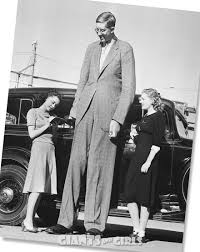


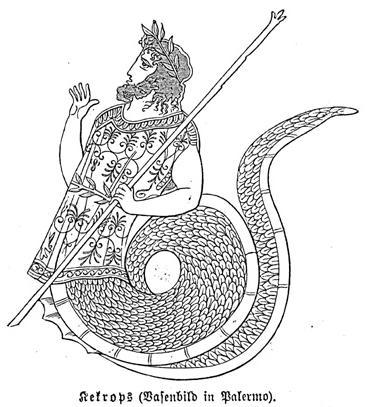


-759725.jpg)