Thursday, August 18, 2011

Moon Younger Than Previously Believed


"The stars did not yet revolve in the heavens; the Danaides had not yet appeared, nor the race of Deucalion; the Arcadians alone existed, those of whom it is said that they lived before the Moon, eating acorns upon the mountains." -- Apollonios Rhodios, librarian, Argonautica, ~246 B.C.

"These were Arcadians of Evander's following, the so‑called Pre-Lunar people." -- Plutarch, historian, Moralia: The Roman Questions #76, 1st century

"In the remotest times, before the Moon accompanied the Earth, according to the mythology of the Muysca or Mozca Indians, the inhabitants of the plain of Bogota lived like barbarians, naked, without any form of laws or religious worship." --Alexander Von Humboldt, naturalist, Researches, 1814

"The passages in Ovid as to the existence of the Arcadians before the Moon are universally known." -- Alexander Von Humboldt, naturalist, 1851

"We shall commence with a few of the principal passages from the ancients, which treat of the Proselenes. Stephanus of Byzantium (v. 'Apkas) mentions the logographs of Hippys of Rhegium, a contemporary of Darius and Xerxes, as the first who called the Arcadians proselenous. The scholiasts, ad Apollon. Rhod. IV 264 and ad Aristoph. Nub. 397, agree in saying, the remote antiquity of the Arcadians becomes most clear from the fact of their being called proselenoi. They appear to have been there before the Moon, as Eudoxus and Theodorus also say; the latter adds that it was shortly before the labours of Hercules that the Moon appeared. In the government of the Tegeates, Aristotle states that the barbarians who inhabited Arcadia were driven out by the later Arcadians before the Moon appeared, and therefore they were called proselenoi." -- Alexander Von Humboldt, naturalist, 1851

"...the pre-Hellenic Pelasgian inhabitants of Arcadia called themselves Proselenes, because they boasted that they came into the country before the Moon accompanied the Earth. Pre-Hellenic and pre-lunarian were synonymous." -- Alexander Von Humboldt, naturalist, 1851

"Capture of our Moon becomes the only option, it cannot have been created from the Earth." -- Wallace Thornhill, physicist, October 2000

"Currently, the moon is moving away from the Earth at such a great rate, that if you extrapolate back in time — the moon would have been so close to the Earth 1.4 billion years ago that it would have been torn apart by tidal forces (Slichter, 1963)." — Dennis J. McCarthy, biogeographer/geologist, 2003

Science Daily: Moon Younger Than Previously Thought, Analysis of Lunar Rock Reveals.

The research team, which includes scientists from the Natural History Museum of Denmark, Lawrence Livermore National Laboratory, Carnegie Institute's Department of Terrestrial Magnetism and Université Blaise Pascal, used newly-refined techniques to determine the age of the sample of a FAN that was returned by the Apollo 16 mission and has been stored at the lunar rock collection at the NASA Johnson Space Center.

The team analysed the isotopes of the elements lead and neodymium to place the age of a sample of a FAN at 4.36 billion years. This figure is significantly younger than earlier estimates of the Moon's age that range to nearly as old as the age of the solar system itself at 4.567 billion years. The new, younger age obtained for the oldest lunar crust is similar to ages obtained for the oldest terrestrial minerals -- zircons from Western Australia -- suggesting that the oldest crust on both Earth and the Moon formed at approximately the same time.

This study is the first in which a single sample of FAN yielded consistent ages from multiple isotope dating techniques. This result strongly suggests that these ages pinpoint the time at which this sample crystallised. The extraordinarily young age of this lunar sample either means that the Moon solidified significantly later than previous estimates -- and therefore the moon itself is much younger than previously believed -- or that this sample does not represent a crystallisation product of the original magma ocean. Either scenario requires major revision to previous models for the formation of the Moon.

Wednesday, August 17, 2011

St. Augustine On Myth, Astrolatry, and Platonism


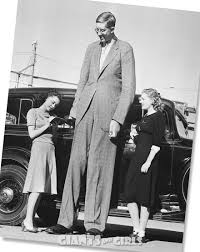
"But whether Venus could bear Aeneas to a human father Anchises, or Mars beget Romulus of the daughter of Numitor, we leave as unsettled questions. For our own Scriptures suggest the very similar question, whether the fallen angels had sexual intercourse with the daughters of men, by which the earth was at that time filled with giants, that is with enormously large and strong men." -– Augustine, City of God, III, 5

"... though the verses of the poets are mythical, they are not altogether devoid of truth...." –- Augustine, City of God, III, 11

"But possibly these stars which have been called by their names are these gods. They call a certain star Mercury, and likewise a certain other star Mars. But among those stars which are called by the name of gods, is that one which they call Jupiter, and yet with them Jupiter is the world. There also is that one they call Saturn, and yet they give him no small property beside, namely all seeds." -- Augustine, City of God, VII, 15

"The Italic school had its founder Pythagoras of Samos, to whom also the term 'philosophy' is said to owe its origin. For whereas formerly those who seemed to excel others by the laudable manner in which they regulated their lives were called sages, Pythagoras, on being asked what he professed, replied that he was a philosopher, that is, a student or lover of wisdom; for it seemed to him to be the height of arrogance to profess oneself a sage." -- Augustine, City of God, VIII, 2

"If, then, Plato defined the wise man as one who imitates, knows, and loves this God, and who is rendered blessed through fellowship with Him in His own blessedness, why discuss with the other philosophers? It is evident that none come nearer to us than the Platonists." -- Augustine, City of God, VIII, 5

"Whatever philosophers, therefore, thought concerning the supreme God, that He is both the maker of all created things, the light by which things are known, and the good in reference to which things are to be done; that we have in Him the first principle of nature, the truth of doctrine, and the happiness of life -- whether these philosophers may be more suitably called Platonists, or whether they may give some other name to their sect; whether we say that only the chief men of the Ionic school, such as Plato himself and they who have well understood him, have thought thus; or whether we also include the Italic school, on account of Pythagoras and the Pythagoreans and all who may have held like opinions; and, lastly, whether also we include all who have been held wise men and philosophers among all nations who are discovered to have seen and taught his, be they Atlantics, Libyans, Egyptians, Indians, Persians, Chaldeans, Scythians, Gauls, Spaniards, or of other nations -- we prefer these to all other philosophers, and confess that they approach nearest to us." -- Augustine, City of God, VIII, 10

"... he [Porphyry] is at a loss to understand how the sun and moon, and other visible celestial bodies – for bodies he does not doubt that they are – are considered gods." -- Augustine, City of God, X

Tuesday, August 16, 2011

Humans Travelled the High Seas 130,000 Years Ago


Archaeology News Network: Homo Erectus travelled the high seas.
Early manlike creatures may have been smarter than we think. Recent archaeological finds from the Mediterranean show that human ancestors traveled the high seas.

A team of researchers that included an N.C. State University geologist found evidence that our ancestors were crossing open water at least 130,000 years ago. That's more than 100,000 years earlier than scientists had previously thought.

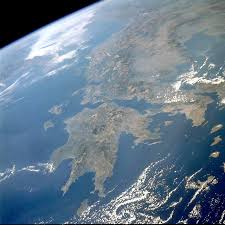
Their evidence is based on stone tools from the island of Crete. Because Crete has been an island for eons, any prehistoric people who left tools behind would have had to cross open water to get there.

The tools the team found are so old that they predate the human species, said Thomas Strasser, an archaeologist from Providence College who led the team. Instead of being made by our species, Homo sapiens, the tools were made by our ancestors, Homo erectus.

The tools are very different from any others found on Crete, Strasser said. They're most similar to early Stone Age tools from Africa that are about 700,000 years old, he said.

Initially the team didn't have any way to date the tools.

That's where NCSU geologist Karl Wegmann came in.

At the time, Wegmann didn't know much about archaeology, but he did know quite a bit about Crete's geology. He had been figuring out the ages of Crete's rock formations to study earthquakes.

A few of the stone tools the team had discovered were embedded in those same rock formations. Those rocks were formed from ancient beach sands, Wegmann said.

Today, the rocks and the tools embedded in them are hundreds of feet above the shore.

The same process that drives the region's strong earthquakes - colliding continents - is pushing Crete upward out of the sea at a rate of less than 1/20 of an inch every year.

The island's slow rise has preserved beaches from many eras as terraces along the coast.

The lower terraces are the easiest to date. Scientists can measure the age of seashells embedded in the rock using radioactive carbon dating.

This method estimates the age of those terraces at about 45,000 and 50,000 years old.

"We know that (the tools) are tens of meters above the terrace we dated at 50,000 years old, so we know right off the bat that they have to be at least that old," Wegmann said.

But 50,000 years ago is carbon dating's limit. Anything older has to be dated using another method.

Dating by terraces

Crete's rise from the sea gives a fairly simple way of doing that. Once they know the age of lower terraces, geologists can calculate the age of higher terraces just by measuring the difference in the beaches' elevation.

If geologists know how much farther the older terrace traveled upward from the newer, and they know how fast it was going, they can figure out how long it took to get there.

Or, in other words, its age, in this case a record-smashing 130,000 years old.

"The thing to me that really makes this unique and exciting is ... these other sister species maybe weren't entirely stupid like we portray them," Wegmann said. "They were capable of really complex things."

Sunday, August 14, 2011

Retarded Science


"It is remarked that no physician in Europe who had reached forty years of age ever, to the the end of his life, adopted Harvey's doctrine of the circulation of the blood; and that his practice in London diminished extremely from the reproach drawn upon him by that great and signal discovery. So slow is the progress of truth in every science, even when not opposed by factions or superstitious prejudices." -- David Hume, philosopher, History of England, 18th century

Saturday, July 30, 2011

Beetle Vicariance Also Proves Plate Tectonics A Lie


Associated Press: Rare destructive beetle intercepted at LA port.

U.S. Customs and Border Protection said in a statement Friday that agriculture specialists at the Los Angeles-Long Beach port complex intercepted the live adult beetle in a shipment of pineapple from Costa Rica, and immediately began working to return it.

The insect — strongylaspis corticarius Ancita — is a cousin of the Asian long-horned beetle.

Friday, July 29, 2011

On the Brink of Fairy-Story and History


"... an equally basic passion of mine ab initio was for myth (not allegory!) and for fairy-story, and above all for heroic legend on the brink of fairy-story and history, of which there is far too little in the world (accessible to me) for my appetite. I was an undergraduate before thought and experience revealed to me that these were not divergent interests -- opposite poles of science and romance -- but integrally related." --- John R. R. Tolkien, professor of English (Oxford University), 1951

Tuesday, July 26, 2011

Special Relativity Confirmed?


Hong Kong scientists 'show time travel is impossible'.

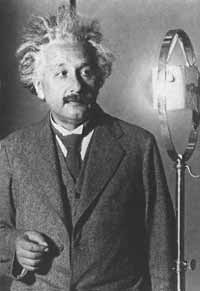
Hong Kong physicists say they have proved that a single photon obeys Einstein's theory that nothing can travel faster than the speed of light -- demonstrating that outside science fiction, time travel is impossible.

The Hong Kong University of Science and Technology research team led by Du Shengwang said they had proved that a single photon, or unit of light, "obeys the traffic law of the universe".

"Einstein claimed that the speed of light was the traffic law of the universe or in simple language, nothing can travel faster than light," the university said on its website.

"Professor Du's study demonstrates that a single photon, the fundamental quanta of light, also obeys the traffic law of the universe just like classical EM (electromagnetic) waves."

The possibility of time travel was raised 10 years ago when scientists discovered superluminal -- or faster-than-light -- propagation of optical pulses in some specific medium, the team said.

It was later found to be a visual effect, but researchers thought it might still be possible for a single photon to exceed light speed.

Du, however, believed Einstein was right and determined to end the debate by measuring the ultimate speed of a single photon, which had not been done before.

"The study, which showed that single photons also obey the speed limit c, confirms Einstein's causality; that is, an effect cannot occur before its cause," the university said.

"By showing that single photons cannot travel faster than the speed of light, our results bring a closure to the debate on the true speed of information carried by a single photon," said Du, assistant professor of physics.

"Our findings will also likely have potential applications by giving scientists a better picture on the transmission of quantum information."

The team's study was published in the US peer-reviewed scientific journal Physical Review Letters.