Jantar Mantar, Jaipur Observatory, India.
Prisca Sapientia, Science in Cryptomnesia, Dissident and Heretical Natural Philosophy, Abiotic Hydrocarbon Origin, Infinite Oil, The Cold Mantle, Expansion Tectonics, Pacific Biogeography, Euclidean Geometry, Electric Universe, Electromagnetic Gravity, Colliding Worlds, The Birth of Venus, The Reversal of Retrograde Rotation, Catastrophism, Global Pyramids, Atlantis In Antarctica, Extreme Human Antiquity, Ancient Technology, Giants and Dragons, Alien Astronauts, & Intelligent Design
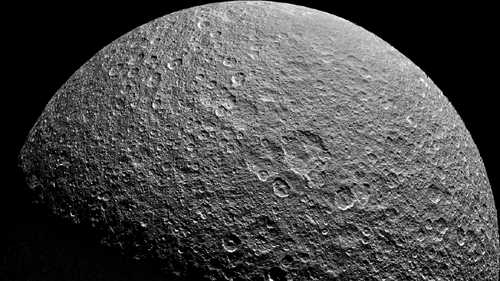
An oxygen atmosphere has been found on Saturn's second largest moon, Rhea, astronomers announced Thursday

The Sioux have been given star billing in “The Great Sioux War of 1876” on the basis of greater visibility and higher total numbers than other tribes. There has in fact been a kind of tunnel vision if not megalomania concerning Sioux prominence -- due in part to their great number of subdivisions and bands, all identified often simply as “Sioux.”
The opinion of other tribes that it was a Cheyenne war in 1876 rather than "The Great Sioux War" is made more plausible by the "Body Count" of seven Cheyenne camps destroyed by the army before 1876 -- more than those of all other tribes put together. Three more were destroyed that year, making a total of ten. According to historian Jerry Greene, the total number of camps of other peoples so destroyed was six (four before 1876) divided among the Shoshone, Arapaho, Piegan, and Lakota as listed below (Greene, personal communication, 1999.) ...
Even with the seven instances of Cheyenne camp destruction by US troops before 1876 (or six, if the first Platte Bridge fight is not counted) compared to four such instances of all other tribes combined before 1876, it is easy to see how the opinion may have prevailed among the tribes in general that the Cheyennes had been singled out for special and unusual punishment. ...
My premises are that:
1) The Cheyennes preceded the Sioux into the Black Hills, and thence into the Powder River Country south of the Yellowstone including Powder River, Tongue River, and the Littlehorn-Bighorn drainages. And they were arguably the prime force in all wars of the northern plains after 1860. (Contemporary Cheyenne remarks to this effect include that of late tribal historian Bill Tallbull, who said “The Sioux were just at the Fetterman fight to hold the Cheyenne horses,” and another, “The Crows did the scouting, the Cheyennes did the fighting, and the Sioux got the credit” (Mary Ellen McWilliams and moccasin telegraph to author, 1999.)
2) The Cheyennes preceded the Sioux in getting horses, later passing them on to the Oglalas with whom they were closely allied and intermarried (Grinnell 1956: 36-37 ; Stands in Timber and Liberty 1998: 116-118; Porter 1986:61; Moore 1996:94).
3) The Cheyennes were first to conduct tribal-level warfare, rather than that of individual bands or war parties -- “horse and scalp raids” in Utley’s terms. This happened against the Bannocks-Shoshonis in 1817, the Crows in 1820, and in four subsequent fights including two against the Pawnees as late as 1853 (Grinnell 1956: 25, 72. ) The tribal Sacred Arrows were carried by the tribe as a whole against these enemies in six recorded moves of the Arrows in 36 years, 1817- 1853 (Grinnell 1956: 72). Such attacks featuring the Arrows had to be made by the tribe as a whole.
It is not clear that any of the seven Lakota groups (Oglala, Hunkpapa etc.) ever went to war as entire societies in this way.


ScienceDaily (Nov. 12, 2010) — A bulge of elevated topography on the far side of the moon -- known as the lunar far side highlands -- has defied explanation for decades. But a new study led by researchers at the University of California, Santa Cruz, shows that the highlands may be the result of tidal forces acting early in the moon's history when its solid outer crust floated on an ocean of liquid rock.LOL. Nevermind the fact that this is utterly impossible.

South America's tropical forests flourished when temperatures skyrocketed 56 million years ago. Could this mean that climate change will spare the Amazon?Abderite LOL.
Carlos Jaramillo of the Smithsonian Tropical Research Institute in Balboa, Panama, and colleagues excavated pollen and other plant remains from three sites in Colombia and Venezuela.
Their samples span the Palaeocene-Eocene Thermal Maximum (PETM), when soaring levels of greenhouse gases caused global temperatures to rise by 5 °C in about 10,000 years.
The tropical forests then faced average temperatures up to 34 °C, compared with 27 °C today, yet contrary to expectations the pollens suggest plant diversity increased.
Each sample of 150 grains of pollen from the PETM contained an average of 36 species, compared with just 24 species in samples from older, cooler times. And the rate at which new species formed was significantly higher in the PETM than before it.
The trends are puzzling because models predict that the Amazon will burn and be reduced to savannah with future climate change

Life on Earth could have grown from the broken remains of alien viruses that, although dead, still contained enough information to give rise to new life.
Scientists have speculated that life could have come to Earth from space — a notion called panspermia — since the 1870s, when Lord Kelvin suggested microbes could have ridden here on a comet or meteor. Others have suggested tiny organisms could cross the galaxy embedded in dust grains, which could be nudged from one planetary system to another by the slight pressure of stars’ radiation.
However, most astrobiologists think that same radiation spells a death sentence for delicate microbes.
“That essentially kills panspermia in the classical sense,” said astrobiologist Rocco Mancinelli of the SETI Institute in Mountain View, California.
But maybe not, says astronomer Paul Wesson, a visiting researcher at the Herzberg Institute of Astrophysics in Canada. In an upcoming paper in Space Science Reviews, Wesson argues that even if the actual microbes are dead on arrival, the information they carry could allow life to rise from the charred remains, an idea he calls necropanspermia.
“The vast majority of organisms reach a new home in the Milky Way in a technically dead state,” Wesson wrote. “Resurrection may, however, be possible.”








-759725.jpg)