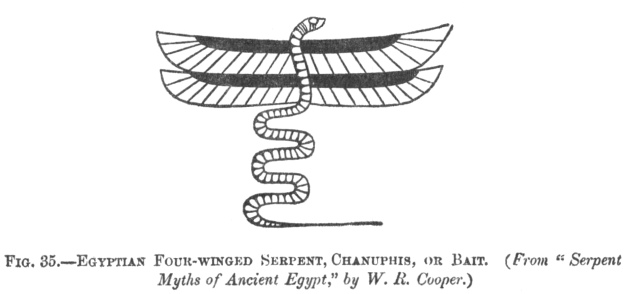
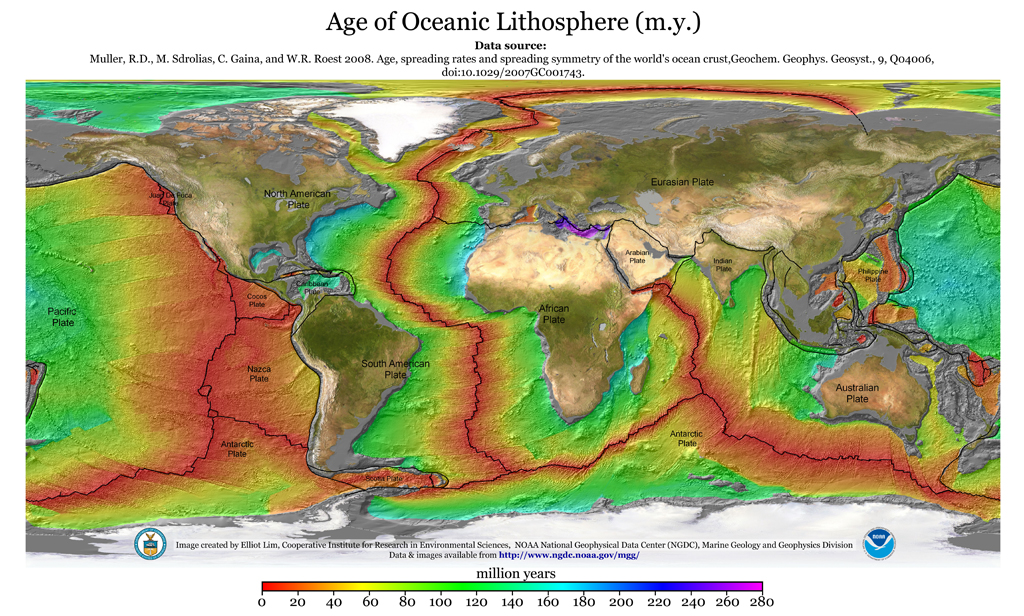
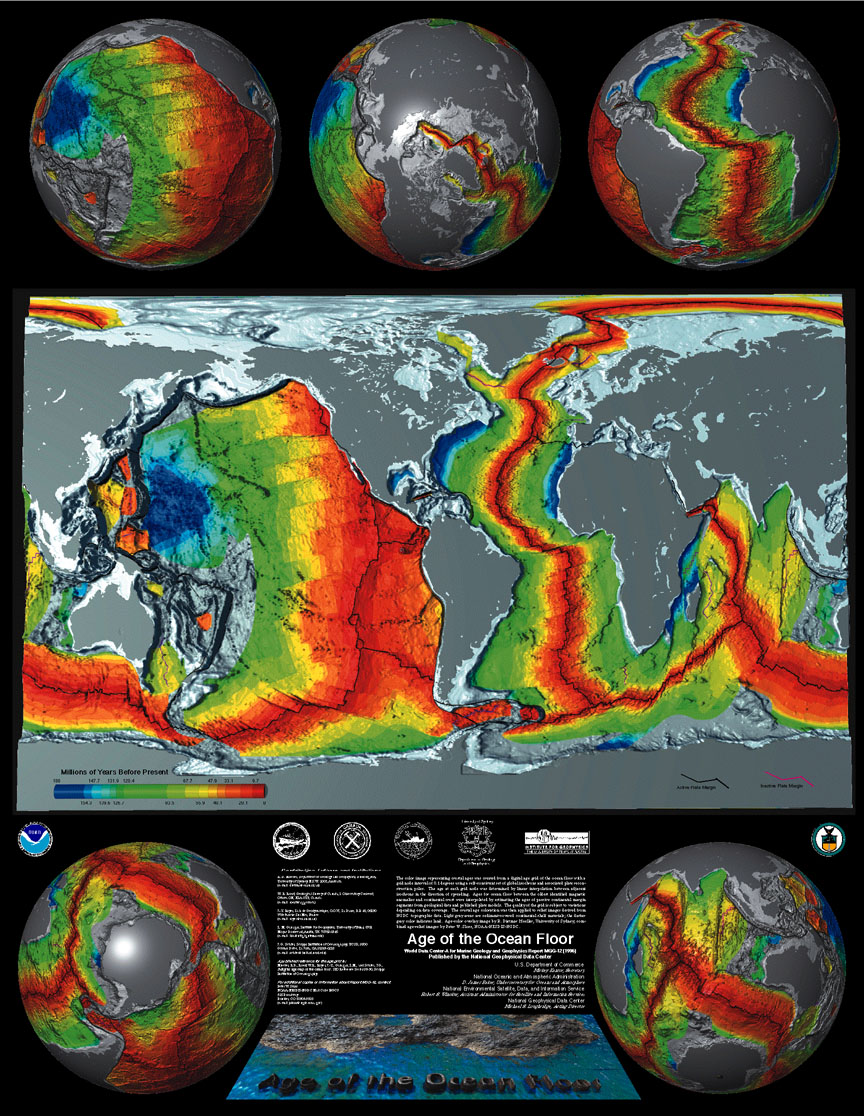
"Ahura Mazda warns Yima, the first king of men, of the approach of a dire winter, which is to destroy every living creature by covering the land with a thick sheet of ice, and advises Yima to build a Vara, or an enclosure, to preserve the seeds of every kind of animal and plant." -- Zend-Avesta, Fargard II
As a naive younger man, whenever I would read Plato I would almost always agree more with those around Socrates including and perhaps even especially the Sophists rather than Socrates himself, whereas on the other hand, the first time I read Aristotle, I considered him to be perhaps the most wise man whose words I'd ever read and for this reason I always considered myself an Aristotelian rather than a Platonist.
The idea of imaginary "Forms" is just not my cup of tea, whereas nature, physics, and metaphysics always appealed to me.
When Socrates said in
Meno (Μένων), "there is no teaching, but only recollection," I didn't take him seriously, I didn't understand him (perhaps because I didn't take him seriously), and I thought he was a bit silly.
The first time I read the
Timaeus (Τίμαιος) I was underwhelmed. I was hoping to find truth in it but didn't. The truth is I was blind to it.
It was
March 23rd, 1994, strangely and exactly 2681 years after the last recorded catastrophe on
March 23rd, 687 BC. Perhaps this is coincidence since there is currently a 1 in 365 chance of it.
But then I discovered the classicist
Velikovsky who I consider to be the greatest genius of the 20th Century and who always reminds us of the wisdom of the ancients.
Velikovsky's claim of "mankind in amnesia" particularly struck a chord with me and the more I considered it the more I saw truth in it, all observation confims it, and the evidence mounts daily.
He pointed me back to Joshua, Homer, Anaxagoras, Democritus, Plato, Euripides, Hippolytus, Kepler, Galileo, Swift, and others who seemed to have bizarre wisdom unexplainable by mainstream logic. The words of Hippolytus and the views of
Democritus perhaps being the the most prescient of all.
And it was along those lines I found this Whitehead quote from 1947, "Everything of importance has been said before, by someone who did not discover it."
But the most famous Whitehead quote is from 1929, "The safest general characterization of the European philosophical tradition is that it consists of a series of footnotes to Plato."
And so it was I came back to Plato and the Timaeus and the wisdom of Solon.
Sometime after 600 BC, Solon travelled to Egypt and received the story of Atlantis which we all assume to be myth and Plato claims that if Solon had devoted his life to poetry he would've been the greatest of all the poets including Homer. However, his poems were lost with Critias which makes us recall the words of Pope, "they had no poet and they died."
Fortunately we have Plato.
Easily my favorite character in all of this is the Egyptian Neith priest identified by Plutarch as
Sonchis of Sais. Why is he such an amazing figure? Because sometime shortly after 600 BC, he claims to have had access to 9000 years of human history.
So I went trying to find out everything I could about this Sonchis of Sais. And it turns out the Greeks after Plato did just the same thing.
According to Proclus, Crantor who was the first commentator on Plato actually travelled to Egypt looking for evidence to determine the question: myth or history?
He found it to be unadorned history.
Fastforward to the 17th century.
Athanasius Kircher (1601-1680) is considered to be the founder of Egyptology as a discipline because most so-called "scholars" are ignorant of world history and human experience. However, perhaps there is a grain of truth in their ignorance insofar as his research is some of the earliest which has survived the passing of time and the catastrophes of the past.
Kircher, like Solon, also went to Egypt, where he transcribed an Egyptian map directly from Egyptian sources which he published in his 1669 treatise Mundus Subterraneous.
But Kircher's map, unlike the documents of Sonchis and poems of Solon, has survived.

Now get ready to be blown away.
Remember our friend Velikovsky and catastrophic pole shift?

Atlantis is Antarctica and the Atlantean civilization there perished suddenly in "a single day and night of misfortune," ~11,609 years ago if Sonchis was correct, with a catastrophic pole shift and Deluge.
Meet
Rand Flem-Ath, the most recent discoverer of Atlantis.







-759725.jpg)