Showing posts with label Dinosaurs. Show all posts

Friday, January 28, 2011

Dinosaurs Survived 700,000 Years After Mass Extinction


Science Daily: Dinosaurs Survived Mass Extinction by 700,000 Years, Fossil Find Suggests.

ScienceDaily (Jan. 28, 2011) — University of Alberta researchers determined that a fossilized dinosaur bone found in New Mexico confounds the long established paradigm that the age of dinosaurs ended between 65.5 and 66 million years ago.

The U of A team, led by Larry Heaman from the Department of Earth and Atmospheric Sciences, determined the femur bone of a hadrosaur as being only 64.8 million years old. That means this particular plant eater was alive about 700,000 years after the mass extinction event many paleontologists believe wiped all non-avian dinosaurs off the face of earth, forever.

Heaman and colleagues used a new direct-dating method called U-Pb (uranium-lead) dating. A laser beam unseats minute particles of the fossil, which then undergo isotopic analysis. This new technique not only allows the age of fossil bone to be determined but potentially can distinguish the type of food a dinosaur eats. Living bone contains very low levels of uranium but during fossilization (typically less than 1000 years after death) bone is enriched in elements like uranium. The uranium atoms in bone decay spontaneously to lead over time and once fossilization is complete the uranium-lead clock starts ticking. The isotopic composition of lead determined in the hadrosaur's femur bone is therefore a measure of its absolute age.

Sunday, May 30, 2010

7 Years Of Invisible Magic Dinosaurs


New York Daily News: BP officials on Gulf oil spill: We can't stop leak until August at the earliest

If left alone, the underwater geyser would not run dry for seven years, experts say.

Sunday, November 1, 2009

Dinosaur Growth May Wipe Out 1/3 of Species


Science Daily: New Analyses Of Dinosaur Growth May Wipe Out One-third Of Species.

ScienceDaily (Oct. 31, 2009) — Paleontologists from the University of California, Berkeley, and the Museum of the Rockies have wiped out two species of dome-headed dinosaur, one of them named three years ago -- with great fanfare -- after Hogwarts, the school attended by Harry Potter.

Their demise comes after a three-horned dinosaur, Torosaurus, was assigned to the dustbin of history last month at the Society of Vertebrate Paleontology meeting in the United Kingdom, the loss in recent years of quite a few duck-billed hadrosaurs and the probable disappearance of Nanotyrannus, a supposedly miniature Tyrannosaurus rex.

These dinosaurs were not separate species, as some paleontologists claim, but different growth stages of previously named dinosaurs, according to a new study. The confusion is traced to their bizarre head ornaments, ranging from shields and domes to horns and spikes, which changed dramatically with age and sexual maturity, making the heads of youngsters look very different from those of adults.

"Juveniles and adults of these dinosaurs look very, very different from adults, and literally may resemble a different species," said dinosaur expert Mark B. Goodwin, assistant director of UC Berkeley's Museum of Paleontology. "But some scientists are confusing morphological differences at different growth stages with characteristics that are taxonomically important. The result is an inflated number of dinosaurs in the late Cretaceous."

Thursday, September 17, 2009

Tiny Raptorex Lived Long Before T-Rex


"Have the subsequently introduced species consumed the food of the great antecedent races? Can we believe that the Capybara has taken the food of the Toxodon, the Guanaco of the Macrauchenia, the existing small Edentata of their numerous gigantic prototypes? Certainly, no fact in the long history of the world is so startling as the wide and repeated exterminations of its inhabitants." -- Charles R. Darwin, naturalist, 1834

Another problem for Darwinists: Tiny Tyrannosaur: T. Rex Body Plan Debuted In Raptorex, But 100th The Size.

ScienceDaily (Sep. 17, 2009) — A 9-foot dinosaur from northeastern China had evolved [sic] all the hallmark anatomical features of Tyrannosaurus rex at least 125 million years ago.

University of Chicago paleontologist Paul Sereno and five co-authors describe the newly discovered dinosaur in the Sept. 17 Science Express, advanced online edition of the journal Science.

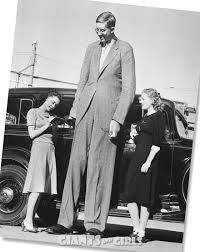
Raptorex shows that tyrannosaur design evolved [sic] at "punk size," said Sereno, a National Geographic Explorer-in-Residence, "basically our bodyweight. And that's pretty staggering, because there's no other example that I can think of where an animal has been so finely designed [as in intelligent design not unintelligent design] at about 100th the size that it would eventually become." [Obviously Dr. Sereno is unaware of giant humans]

Friday, August 7, 2009

Dinosaur Infanticide


Science Daily: Chicken-hearted Tyrants: Predatory Dinosaurs As Baby Killers.

Dr. Oliver Rauhut, paleontologist at Ludwig-Maximilians-Universität (LMU) in Munich, and his collegue Dr. David Hone surmise that giant carnivores like Tyrannosaurus preyed mainly on juvenile dinosaurs. "Unlike their adult and well-armed relatives these young animals hardly posed any risk to the predators," says Rauhut. "And their tender bones would have added important minerals to a theropod's diet. Now we hope for more fossils to be found that add new evidence to our hypothesis."

King of tyrants, Tyrannosaurus rex is by far the most famous dinosaur. Not even recent finds of slightly bigger – and maybe even more terrifying – species like Giganotosaurus could dent the aura of "T-Rex". But what would happen if the king turned out a baby killer instead of fearless hunter of much bigger prey? "Animals such as Tyrannosaurus are often seen as the perfect 'killing machines' with extremely powerful bites, which were able to bring down even the largest possible prey," says Rauhut of the Bayerische Staatssammlung für Paläontologie und Geologie and LMU Munich. "But the very few fossils that reflect the hunt of predatory dinosaurs on large herbivores tell a tale of failure – the prey either got away, or both prey and predator were killed."

On the other hand, the also extremely sparse cases of direct evidence for the diet of predatory dinosaurs – stomach contents and coprolites – show that juveniles or much smaller prey species were ingested and the latter were swallowed whole. Rauhut and Hone, who is now at the Institute of Vertebrate Paleontology and Paleoanthropology in Beijing, China, therefore propose as a hypothesis that large predatory dinosaurs only as an exception attacked other large dinosaurs, but mainly fed on juveniles. "Even modern predators prefer old and sick animals or unexperienced young individuals," states Hone. "These are an easy prey to bring down and the risk of injury for the predator is much lower. This strategy was probably the same in dinosaurs."

Saturday, July 11, 2009

Dinosaur Burrow Discovered In Australia


Science Daily: Down Under Dinosaur Burrow Discovery Provides Climate Change Clues.

ScienceDaily (July 11, 2009) — On the heels of his discovery in Montana of the first trace fossil of a dinosaur burrow, Emory University paleontologist Anthony Martin has found evidence of more dinosaur burrows – this time on the other side of the world, in Victoria, Australia. The find, to be published this month in Cretaceous Research, suggests that burrowing behaviors were shared by dinosaurs of different species, in different hemispheres, and spanned millions of years during the Cretaceous Period, when some dinosaurs lived in polar environments.

"This research helps us to better understand long-term geologic change, and how organisms may have adapted as the Earth has undergone periods of global cooling and warming," says Martin, a senior lecturer in environmental studies at Emory. Martin is also an honorary research associate at Monash University in Melbourne.

In 2006, in collaboration with colleagues from Montana State University and Japan, Martin identified the 95-million-year-old skeletal remains of a small adult dinosaur and two juveniles in a fossilized burrow in southwestern Montana. They later named the dinosaur species Oryctodromeus cubicularis, meaning "digging runner of the lair."

The researchers hypothesized that, besides caring for young in their dens, burrowing may have allowed some dinosaurs to survive extreme environments – throwing a wrench in some extinction theories.

A year after the Montana find, Martin traveled to the Victoria coast, which marks the seam where Australia once snuggled against Antarctica. Lower Cretaceous strata of Victoria have yielded the best-documented assemblage of polar dinosaur bones in the world.

During a hike to a remote site known as Knowledge Creek, west of Melbourne, Martin rounded the corner of an outcropping and was astounded to see, right at eye level, the trace fossil of what appeared to be a burrow almost identical to the one he had identified in Montana. "I stared at it for a long time," recalls Martin. "In paleontology, the saying, 'where luck meets preparation' really holds true."

Sunday, June 28, 2009

Dinosaur Petroglyphs


Mysterious Anomalies: Walking With Dinosaurs (and Humans)?

The most substantial piece of evidence that dinosaurs once lived along side humankind are prehistoric petroglyphs and paintings found throughout the world that clearly resemble the appearance of various dinosaurs. For example, one of these petroglyphs in particular can be found at Natural Bridges, National Monument Utah. Its creation is attributed to the Anasazi Indians who lived in the region approximately between the fifth and fourteenth centuries. It is apparent that the Anasazi Indians are representing a dinosaur, specifically a Brontosaurus (now referred to as Apatosaurus). However, we seem to forget that the species Brontosaurus excelsus was not discovered until 1879, hundreds of years after the creation of this petroglyph. Thus, it seems nearly impossible that a group of ancient Indians would accurately depict a dinosaur without ever making any contact. Ultimately, we are left with three options: Either the Anasazi Indians were sophisticated archeologists, capable of mind-traveling into the past, or simply put, they coexisted along side at least one dinosaur species at some point in history. At this point, the later is currently the most rational explanation.


Dinosaur Petroglyph Replica

This is a 1:1 scale reproduction of a petroglyph (rock art) that was originally discovered in 1879 in the Havasupai Canyon in Arizona. In 1924, a scientific expedition was sent to the canyon to document the artifacts and petroglyphs left behind by the Native Americans.

The director of that expedition, Samuel Hubbard, said the following about the above petroglyph, "The fact that some prehistoric man made a pictograph of a dinosaur on the walls of this canyon upsets completely all of our theories regarding the antiquity of man. Facts are stubborn and immutable things. If theories do not square with the facts then the theories must change, the facts remain." (Discoveries Relating to Prehistoric Man by the Doheny Scientific Expedition in the Hava Supai Canyon Northern Arizona, Oakland Museum, Oakland California, October and November 1924, p. 5)

There is a very heavy desert varnish on this petroglyph, which authenticates its antiquity and thus its authenticity. This is not a modern forgery.


Ancient Dinosaur Depictions.

There are stories of a plesiosaur-like creature seen in Queensland, Australia. Both aboriginal peoples around Lake Galilee and tribes farther up to the north tell of a long-necked animal with a large body and flippers. "Elders of the Kuku Yalanji aboriginal tribe of Far North Queensland, Australia, relate stories of Yarru (or Yarrba), a creature which used to inhabit rain forest water holes. The painting [left] depicts a creature with features remarkably similar to a plesiosaur. It even shows an outline of the gastro-intestinal tract, indicating that these animals had been hunted and butchered." (CEN Technical Journal, Vol.12, No. 3, 1998, p. 345.)

Monday, December 8, 2008

Magic Dinosaurs Loved The Freezing Cold


Even though dinosaurs were reptiles and their alleged descendents the birds migrate during the winter, "scientists" are once again ignoring Anaxagoras, Empedokles, Herodotos, Leukippos, Demokritos, Platon, Seneca, Plutarchus, Diogenes Laertius, and Velikovsky and telling us the poles have always been in their same places and the Earth's axis of rotation has never changed in the past 4 billion years: Polar Dinosaurs Endured Cold Dark Winters.

Polar dinosaurs such as the 3.3-ton duckbill Edmontosaurus are thought by some paleontologists to have been champion migrators to avoid the cold, dark season. But a study now claims that most of these beasts preferred to stick closer to home despite potentially deadly winter weather.
The dinosaurs must have had white scales to camouflage themselves in the Antarctic snow. That's why all the invisible snow lizards of today have white scales and live at the poles.

Friday, October 3, 2008

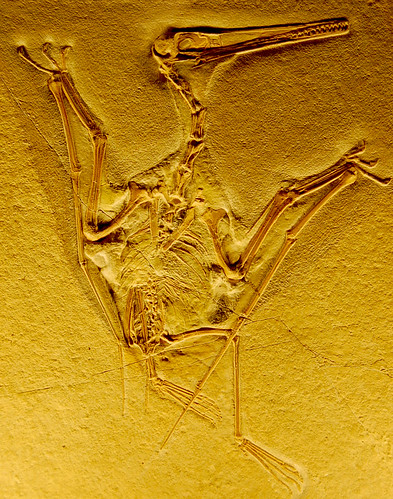
Were Pterosaurs Too Big To Fly?


Not on a smaller Earth: Pterodactyls were too heavy to fly, scientist claims.

The new research claims that the ancient reptiles, which could grow to the size of small aeroplanes, were too heavy to fly - even with their massive wings.

The problem, according to a leading scientist, is that they could not flap fast enough to create the thrust to keep their enormous bulk airborne.

The 'dinosaur' popularly known as a pterodactyl is actually called a reptile called a pterosaur, which is Greek for flying lizard.

It existed alongside the dinosaurs between 251 and 65 million years ago, and were thought to be the biggest creatures to ever take to the air.

The fossilised remains of one example had a wing span of more than 15 metres.

But Katsufumi Sato, a Japanese scientist, who collected data from five large birds including the world's biggest, the wandering albatross, has calculated that it was physically impossible for them to stay aloft.

The University of Tokyo professor claims that the largest animal capable of soaring across the sky unaided could have weighed no more than 40kg (88lbs) or the size of a labrador dog.