Showing posts with label Earthquake. Show all posts

Wednesday, April 22, 2009

Stavros Tassos On L'Aquila Earthquake


Dear Brian

I show your post about the synthetic apperture radar interferogram in L'Aquila earthquake where you state: "I'm pretty sure this data shows the Earth growing. However they only provide two numbers (2.8 centimeters and 25 centimeters) and no vectors. Movement, but to where? It would be interesting if they told us what the interferogram data shows:"

Well, if you look carefully in the Science Daily post, which reads: "Each fringe of the interferogram, corresponding to a colour cycle, is equivalent to an Earth surface displacement of 2.8 cm along the satellite direction (the bold letters is by S.T.)." it is clear that this is vertical movement, i.e., uplift.

Now, since there are ~9 fringes, and each fringe represents 2.8 cm along the satellite direction, the total displacement-uplift at the center of a ~26 km by ~13 km dome is ~25 cm, which corresponds to a volume of ~3.3x10^7 m^3 or ~10^11 kg of Excess Mass. So here is your measured earth growth; and this is not theory. It is hard-core modern technology data.

This earthquake or volcano related doming-uplift, the size of which depends on the earthquake magnitude or volcano size, has been observed before, e.g., Izmit earthquake and Mount St Helens volcano.

As for the prediction of the L'Aquila earthquake be a bit cautious. The problem of earthquake prediction is not solved yet. Especially mainsteamers with their plate tectonics, elastic rebound, and static stress myths have a real problem understanding the physics of the earthquake source. This is why it is almost unanimously recognized that the physics of the earthquake source is not known. It follows that it is impossible to deterministically predict a phenomenon when you do not know the cause and effect relationships that govern the phenomenon itself.

Although there are various precursors, among which the increase in radon content, since an earthquake is a quantized phenomenon you never now if and when the necessary quantum-limit will be reached. It might never be reached or it might be reached within seconds. Then even if we have a swarm of small earthquakes, like in L'Aquila, in the 99% of the cases this is not followed by a much stronger earthquake. The real problem with L'Aquila and other earthquake hit areas is the quality of structures, and earthquake preparedness in general, and of course the reasons if they are not good.

Best regards
Stavros

Wednesday, April 8, 2009

Pseudoscientists Dismiss Accurate Prediction


Reuters: Scientists dismiss prediction of Italy earthquake.

Gioacchino Giuliani is at the center of a debate about the limits of seismology after Italian officials shrugged off his warnings last month that a devastating earthquake in the central Abruzzo region was imminent.

In fact Giuliani, who works at the National Institute of Physics, was even reported to police for spreading panic.

While many Italians are now more than ready to listen to whatever Giuliani has to say, geophysicists in Europe and the United States remain skeptical of his claims to have discovered an effective early-warning system. ...

"We can know when an earthquake is coming," Giuliani said in one of the flurry of interviews he has given to Italian media over the past 24 hours.

"To those who have not believed me, I'll just say that a scientist's dictionary should not contain the word 'impossible'. History has proven that to us."
Shou, Z., Earthquake Clouds: A Reliable Precursor, Science and Utopya, Volume 64, Pages 53-57, Oct 1999

Monday, April 6, 2009

Seismologist Who Predicted Italian Earthquake Was Silenced


Dogma = dead people.

Scientific retardation, censorship, and information suppression at it's finest: Italy muzzled scientist who foresaw quake.

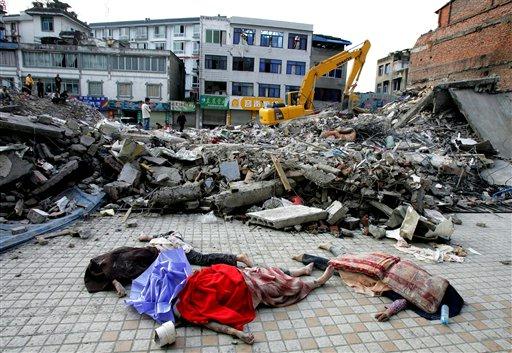
ROME, April 6 (Reuters) - An Italian scientist predicted a major earthquake around L'Aquila weeks before disaster struck the city on Monday, killing dozens of people, but was reported to authorities for spreading panic among the population.

The first tremors in the region were felt in mid-January and continued at regular intervals, creating mounting alarm in the medieval city, about 100 km (60 miles) east of Rome.

Vans with loudspeakers had driven around the town a month ago telling locals to evacuate their houses after seismologist Gioacchino Giuliani predicted a large quake was on the way, prompting the mayor's anger.

Giuliani, who based his forecast on concentrations of radon gas around seismically active areas, was reported to police for "spreading alarm" and was forced to remove his findings from the Internet.

Italy's Civil Protection agency held a meeting of the Major Risks Committee, grouping scientists charged with assessing such risks, in L'Aquila on March 31 to reassure the townspeople.

"The tremors being felt by the population are part of a typical sequence ... (which is) absolutely normal in a seismic area like the one around L'Aquila," the civil protection agency said in a statement on the eve of that meeting.

"It is useful to underline that it is not in any way possible to predict an earthquake," it said, adding that the agency saw no reason for alarm but was nonetheless effecting "continuous monitoring and attention".
Italian earthquake: anger mounts over ignored warnings.

Giampaolo Giuliani told locals to evacuate their houses and posted a video on YouTube in which he said a build-up of radon gas around the seismically active area of Abruzzo suggested a major earthquake was imminent.

Several tremors had been felt in the medieval city of L'Aquila, around 60 miles east of Rome, from mid-January onwards, and vans with loudspeakers had reportedly driven around the city spreading the warning.

But instead of heeding Mr Giuliani's advice, the local authorities reported him to police for "spreading alarm" and he was told to remove his findings from the internet.

Even after he was proved right, civic leaders effectively dismissed him as a maverick whose accurate prediction was little more than a fluke.

As the row escalated yesterday, the Italian president, Silvio Berlusconi, was among those having to fend off angry questions about whether the area should have been evacuated in the light of the warnings.

Maria Francesco, a survivor of the earthquake who lives in L'Aquila, said: "It's a scandal what's happened. For the past three months there have been regular tremors, and they've been getting stronger and stronger. The authorities were well aware."

Friday, October 24, 2008

5 Most Dangerous Earthquake Hotspots Beyond California


Via Wired: 5 Most Dangerous U.S. Earthquake Hot Spots Beyond California and one anomaly.

NEW MADRID:

Most of the major earthquakes in the world occur at tectonic plate boundaries where land masses are colliding or pushing past one another. But in the middle of the country lurks a geological enigma near New Madrid, Missouri, that has produced some of the largest quakes on record for the United States but has yet to be fully explained by scientists.

"It's a big mystery," said geologist Eugene Schweig of the U.S. Geological Survey, who has studied the area for 23 years. "New Madrid is about as far from a plate boundary as you can get."

In 1811 and 1812, a swarm of at least three massive earthquakes struck near New Madrid, the largest of which exceeded a magnitude 8 and caused violent, damaging shaking in an area 10 times larger than did the 1906 earthquake. The quake was felt over an area of two million square miles — nearly two-thirds of the country.

During the quakes, the ground rose and fell, trees were bent, deep cracks opened up in the ground, large landslides swept down hills, huge waves washed boats out of the Mississippi River and river banks, islands and sand bars gave way.

Damage was widespread, but only a few people died thanks to the sparse population in what was then the Louisiana Territory but today is near the junction of Missouri, Illinois, Kentucky, Tennessee and Arkansas. Were another magnitude 8 earthquake to strike the region today, the toll would be much, much higher.

By analyzing deposits of sand that squirted out of the ground during past major quakes, Schweig and others estimate an average time between earthquakes of 500 years. But earthquakes are impossible to predict, and because scientists aren't even sure why major quakes occur away from plate boundaries, it is even more difficult to estimate a probability for New Madrid.

Thursday, October 23, 2008

ESF Research Conference On Earthquakes


Today is the last day of the European Science Foundation Research Conference on Earthquakes: NEW CHALLENGES IN EARTHQUAKE DYNAMICS: OBSERVING AND MODELLING A MULTI-SCALE SYSTEM. I look forward to hearing how things went from our friend Mr. Front Row, Stavros Tassos.

Earthquakes are complex phenomena that result from many intervening processes acting at various spatial and time scales. Recent advances in the observation and modelling of earthquakes have shown that faults interact through elastic stress transfer, but also via the activation of thermal, chemical, hydrological and visco-elastic processes, all occurring in a structurally complex medium. Our perception of the diversity of mechanisms by which faults accommodate stress is changing rapidly with our growing ability to instrument the crust. There is an increasing evidence that these interactions are not restricted to the large scales, typical of strong, destructive earthquakes: (i) recent observations have pointed out that small earthquakes can have as strong an influence on stress redistribution as large earthquakes do. Because of their sizes, these small-scale events are difficult to model. However, their influence can be incorporated as a stochastic term, or the errors involved in ignoring them must be estimated. (ii) Frictional models predict that even large earthquake nucleation could take place in very small zones (e.g., ~ 10 m). This implies that earthquakes are sensitive to mechanical conditions and processes acting at these very small scales, which can be significantly different from those characteristic of the regional tectonics. (iii) During rupture propagation, small-scale variations in pre-stress and / or fault geometry, related to the complexity of fault roughness and fault-zone structure, can control both the rupture speed and its total extent. The aim of this conference is to discuss the recent advances in earthquake physics, in particular relating to earthquake interactions (observations, models). An emphasis will be given on the role of small scale processes and structures in controlling large scale earthquakes and regional seismicity. It will promote new, exploratory discussions on how to reconcile large scale regional models with small-scale controls on stress and seismicity.

Wednesday, August 27, 2008

Magnitude 6.3 Earthquake At Lake Baikal


Is the world trying to tell us something? Is science itself trying to tell us something? Is God (gasp!) trying to tell us something? I'm referring to 2 temporally related events, the discovery of a third oil fissure in Lake Baikal's bedrock and the 6.3 Magnitude earthquake at Lake Baikal on the morning of Wednesday August 27th (Hat tip: Quantum Flux). Even if these 2 events seem to be causally unrelated and are merely Jungian "synchronicity", they still point us to the same conclusion, namely the conclusion reached by Thomas Gold in Chapter 8 ("Rethinking Earthquakes") of The Deep Hot Biosphere: "Earthquakes can best be understood as outgassing phenomena, within the framework of the deep-earth gas theory."