Showing posts with label Iliad. Show all posts

Sunday, April 10, 2011

The History of Classical Fairyland


"One of the great discoveries of the last eighty years has been the discovery of the civilization of prehistoric Greece, the Aegean Civilization as it is sometimes called. Before 1870 the history of Greece began with the First Olympiad in 776 B.C. Everything before that date was legendary and mythical. The age of Homer and Homer's heroes and their cities was also regarded as belonging to a kind of classical fairyland." -- Alan Wace, professor of classics and archaeology (Farouk I University of Alexandria), The Bull of Minos, 1953

"Like many pioneers Schliemann had to struggle against much misrepresentation to obtain recognition for his great discoveries. For a time he was almost a lone prophet crying in the wilderness. Now the truth of his discoveries and their overwhelming importance are universally recognized and the feeble voices of dissent can be rightly discarded." -- Alan Wace, professor of classics and archaeology (Farouk I University of Alexandria), The Bull of Minos, 1953

Monday, April 4, 2011

More Evidence of King Nestor


Braconnier, D., Oldest Evidence of Writing Found in Europe.
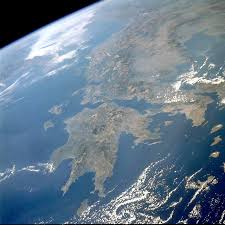
Located in the southwestern corner of Greece, the town where this discovery took place is Iklaina. This town dates back to the Mycenaean period of 1500 BC to 100 BC, and around 1400 BC was conquered by King Nestor.

Cosmopoulos has been actively excavating this site for 11 years and has found evidence of a Mycenaean palace, including colorful murals, Cyclopean walls, and an elaborate drainage system made from clay pipes. However, this tablet has been his most unexpected find.

Tablets of this nature were made from clay which was allowed to dry in the sun, making them very brittle and easily destroyed. The tablet they discovered however, had been thrown in a garbage pit and burned, thus firing the clay and leaving it preserved.

The estimated 3,500 year-old tablet only measures around one inch by one and a half inches, but shows various symbols of Linear B, an ancient Greek writing consisting of 87 signs, each signifying one syllable. It appears that the Mycenaean’s used this tablet to record economic matters of interest to those in the ruling party.

From what the researchers can distinguish, the front of the tablet shows markings appearing to for a verb relating to manufacturing. The back of this small tablet shows a list with numbers and names.

While this is not the oldest writing ever found, it is the earliest example of writing found in Europe.
The oldest evidence of writing dates back to 58,000 B.C.

Thursday, May 28, 2009

Ajax


"These were the strongest generation of earth-born mortals,
the strongest, and they fought against the strongest, the beast men
living within the mountains, and terribly they destroyed them.
I was in the company of these men....'"
-- Homeros, poet, Iliad, Book I: 247-269, 8th century B.C.

"Such was Aias as he strode gigantic, the wall of the Achaians,
smiling under his threatening brows, with his feet beneath him
taking huge strides forward, and shaking the spear far-shadowing.
And the Argives looking upon him were made glad, while the Trojans
were taken every man in the knees with trembling and terror,
and for Hektor himself the heart beat hard in his breast, but he could not
any more find means to take flight and shrink back into
the throng of his men, since he in his pride had called him to battle.
Now Aias came near him, carrying like a wall his shield
of bronze and sevenfold ox-hide which Tychios wrought him with much toil;
Tychios, at home in Hyle, far the best of all workers in leather
who had made him the great gleaming shield of sevenfold ox-hide
from strong bulls, and hammered an eighth fold of bronze upon it.
Telamonian Aias, carrying this to cover
his chest, came near to Hektor and spoke to him in words of menace:
'Hektor, single man against single man you will learn now
for sure what the bravest men are like among the Danaans."
-- Homeros, poet, Iliad, Book VII: 212-227, 8th century B.C.

Carr, J., Palace of Homer's Hero Rises Out of the Myths, The Times, Mar 2006

'Palace of Ajax' Found In Greece, BBC, Mar 2006

Paphitis, N., Archaeologist Links Palace to Legendary Ajax, MSNBC, Mar 2006

Archaeologist: I've Found Greek Hero Ajax's Palace, Fox News, Mar 2006

Monday, February 9, 2009

Celestial Events In The Time of the Iliad


"There did really happen, and will again happen, like many other events of which ancient tradition has preserved the record, the portent which is traditionally said to have occurred in the quarrel of Atreus and Thyestes. ... how the sun and the stars once rose in the west, and set in the east, and that the god reversed their motion, and gave them that which they now have as a testimony to the right of Atreus. " -- Plato, The Statesman

"Then, it was then that Zeus changed the radiant paths of the stars, and the light of the sun, and the bright face of dawn; and the sun drove across the western back of the sky with hot flame from heaven's fires, while the rain-clouds went northward and Ammon's lands [Egypt] grew parched and faint, not knowing moisture, robbed of heaven's fairest showers of rain." --Euripides, Electra, 408 B.C.

Once again Velikovsky demonstrates himself to be an absolute monster intellect and polymath with his essay Celestial Events in the Iliad.

The true time of the events recounted in the Iliad was the second half of the eighth and the beginning of the seventh centuries before the present era.

In Worlds in Collision an effort was made to recognize in the description of theomachy and of the natural phenomena that accompanied the battle of the gods, the events that took place in the sky and on earth between -747 and -687.1

The Trojan War was waged to the accompaniment of blows exchanged by the planetary gods—Earth (Hera), Moon (Aphrodite), Venus (Athene), Mars (Ares) and Jupiter (Zeus).

These celestial phenomena could not have taken place in the sky over Troy alone: the entire world had to witness the events, if they were not mere creations of the bard. That they were not can be deduced from the fact that these very events, witnessed in all parts of the world, are also described in sacred epics from Finland (Kalevala), Lapland and Iceland (Edda), from Mexico, Peru, India, the South Sea Islands, China and Japan, and, of course, by the poets and dramatists, annalists and astronomers, of the Near and Far East. It would require repeating close to two hundred pages of Worlds in Collision, actually the entire part II (Mars) of that book, should we desire here to evidence and illuminate this in some detail.

Perturbations in the celestial sphere, or Theomachy, in which Mars endangered the Earth at nearly regular intervals during this century, preoccupied the minds of men and repeatedly intervened in human history. Pestilence also broke out, and many references in the cuneiform literature ascribe its cause to Nergal (Mars). Earthquakes, overflooding, change of climate, evidenced by Klimasturz, did not spare a single land. These changes moved entire nations to migrations. Calendars were repeatedly thrown out of order and reformed—and the reader will find abundant material in the second part of Worlds in Collision and also in Earth in Upheaval, where no human testimony, but only the testimony of nature was presented; and this material could be multiplied by any dedicated researcher.

It appears, however, that in the Iliad Homer telescoped into a few weeks events that took place in the space of several decades. At least some of the events may be placed in a chronological order with the help of ancient Israelite sources: namely, on the day when King Ahaz was interred the motion of the Earth was disturbed so that the Sun set before its appointed time;2

At the time of the destruction of Sennacherib’s army in the days of Hezekiah, son of Ahaz, another disturbance occurred with the contrary effect: the Sun appeared to return several degrees to the east before proceeding on its regular westward path. It is asserted in the rabbinical literature that the second disturbance rectified the effects of the first—and this is also the meaning of the sentence in Isaiah 38:8: “So the sun returned ten degrees by which degrees it was gone down.”3

In Greek legendary tradition the first event took place in the days of the two brothers, Atreus and Thyestes, contesting the throne of Mycenae—when, according to Seneca, the Sun set earlier than usual.4

Yet a certain compression or amalgamating of two events, separated in time, must have taken place, for another version of the story tells of a reversal of the sun’s motion. This version is recorded by Apollodorus and several other authors.5

The event described as the reversal of motion of the sun took place, as illuminated Worlds in Collision, on March 23rd, -687.6

The fixing of the event to the early spring of -687 is made on the strength of the information from Hebrew sources that the event took place on the night of Passover, during the second campaign of Sennacherib against Judah, the ninth campaign of his reign. The exact date for the last of this series of catastrophes7 is provided by the records of the astronomical observations of the Chinese, where we learn that in the year -687, on the 23rd of March, “during the night the fixed stars did not appear, though the sky was clear. In the middle of the night stars fell like rain.”8

This date is also confirmed by Roman sources—Romulus found his end during a celestial-terrestrial catastrophe connected with the planet Mars:

Both the poles shook, and Atlas lifted the burden of the sky . . . The sun vanished and rising clouds obscured the heaven . . . the sky was riven by shooting flames. The people fled and the king [Romulus] upon his father’s [Mars’] steeds soared to the stars.9
Romulus was a contemporary of Hezekiah;10 and the 23rd of March was the most important day in the Roman cult of Mars.11

We must not forget that the Romans and the Greeks worshipped their gods in the planets, not as gods of the planets. Invocations to the gods, such as the Homeric Hymn to Ares (Mars) are addressed directly to the planet as an astral power.12

The siege of Troy under Agamemnon followed by less than one generation the natural disturbances of the days of his father Atreus, when this king of Mycenae competed with his brother Thyestes for the crown of the realm and the Sun was disrupted in its motion.