Showing posts with label Homer. Show all posts

Thursday, September 29, 2011

George Sarton: What Did Homer Teach?


"What did Homer teach? In the first place, he taught the Greek language. His immortal works helped to standardize that language, or rather to lift it up to that level of excellence and dignity which can be reached only by means of literary masterpieces. His writings became for the Greek people a kind of Bible, to which they were always ready to listen and which gave them and their children patterns of honor, of good breeding, and of good language. In spite of its mythological contents, the Bible was a lay Bible; that is, there was nothing sacerdotal in it, and it was remarkably free of magic and superstitions. The Ionian poet was truly an ancestor of the Ionian scientists whose achievements will be explained later. In the second place, the Iliad and the Odyssey taught history, the history of the Minoan and Mycenaean origins, which were in some respects dim and distant, yet in other respects near enough in the form of tools, usages, words, and folklore to be easily recognized and understood by the listeners. It is the very function of epic poetry to record the past for posterity and prevent it's oblivion."

"Homeric poetry offers us a mirror of the Mycenaean age, which was then vanishing, yet was vividly and joyfully remembered by the old people and the minstrels. Like every epic, it was turned toward the past; it is thus a little paradoxical to call it the harbinger of a new age. It is a climax or an ending rather than a beginning yet it proivided the new people, the Greeks, with a solid foundation upon which to establish a new culture; it provided them with a standard of propriety and a guide of conduct; it gave them pride and dignity. To put it otherwise, I am more and more convinced that the Greek culture of Homeric days was not something radically new but rather a sec ond growth of the Aegean culture which had been completely destroyed, however; consider, for example the rich growth of plants in a region devastated by volcanic eruptions or desiccated by a long drought. One might think that everything is dead, but it is not. Life is dormant and may remain so for a long time, yet let the blessed rain fall and the mercy of heaven permit it, and it will soon reappear as vigorous as ever. Much is lost in the process, of course, and new elements are mixed with the old ones. The new Greek culture was a revival of the old one; that revival was deliberate, at least from the point of view of the minstrels and their patrons. It was different in many respects from the Aegean one, for the conditions of life were deeply modified. For one thing this was the age of iron; the days of bronze could never come back."

Sunday, April 3, 2011

Ancient Greek Tablet Survived Only By Accident


Found at a site tied to myth, Greek tablet survived only by accident, experts say.

Than, K., Ancient Tablet Found: Oldest Readable Writing in Europe, National Geographic, Mar 30th 2011
Marks on a clay tablet fragment found in Greece are the oldest known decipherable text in Europe, a new study says.

Considered "magical or mysterious" in its time, the writing survives only because a trash heap caught fire some 3,500 years ago, according to researchers.

Found in an olive grove in what's now the village of Iklaina (map), the tablet was created by a Greek-speaking Mycenaean scribe between 1450 and 1350 B.C., archaeologists say.

The Mycenaeans—made legendary in part by Homer's Iliad, which fictionalizes their war with Troy—dominated much of Greece from about 1600 B.C. to 1100 B.C. (See "Is Troy True? The Evidence Behind Movie Myth.")

So far, excavations at Iklaina have yielded evidence of an early Mycenaean palace, giant terrace walls, murals, and a surprisingly advanced drainage system, according to dig director Michael Cosmopoulos.

But the tablet, found last summer, is the biggest surprise of the multiyear project, Cosmopoulos said.

"According to what we knew, that tablet should not have been there," the University of Missouri-St. Louis archaeologist told National Geographic News.

First, Mycenaean tablets weren't thought to have been created so early, he said. Second, "until now tablets had been found only in a handful of major palaces"—including the previous record holder, which was found among palace ruins in what was the city of Mycenae.

Although the Iklaina site boasted a palace during the early Mycenaean period, by the time of the tablet, the settlement had been reduced to a satellite of the city of Pylos, seat of King Nestor, a key player in the Iliad.

"This is a rare [sic] case where archaeology meets ancient texts and Greek myths," Cosmopoulos said in a statement.

Tuesday, September 7, 2010

Revisiting Atlantis/Antarctica In Homer


"... on a sea-girt island, where the sea's navel is.
The island is forested, and on it a goddess makes her home,
the daughter of malign Atlas, he who knows the depths
of every sea
and by himself holds the tall pillars
that hold apart heaven and earth
." -- Homer, poet, Odyssey, Book I, 50-54, 8th century B.C.

"... to the island of Ogygia ...." -- Homer, Odyssey, Book I, 85, 8th century

"Instead, he'll [Odysseus] suffer miseries on a well-bound raft
and reach fertile Scheria on the twentieth day,
the land of the Phaeacians, who are close to the gods...." -- Homer, Odyssey, Book V, 33-35, 8th century B.C.

"Even an immortal, after coming there,
would gaze in admiration at what he saw and be delighted in his mind.
Runner Argeiphontes stood there and gazed in admiration." -- Homer, Odyssey, Book V, 73-74, 8th century B.C.

"Who'd run across so much briny water?
It's immense! Nor is there nearby any mortals' city...." -- Homer, Odyssey, Book V, 100-101, 8th century B.C.

"An island, Ogygia, lies far off on the sea.
Atlas' daughter lives there, crafty fair-haired Calypso,
a dread goddess. No one mixes with her,
neither gods nor mortal men.
But a divine one led this wretched one, me, to her hearth
alone, after Zeus impeded and split my swift ship
with white lightning in the midst of the wine-dark sea.
All the rest of my good comrades perished there,
but in my arms I grabbed the double-curved ship's keel
and for nine days I was carried. On the tenth dark night
the gods brought me to the island of Ogygia
." -- Homer, Odyssey, Book VII, 244-254, 8th century B.C.

"'Nine days I was carried from there, and on the tenth night
the gods brought me to the island of Ogygia
.'" -- Homer, Odyssey, Book XII, 447-448, 8th century B.C.

"After this at a distance of ten days' journey there is another hill of salt and spring of water, and men dwell round it. Near this salt hill is a mountain named Atlas, which is small in circuit and rounded on every side; and so exceedingly lofty is it said to be, that it is not possible to see its summits, for clouds never leave them either in the summer or in the winter. This the natives say is the pillar of the heaven. After this mountain these men got their name, for they are called Atlantians; and it is said that they neither eat anything that has life nor have any dreams." -- Herodotus, historian, History, Book IV, 440 B.C.

"For at one moment he [Polybius] quotes the words of the poet, 'Thence for nine whole days was I borne by baneful winds'; and at another moment he suppresses statements. For Homer says also: 'Now after the ship had left the river-stream of Oceanus'; and 'In the island of Ogygia, where is the navel of the sea,' going on to say that the daughter of Atlas lives there; and again, regarding the Phaeacians, 'Far apart we live in the wash of the waves, the farthermost men, and no other mortals are conversant with us.' Now all these incidents are clearly indicated as being placed in fancy in the Atlantic Ocean; but Polybius by suppressing them destroys what the poet states in expressing them. In so doing he is wrong ...." -- Strabo, geographer, The Geography, 7


"The great mainland, by which the great ocean is encircled, while not so far from the other islands, is about five thousand stades from Ogygia, the voyage being made by oar, for the main is slow to traverse and muddy as a result of the multitude of streams. The streams are discharged by the great land-mass and produce alluvial deposits, thus giving density and earthiness to the sea, which has been thought actually to be congealed. On the coast of the mainland Greeks dwell about a gulf which is not smaller than the Maeotis and the mouth of the Caspian sea. These people consider and call themselves continentals and the inhabitants of this land islanders because the sea flows around it on all sides; and they believe that with the peoples of Cronus there mingled at a later time those who arrived in the train of Heracles and were left behind by him and that these latter so to speak rekindled again to a strong, high flame the Hellenic spark there which was already being quenched and overcome by the tongue, the laws, and the manners of the barbarians. Therefore Heracles has the highest honours and Cronos the second. Now when at intervals of thirty years the star of Cronus, which we call 'Splendent' but they, our author said, call 'Night-watchman,' enters the sign of the Bull, they, having spent a long time in preparation for the sacrifice and the expedition, choose by lot and send forth a sufficient number of envoys in a correspondingly sufficient number of ships, putting aboard a large retinue and the provisions necessary for men who are going to cross so much sea by oar and live such a long time in a foreign land. Now when they have put to sea the several voyagers meet with various fortunes as one might expect; but those who survive the voyage first put in at the outlying islands, which are inhabited by Greeks, and see the sun pass out of sight for less than an hour over a period of thirty days, — and this is night, though it has a darkness that is slight and twilight glimmering from the west. There they spend ninety days regarded with honour and friendliness as holy men and so addressed, and then winds carry them across to their appointed goal. Nor do any others inhabit it but themselves and those who have been dispatched before them, for, while those who have served the god together for the stint of thirty years are allowed to sail off home, most of them usually choose to settle in the spot, some out of habit and others because without toil or trouble they have all things in abundance while they constantly employ their time in sacrifices and celebrations or with various discourse and philosophy, for the nature of the island is marvellous as is the softness of the circumambient air. Some when they intend to sail away are even hindered by the divinity which presents itself to them as to intimates and friends not in dreams only or by means of omens, but many also come upon the visions and the voices of spirits manifest. For Cronus himself sleeps confined in a deep cave of rock that shines like gold — the sleep that Zeus has contrived like a bond for him —, and birds flying in over the summit of the rock bring ambrosia to him, and all the island is suffused with fragrance scattered from the rock as from a fountain; and those spirits mentioned before tend and serve Cronus, having been his comrades what time he ruled as king over gods and men. Many things they do foretell of themselves, for they are oracular; but the prophecies that are greatest and of the greatest matters they come down and report as dreams of Cronus, for all that Zeus premeditates Cronus sees in his dreams and the titanic affections and motions of his soul make him rigidly tense until sleep restores his repose once more and the royal and divine element is all by itself, pure and unalloyed. Here then the stranger was conveyed, as he said, and while he served the god became at his leisure acquainted with astronomy, in which he made as much progress as one can by practising geometry, and with the rest of philosophy by dealing with so much of it as is possible for the natural philosopher. Since he had a strange desire and longing to observe the Great Island (for so, it seems, they call our part of the world...." -- Plutarch, historian, Concerning the Face Which Appears In The Orb of the Moon, Chapter 26, 1st century

"896 B.C. Ulysses found Calypso on the island of Ogygia [Antarctica] .... She was the daughter of Atlas, according to Homer. The ancients at length imagined that this island (which they called Atlantis after the name of Atlas) had been as large as all Europe, Africa and Asia, and sank into the sea." -- Isaac Newton, mathematician, Revised History of Ancient Kingdoms, 1727
Saturday, July 3, 2010

The Phaeacian Ships of Antarctica


"... or I've [Odysseus] come here [Antarctica] a much-suffering stranger,
from afar, from a distant country [Ithaca]. I therefore know none
of the people who inhabit this city and farmland." -- Homer, poet, The Odyssey, Book VII: 25-26, ~ 8th century B.C.

"... until you reach
your home and fatherland, or anywhere that's dear to you,
even if it's much, much farther away than Euboeia,
which those of our people who saw it, when they took
blond Rhadamanthus to see Tityus,
son of Gaea, say is farthest off.
They went there, and made it without effort,
and made it back home that very day." -- Homer, poet, The Odyssey, Book VII: 319-326

"Tell me your land and home and city,
so our ships, directing their minds there, can convey you,
for Phaeacian ones don't have pilots,
and there aren't any steering oars that other ships have,
since the ships themselves know men's thoughts and minds,
know also all their rich farmlands and cities,
and cross the sea's gulf with the greatest speed,
wrapped in mist and cloud, and never have
any fear at all of being damaged or destroyed." -- Homer, poet, The Odyssey, Book VIII: 555-563

"Good souled Alcinous sent a herald with him,
to guide him to the swift ship and sea's shore.
Arete sent slave women with him,
one with a well-washed cloak and a tunic,
a second, whom she sent to attend the strongly-built chest,
while another carried food and red wine.
Then after they'd gone down to the ship and sea,
the illustrious convoys immediatley took and stowed it,
all the food and drink, in the hollow ship.
They spread out a blanket and linens for Odysseus
on the hollow ship's half-deck, so he could sleep unwaking,
in the stern. He got himself aboard and lay down
in silence. Each of them, in order, sat down
at the oarlocks, then freed the cable from the perforated stone.
When they leaned and threw up the sea with their blades,
right then sweet sleep fell upon his eyelids,
unwaking, very sweet, like the closest thing to death.
As on the plain male horses, yoked four together,
all speed along as one under the whip's lashes
and, rearing high, swiftly make their way,
so the ship's stern lifted up, and behind her
the purple wave of the loudly-surging sea rushed mightily.
She ran very surely, steadily. Not even a hawk,
a falcon, nimblest of winged things, could have kept pace,
she ran so swiftly, cutting the sea's waves,
carrying a man with counsels like the gods,
who in the past had suffered many sorrows in his heart,
cutting through men's wars and painful waves,
and at this time slept quietly, forgetting all he'd suffered.
When the brightest star was up, that most often comes
announcing early-born Dawn's light,
then the seafaring ship put in at the island [Ithaca]." -- Homer, poet, The Odyssey, Book XIII: 64-95

Thursday, May 28, 2009

Ajax


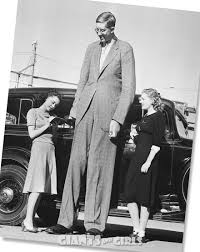
"These were the strongest generation of earth-born mortals,
the strongest, and they fought against the strongest, the beast men
living within the mountains, and terribly they destroyed them.
I was in the company of these men....'"
-- Homeros, poet, Iliad, Book I: 247-269, 8th century B.C.

"Such was Aias as he strode gigantic, the wall of the Achaians,
smiling under his threatening brows, with his feet beneath him
taking huge strides forward, and shaking the spear far-shadowing.
And the Argives looking upon him were made glad, while the Trojans
were taken every man in the knees with trembling and terror,
and for Hektor himself the heart beat hard in his breast, but he could not
any more find means to take flight and shrink back into
the throng of his men, since he in his pride had called him to battle.
Now Aias came near him, carrying like a wall his shield
of bronze and sevenfold ox-hide which Tychios wrought him with much toil;
Tychios, at home in Hyle, far the best of all workers in leather
who had made him the great gleaming shield of sevenfold ox-hide
from strong bulls, and hammered an eighth fold of bronze upon it.
Telamonian Aias, carrying this to cover
his chest, came near to Hektor and spoke to him in words of menace:
'Hektor, single man against single man you will learn now
for sure what the bravest men are like among the Danaans."
-- Homeros, poet, Iliad, Book VII: 212-227, 8th century B.C.

Carr, J., Palace of Homer's Hero Rises Out of the Myths, The Times, Mar 2006

'Palace of Ajax' Found In Greece, BBC, Mar 2006

Paphitis, N., Archaeologist Links Palace to Legendary Ajax, MSNBC, Mar 2006

Archaeologist: I've Found Greek Hero Ajax's Palace, Fox News, Mar 2006

Monday, February 9, 2009

Celestial Events In The Time of the Iliad


"There did really happen, and will again happen, like many other events of which ancient tradition has preserved the record, the portent which is traditionally said to have occurred in the quarrel of Atreus and Thyestes. ... how the sun and the stars once rose in the west, and set in the east, and that the god reversed their motion, and gave them that which they now have as a testimony to the right of Atreus. " -- Plato, The Statesman

"Then, it was then that Zeus changed the radiant paths of the stars, and the light of the sun, and the bright face of dawn; and the sun drove across the western back of the sky with hot flame from heaven's fires, while the rain-clouds went northward and Ammon's lands [Egypt] grew parched and faint, not knowing moisture, robbed of heaven's fairest showers of rain." --Euripides, Electra, 408 B.C.

Once again Velikovsky demonstrates himself to be an absolute monster intellect and polymath with his essay Celestial Events in the Iliad.

The true time of the events recounted in the Iliad was the second half of the eighth and the beginning of the seventh centuries before the present era.

In Worlds in Collision an effort was made to recognize in the description of theomachy and of the natural phenomena that accompanied the battle of the gods, the events that took place in the sky and on earth between -747 and -687.1

The Trojan War was waged to the accompaniment of blows exchanged by the planetary gods—Earth (Hera), Moon (Aphrodite), Venus (Athene), Mars (Ares) and Jupiter (Zeus).

These celestial phenomena could not have taken place in the sky over Troy alone: the entire world had to witness the events, if they were not mere creations of the bard. That they were not can be deduced from the fact that these very events, witnessed in all parts of the world, are also described in sacred epics from Finland (Kalevala), Lapland and Iceland (Edda), from Mexico, Peru, India, the South Sea Islands, China and Japan, and, of course, by the poets and dramatists, annalists and astronomers, of the Near and Far East. It would require repeating close to two hundred pages of Worlds in Collision, actually the entire part II (Mars) of that book, should we desire here to evidence and illuminate this in some detail.

Perturbations in the celestial sphere, or Theomachy, in which Mars endangered the Earth at nearly regular intervals during this century, preoccupied the minds of men and repeatedly intervened in human history. Pestilence also broke out, and many references in the cuneiform literature ascribe its cause to Nergal (Mars). Earthquakes, overflooding, change of climate, evidenced by Klimasturz, did not spare a single land. These changes moved entire nations to migrations. Calendars were repeatedly thrown out of order and reformed—and the reader will find abundant material in the second part of Worlds in Collision and also in Earth in Upheaval, where no human testimony, but only the testimony of nature was presented; and this material could be multiplied by any dedicated researcher.

It appears, however, that in the Iliad Homer telescoped into a few weeks events that took place in the space of several decades. At least some of the events may be placed in a chronological order with the help of ancient Israelite sources: namely, on the day when King Ahaz was interred the motion of the Earth was disturbed so that the Sun set before its appointed time;2

At the time of the destruction of Sennacherib’s army in the days of Hezekiah, son of Ahaz, another disturbance occurred with the contrary effect: the Sun appeared to return several degrees to the east before proceeding on its regular westward path. It is asserted in the rabbinical literature that the second disturbance rectified the effects of the first—and this is also the meaning of the sentence in Isaiah 38:8: “So the sun returned ten degrees by which degrees it was gone down.”3

In Greek legendary tradition the first event took place in the days of the two brothers, Atreus and Thyestes, contesting the throne of Mycenae—when, according to Seneca, the Sun set earlier than usual.4

Yet a certain compression or amalgamating of two events, separated in time, must have taken place, for another version of the story tells of a reversal of the sun’s motion. This version is recorded by Apollodorus and several other authors.5

The event described as the reversal of motion of the sun took place, as illuminated Worlds in Collision, on March 23rd, -687.6

The fixing of the event to the early spring of -687 is made on the strength of the information from Hebrew sources that the event took place on the night of Passover, during the second campaign of Sennacherib against Judah, the ninth campaign of his reign. The exact date for the last of this series of catastrophes7 is provided by the records of the astronomical observations of the Chinese, where we learn that in the year -687, on the 23rd of March, “during the night the fixed stars did not appear, though the sky was clear. In the middle of the night stars fell like rain.”8

This date is also confirmed by Roman sources—Romulus found his end during a celestial-terrestrial catastrophe connected with the planet Mars:

Both the poles shook, and Atlas lifted the burden of the sky . . . The sun vanished and rising clouds obscured the heaven . . . the sky was riven by shooting flames. The people fled and the king [Romulus] upon his father’s [Mars’] steeds soared to the stars.9
Romulus was a contemporary of Hezekiah;10 and the 23rd of March was the most important day in the Roman cult of Mars.11

We must not forget that the Romans and the Greeks worshipped their gods in the planets, not as gods of the planets. Invocations to the gods, such as the Homeric Hymn to Ares (Mars) are addressed directly to the planet as an astral power.12

The siege of Troy under Agamemnon followed by less than one generation the natural disturbances of the days of his father Atreus, when this king of Mycenae competed with his brother Thyestes for the crown of the realm and the Sun was disrupted in its motion.