"....this fortress [Sacsayhuaman/Satisfied Falcon] surpasses the constructions known as the seven wonders of the world. For in the case of a long broad wall like that of Babylon, or the colossus of Rhodes, or the pyramids of Egypt, or the other monuments, one can see clearly how they were executed...how, by summoning an immense body of workers and accumulating more and more material day by day and year by year, they overcame all difficulties by employing human effort over a long period. But it is indeed beyond the power of imagination to understand how these Indians, unacquainted with devices, engines, and implements, could have cut, dressed, raised, and lowered great rocks, more like lumps of hills than building stones, and set them so exactly in their places. For this reason, and because the Indians were so familiar with demons, the work is attributed to enchantment." -- Garcilaso de la Vega, historian, 1610
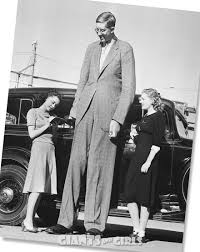
"As told by Huaman Poma [Falcon Puma], five such ages had preceded that in which he lived. The first was an age of Viracochas, an age of gods, of holiness, of life without death, although at the same time it was devoid of inventions and refinements; the second was an age of skin-clad giants, the Huari Runa, or 'Indigenes,' worshippers of Viracocha; third came the age of Puron Runa, or 'Common Men,' living without culture; fourth, that of Auca Runa, 'Warriors,' and fifth that of the Inca rule, ended by the coming of the Spaniards." -- Hartley B. Alexander, historian, The Mythology of All Races, 1920
"Here is a mystery: The [Inca] chronicler Garcilaso de la Vega was born around 1530 [1539], and raised in the shadow of these walls. And yet he seems not to have had a clue as to how Sacsayhuaman was built. ... Surely a few of those 20,000 labourers were still around when Garcilaso was young. Was everyone struck with amnesia? Or is Sacsayhuaman much older than we've been led to believe?" -- WorldMysteries.Com








-759725.jpg)