Monday, October 20, 2008

Halliburton Q3 Results


U.S. Stocks Gain, Led by Energy Shares on Halliburton Earnings.

Halliburton jumped $1.59 to $19.85. Excluding an acquisition charge and $693 million in costs related to redemption of convertible bonds, per-share profit was 76 cents, 2 cents higher than the average of 24 analyst estimates compiled by Bloomberg.

``Whenever somebody reports numbers that exceed expectations, that's a positive not only for the individual stock but the broader market,'' said Dean Gulis, who helps manage about $2.5 billion for Loomis Sayles & Co. in Bloomfield Hills, Michigan. ``In a case like Halliburton, it carries over to its sector. You have a good number of attractively valued opportunities out there.''

Exxon gained $4.79 to $72.83. Crude oil for November delivery climbed as much as 5.8 percent to $76 a barrel in New York on speculation OPEC will cut production to halt a 50 percent slide in prices from July's record.


Thursday, October 16, 2008

Oil Falls Below $70


OPEC calls emergency meeting as oil prices fall.

Oil prices dropped below $70 a barrel for the first time in 14 months Thursday, prompting the OPEC cartel to call for an emergency meeting next week to establish some stability in prices that have plummeted recently after rising for months.

Oil prices have tumbled by nearly $40 a barrel in just three weeks as indications grow that demand for energy will slow along with weakening economies around the world. As recently as July, oil was trading at a record of $145 a barrel.

The decline in oil prices could provide a form of stimulus to the global economy as consumers pay less to fill up their tanks. If oil prices stay at current levels, American consumers would have $250 billion more, over a year, to save or spend elsewhere, according to Lawrence Goldstein, an energy economist. Some analysts expect oil prices to keep declining, perhaps to as low as $50 a barrel in coming months.

Americans will probably see lower energy bills this winter, as gasoline and heating oil futures also dropped sharply on Thursday. Gasoline prices now average $3.08 a gallon, or 3.8 liters, down from a summer peak of $4.11 a gallon, according to AAA.
Must be peak oil.

Tuesday, October 14, 2008

The Mysterious Receding Seas


A new book on Earth expansion: ANCIENT CIVILIZATIONS IN HIGH MOUNTAINS.

NEW YORK, NEW YORK, Oct. 8 -/E-Wire/-- Richard Guy in his latest book shows how all ancient civilizations worldwide evolved in high mountains. The fact that they did originate in high mountains has never been subject to historical scrutiny or research. Guy does an in-depth expose of this anomaly in his new book "The Mysterious Receding Seas." He takes his readers on an interesting journey back into ancient history to show how sea levels have influenced the development and dispersion of civilizations from pre-history up to the present.

Did you ever stop to seriously consider why the oldest civilizations known to mankind all resided at extremely high altitudes? Did you ever wonder whatever became of important port cities like Pithom and Ramses in Egypt or Ostia, the harbor city of ancient Rome? Did it ever strike you as odd that the legendary Sinbad the Sailor sailed from Baghdad harbor which was on the Persian Gulf? Today, Baghdad is some 350 miles from the sea and one hundred and twenty five feet above sea level. Author Richard Guy is a structural engineer. His work has taken him all over the world. And Richard Guy has a theory. Guy believes that the earth is constantly expanding as a result of seismic activity and volcanic eruptions. Furthermore, the consequences of our expanding earth are a slow but steady decline in sea levels worldwide.

"The Mysterious Receding Seas" presents Guy's incredible hypothesis for your consideration. As it says on the back cover of this book "This book will not only convince you but will forever change your perspective on the way our civilization developed."

As a structural engineer with forty years of experience in this field, He has built roads, harbors, docks, oil refineries and airports on lands that were once under the sea. Richard Guy developed a relationship and respect for the seas and oceans. His vast experience, direct observations, as well as acquired knowledge from a keen interest in the subject, is clear and evident throughout the book. His enthusiasm for the subject is contagious. His book is dedicated to showing how sea levels have changed over the millennia and how new land develops, that mankind is oblivious to this fact, and that the creation of new topography is a natural phenomenon.

Given that the volume of water in the oceans is relatively constant, the changes in land development are shown from ancient times into the present. It is a continuing process where estuaries and wetlands are by nature temporary. They will dry up as seas recede and new land claims their space and displaces the life forms dependent on this habitat. The author provides a fascinating look at the earth and environment, as it used to be in the past and how it is developing for the future. This book opens up new vistas of understanding nature and the vastness of earth changes. The reader comes to realizes how brief and temporary our existence is on planet earth and how large and infinite the possibilities for these change really are ... This book is about earth expansion theory and how this relates to receding sea levels. A fascinating read. "The Mysterious Receding Seas" is published by Xlibris www.widemargin2000.com

Tough Time For Everybody


Well at least I'm suffering (and learning) in good company: Hedge Funds Concede Errors, Profess Optimism After Worst Losses.

David Einhorn, who runs New York-based Greenlight Capital LLC, said external forces were partly to blame for the 17 percent drop in his three funds in September.

While he and his team made mistakes, ``we believe that our portfolio management has been reasonable,'' Einhorn wrote in an Oct. 1 letter to clients.

Einhorn, 39, pointed to the U.S. Securities and Exchange Commission's Sept. 18 ban on short sales of financial stocks for some of the losses in the month. The ban, which expired Oct. 9, eventually included about 15 percent of the companies in the Standard & Poor's 500 Index.

Caught Short

In a short sale, investors sell borrowed stock in hopes of repurchasing it later at a lower price and pocketing the difference. A long position is one that an investor holds in expectation it will rise.

After the ban went into place, the shorts recovered much more than the longs, he wrote, ``especially the financial shorts abundant in our portfolio.''

Einhorn, who earlier this year was vocal in this view that shares of now-bankrupt Lehman Brothers Holdings Inc. would tumble, said he planned to hold onto the short positions in financial companies ``for a good deal of time (providing there aren't additional extraordinary legal changes) until they begin to trade in a normal market environment again.''

In the third quarter, Einhorn's three funds lost about 15 percent, one percentage point of which came from stocks he had shorted. Nine companies Einhorn held long, including French chemical-maker Arkema SA, French bank Natixis SA and Houston- based oil and gas producer Helix Energy Solutions Group Inc., each contributed more than one percentage point to the quarterly drop.

Playing Defense

Einhorn told investors his funds are more conservatively invested than ever. While almost three-quarters of assets, including leverage, are long, he has offset those holdings with short sales that bring the net to 9 percent. Einhorn declined to comment.

Monday, October 13, 2008

Black Swans Kill


Stress in Global Markets Is a `Black Swan Event'.

Oct. 13 (Bloomberg) -- Measures of stress in worldwide markets are so far from historical norms that they qualify as a ``black swan event.''

The CHART OF THE DAY shows Bloomberg's Financial Conditions Index, which includes yield spreads and measures of the money, stock and bond markets. The index's drop this month is the kind of rare, devastating event described in Nassim Taleb's book ``The Black Swan: The Impact of the Highly Improbable,'' said Nigel Marriott, the founder of Bath, England-based Marriott Statistical Consulting Ltd.

``It's way off the scale, a one-in-billions chance,'' said Marriott, a fellow of the Royal Statistical Society. ``This is absolutely a black swan event.''

In statistical theory, about 68 percent of events are within one standard deviation above or below the average, 95 percent are within two deviations and 99.7 percent within three. Markets are currently 9.47 so-called standard deviations from usual levels, the Bloomberg index shows.

The measures indicate conditions so unusual that they're comparable only with winning the lottery twice in a week or the earth being destroyed by an asteroid, said David Watts, a strategist at CreditSights Inc. in London.

The data go back only to 1992 and so don't reflect market disruptions such as Black Monday in October 1987 or the Great Depression.

``The Depression was an event in human history,'' said Marriott. ``So is this.''

Wednesday, October 8, 2008

PT Says Earth Is Unique In The Universe


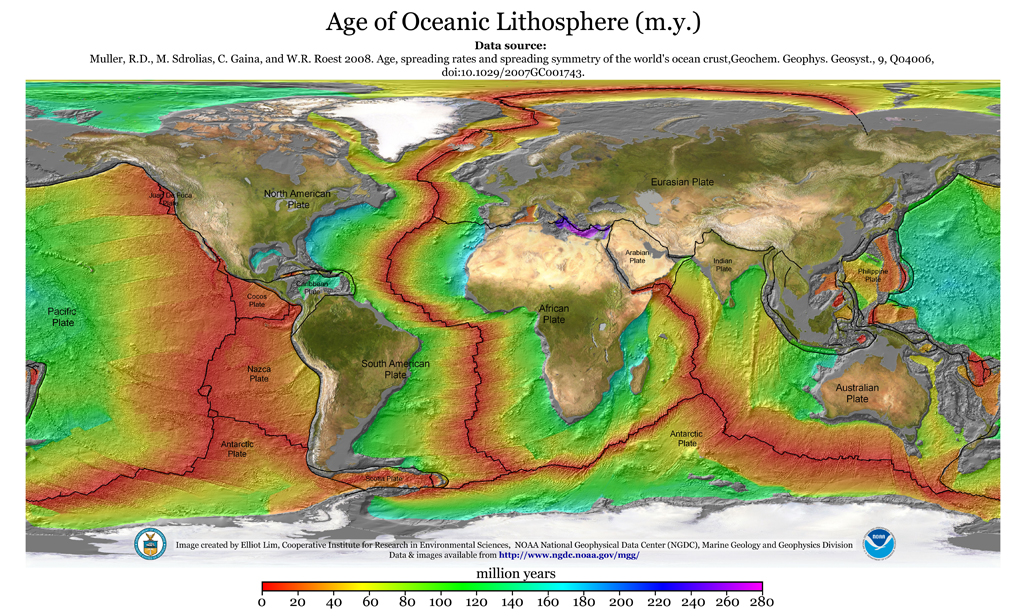
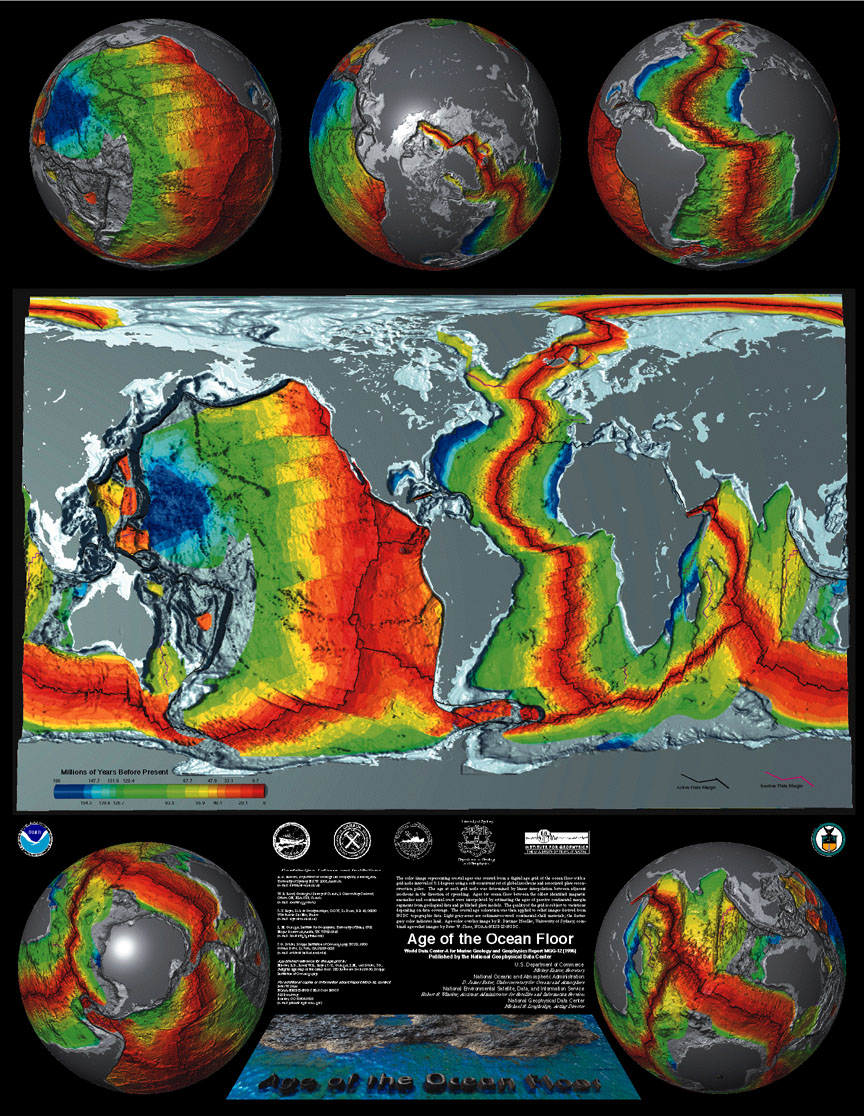
Get this: according to Plate Tectonics mythology, Earth is the only planet in the universe with subduction zones.

Why does plate tectonics occur only on Earth?

Abstract. Plate tectonics [allegedly] governs the topography and motions of the surface of Earth, and the loss of heat from Earth's interior, but appears to be found uniquely on Earth in the Solar System. Why does plate tectonics occur only on Earth? This is one of the major questions in earth and planetary sciences research, and raises a wide range of related questions
UT Dallas Geosciences Faculty Profile: Robert Stern

“Earth is the only planet with plate tectonics. That means it’s special in space, and it’s probably special in time, too. There must have been a time when the Earth didn’t have plate tectonics. The Earth had a very different tectonic, geologic style. There were no mid-ocean ridges with continents moving apart. There were no subduction zones where oceanic crust would have been going down,” Stern explained.
LOL. Wow they are really desperate now.

New Object Discovered


Is It A Planet? Exotic Object Orbiting Star Stirs Exoplanet Classification Rethink.

ScienceDaily (Oct. 7, 2008) — The European spacecraft COROT has discovered a massive planet-sized object orbiting its parent star closely, unlike anything ever spotted before. It is so exotic, that scientists are unsure as to whether this oddity is actually a planet or a failed star.

The object, named COROT-exo-3b, is about the size of Jupiter, but packs more than 20 times the mass. It takes only 4 days and 6 hours to orbit its parent star, which is slightly larger than the Sun.

COROT-exo-3b was found as the satellite observed the drop in the brightness of the star each time the object (COROT-exo-3b) passed in front. "We were taken by surprise when we found this massive object orbiting so close to its parent star", said Dr Magali Deleuil from the Laboratoire d'Astrophysique de Marseille (LAM), leader of the team that made the discovery. She added, "COROT-exo-3b is really unique - we’re still debating its nature."

The search for planets with orbital periods less than 10 days orbiting close to the parent star has lasted almost 15 years. During this time, scientists have encountered planets with masses 12 times that of Jupiter, and stars 70 times as massive as Jupiter, but none in between. This is why the 20-Jupiter-mass COROT-exo-3b was such a surprise.
"The heavens declare the glory of God; the skies proclaim the work of His hands." (Psalm 19:1)

"He telleth the number of the stars; he calleth them all by [their] names." (Psalm 147:4)