Friday, September 16, 2011

Democritus Guesses Again


Science in cryptomnesia:

"He [Democritus] said that the ordered worlds are boundless and differ in size, and that in some there is neither sun nor moon, but that in others, both are greater than with us, and yet with others more in number. And that the intervals between the ordered worlds are unequal, here more and there less, and that some increase, others flourish and others decay, and here they come into being and there they are eclipsed. But that they are destroyed by colliding with one another. And that some ordered worlds are bare of animals and plants and all water." -- Hippolytus, priest, 2nd century

Discovery News: WEIRD [sic] EXOPLANET DISCOVERED ORBITING TWO STARS.

If you could stand on the surface of Kepler-16b, you'd have two shadows. At sunset, you would see an orange star about the size of the sun and next to it a much fainter red star. As the stars slipped toward the horizon, they would change places in the sky, like partners in a square dance.

Thursday, September 15, 2011

Carbon In Deep Mantle


An old rediscovery = science in cryptomnesia.

Science Daily: Carbon Cycle Reaches Earth's Lower Mantle: Evidence of Carbon Cycle Found in 'Superdeep' Diamonds From Brazil.

ScienceDaily (Sep. 15, 2011) — The carbon cycle, upon which most living things depend, reaches much deeper into Earth than generally supposed -- all the way to the lower mantle, researchers report.

The findings, which are based on the chemistry of an unusual set of Brazilian diamonds, will be published online by the journal Science, at the Science Express Web site, on 15 September. Science is published by AAAS, the non-profit, international science society.

"This study shows the extent of Earth's carbon cycle on the scale of the entire planet, connecting the chemical and biological processes that occur on the surface and in the oceans to the far depths of Earth's interior," said Nick Wigginton, associate editor at Science.

"Results of this kind offer a broader perspective of planet Earth as an integrated, dynamic system," he said.

Friday, September 9, 2011

Precious Metals From Meteorites


Science Daily: Where Does All Earth's Gold Come From? Precious Metals the Result of Meteorite Bombardment, Rock Analysis Finds.

ScienceDaily (Sep. 9, 2011) — Ultra high precision analyses of some of the oldest rock samples on Earth by researchers at the University of Bristol provides clear evidence that the planet's accessible reserves of precious metals are the result of a bombardment of meteorites more than 200 million years after Earth was formed.

The research is published in Nature.
During the formation of Earth, molten iron sank to its centre to make the core. This took with it the vast majority of the planet's precious metals -- such as gold and platinum. In fact, there are enough precious metals in the core to cover the entire surface of Earth with a four-metre thick layer.

The removal of gold to the core should leave the outer portion of Earth bereft of bling. However, precious metals are tens to thousands of times more abundant in Earth's silicate mantle than anticipated. It has previously been argued that this serendipitous over-abundance results from a cataclysmic meteorite shower that hit Earth after the core formed. The full load of meteorite gold was thus added to the mantle alone and not lost to the deep interior.

To test this theory, Dr Matthias Willbold and Professor Tim Elliott of the Bristol Isotope Group in the School of Earth Sciences analysed rocks from Greenland that are nearly four billion years old, collected by Professor Stephen Moorbath of the University of Oxford. These ancient rocks provide a unique window into the composition of our planet shortly after the formation of the core but before the proposed meteorite bombardment.

The researchers determined the tungsten isotopic composition of these rocks. Tungsten (W) is a very rare element (one gram of rock contains only about one ten-millionth of a gram of tungsten) and, like gold and other precious elements, it should have entered the core when it formed. Like most elements, tungsten is composed of several isotopes, atoms with the same chemical characteristics but slightly different masses.

Isotopes provide robust fingerprints of the origin of material and the addition of meteorites to Earth would leave a diagnostic mark on its W isotope composition.

Dr Willbold observed a 15 parts per million decrease in the relative abundance of the isotope 182W between the Greenland and modern day rocks. This small but significant change is in excellent agreement with that required to explain the excess of accessible gold on Earth as the fortunate by-product of meteorite bombardment.

Dr Willbold said: "Extracting tungsten from the rock samples and analysing its isotopic composition to the precision required was extremely demanding given the small amount of tungsten available in rocks. In fact, we are the first laboratory world-wide that has successfully made such high-quality measurements."

Friday, September 2, 2011

Humans Shaped Stone Axes 1.8 Million Years Ago


Darwinists wrong AGAIN (shock and awe)!

Science Daily: Humans Shaped Stone Axes 1.8 Million Years Ago: Advanced Tool-Making Methods Pushed Back in Time.
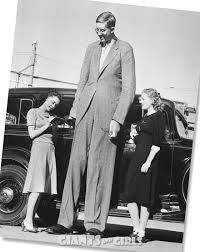
ScienceDaily (Sep. 1, 2011) — A new study suggests that Homo erectus, a precursor to modern humans, was using advanced toolmaking methods in East Africa 1.8 million years ago, at least 300,000 years earlier than previously thought. The study, recently published in Nature, raises new questions about where these tall and slender early humans originated and how they developed sophisticated tool-making technology.

Thursday, September 1, 2011

Helena Blavatsky: The Secret Doctrine


On Prisca Sapientia: Ancient Thought in Modern Dress

"But the idea was not ours, it is that of antiquity."

"For, archaic astronomy, and the ancient, physical and mathematical sciences, expressed views identical with those of modern science, and of far more momentous import."

"Modern science is ancient thought distorted, and no more."

Earth, Peopled From Heaven

"The 'Watchers' reign over man during the whole period of Satya Yuga and the smaller subsequent yugas, down to the beginning of the Third Root Race; after which it is the Patriarchs, Heroes, and the Manes (see Egyptian Dynasties enumerated by the priests to Solon), the incarnated Dhyanis of a lower order, up to King Menes and the human kings of other nations; all were recorded carefully. In the views of symbologists this Mythopaeic Age is of course regarded as a fairy tale. But since traditions and even Chronicles of such dynasties of divine Kings -- of gods reigning over men followed by dynasties of Heroes or Giants -- exist in the annals of every nation, it is difficult to understand how all the people under the sun, some of whom are separated by vast oceans and belong to different hemispheres, such as the ancient Peruvians and Mexicans, as well as the Chaldeans, could have worked out the same 'fairy tales' in the same order of events."

Nothing New Under the Sun

"For the truly astral light of the derided Kabalists has strange weird secrets for him who can see in it; and the mysteries concealed within its incessantly disturbed waves are there, the whole body of Materialists and scoffers notwithstanding. These secrets, along with many other mysteries, will remain non-existent to the materialists of our age, in the same way as America was a non-existent myth for Europeans during the early part of the mediaeval ages, whereas Scandinavians and Norwegians had actually reached and settled in that very old 'New World' several centuries before. But, as a Columbus was born to re-discover, and to force the Old World to believe in Antipodal countries, so will there be born scientists who will discover the marvels now claimed by Occultists...."

The Metaphysics of Physical Science

"Sir Isaac Newton held to the Pythagorean corpuscular theory, and was also inclined to admit its consequences; which made the Count de Maistre hope, at one time, that Newton would ultimately lead science back to the recognition of the fact that Forces and the Celestial bodies were propelled and guided by Intelligences (Soirees, vol. ii). But de Maistre counted without his host. The innermost thoughts and ideas of Newton were perverted, and of his great mathematical learning only the mere physical husk was turned to account. Had poor Sir Isaac foreseen to what use his successors and followers would apply his 'gravity,' that pious and religious man would surely have quietly eaten his apple, and never breathed a word about any mechanical ideas connected with its fall. Great contempt is shown for metaphysics generally and for ontological metaphysics especially. But we see, whenever the Occultists are bold enough to raise their diminished heads, that materialistic, physical science is honey-combed with metaphysics; that its most fundamental principles, while inseparably wedded to transcendentalism, are nevertheless, in order to show modern science divorced from such 'dreams,' tortured and often ignored in the maze of contradictory theories and hypotheses."

The Geology of Enoch: The Expanding Earth

"The Earth and mankind, like the Sun, Moon, and planets, have all their growth, changes, developments, and gradual evolution in their life-periods; they are born, become infants, then children, adolescents, grown-up bodies, grow old, and finally die."

Sunday, August 28, 2011

The Archaeology of Legend


Telegraph: King Arthur's round table may have been found by archaeologists in Scotland.

The King's Knot, a geometrical earthwork in the former royal gardens below Stirling Castle, has been shrouded in mystery for hundreds of years.

Though the Knot as it appears today dates from the 1620s, its flat-topped central mound is thought to be much older.

Writers going back more than six centuries have linked the landmark to the legend of King Arthur.

Archaeologists from Glasgow University, working with the Stirling Local History Society and Stirling Field and Archaeological Society, conducted the first ever non-invasive survey of the site in May and June in a bid to uncover some of its secrets.

Their findings were show there was indeed a round feature on the site that pre-dates the visible earthworks.

Historian John Harrison, chair of the SLHS, who initiated the project, said: "Archaeologists using remote-sensing geophysics, have located remains of a circular ditch and other earth works beneath the King's Knot.

"The finds show that the present mound was created on an older site and throws new light on a tradition that King Arthur's Round Table was located in this vicinity."

Stories have been told about the curious geometrical mound for hundreds of years -- including that it was the Round Table where King Arthur gathered his knights.

Around 1375 the Scots poet John Barbour said that "the round table" was south of Stirling Castle, and in 1478 William of Worcester told how "King Arthur kept the Round Table at Stirling Castle".

Sir David Lindsay, the 16th century Scottish writer, added to the legend in 1529 when he said that Stirling Castle was home of the "Chapell-royall, park, and Tabyll Round".

It has also been suggested the site is partly Iron Age or medieval, or was used as a Roman fort.

Extensive work on the royal gardens was carried out in the early 17th century for Charles I, when the mound is thought to have taken its current form.

The first known record of the site being called the King's Knot is from 1767, by which time it was being leased for pasture.

Locals refer to the grassy earthworks as the "cup and saucer", but aerial photographs taken in 1980 showed three concentric ditches beneath and around the King's Knot mound, suggesting an earthwork monument had preceded it.

The new survey -- funded by Historic Scotland and Stirling City Heritage Trust -- used the latest scientific techniques to showing lost structures and features up to a metre below the ground.

It also revealed a series of ditches south of the main mound, as well as remains of buildings, and more recent structures, including modern drains which appear at the northern end of the gardens.

Mr Harrison, who has studied the King's Knot for 20 years, said: "It is a mystery which the documents cannot solve, but geophysics has given us new insights.

"Of course, we cannot say that King Arthur was there, but the feature which surrounds the core of the Knot could explain the stories and beliefs that people held."

Archaeologist Stephen Digney, who coordinated the project, said: "The area around Stirling Castle holds some of the finest medieval landscapes in Europe.

"This investigation is an exciting first step in a serious effort to explore, explain and interpret them. The results so far suggest that Scotland's monarchs integrated an ancient feature into their garden, something we know happened in other countries too.

"We are looking forward to the next stage in September when we hope to refine some of the details."

Dr. Kirsty Owen, Cultural Heritage Adviser at Historic Scotland, added: "The project has the potential to add to our knowledge of the landscape context of the medieval and early modern occupation of Stirling Castle.

"The ditches identified may intriguingly be part of historically documented earlier garden features, or if prehistoric in origin could add to our scant knowledge of prehistoric activity at Stirling Castle.

"We look forward to seeing the results of the next phase of investigations."Futher work including a ground-penetrating radar survey, is now planned to take place next month to find out more.

A small display of the interim results can be seen close to the site at the Smith Museum.

Friday, August 26, 2011

Ancient Protractor Denied By Darwinists


New Scientist: Egyptian tomb mystery may be world's first protractor.

The bizarre object to the right was found in the tomb of an ancient Egyptian architect. For over 100 years, it has languished while archaeologists debated its function.

Now, a physicist has thrown her hat into the ring, arguing that it is the world's first known protractor. The intriguing suggestion – which has drawn scepticism from archaeologists – is based on the numbers encoded within the carvings on its surface.

The architect Kha helped to build pharaohs' tombs during the 18th dynasty, around 1400 BC. His own tomb was discovered intact in 1906 by archaeologist Ernesto Schiaparelli in Deir-al-Medina, near the Valley of the Kings. Among Kha's belongings were measuring instruments including cubit rods, a levelling device that resembles a modern set square, and what appeared to be an oddly shaped empty wooden case with a hinged lid.

Schiaparelli thought this last object had held another levelling instrument. The museum in Turin, Italy, where the items are now exhibited identifies it as the case of a balancing scale.

But Amelia Sparavigna, a physicist at Turin Polytechnic, suggests that it was a different architectural tool – a protractor. The key, she says, lies in the numbers encoded in the object's ornate decoration, which resembles a compass rose with 16 evenly spaced petals surrounded by a circular zigzag with 36 corners.

Sparavigna says that if the straight bar part of the object were laid on a slope, a plumb line would revealed its inclination on the circular dial (as illustrated in this graphic).

The fraction of one-sixteenth features in a calculus system the Egyptians used, says Sparavigna, and they also identified 36 star groups called the decans, which later formed the basis of a star clock. She suggests the object was "a protractor instrument with two scales, one based on Egyptian fractions, the other based on decans".

But Kate Spence, an archaeologist at the University of Cambridge who specialises in ancient Egyptian architecture, is not convinced and maintains the object is simply a decorative case. She says that unlike those on known measuring instruments, the markings in question are not particularly accurate: "When the Egyptians want to be precise, they are." She says the Egyptians tended to define angles by measuring the two sides of a rectangle, and that no similar instrument is known.