Wednesday, November 12, 2008

The ESF Meeting On Earthquakes


NEW CHALLENGES IN EARTHQUAKE DYNAMICS: OBSERVING AND MODELLING A MULTI-SCALE SYSTEM.

Letter from Stavros T. Tassos; notes from the European Science Foundation Conference. (Posted with permission from the author).

Emphasis (bold) added by me.

Tassos, S.T., The ESF Conference, personal communication, received Nov 11, 2008

In the ESF Conference on ‘New Challenges in Earthquake Dynamics’ in Obergurgl, a small ski resort at 1900 meters altitude, and about 50 km from Innsbruck, Austria, some of the ‘big names’ among the about 100 participants, in the field of seismology presented their work. After the ESF conference I went to Leuven, for a lecture to about 20 PhD students and staff members. As an ‘observer’, but also as an ‘involved participant’ I will try to present the general themes and highlights of these two events, as well as their reaction to my ideas, and my reaction to their ideas.

-- Although the title of the conference was ‘New Challenges in Earthquake Dynamics’, the general framework of plate tectonics and elastic rebound was not challenged. Only my presentation titled ‘the challenge of the cause and effect relationship between faults and earthquakes’ challenged the fundamental assumptions of plate tectonics and elastic rebound.

-- The earthquake dynamics within the mainstream plate tectonics and horizontal movement framework refer to horizontal stress, mostly static, i.e., the one that does not change, or changes very slowly with time, but the horizontal dynamic stress, i.e., the one that changes quickly with time, was also considered and debated. Thus in the conventional framework rocks are an elastic medium, at least partially, and static stress changes along future fault planes produce elastic strain accumulation, i.e., bending, frictional sliding, then rupture, and finally an earthquake.

-- My thesis is that rocks are a plastic medium, i.e., they cannot accumulate elastic strain through bending, and an earthquake is the primary elastic mandatory effect of a sufficient dynamic stress, as in free-fall, from a height of the order of 10^-5 to 10^-2 m, that forces an otherwise inelastic medium to respond momentarily elastically, and a fault is the secondary possible post-seismic inelastic effect if the stress is sufficiently high to cause rupture. In other words I concentrate on understanding, and proposing a comprehensive and physically possible deterministic model of the physics of the earthquake source, and not on statistical modeling.

-- Within again the mainstream framework the validity of statistical models was discussed and debated. In one case an invited speaker presented the case of nine (9) different models that all fitted the data from a particular earthquake very well. It is obvious that most likely neither one of them corresponds to the physical actuality and all are mental artifacts. In all cases most of the work presented was on statistical models and on how static stress accumulates and transfers, and not about the physics of the earthquake source, which is still unknown as it was unanimously recognized.

-- The deadlock of the mainstream approach was shown on several occasions. I do not mention names, first because the views expressed by most if not all speakers more or less reflect the general feeling, and second because my intention is only to discuss and criticize ideas:

1.One of the key speakers presented his statistical model on how aftershocks can be triggered by either static or dynamic horizontal stress transfer from the main-shock. My question was: OK let us accept that the aftershocks were triggered by the main shock, but then what triggered the main-shock? Because if the laws of nature are the same regardless of frame of reference, as they are, and your model corresponds to the physical actuality the main-shock should be triggered by an even stronger, but unknown shock His answer was “I do not know. I have only made a statistical model about aftershocks”. I think this is one of the main weaknesses of the main-stream way of thinking. Isolate a case and build ad-hoc mathematically perfect statistical models, which nevertheless usually contradict other ad-hoc models, and most likely have nothing to do with the physical actuality.

2.On another occasion a speaker presented an interesting theoretical and experimental work on the effect of fractured rock on seismic wave velocity. Making also a statement, I asked him, that the real issue was if fracturing could produce seismic waves, and if he had done any experiment on that. His answer was that he had not done any experiment on that, but others had done. But, all those who have experimented with rock rupture under high confining pressure have only recorded sound waves, the speed of which is more than one order of magnitude lower, of the order of 340 m/sec, than the speed of seismic waves, and of course they are transmitted in the air, not in solid rock with about 10^11 Pa rigidity. On the contrary as it was shown experimentally with projectile impacts by Freund (2002, 2003), at 1.45 km.s^-1 impact velocity, P and S waves propagating at ~6 and 3.4 km.s^-1, respectively, were generated that soon faded away within 0.2 ms after impact. At 4.45 km.s^-1 impact velocity fissures began to form 2 ms after impact, i.e., ten times later in time after the seismic waves faded away, and at 5.64 km.s^-1 the block ruptured into three segments along the formerly formed fissures. Thus the dynamic stress had two effects; a primary and a secondary. The primary is mandatory and co-seismic, and refers to the transient elastic response of an otherwise non-elastic rock block, and the generation of seismic waves. The secondary is possible and post-seismic, and involves inelastic slip and the generation of a fault, and occurs there and when the rock’s strength has been exceeded to the degree to cause rupture, and not only creep or slip.

3.Nevertheless few scientists, especially the younger ones but not only, in their private discussions with me expressed a view which could be summed up as “you got a point”.

4.On the overall, the reaction of the majority to my proposition and my reaction to their reaction in both the ESF conference and Leuven University is contained in the e-mails exchanged by Prof. Rudy Swennen, at Leuven University and myself after my talk there. They are as follows: «Dear Stavros, Thank you once again for the nice presentation. Your presentation certainly stimulated some of the discussion in my department, however most scientists are very sceptical about most of your ideas. Kind regards, Rudy», and my reply: «Dear Rudy, It was my pleasure to meet you again and to present my ideas to your department. The reaction of your colleagues is the expected one, and more or less typical of geological audiences, whereas the engineering audiences are more receptive. Of course I insist on my ideas, because I did not hear any scientific objection, for example about the earth's interior getting more rigid as depth increases, because otherwise the observed seismic wave velocity increase with depth cannot be explained. If this is a fact, as I think observation and logic indicate it is, the implications are unavoidable. For one thing the ambient temperatures in the mantle cannot be high, and more so increase with depth. Therefore although I can understand the psychological reaction because I put under question literally all the fundamental assumptions and notions of mainstream science, I cannot consider it equivalent to a scientific argument. I try to come up with a comprehensive set of ideas so that there is no need to adhere to ad-hoc interpretations that usually contradict each other, for example treat the earth as a solid body in seismology, and as a melt in volcanology, in order to explain the various physical phenomena. Nevertheless I really appreciate the opinion of people like you. So since you have my presentation, and of course at your early convenience, study it, reflect on it, and then I would be more than happy to hear your scientific objections, and try to answer them. Thank you again for the invitation to present my provocative ideas to your department. Best regards, Stavros» 
Kanamori, H., The Energy Release in Great Earthquakes, Journal of Geophysical Research, Volume 82, Issue B20, p. 2981-2988, 1977

Freund, F.T., et al., Mid-Infrared Luminescence Observed During Rock Deformation, AGU, 2002

Freund, F.T., Rocks That Crackle and Sparkle and Glow: Strange Pre-Earthquake Phenomena, Journal of Scientific Exploration, Volume 17, Number 1, Pages 37-71, 2003

Freund, F.T., et al., Stimulated IR Emission From The Surface of Rocks During Deformation, AGU, Volume 84, Number 46, 2003

Tassos, S.T., and Ford, D.J., An Integrated Alternative Conceptual Framework to Heat Engine Earth, Plate Tectonics, and Elastic Rebound, Journal of Scientific Exploration, Volume 19, Number 1, Pages 43-90, 2005

Tuesday, November 11, 2008

Secular Acceleration of the Moon as Evidence for Earth Expansion


In 1683, Sir Edmond Halley (discoverer of Halley's Comet) commenced a long series of lunar studies, discovering the Moon's secular acceleration in 1693. This was based upon Ptolemy's recordings of eclipses in Babylon in the 8th Century BC in the Almagest.

Direct measurements of the acceleration have been only been possible since 1969 using the Apollo retro-reflectors left on the Moon. The results from Lunar Laser Ranging show that the Moon's mean distance from Earth is increasing by 3.8 cm per year (Dickey, et al., 1994).

"Currently, the moon is moving away from the Earth at such a great rate, that if you extrapolate back in time -- the moon would have been so close to the Earth 1.4 billion years ago that it would have been torn apart by tidal forces (Slichter, 1963)" (McCarthy 2003).

"The implications of employing the present rate of tidal energy dissipation on a geological timescale are catastrophic. Around 1500 Ma the Moon would have been close to the Earth, with the consequence that the much larger tidal forces would have disrupted the Moon or caused the total melting of Earth's mantle and of the moon." (Williams 2000)

"This was a mystery for decades that surprised mainstream planetary scientists. It is now explained away by assuming that tidal forces were not as great during the Mesozoic as they are today." (McCarthy 2003)

However, there is no reason to believe tidal forces have changed since the Mesozoic unless Earth expansion is taking place.

Slichter, L. B., Secular Effects of Tidal friction upon the Earth's Rotation, Journal of Geophysical Research, Volume 68, Number 14, Jul 1963

Lambeck, K., The Earth's Variable Rotation: Geophysical Causes and Consequences, Page 449, 1980

Dickey, et al., Lunar Laser Ranging: A Continuing Legacy of the Apollo Program, Science, Volume 265, Number 5171, Pages 482-490, Jul 1994

Williams, G.E., Geological Constraints on the Precambrian History of the Earth's Rotation and the Moon's Orbits, Reviews of Geophysics, Volume 38, Number 1, Pages 37-59, 2000

Monday, November 10, 2008

The Irrefutable Expansion of Ganymede


"The bright terrain formed as Ganymede underwent some extreme resurfacing event, probably as a result of the moon's increase in size". -- Prockter, L.M., Icing Ganymede, Nature, Volume 410, Pages 25-27, 2001

Collins et al. (1999) agree that the formation of the grooved terrain on Ganymede was likely the result of post-formation "global expansion".

Collins, G.C., Pappalardo, R.T., & Head, J.W., Surface Stresses Resulting From Internal Differentiation: Application to Ganymede Tectonics, Lunar and Planetary Science XXX, 1695, 1999

"Researchers now believe that Ganymede's more youthful-looking half could be due to a crust that stretched--as has happened in the past few million years on Europa--rather than any sort of icy volcanism, as many had assumed." -- Richard. A. Kerr, 2001

Kerr, R.A., Jupiter's Two-Faced Moon, Ganymede, Falling Into Line, Science, Volume 291, Number 5501, Pages 22-23, 2001

"Since planets and moons did not pop into existence at their current size, everyone agrees they must have expanded at some point in their history." -- Dennis D. McCarthy, biogeographer/geoscientist, 2005

"Ganymede's grooved terrain likely formed during an epoch of global expansion..." -- Michael T. Bland and Adam P. Showman, 2007

Bland, M.T., and Showman, A.P., The Formation of Ganymede's Grooved Terrain: Numerical Modeling of Extensional Necking Instabilities, Icarus, Volume 189, Issue 2, Pages 439-456, Aug 2007

Saturday, November 8, 2008

Biogeographical Falsification of Subduction


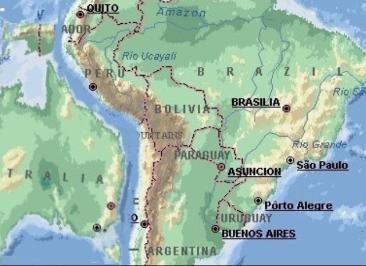
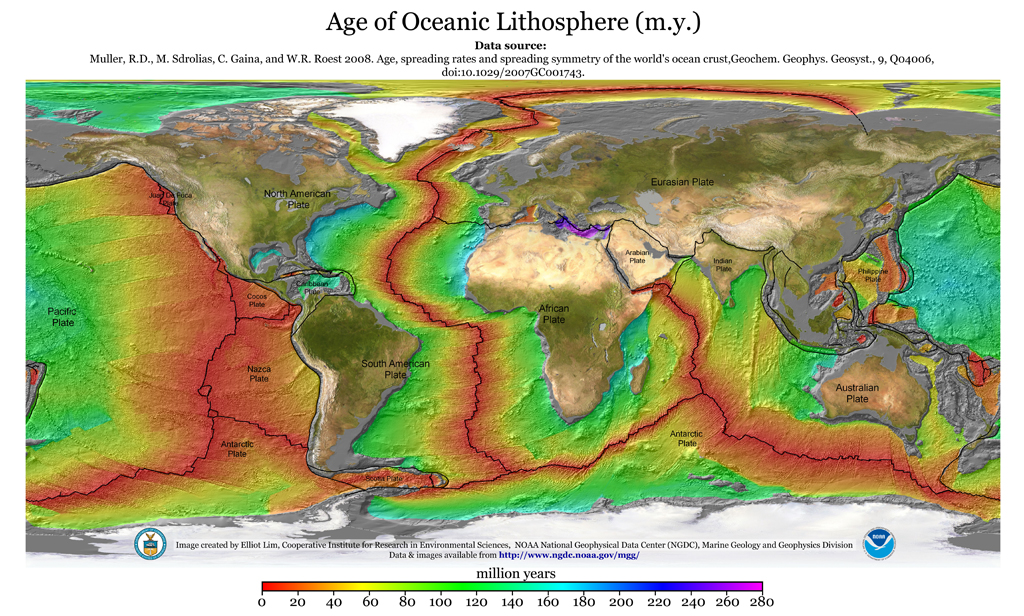
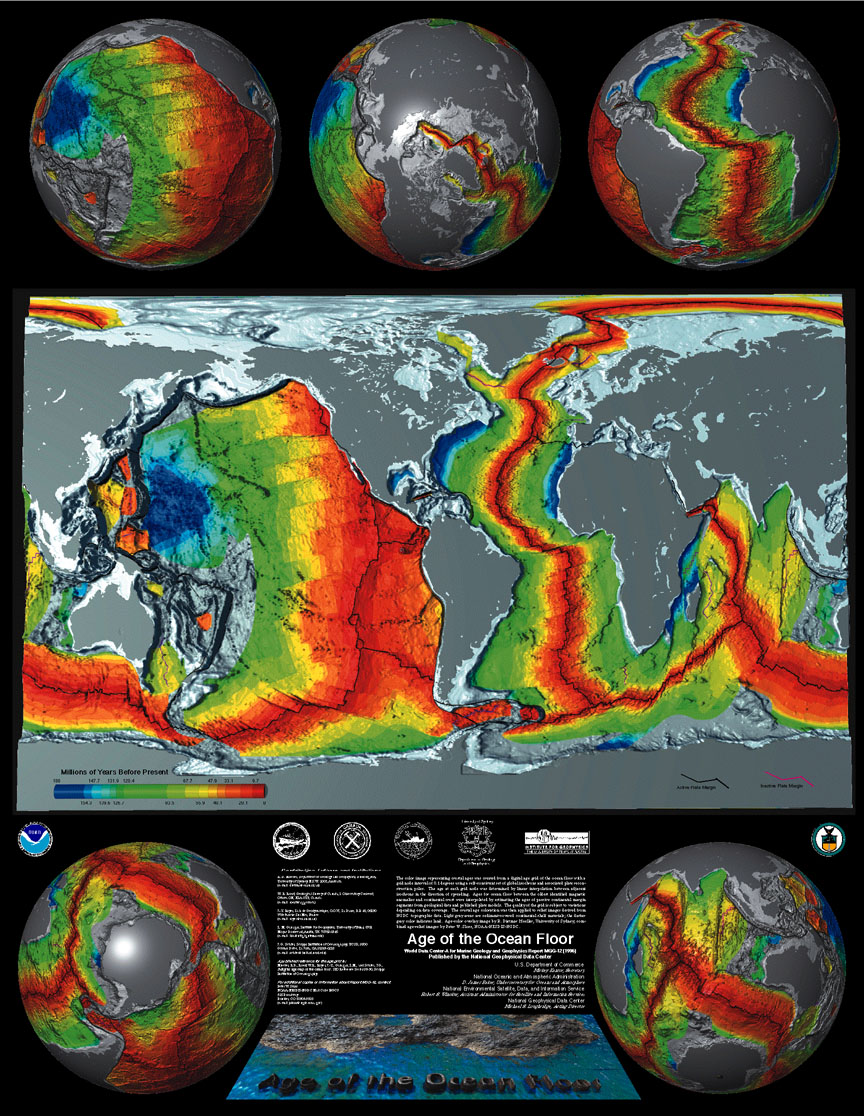
If the Pacific Ocean/Ring of Fire is shrinking in size as required by subduction, how is it possible that Australia was once connected to South America?


Most of the marsupials alive today are confined to South America and Australia.


Via Retardipedia:

There are about 334 species of marsupial, and over 200 are native to Australia and neighboring northern islands. There are also 100 extant American species; these are centered mostly in South America
Harrison, L., The Migration Route of the Australian Marsupial Fauna, Australian Zoologist, Volume 3, Pages 247-263, 1924

McCarthy, D.D., The Trans-Pacific Zipper Effect: Disjunct Sister Taxa and Matching Geological Outlines That Link the Pacific Margins, Journal of Biogeography, Volume 30, Issue 10, Pages 1545-1561, 2003

"Biogeographic arguments for a closed Pacific (just like biogeographic arguments for a closed Atlantic and closed Indian) are based on evolutionary theory. Specifically, according to the theory of evolution, you can't have a host of closely-related, poor dispersing taxa suddenly appearing on opposite sides of an ocean -- when it is highly improbable for any of the ancestral taxa to cross oceans. So according to the referenced paper above, unless plate tectonic theorists want to rely on divine intervention, a slew of creation stories or a myriad of impossible trans-oceanic crossings of terrestrial taxa, their paleomaps are wrong. Panthalassa could not have existed between all of the hundred plus referenced taxa, which is to say, it didn't exist." -- Dennis D. McCarthy, geoscientist, 2003

Briggs, J.C., The Ultimate Expanding Earth Hypothesis, Journal of Biogeography, Volume 31, Issue 5, Pages 855 - 857, 2004

McCarthy, D.D., Biogeographical and Geological Evidence for a Smaller, Completely-Enclosed Pacific Basin in the Late Cretaceous, Journal of Biogeography, Volume 32, Issue 12, Pages 2161 - 2177, 2005

Ali, J.R., Biogeographical and Geological Evidence for a Smaller, Completely-Enclosed Pacific basin in the Late Cretaceous: a Comment, Journal of Biogeography, Volume 33, Issue 9, Pages 1670-1674, 2006

Briggs, J.C., Another Expanding Earth Paper, Journal of Biogeography, Volume 33, Issue 9, Pages 1674 - 1676, 2006

Ebach, M.C., and Tangney, R.S., Biogeography in a Changing World, 2007

"The present-day cordilleran system of eastern Australia was formed in still earlier times; it arose at the same time as the earlier folds in South and North America, which formed the basis of the Andes (pre- cordilleras), at the leading edge of the continental blocks, then drifting as a whole before dividing." -- Wegener, A.L., The Origin of Continents and Oceans, 1915

UPDATE: Dennis D. McCarthy is an important genius and I put him up there with Tassos. His website is called The Fourth Revolt.

See video: here.

What the Fascists Don't Want You To See


Egyed: Some remarks on continental drift

L. Egyed1

(1) Geophysical Institute, Eötvös University, Budapest, Hungary

Received: 5 April 1960

Summary: The continental drift may be explained by an expanding Earth only.
Cox and Doell: Palæomagnetic Evidence Relevant to a Change in the Earth's Radius.

INTEREST in the hypothesis that the Earth's radius has increased during geological history has been renewed in recent years because of several sets of independent observations and interpretations. From studies of the deformation of mountain ranges and the distribution of faults and oceans, Carey1 proposes an increase in the Earth's area of 45 per cent since the Palæozoic era. Heezen2 similarly interprets submarine topography as indicating that the oceans may be immense rift valleys formed by a pulling apart of the continents as the Earth expanded. Using a different approach, Egyed3,4 infers a rate of increase of the Earth's radius of 0.4–0.8 mm. per year. This calculation is based on a decrease in the total amount of continental area covered by oceans during the past 400 million years, as determined palæographically. Egyed4 has also pointed out the desirability of using palæomagnetic data to test this hypothesis.
Carey: Palæomagnetic Evidence relevant to a Change in the Earth's Radius.

Cox and Doell1, applying a suggestion of Egyed2 to test the reality of the expansion of the Earth through geological time, have calculated the radius of the Earth implied by comparison of Permian palseomagnetic measurements in the Maymecha–Kotuy region of Siberia and localities in western Europe, and find that although the standard deviation of the individual results is very wide indeed, the average of the computed radii of the Earth is close to the present radius. From this they conclude that the substantial post-Palæozoic expansion of the globe deduced by me on tectonic grounds is unlikely.

Wednesday, November 5, 2008

Moonbats Predict Collapse of Civilization


Peak Oil and the Consequent Collapse of Civilization.

Matt Savinar’s website gives a broad and compelling overview of the fix we’re in, and it debunks ridiculous ideas such as “deep” and “abiotic” oil, and also hydrogen as a fuel. It’s worth reading the site’s breaking news every day.
LOL. At least we have Obama to save us.

Monday, November 3, 2008

Oil Falls To $64


Oil falls to $63.

NEW YORK (CNNMoney.com) -- The price of oil fell on Monday as fresh signs of economic weakness stoked concerns about waning energy demand worldwide.

Light, sweet crude for December delivery fell $3.90 to settle at $63.91 a barrel on the New York Mercantile Exchange.

The oil market was pressured by a report showing that U.S. manufacturing activity sank to a 26-year low last month and fell below the level consistent with recession.