Tuesday, December 16, 2008

Scientists Confirm Infinite Hydrocarbons On Titan


NASA: Titan's Volcanoes Give NASA Spacecraft Chilly Reception.

Some Cassini scientists indicate that such volcanism could release methane from Titan's interior, which explains Titan's seemingly continuous supply of fresh methane. Without replenishment, scientists say, Titan's original atmospheric methane should have been exhausted long ago.

Monday, December 15, 2008

Stream of Atomic Hydrogen Coming From The Sun


James Anthony Phillips: Solar Flare Surprise.

Dec. 15, 2008: Solar flares are the most powerful explosions in the solar system. Packing a punch equal to a hundred million hydrogen bombs, they obliterate everything in their immediate vicinity. Not a single atom should remain intact.

At least that's how it's supposed to work.

"We've detected a stream of perfectly intact hydrogen atoms shooting out of an X-class solar flare," says Richard Mewaldt of Caltech. "What a surprise! These atoms could be telling us something new about what happens inside flares."

The event occurred on Dec. 5, 2006. A large sunspot rounded the sun's eastern limb and with little warning it exploded. On the "Richter scale" of flares, which ranks X1 as a big event, the blast registered X9, making it one of the strongest flares of the past 30 years.

NASA managers braced themselves. Such a ferocious blast usually produces a blizzard of high-energy particles dangerous to both satellites and astronauts. Indeed, moments after the explosion, radio emissions from a shock wave in the sun's atmosphere signaled that a swarm of particles was on its way.

An hour later they arrived. But they were not the particles researchers expected.

NASA's twin STEREO spacecraft made the discovery: "It was a burst of hydrogen atoms," says Mewaldt. "No other elements were present, not even helium (the sun's second most abundant atomic species). Pure hydrogen streamed past the spacecraft for a full 90 minutes."
Read the whole thing.

Gravity In The Garbage Can


Science Daily: Planet Formation Could Lie In Stellar Storms Rather Than Gravitational Instability.

ScienceDaily (Dec. 15, 2008) — New research suggests that turbulence plays a critical role in creating ripe conditions for the birth of planets. The study, to be published in The Astrophysical Journal, challenges the prevailing theory of planet formation.

Using three-dimensional simulations of the dust and gas that orbits young stars, the study demonstrates that turbulence is a significant obstacle to gravitational instability, the process that scientists have used since the 1970s to explain the early stage of planet formation.

Gravitational instability proposes that dust will settle into the middle of the protoplanetary disk around a newly-formed star. It is thought that the dust will gradually become denser and thinner until it reaches a critical point and collapses into kilometer-size clumps, which later collide to form planets. But new research by San Francisco State University professor Joseph Barranco shows that turbulent forces keep the dust and gas swirling and prevent it from forming a dense and thin enough layer for gravitational instability to occur.

"These results defy the proposed solution of how planets are formed," Barranco said. "Scientists have long been using gravitational instability theory to explain how millimeter-size particles grow to kilometer-size, but these new simulations open new avenues of investigation. Perhaps massive storms, similar to hurricanes found on the Earth or Jupiter, provide clues about how tiny dust grains clump together to become kilometer-size boulders."
Hmmm. Planets forming from the hurricanes of Jupiter? I seem to remember a certain Dr. Velikovsky making such a claim.

Sunday, December 14, 2008

Warm Plasma Cloak Discovered


Science Daily: Discovery Of Warm Plasma Cloak Surrounding Earth, New Region Of Magnetosphere

ScienceDaily (Dec. 14, 2008) — A detailed analysis of the measurements of five different satellites has revealed the existence of the warm plasma cloak, a new region of the magnetosphere, which is the invisible shield of magnetic fields and electrically charged particles that surround and protect Earth from the onslaught of the solar wind.

The study was conducted by a team of scientists headed by Charles "Rick" Chappell, research professor of physics and director of the Dyer Observatory at Vanderbilt University and published this fall in the space physics section of the Journal of Geophysical Research. The northern and southern polar lights – aurora borealis and aurora australis – are the only parts of the magnetosphere that are visible, but it is a critical part of Earth's space environment.

"Although it is invisible, the magnetosphere has an impact on our everyday lives," Chappell said. "For example, solar storms agitate the magnetosphere in ways that can induce power surges in the electrical grid that trigger black outs, interfere with radio transmissions and mess up GPS signals. Charged particles in the magnetosphere can also damage the electronics in satellites and affect the temperature and motion of the upper atmosphere."

The other regions of the magnetosphere have been known for some time. Chappell and his colleagues pieced together a "natural cycle of energization" that accelerates the low-energy ions that originate from Earth's atmosphere up to the higher energy levels characteristic of the different regions in the magnetosphere. This brought the existence of the new region into focus.

The warm plasma cloak is a tenuous region that starts on the night side of the planet and wraps around the dayside but then gradually fades away on the afternoon side. As a result, it only reaches about three-quarters of the way around the planet. It is fed by low-energy charged particles that are lifted into space over Earth's poles, carried behind the Earth in its magnetic tail but then jerked around 180 degrees by a kink in the magnetic fields that boosts the particles back toward Earth in a region called the plasma sheet.

Chappell and his colleagues – Mathew M. Huddleston from Trevecca University, Tom Moore and Barbara Giles from the National Aeronautics and Space Administration, and Dominique Delcourt from the Centre d'etude des Environments Terrestre et Planetaires, Observatoire de Saint-Maur in France – used satellite observations to measure the properties of the ions in different locations in the magnetosphere.

Saturday, December 13, 2008

Black Holes And Other Cosmic Mirages


"They are looking through the wrong end of the telescope and telling us what they imagine they see." -- Mel Acheson

According to relativity, photons have zero mass. Since they have zero mass, it is impossible for gravity to have any effect on them. However this is all denied by the fanatic relativists: Supermassive Black Hole Dissected With Natural Magnifying Glasses: 1,000 Times Clearer Than Best Telescopes Can Do.

The team of astronomers from Europe and the US studied the "Einstein Cross", a famous cosmic mirage. This cross-shaped configuration consists of four images of a single very distant source. The multiple images are a result of gravitational lensing by a foreground galaxy, an effect that was predicted by Albert Einstein as a consequence of his theory of general relativity. The light source in the Einstein Cross is a quasar approximately ten billion light-years away, whereas the foreground lensing galaxy is ten times closer. The light from the quasar is bent in its path and magnified by the gravitational field of the lensing galaxy.
So let me get this straight. Prior to Einstein's hypothesis of General Relativity, magnetic fields couldn't bend light? Ever heard of magneto-optic effects? And how can something that has zero mass be affected by gravity? If gravity bends light, why don't astronauts and cosmonauts observe this effect when they look at the Earth? Why don't we see the Earth as blurry? And why don't we observe this effect around Sagittarius A*?


Dowdye, Jr., E.H., Astrophysical observations at the galactic center appear to counter General Relativity, suggesting that the conventional understanding of gravitational lensing is seriously flawed, 2007

Intense astrophysical observations at the galactic center of the Milky Way appear to counter General Relativity, suggesting that the conventional understanding of gravitational lensing is seriously flawed. The lack of evidence for any gravitational light bending effects on the emissions from the orbiting stellar objects about the galactic core clearly shows that fundamental principles of Mathematical Physics may have been seriously misapplied to the problem at the galactic core. This has apparently resulted in flawed concepts on the interaction of gravity and light, also resulting in the conventional understanding of gravitational lensing.

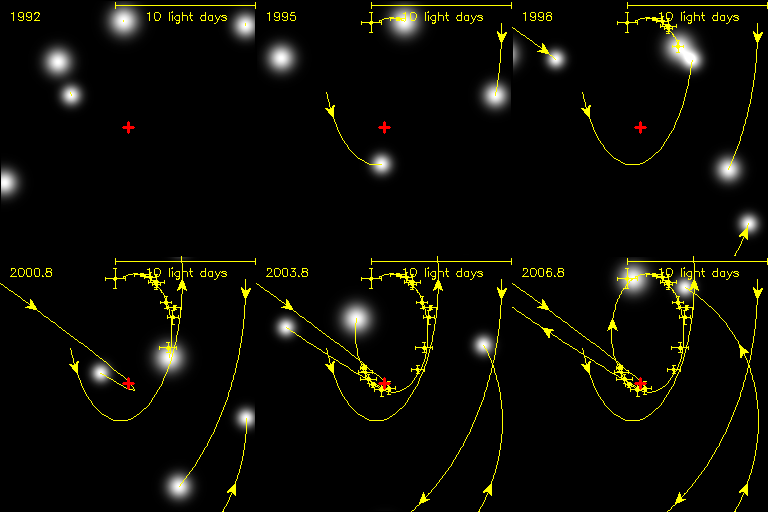
Observed emissions from the rapidly moving stars, especially the star known as S2, observed to move on an well defined eliptical path about the galactic center known as Sagittarius A*, appear to contradict General Relativity. Time resolved images of the Keplerian motion of these stars have exhibited to date no evidence of gravitational distortions in the images due to gravitational
light bending effects, as predicted by General Relativity. Moreover, the findings clearly show that fundamental principles of Mathematical Physics may have been seriously misapplied to the conventional understanding of gravitational lensing.

Details have been published in the highly esteemed and renowned refereed journal, the Astronomische Nachrichten (English title: Astronomical Notes). The title of the article is: "Time resolved images from the center of the Galaxy appear to counter General Relativity", Dowdye, Jr., E.H., Astronomische Nachrichten, Volume 328, Issue 2, Date: February 2007, Pages 186-191.
Scott, D., Gravitational Lensing or Death of a Theory?, Jul 2006

Dowdye, Jr., E.H., Profound Fundamentals of Mathematical Physics Seriously Misapplied to Gravitational Lensing, Dec 2008

Friday, December 12, 2008

Why Doesn't The Earth Crash Into The Sun?


According to Newton and Einstein, the sun and Earth are attracted to eachother gravitationally.

So why haven't they crashed into eachother?

According to Newton's so-called "theory" of gravity: God.

The Earth is alleged to have formed 4.5-4.6 billion years ago and according to Newton and gravity, God in His infinite wisdom made the Earth with the exact perfect velocity at the time of creation so as not to exceed the escape velocity.

In Principles of Mathematics Having Nothing To Do With Physics Newton writes:

"Every body perserveres in it's state of rest, or of uniform motion in a right line [Einstein doesn't believe in right lines so according to Relativity that's impossible], unless it is compelled to change that state by forces [electromagnetic perhaps?] impressed thereon."

However, for the past 4.5 billion years the Earth has been experiencing forces and friction via cosmic rays and Birkeland currents so the Earth should have either (a) been accelerated past escape velocity into the depths of space or (b) slowed sufficiently below orbital velocity, thus crashing into the sun.

In the General Scholium, Newton writes the following:

"...lest the systems of the fixed stars should, by their gravity, fall on each other, he [God] hath placed those systems at immense distances from one another."

Fixed stars? Is this guy serious? The Arp 147 galaxy pair crashing into eachother don't look too distant from one another or fixed to me.

Thursday, December 11, 2008

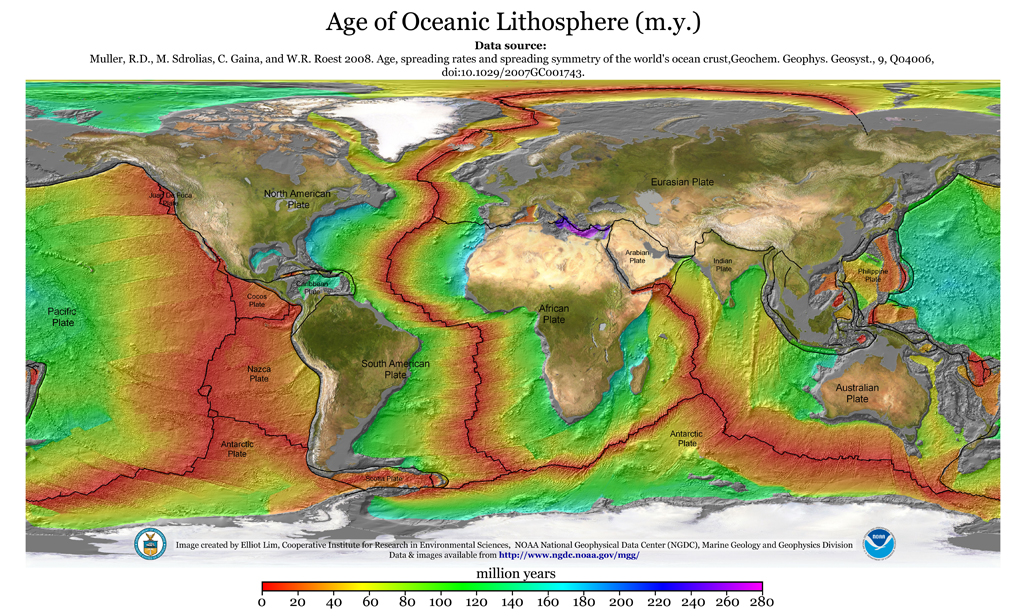
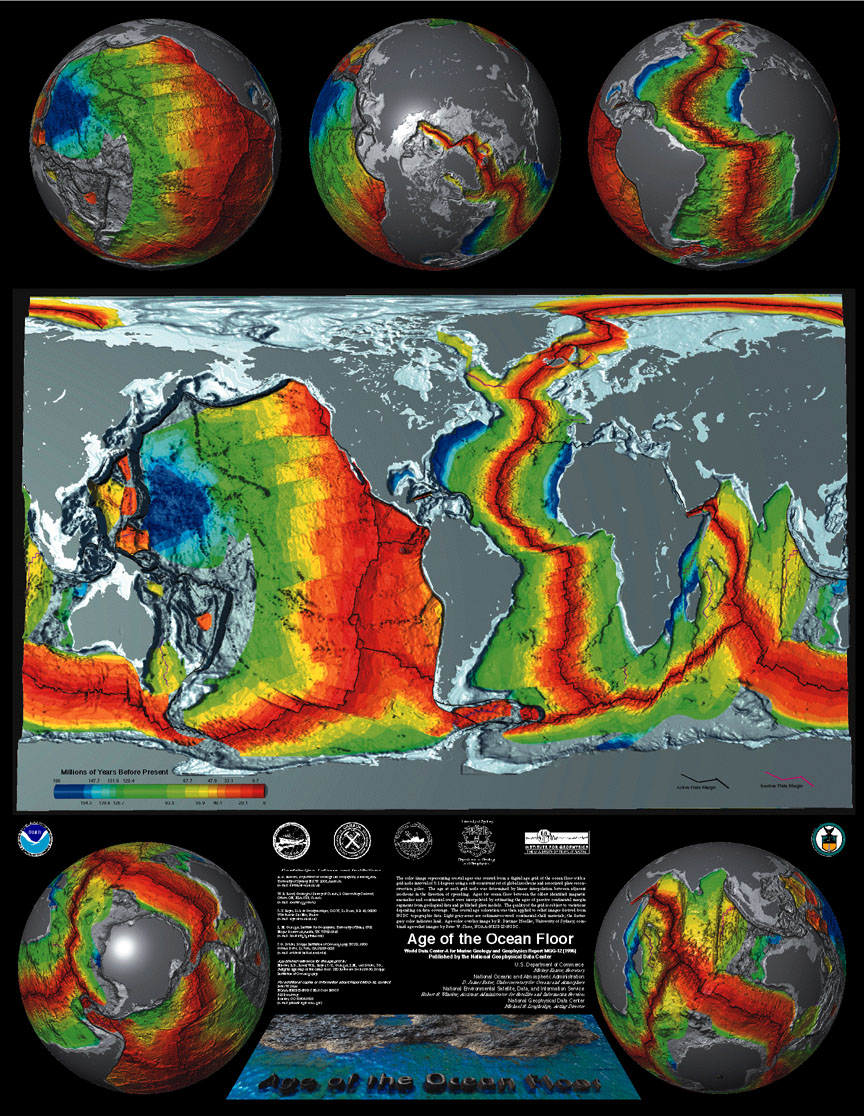
Earth Expansion Observed At Continental Rift


Calais, et al.: Strain accommodation by slow slip and dyking in a youthful continental rift, East Africa.

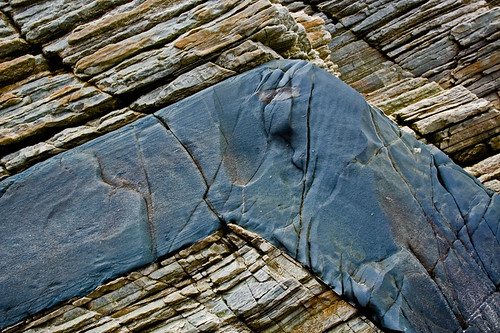
Continental rifts begin and develop through repeated episodes of faulting and magmatism, but strain partitioning between faulting and magmatism during discrete rifting episodes remains poorly documented. In highly evolved rifts, tensile stresses from far-field plate motions accumulate over decades before being released during relatively short time intervals by faulting and magmatic intrusions1, 2, 3. These rifting crises are rarely observed in thick lithosphere during the initial stages of rifting. Here we show that most of the strain during the July–August 2007 seismic crisis in the weakly extended Natron rift, Tanzania, was released aseismically. Deformation was achieved by slow slip on a normal fault that promoted subsequent dyke intrusion by stress unclamping. This event provides compelling evidence for strain accommodation by magma intrusion, in addition to slip along normal faults, during the initial stages of continental rifting and before significant crustal thinning.