Sunday, November 30, 2008

How Should We Presume?


Mel Acheson: How Should We Presume?

The burden of proof is on gravity theorists to explain some mechanism that suppresses the large initial electromagnetic energies and then enables the weak force of gravity to build them back up again.

Several astrophysicists have told me that, although plasma cosmology appears interesting, they won’t consider it until proponents can prove that some mechanism can produce charge separation in space from neutral matter on an astronomically significant scale.

At first thought, the presumption that neutral matter is the starting condition appears reasonable. It’s consistent with our everyday experience, and it fits with our other physical theories. It’s compatible with “secure knowledge.” Until the space age, human experience was almost exclusively that of neutral earth, air, fire, and water. Except for a few intermittent events such as lightning, plasma phenomena occur only in the high-energy domains of outer space. The concept of plasma didn’t exist until the twentieth century.

Investigations of plasma phenomena in the past century now confront us with another possibility. We’ve become aware that most of the observable universe is composed of plasma. The starting condition could just as well be separated charges, and what we observe is the consequential charge combination (not recombination).

Consilience with the “already known” is a circular argument because our other physical theories are also based on this presumption. After removing tautologies, “reasonableness” reduces to “familiarity” and parochialism.

Geology provides an illustration of this bias. The formations on Earth have been exclusively described in terms of mechanical action, and the resulting facts are turned back to justify the presumption. A river flows down a valley, and the valley’s existence and form are attributed to the water’s erosion acting over a long time. Then the existence of the valley and the river as the only apparent instrumental agency is thought to justify the attribution.

Stephen Smith, in many Thunderbolts Pictures of the Day, has examined these formations in the light of a presumption that plasma forces may have caused them. The valley could have been formed in a short time by planetary-scale electric arcs, and the river would have been opportunistically “captured.” After all, we see similar formations on planets and moons that don’t have, and probably never had, water.

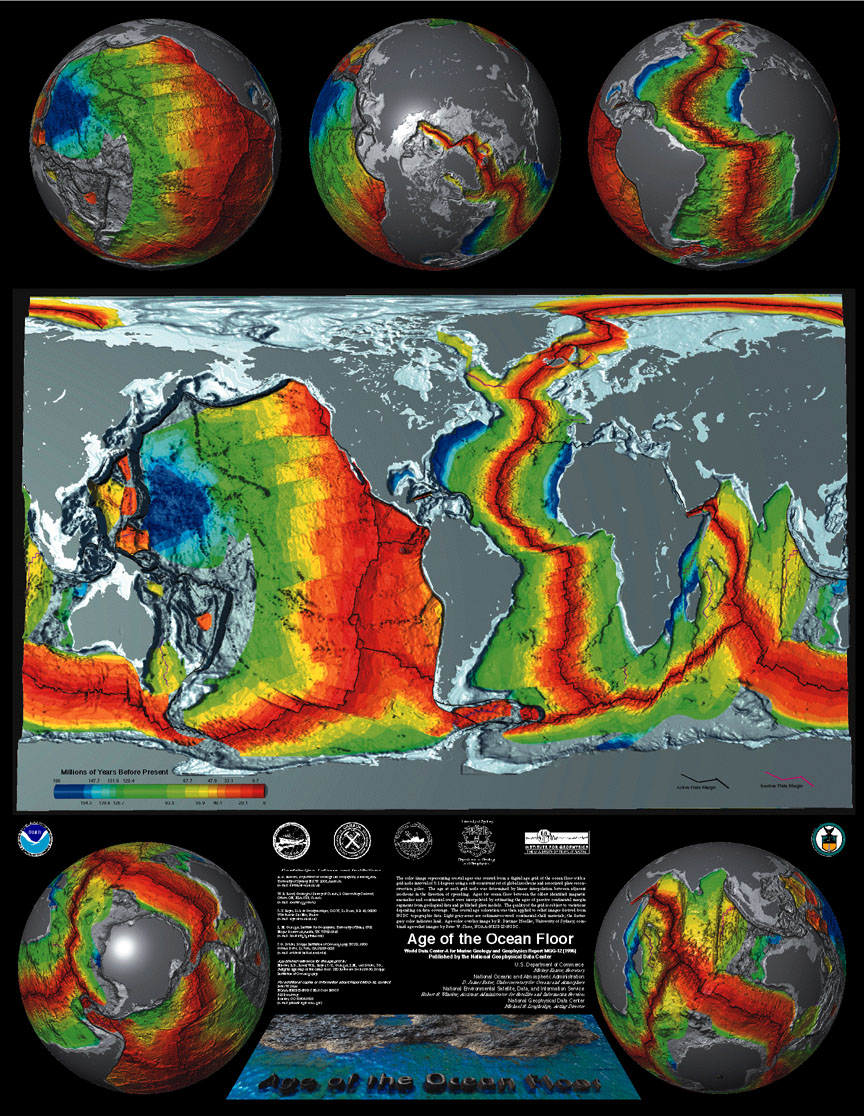
The electrical presumption is as general as the mechanistic one: the ocean floor may be understood as the scar of an Earth-engulfing plasma discharge, a small-scale version of what we see in planetary nebulae, and the water subsequently collected at the bottom. Changing the familiar presumption changes the familiar landscape into an unfamiliar one.

Awareness of the “bias of familiarity” then provokes a second thought. The bias arises not from where we live but from the peculiar limits of our senses. Plasma activity proclaims itself largely in frequencies such as radio and x-ray that lie outside the sensitivities of our senses. We are unfamiliar with plasma because we are blind to it. Modern astrophysicists are in this sense correct to claim that 90% of the universe is undetectable “dark” substances. Their error is to fill in the blank with mathematical extrapolations from familiar theories and to leave their thinking blind to plasma.

The space age has provided us with instruments and techniques that extend our senses to detect plasma. We are now able to experiment with it in laboratories. Our thinking tends to remain stuck in familiar habits and ideas, however. We must make an effort, sometimes a great and frightening effort, to root out our familiar presumption and to adapt our thinking to an unfamiliar new empirical foundation.

Friday, November 28, 2008

Cosmic Ray Hot Spots Puzzle Researchers


Ball, P., Cosmic-Ray Hot Spots Puzzle Researchers, Nature, Nov 26th 2008. (Hat tip: Dave L.)

Proton discovery may cast doubt on dark-matter theories.

Philip Ball

The Milagro detector has seen cosmic-ray hot-spots. Hot on the heels of speculation that cosmic rays may have revealed the signature of elusive dark matter in space, new observations could challenge that idea and reinforce an alternative explanation.

A seven-year-long experiment at the Milagro cosmic-ray detector near Los Alamos, New Mexico, has revealed 'bright patches' of high-energy cosmic rays in the sky1 – something incompatible with a dark-matter source.

Cosmic rays are charged particles, mostly protons and electrons, that are produced in space and generally have a characteristic energy spectrum — the higher their energy, the rarer they are.

But last week, researchers working on the Advanced Thin Ionization Calorimeter (ATIC) experiment, which uses detectors borne by a high-altitude balloon to measure cosmic-ray electrons above the Antarctic, reported an unexpected bump in this energy spectrum, corresponding to a surfeit of electrons with energies between 300 and 800 gigaelectronvolts2.

Hints at such an anomaly have been seen before. A satellite observatory — Payload for Antimatter Matter Exploration and Light-nuclei Astrophysics (PAMELA) — detected an excess of cosmic-ray positrons, the anti-particles of electrons, at similar energies3. And a Japanese detector called the Balloon-borne Electron Telescope with Scintillating fibers (BETS) also found a small excess of cosmic-ray electrons at high energy4.

These cosmic rays may be the decay products of hypothetical particles of dark matter, thought to make up about 85% of all matter in the Universe. Astronomers have invoked dark matter's gravitational effects to explain why rotating galaxies don't fall apart as they whirl through space. But as the name implies, dark matter can't be seen directly and its identity remains obscure.

A common assumption is that dark matter consists of a hitherto unknown particle that interacts weakly with other forms of matter. In some theories, two dark-matter particles are predicted to annihilate when they collide, producing a high-energy electron–positron pair. These could account for the ATIC cosmic-ray bump and the hints of it in the PAMELA data. But if that's so, the anomalous cosmic rays should be distributed more or less evenly across the sky.

In contrast, the Milagro team, led by Jordan Goodman at the University of Maryland, College Park, found cosmic-ray protons bunched up in two 'hot spots': one between the Orion and Taurus constellations, the other near Gemini. They think that the excess cosmic rays may be coming from exotic sources such as the rapidly rotating neutron stars known as pulsars, rather than dark-matter annihilations.

Dark-matter mystery

Goodman stresses that it's not yet clear if the ATIC and Milagro results are related, because the former measure cosmic-ray electrons whereas the latter detect protons. But he says the sources of the protons they have seen could also plausibly generate the electrons and positrons found in the earlier studies. "If it's the same phenomenon making them all, then it's not dark matter," he says.

But the dark-mater explanation still cannot be ruled out. "I've been totally perplexed by the hot spots but I don't see any reason to connect them with the ATIC findings," says Dan Hooper, a theoretical physicist at Fermi National Accelerator Laboratory in Batavia, Illinois.

The Milagro detector isn't aimed primarily at investigating cosmic rays, but is instead used for gamma-ray astronomy. When high-energy gamma rays hit our atmosphere they trigger a shower of exotic particles. These particles annihilate when they collide with water in Milagro's giant tank, producing a flash of light that can be recorded by sensors.

But 99.9% of the flashes seen by Milagro originate from collisions of cosmic-ray protons, explains Goodman. That creates a background signal that has to be subtracted in order to identify gamma rays from energetic astrophysical sources. Goodman says that finding localized sources of cosmic-ray protons in this background came as a surprise to them.

An earlier cosmic-ray experiment called the Tibet Air Shower Array, run by a team of researchers in Japan and China, saw broad differences in the cosmic-ray intensity between the two hemispheres5, but no one had previously seen such smaller-scale concentrations.

The Milagro team suggests that the protons, with energies of around 10,000 gigaelectronvolts, may be generated in the extreme astrophysical environment of a super-dense neutron star or pulsar. At least some high-energy cosmic rays have previously been shown to come from super-massive black holes in nearby galaxies6.

"We don't know what is causing it," Goodman admits. He suggests that the localization may be partly caused by magnetic fields focusing the protons' trajectories.

But in general, magnetic fields in interstellar space should exert a randomizing influence, destroying any bright spots, says Hooper. "I can't imagine how they're created, and I don't know if anyone has any great ideas," he says.

Thursday, November 27, 2008

Of White Whales and Dark Energies


Dylan Thuras: Of White Whales and Dark Energies.

It would appear that something is blasting our universe apart— an awkward situation, to say the least. As a resident of the universe, one feels as if he should have a say, a vote in the cosmic election. "Nay on Proposition Omega - The Blasting Apart of the Universe!" But alas, the universe is cruelly undemocratic. Despite one's uncomfortable feelings about it, the galaxies will continue to fly away from each other at an ever-increasing speed, and they will seemingly do so forever, until the universe turns cold and empty— a cosmic desert.

This is the standing theory anyway. To understand how we got here, to this strange and disconcerting flinging to pieces, we must go back (or at least I feel like taking us back) on a curious journey. A journey through rough seas and darkened basements, up mountain observatories and into the furthest reaches of dying starlight. We'll even learn about whales! We begin this tale one hundred and thirty years ago in Nantucket, with the unfortunate tale of a young whaler named Owen Coffin.

It was 1819 and seventeen year old Owen was bored of the Nantucket life. Bored. To. Tears. To escape his folks and enjoy a little adventure, Owen and his friend Charles took jobs aboard a whaling ship. It was a stroke of good fortune that Owen's cousin was George_Pollard_Jr, the captain of the Essex. He had gladly secured Owen and Charles positions on the ship. They were going to see the world! The intended voyage would be a two and half year trip around the west side of South America and into the South Pacific in search of Sperm Whale.

They had been out to sea for about a year, and things were going well. In fact, if things kept up at this pace, the crew of eighteen would be home, and rich, in no time at all. On the morning of November 20, 1820, whale spouts were spotted on the horizon. Three small whaling boats set out from the Essex. In the midst of the Sperm Whale hunt, a seemingly improbable disaster struck. The whale fought back.

The crew had already speared two sperm whales when, in a flash, an 85-foot bull whale 1 slammed its huge head into the side of the boat, causing the boat to rock violently "as if she had been struck by a rock," the first mate recalled. "We looked at each other with perfect amazement, deprived almost of the power of speech." As young Owen and the crew regained their footing, the whale struck the Essex again, this time staving in the bow of the huge ship. Nothing could be done. Within ten minutes, the 238-ton ship was underwater. The first mate wrote of the incident,

"Amazement and despair now wholly took possession of us. We contemplated the frightful situation the ship lay in, and thought with horror on the sudden and dreadful calamity that had overtaken us...To shed tears was all together unavailing, and withal unmanly; yet I was not able to deny myself the relief they served to afford me."

Melville wasn't kidding when he wrote "forehead to forehead I meet thee, this third time."

Two of the whaling boats were too far away to see what had occurred. When they returned to find the ship, it was nowhere to be found. Things only got worse for the crew of the Essex from there on out. Owen, George, and the rest of the crew survived in the three small whaling boats, before finding the uninhabited Henderson Island. They remained on land for a week, eating every available food source, until they had exhausted all natural resources. All the remaining crew but three set off on water in an attempt to make their way back to civilization. Back on open seas, many soon succumbed to exposure and starvation. Without some kind of sustenance, they would surely die. It was only a matter of time before they would have to answer the delicate question of which one it would be.

When Owen drew the black dot, he knew what it meant. His cousin George tried to take his place, as did his friend Charles, but Owen was steadfast. He drew the black dot and it was he who would be killed and eaten. In a cruel twist of fate, his friend Charles drew the black dot which decided who would be the one to kill Owen. Pollard pleaded with his cousin once more saying "My lad, my lad, if you do not like your lot, I'll shoot the first man that touches you," to which Owen lay down his head and replied "I like it as well as any other." Owen's 28-year-old cousin George and captain of the Essex, who had sworn an oath to protect Owen, looked on in horror as Charles shot his best friend Owen in the head. And then they ate. 2

Eventually, George and Charles were rescued along with a few other members of the crew. The ship's first mate went on to publish a book about his experiences titled Narrative of the Most Extraordinary and Distressing Shipwreck of the Whale-Ship Essex. You can be sure Melville read it with horrified delight, and the sinking of the Pequod is based largely on the tale. 3

Horrible as it was, Owen Coffin's death was not in vain. Besides saving the lives of his fellow shipmates— albeit in a horrible and gruesome manner— and inspiring Moby Dick, there is another legacy that can be found in the tale. In a funny roundabout way, the way in which I am taking you on this strange tale, Owen, and other whalers like him, were of significant importance to the advancement of modern physics. Without whalers like Owen, we might not have achieved one the great discoveries of physics or been lead to one of the greatest scientific mysteries of our day.

Albert Abraham Michelson also once served on a ship in the US Navy. Born in Poland, but raised in the rough-and-tumble mining towns of California, the Jewish Albert had to work twice as hard to get by. While serving in the Navy, he had shown great skill in the fields of optics and heat. Now in his thirties, he was working as a scientist at the Case School in Cleveland, Ohio. One thing in particular interested Albert Michelson: He was obsessed with light and how it got where it was going. The year was 1887, and Michelson had just met another scientist named Edward Morley, who was also curious about light and the substance that carried it across the universe. They called it "the luminous ether."

Waves move through water as sound does through air. They knew there was no water or air in the vacuum of space, but there had to be something, some kind of medium in which light waves could propagate. That something was the ocean that made up all of space, it was ether, and together Michelson and Morley were going to measure it. The basic idea was that the Earth, sun, everything was spinning and moving in this ethereal stuff, like apples in a bobbing bucket. As the Earth spun in the ether it would create an ether wind, and the speed of the light aligned with the direction of the ether. Wind would be faster, like a runner with a breeze at his back. To measure this, they would use a curious instrument which Michelson had been perfecting for the past 10 years.

An inferometer is a delicate device. It is made of a steady light source, a half silvered mirror, two (or more) regular mirrors, and a "detector" or something for the light to shine onto. To detect the ether, a beam of light is sent to the half silvered mirror, a mirror that lets half of the light through and reflects the other half, split at a right angles. Then using the normal mirrors, the beam was sent back to the half silvered mirror where it would recombine into one beam and shine onto the detector.4 The speed of the light would change depending on how the Earth was positioned to the ether wind, and this difference would be shown in a tell-tale pattern on the detector. Measure this, and you'd measure the ether.

Michelson and Morley often had to wait to do their experiments until late in the evening, when the city had quieted down, to make sure there would be no disrupting vibrations. To protect against vibrations and interference, the inferometer was kept in a basement and built on a massive slab of marble, which was then floated on a pool of mercury. One can picture them now, sitting there, bowler-hatted and mustachioed in a dark basement, ready to use the apparatus. All they needed was a steady and reliable light source. For this they looked to the sea.

And here is where the whales come back in. Are you ready to learn more about whales? Here goes. Physeter macrocephalus, or the Sperm Whale, is a remarkable creature. They have the largest brain 5 ever to exist in any known animal; they can survive in a huge range of environments and are found from the Arctic to the equator; they feed primarily on giant and colossal squid (and have been known to snack on Great Whites); they collectively eat more tonnage of seafood then the entirety of humanity; the bull males have no natural predators and are the largest living toothed animal; they use echolocation to help see and find mates; they produce the loudest sounds known in nature; and they can live for over 70 years! Whew! Sperm Whales are bizarre, majestic, and truly fantastical creatures.

To the people of the 19th century, whales were a lot like a floating Wal-Marts; huge, ugly, and full of desirable products. Whale bone was used in clothing and as decoration, whale meat could be eaten (though it rarely was 6) or used as feed for animals, and whale teeth were carved into artful decorations called scrimshaw. Even more valuable was whale fat, used in soaps, cosmetics, and as machine lubricant. A foul-smelling mass called ambergris, when aged, was worth almost its weight in gold and was used as an ingredient in expensive perfumes7. But more than anything, Sperm Whale hunters were after spermaceti.

Today the finite [sic] resources of petroleum pose a major problem, but in those days, they had a different kind of dependence on foreign oil. The head of a Sperm Whale is one fourth the length of it's entire body, and it is filled with a waxy white substance known as spermaceti. It is used by the whales as ballasts. When the fluid was first discovered in the 1700s, it reminded whalers of sperm, hence the name Sperm Whales. 8 To collect this liquid, the whale's head would be cut off and lashed to the side of the ship. A whaler would then bore a man-sized hole in the whale's head and climb inside, chest deep in spermaceti, and hand out buckets— often up to three tons— of the of the waxy liquid. This messy job was done because spermaceti proved to have one exceedingly valuable property. It burned brightly, and it burned evenly. 9

Candles were a big business in the 19th century. William Procter and his brother-in-law James Gamble (you might recognize their last names) made their fortune selling candles. During the Middle Ages, candles were made of either animal fat (known as tallow) or beeswax. Tallow candles were smoky, the light was uneven, and they smelled of seared flesh as they burned. The more expensive beeswax candles burned better, but spermaceti candles proved to be the best. They burned brightly and evenly— evenly enough so that they could be used to produce a standard measurement of light, something of great importance to anyone that might, for example, be trying to control the variables in physics experiments.

Let's take a moment here to talk about units of measurement. It may not seem like it, but units of measurement are fascinating and really quite wacky. The cubit, span, yard, fathom, handbreadth, and foot all measure the same thing: length. In a 1958 MIT fraternity prank, members used their fraternity brother Oliver R. Smoot to measure the length of the Harvard Bridge in a unit of measurement they termed "smoots." They layed Smoot end over end across the entire bridge. (The bridge's length was measured to be 364.4 smoots plus or minus one ear 10.) So really, anything can be a unit of measurement, as long as it is agreed upon. But of course, they weren't agreed upon at all until recently. An "inch" was measured as the width of a man's— any man's— thumb, and the weight of a pound was based on the weight of grain, which was different in each town. Uniformly agreed-upon units of measurement are extremely important, because without them, activities like building a house, paying someone for a bag of feed, or asking someone how far to the next town become very, very difficult. So when people did manage agree on a new unit of measurement, it was worth noting.

And so it was defined in 1860 that a unit of candlepower was the light produced by "a pure spermaceti candle weighing one-sixth of a pound, burning at a rate of 120 grains per hour." Spermaceti candles weren't just an excellent source of oil, but were now a scientific instrument as well. When Michelson and Morley lit their spermaceti oil-filled lamps, they understood that it burned at a scientifically calibrated rate of eight candlepower units per hour.

But what Michelson and Morley didn't understand was why they couldn't see the ether. They tried the experiment again and again, but they couldn't seem to measure anything substantial. What they did measure was 1/40th of what they expected— so small, in fact, as to fall within the margin of error. It was almost as if the ether didn't even exist. But that couldn't be right, for if the ether didn't exist and light traveled at a constant speed... well, it would mean that Newton, Galileo, and the entire basis of physics was wrong! The lack of an ether was a shocking discovery, and the Michelson-Morley experiment became known as the most famous failed experiment. This is not to say it wasn't valuable; indeed, it may have been one of the most important physics experiments ever conducted. Michelson went on to receive the Nobel Prize for his work on the experiment. (For his part, Morley never fully believed the results of his own experiment, and he went on to test for the ether in several more experiments.) But there was one young man who became sure the experiment had been a success. He was only eight years old at the time of the Michelson-Morely experiment, busy reading geometry books, and it would be another eighteen years before he would say exactly how they were wrong. But when he did explain, the world took notice.

Albert Einstein was positive the inferometer had worked. He was sure that it proved there was no ether. As it turns out, ether is kind of unwieldy. If you consider a universe governed by a mysterious and unmeasurable substance and a universe without it, this mysterious ether quickly seems like a bizarre assumption. All you needed to do was forgot all your assumptions and imagine a universe without ether, which Einstein promptly did. 11 Einstein developed this idea further, saying that the results of the Michelson-Morley experiment meant that light traveled in all directions, at once, at a constant speed. Einstein slowly began to realize that even if Michelson and Morely had been doing the same test while flying through space at half the speed of light, their results would have been the same. There was no light faster then light, no light slower than light— there was only the speed of light and it was a constant. 12 Einstein called this idea his special theory of relativity and it was to turn the world of physics upside down.

Ninety some years later, Einstein's special theory of relativity, with all it's strange space-time implications 13, as well as his general theory of relativity have been established as tried and true physics and the basis for modern cosmology. At first Einstein fitted the universe with what he called the cosmological constant, a sort of antigravity ether of his own devising. Einstein was embarrassed by the cosmological constant, as it was an awful lot like the ether, but his belief was that the universe was static and the anti-gravitational constant was a way of explaining why gravity hadn't simply crushed everything. But when Einstein was confronted with evidence that the universe was expanding, he took back his cosmological constant, calling it the biggest blunder of his life. The stars, it seemed, would not allow for a static universe.

Galaxies have a color, some are red and some are blue. To us humans at least. This sounds a bit whimsical, but these colors are how we first realized that the universe was doing more then just sitting around, hanging out. Discovered by a shy and secretive astronomer named Vesto Slipher and made famous by braggart Edwin Hubble, astronomers realized that by measuring the colors of galaxies, they could tell which way the universe was moving. In the spectrum of light, blue light is more energetic (shorter wavelengths) and red light is less energetic (longer wavelengths). When light moving through the galaxy is all scrunched up and moving toward us, it appears blue, known as a "blue shift," and when the light is all stretched out and moving away from us, it appears red, known as a "red shift." 14

Slipher and Hubble clearly saw that things in the universe were, by and large, very red. Not only that, but the red shift coming from distant galaxies was proportional to the distance. Most galaxies were red, and the further away the galaxy, the redder it appeared. This meant that the universe was indeed expanding, and the Big Bang Theory was born shortly thereafter. High fives were had, and it seemed, for a while at least, that cosmology was really beginning to make some sense. That is, until astronomers watched a star explode. There were still some very big surprises in store for physicists, involving another measurable unit of light or "standard candle" as well. This candle, however, would be even more exotic than the one crafted from spermaceti.

And this is where we learn about giant, fiery, exploding stars! Imagine a star, the sun for example. It is a huge, massively gigantic fireball, capable of fitting roughly 1.3 million Earths inside. Now imagine it exploding... are you picturing it? If what you see isn't cool, you are not imagining it right. As the star explodes, the explosion rips through its solar system, destroying everything in its path. Planets are incinerated like garbage, moons are vaporized, all in its path ceases to be. It is a big damn explosion. Stars go supernova when the star suddenly has too much (or not enough) energy to remain stable. Sometimes the star's core abruptly turns off and the star collapses into a black hole, releasing massive waves of energy. The other and even more spectacular result is when, like someone who eats himself to death 15, a star sucks up too much fuel from a neighboring star and undergoes "runaway nuclear fusion," literally blowing itself to smithereens.

It probably goes without saying that supernovae are also extremely bright. Five billion times brighter than the sun kind-of bright. In 1006, a supernova occurred that was seen around the world. Chinese, Arab, and Native American astronomers all recorded the stellar event, and it was bright enough that, according modern astronomer Frank Winkler, "people could probably have read manuscripts at midnight by its light." A single supernovae can emit as much light in a couple of weeks as our sun will in its entire 4.5 billion-year life span. Really. Really. Bright. Lucky for us they are also very far away. For astronomers looking to gauge the rate at which the universe was expanding, something really, really bright and really, really far away was just what they needed.

Astronomers knew that the universe was expanding. Slipher and Hubble had already proven this, but what they didn't know was how fast it was happening. Measuring the red shift of galaxies to find the rate was problematic due to interfering light from other galaxies. In the words of astrophysicist and writer Michael Brooks "it is like trying to measure the properties of human speech by listening to a soccer crowd." No, to figure out the the speed of the universe's expansion, they needed something of uniform extreme brightness, a "standard candle" as they called it. Enter the supernova.

Set on mountaintops in Chile, Hawaii, and Arizona are three observatories with exceedingly powerful telescopes. In 1996, they were all trained on an exploding star in the far reaches of space. Like the spermaceti candle before it, certain types of supernova have a uniform brightness, so they can be used as a unit of measurement to calculate the distance and acceleration in the farthest reaches of the cosmos 16. By measuring the rate at which the light from these massively bright star explosions shifts red, the astronomers would be able to tell the rate at which the universe was expanding. From that, they could project when they thought the expansion would end. The general assumption was that 13.5 billion years after the Big Bang, the universe should be getting tired and slowing down a bit. It would still expand, but slower and slower. Eventually, astronomers agreed, it would stop expanding and begin contracting in a process known as "the big crunch." But in 1996, as the research teams watched a star explode and looked at the data from the supernova, they saw something no one had expected.

One head researcher, when looking at the data, said his reaction was "somewhere between horror and amazement." Just like Michelson and Morley, they looked through the data again and again, knowing it couldn't be correct. It all pointed to one impossible thing. The supernova was further away than they thought it to be, and the red shift was much greater than they expected. And it was increasing exponentially. The universe was not just expanding, the expansion was growing faster and faster; the cosmos, in the words of Michael Brooks, was literally "blowing itself apart."

This was a fate was not only terrifying, but it made no sense. For the universe to be exponentially expanding, something, some energy— you might even say some sort of ether— must be pushing it. When the astronomers tried to account for this by calculating the quantum energy in the vacuum of space, they got an even more confusing answer. It suggested that the vacuum energy was 1 followed by 120 zeros larger than the expansion of the universe, which meant the universe should have effectively ripped itself into pieces in the first microseconds of its existence. On the one hand, you had a universe accelerating for no reason, making no sense in the context of the Big Bang, and on the other, there was a number derived from quantum physics that suggested we shouldn't even have a universe to watch accelerate in the first place. Into this unpleasant void stepped a theory, or more accurately, a name for something— the something that has no explanation, but fills the cosmos and is pushing it apart with untold force. Luminous ether, meet your evil twin: dark energy 17.

And that is how we, and this tale told via Owen Coffin, whale attacks, cannibalism, Moby Dick, spermaceti, the weird history of the ether, inferometers, smoots, relativity and time dilation, red shifts, and exploding stars, have arrived at the rather problematic cosmological situation we are in. No one knows what dark energy is, or how it works, or what it is made up of. But we know that without it, our current understanding of the universe ceases to function. Like the debunking of the ether, the accelerating universe has left a smoking theoretical hole in the cosmological underpinnings of our universe, and we humans are in the odd position of living in a frightening universe where everything is constantly getting further from everything else. But scientific confusion makes for opportunity, and the unexplainable often leads to entirely new scientific paradigms. Perhaps somewhere out there, there is an eight-year-old child studying geometry books, a child who will one day turn the world of astrophysics on its head and present humanity with an entirely new model of creation.

Whales live an exceedingly long time. Some, like the Bowhead Whale, can live for more than 200 years. A whale that could have been a baby swimming in the Artic Ocean in 1820 when the Essex was sunk and Owen Coffin drew the black dot, a teenager when Moby Dick was published, a young adult in 1887 when Michelson and Morley disproved ether and Einstein presented the theory of special relativity in 1905, and reaching old age when we humans discovered that the universe was flying to pieces in 1996— that whale, that aged and magnificent creature, may yet still live to see yet another revolution in physics. Hopefully, this time, it won't come at the cost of his head.
Happy thanksgiving!

Wednesday, November 26, 2008

Magnetic Monsters


Stephen Smith: Magnetic Monsters.

Extreme magnetic fields in space are said to be caused by the high-speed rotation of neutron stars. One of many cases where a theory is built on the incorrect assumptions of another theory.

Several Picture of the Day articles have addressed the problem of neutron stars and how they affect the progress of astronomical investigation. According to electric star theory, neutron stars belong in the same category with invisible pink unicorns. Deficits in gravity-only cosmology made the neutron star hypothesis necessary in order to defend gravity's ostensibly endless powers.

Neutron stars were proposed as the answer to pulsar behavior. Pulsars are stars whose brightness fluctuates over a short period of time. Pulsars are important to astrophysical models because they are used as measuring tools. Those with "known" distance, coupled with variations in their luminosity, are thought to be road markers in space, so that the distances of other stars with similar characteristics can be determined.

Pulsars are described as "light houses" with beams of energy concentrated at specific points. Consensus gravitational theory demands that any new information conform to the tenets of the theory rather than the other way around, so a rotational mechanism was proposed for the pulsations. When the spin of a pulsar brings its beam inline with telescopes on Earth, a flash of light is visible.

However, when the rotation rates of some pulsars were measured at once per second or less (even with many times the mass of our Sun), "neutron stars" were fabricated. Only a super dense material like neutronium was thought able to withstand those rotational speeds. Neutronium is a hypothetical material that has had all of its electrons smashed down into the nuclei, where the protons and electrons combine into neutrons.

"Magnetars" are anomalous stars identified as x-ray pulsars (AXP) or soft gamma repeaters (SGR). They are said to be created by neutron stars with magnetic fields measuring over 10^15 Gauss. For comparison, the Earth's magnetic field is about one-half Gauss, so these "magnetic pulsars" are surprisingly powerful sources. It must be stressed, though, that the evidence is indirect and no neutron star has ever been observed.

What is observed are intense magnetic fields sometimes pulsing in a fraction of a second. Some magnetars have also been detected emitting gamma ray bursts ascribed to “star quakes” in the ultra-hard surface of the neutron star. Because the mass per unit volume is so great, any rapid movement in the crust generates intense "magnetic reconnection," thereby producing gamma rays. It is not necessary to reiterate the problems with magnetic reconnection except to say that it is also one of the class of imaginary constructs created by astrophysicists in an attempt to explain energetic events without sufficient gravity

It is a well-established fact that magnetic fields are induced by electric currents. Therefore, there must be an electric current generating the intense fields in the magnetar. It is also indisputable that the feeder current must be part of a circuit, since persistent electric current must flow in a completed circuit.

The Electric Universe hypothesis requires no collapsed stars or rotational speeds so great that ordinary matter could never take the strain. The oscillations in magnetars (or pulsars, in general) are caused by resonant effects in electric circuits. The sudden release of stored electrical energy in a “double layer” is responsible for the occasional outburst of gamma rays. The outburst begins with a sudden peak of energy, and then declines gradually, like a stroke of lightning.

Don Scott, author of The Electric Sky, recently wrote: "The 'neutron star' is simply yet another fantasy conjured up, this time, in order to avoid confronting the idea that pulsar discharges are electrical phenomena. A nucleus or charge free atom made up of only neutrons has never been synthesized in any laboratory nor can it ever be. In fact, a web search on the word 'neutronium' will produce only references to a computer game—not to any real, scientific discussion or description. Lone neutrons decay into proton/electron pairs in less than 14 minutes; atom-like collections of two or more neutrons will fly apart almost instantaneously."

It seems more likely that we are witnessing in magnetars an immense concentration of electricity being focused by some kind of "plasma gun." As the current flows through clouds of dusty plasma it concentrates forces because of the Biot-Savart effect, drawing itself together and forming helical zones of immense compression known as "z-pinches" or "Bennett pinches." Stars form in the compression zones, and depending on how much current is flowing through the circuit the star's magnetic field will be greater where there is more current.

Tuesday, November 25, 2008

Cosmic Ray Hot Spots Identified


Cosmic Ray 'Hot Spots' Bombarding Earth With Cosmic Rays.

ScienceDaily (Nov. 24, 2008) — A Los Alamos National Laboratory cosmic-ray observatory has seen for the first time two distinct hot spots that appear to be bombarding Earth with an excess of cosmic rays. The research calls into question nearly a century of understanding about galactic magnetic fields near our solar system.

Joining an international team of collaborators, Los Alamos researchers Brenda Dingus, Gus Sinnis, Gary Walker, Petra Hüntemeyer and John Pretz published the findings November 25 in Physical Review Letters.

“The source of cosmic rays has been a 100-year-old problem for astrophysicists,” Pretz said. “With the Milagro observatory, we identified two distinct regions with an excess of cosmic rays. These regions are relatively tiny bumps on the background of cosmic rays, which is why they were missed for so long. This discovery calls into question our understanding of cosmic rays and raises the possibility that an unknown source or magnetic effect near our solar system is responsible for these observations.” ...

Researchers used Los Alamos’ Milagro cosmic-ray observatory to peer into the sky above the northern hemisphere for nearly seven years starting in July 2000. The observatory is unique in that it monitors the entire sky above the northern hemisphere. Because of its design and field of view, Milagro was able to record over 200 billion cosmic-ray collisions with the Earth’s atmosphere. ...

But because Milagro was able to record so many cosmic-ray events, researchers for the first time were able to see statistical peaks in the number of cosmic-ray events originating from specific regions of the sky near the constellation Orion. The region with the highest hot spot of cosmic rays is a concentrated bulls eye above and to the right visually of Orion, near the constellation Taurus. The other hot spot is a comma-shaped region visually occurring near the constellation Gemini. ...

Milagro scientists are currently working with researchers in Mexico to build a second-generation observatory known as the High-Altitude Water Cherenkov (HAWC) experiment. If built, the HAWC observatory could help researchers solve the mystery of cosmic-ray origin.

Monday, November 24, 2008

Marsupials Vs. Plate Tectonics


According to plate tectonics, this is what the Earth looked like during the Cretaceous period, 125 million years ago.

Here it is more clearly from the same source (Northern Arizona University) as the crude maps above.


At the risk of beating a dead horse, the paleomaps based upon plate tectonics are utterly absurd and totally contradicted by observation and logic.

Why?

Because marsupials "evolved" in Northern China.


A mouse-sized fossil found in China may be the oldest ancestor of modern marsupials - the mammal family that includes kangaroos and koalas.

The creature, which was unearthed in Liaoning province, extends the ancestry of marsupials by 50 million years.

The stunning specimen preserves an imprint of the animal's coat of hair and analysis of its feet suggests it was adapted to climbing in trees.

Details of the find are reported in the latest edition of the journal Science.

Sinodelphys szalayi, as the new species has been named, lived alongside the dinosaurs in the early Cretaceous Period.

The 125-million-year-old creature has close affinities with the family of mammals known as metatherians, which includes the marsupials.
Question: if marsupials evolved in China 125 million years ago, how did they teleport to Australia and South America? I guess since banded iguanas have no problem rafting 7,000 miles to Fiji-Tonga, kangaroos have no problem hopping across the Pacific Ocean?

Saturday, November 22, 2008

Consensus and the Crab


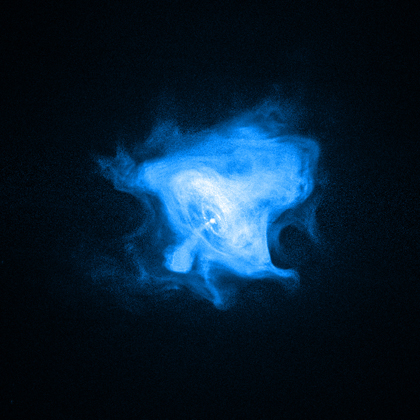
X-Ray (electromagnetic radiation emitted by electrons) image of the Crab Nebula, NASA Chandra X-Ray Telescope
Credit: NASA/CXC/SAO/F.Seward et al

Mel Acheson: The Consensus and the Crab.

Gravity is a weak force, and it can generate only a dribble of energy. Yet throughout the universe we see floods of energy.

The consensus of opinion among astronomers is that the energies of the universe can only come from gravitational mechanisms. Because the force of gravity, and therefore its energy, is directly related to mass, the floods of energy require enormities of mass.

Because the consensus opinion holds that magnitude of mass is equivalent to amount of matter, many of the floods of energy require more matter than can fit into the observed sizes of their sources. Consensus opinion takes recourse in boosting densities: by ignoring all that is known empirically and much that is known theoretically about the compression of matter, the consensus opinion can believe that however much matter is needed can be crammed into the available volume.

The coincidence of such super-densities with the requirements for gravitational production of observed energies is accepted as prima facie proof that the consensus opinion is, in fact, a fact, despite the circular reasoning.

This is the fact that makes the central star in the Crab Nebula’s inner x-ray structure (above image) a pulsar. The press release for this new image states matter-of-factly: “The nebula is powered by a rapidly rotating, highly magnetized neutron star, or pulsar (white dot near the center). The combination of rapid rotating [sic] and strong magnetic field generates an intense electromagnetic field that creates jets of matter and antimatter moving away from the north and south poles of the pulsar, and an intense wind flowing out in the equatorial direction.”

A neutron star has so much matter squeezed into it that the electrons have been squeezed into the nucleus to combine with the protons there and form neutrons. The uncharged neutrons are then packed together, as congested as commuters at rush hour. The pulsations of the pulsar are attributed to a hot spot on its surface that sends a flash of radiation with each rotation of the star. Its operation is analogous to a lighthouse light, back when such lights were mechanically rotating devices, before they were converted to electrically pulsed lamps.

The Crab Nebula’s pulsar pulses 30 times a second. This would mean that the star rotates 30 times a second. This would mean that the centrifugal force is stronger than the star’s gravity … which would mean that the star tore itself apart a long time ago, except that consensus opinion crammed in additional matter to bump up the mass sufficiently to increase the gravitational force enough to hold it together.

Of course, another possibility, one not considered by consensus opinion, is that, as with modern lighthouses, electrical oscillations make the pulsar blink. Super-dense matter and super-fast rotation aren’t needed. The x-ray structure—the jets and rings and sharp boundaries of the diocotron instability around the periphery—are common characteristics of plasma discharges … as is the strong magnetic field, the origin of which consensus opinion neglects to explain. Externally driven electrical circuits provide a unified and coherent explanation that is consistent with electromagnetic theory and laboratory investigations. It’s an explanation that doesn’t require exceptions, circular reasoning, or a consensus of opinion.